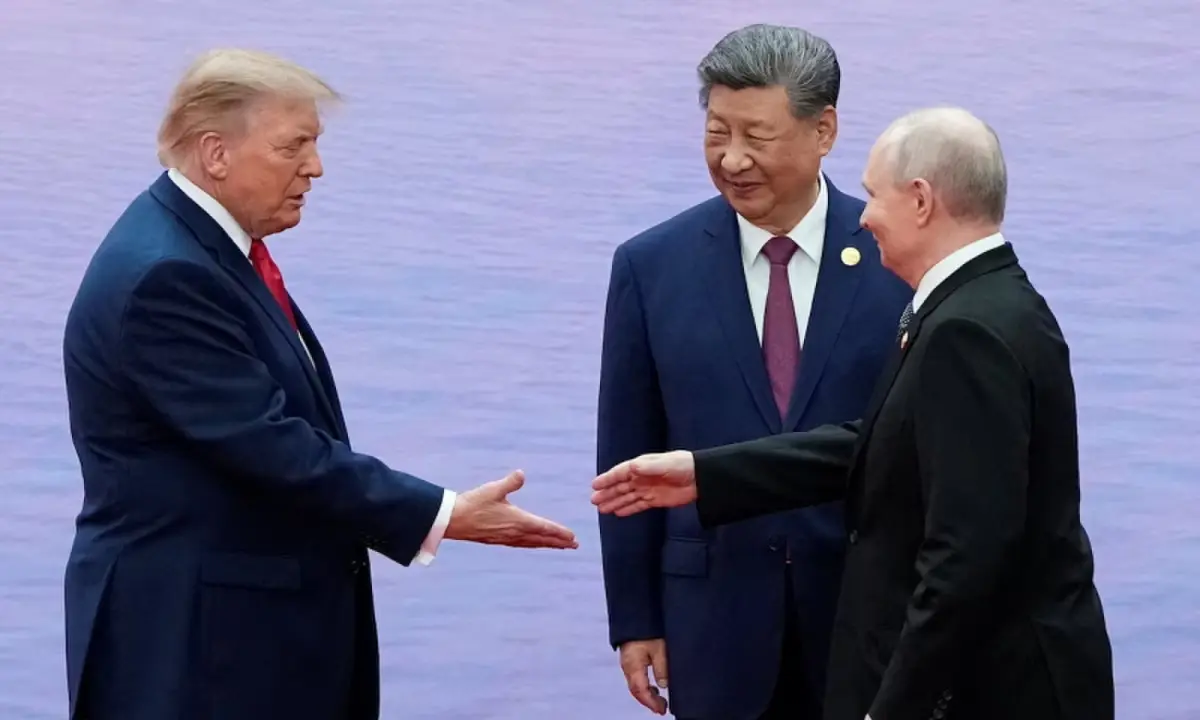
Photo via The Straits Times

Iran protests as US prevents its nuclear chief attending IAEA meeting

Read the original at The Straits Times ↗
Cite

The Straits Times. (2026, September 14). Iran protests as US prevents its nuclear chief attending IAEA meeting. The Straits Times. https://www.straitstimes.com/world/europe/iran-protests-as-us-prevents-its-nuclear-chief-attending-iaea-meeting

Dated when The Aporia collected the article, usually within hours of publication. Check the original for its exact date and byline.

The Straits Times · collected 2026-09-14 · by The Straits Times

Quick Summary

The United States prevented Iran’s nuclear chief Mohammad Eslami from attending the International Atomic Energy Agency General Conference in Vienna by opposing an exemption from U.N. sanctions known as "snapback." Austria initially granted Eslami a visa but revoked it after the United States objected to the exemption, leading Iran to accuse the US of politicizing the conference and interfering with international diplomacy. The U.S. claims that allowing Eslami’s participation would undermine IAEA credibility due to ongoing disputes over inspections.
Written by AI on 2026-09-14, from this article's own text only (the story summary below draws on all the coverage).
See how they differ ↓

AI analysis

Story summary

On September 14, the United States blocked Mohammad Eslami, Iran's nuclear chief, from attending the International Atomic Energy Agency (IAEA) General Conference in Vienna by opposing an exemption from "snapback" U.N. sanctions. Initially granted a visa to attend, Austria later revoked it after the U.S. objected. Iran protested this decision, accusing both the U.S. and Austria of political interference. The Iranian delegation was denied entry when they arrived on Saturday for the conference. Iran's ambassador to the IAEA said that Vienna’s move violated host country obligations under the legal framework governing IAEA meetings. This incident highlights growing tensions between the U.S., Iran, and other IAEA member states over nuclear inspections and sanctions compliance.

Written for “US Blocks Iranian Nuclear Official” on 2026-11-20, grounded in this article and the 4 other(s) covering the same event.

How they differ

4 outlets covered “US Blocks Iranian Nuclear Official”.

What each outlet says

One AI summary per outlet of its latest article on this story, written from that article alone and checked against it. Open the article for the outlet's own words.

The Straits TimesThis outlet14 Sep

The United States prevented Iran’s nuclear chief Mohammad Eslami from attending the International Atomic Energy Agency General Conference in Vienna by opposing an exemption from U.N. sanctions known as "snapback." Austria initially granted Eslami a visa but revoked it after the United States objected to the exemption, leading Iran to accuse the US of politicizing the conference and interfering with international…

Iran protests as US prevents its nuclear chief attending IAEA meeting (this article)
Al Jazeera14 Sep

Iran accused Austria of revoking permission for an Iranian delegation to attend an International Atomic Energy Agency meeting due to external influence. However, Austria stated that Iranian official Mohammed Eslami was not allowed into the country because the UN Security Council had denied a request to waive his travel ban.

Austria denies entry to Iranian official after UN ruling →2 articles from Al Jazeera on this story
South China Morning Post14 Sep

US Energy Secretary Chris Wright announced that Iran’s nuclear chief Mohammad Eslami was barred from entering Austria for an annual conference at the UN’s nuclear agency headquarters in Vienna due to US sanctions. Wright stated that Eslami is a sanctioned individual and the request for a waiver of these sanctions was denied. Iranian state media reported that Eslami and his delegation attempted entry on Saturday but…

US blocks Iran’s nuclear chief from Vienna meeting →
The Hindu14 Sep

On September 14, 2026, Behrouz Kamalvandi, a senior official from Iran's Atomic Energy Organisation, criticized the United States for blocking Iranian participation in a conference of the International Atomic Energy Agency (IAEA). Kamalvandi described this action as "bullying" and "malicious," warning that it sets a dangerous precedent. He also characterized the U.S. behavior as "childish.".

Iran official blasts 'malicious' U.S. block at IAEA meeting →

Where they agree and split

Framing

How the first headlines put it

Stated as fact4
The headlines (4)

Iran protests as US prevents its nuclear chief attending IAEA meeting The Straits Times · stated as fact

US blocks Iran’s nuclear chief from Vienna meeting South China Morning Post · stated as fact

Iran official blasts 'malicious' U.S. block at IAEA meeting The Hindu · stated as fact

US blocks Iran nuclear chief from attending key Vienna conference Al Jazeera · stated as fact

Words to watch (1)

Iran official blasts 'malicious' U.S. block at IAEA meeting The Hindu

The full story: what happened, how it changed, and all 5 articles →

Compared with similar articles

This article reads unscored and hedges 0% of its claims. Each row says how that neighbour differs.
The Hindu
Hedges 0 of 4 claims Outlet record 60/100
Al Jazeera
Leans left Hedges 0 of 21 claims Outlet record 60/100
South China Morning Post
Hedges 0 of 4 claims Outlet record 62/100
Al Jazeera
Hedges 0 of 2 claims Outlet record 60/100
The Straits Times
Hedges 1 of 14 claims Outlet record 64/100
“The articles describe different events related to Iran's participation in international meetings, but they refer to separate occurrences at distinct times and places.”
The Hindu
Centre Hedges 2 of 20 claims Outlet record 60/100
“The articles describe different events: one about Iran's nuclear chief being blocked from a meeting and protesting, the other about Russia and China vetoing a U.S. proposal regarding UN sanctions monitoring.”
Al Jazeera
Hedges 0 of 13 claims Outlet record 60/100
“The articles describe different decisions by the US regarding Iranian officials attending international meetings, not the same specific incident.”
Toronto Star
Hedges 1 of 24 claims Outlet record 64/100
“The articles describe two distinct events: one about the US preventing Iran's nuclear chief from attending an IAEA meeting and another about Russia and China vetoing a UN resolution regarding sanctions monitoring on Iran.”
South China Morning Post
Hedges 1 of 7 claims Outlet record 62/100
“The articles describe different events related to Iranian officials attending international meetings, but they are about separate incidents happening at different times and places.”
The Straits Times
Leans left Hedges 7 of 30 claims Outlet record 64/100
“The articles describe different events occurring on different dates involving distinct actions by the US and Iran.”

Story

US Blocks Iranian Nuclear Official
Politics · 5 article(s) covering the same event. Compare every outlet's account →
How this article was measured signals, leaning charts, publisher record, byline, topics and claims

Signals How these are calculated →

Claims extracted
14
sentences that state something as happening or true
Uncertain
0%
0 of 14 hedged ("reportedly", "may", "according to")
Leaning
withheld
no quote in the article backed the model's score
Publisher signals
64/100
The Straits Times's corrections and hedging, across everything collected from it. Not a measure of accuracy.
Outlets on this story
5
Politics
Same framing elsewhere
1
articles that frame the event the way this one does
Analyzed 2026-09-14 · how these are computed

How this is being covered How these are calculated →

Article leaning vs. publisher reliability
Source leaning vs. consistency

Publisher

The Straits Times · 5570 article(s) · 7 correction(s) detected
Running correction rate · 7 correction(s)

Who wrote this

The Straits Times
3829 article(s) here · 1 carrying a prediction
The European leaders were meeting as part of the so-called coalition of the willing, which regularly gathers to discuss ways to protect a postwar Ukraine from future Russian aggression.
US peace negotiator Jared Kushner, at the same event, also said that he and fellow negotiator Steve Witkoff had “gotten the Russians comfortable with the concept that any security guarantee for Ukraine would be based on Article 5”.
Takaichi’s China trip this week was her first since suggesting in 2025 that Japan might intervene militarily if China attempted to take Taiwan by force.
But while some believe the success of the meeting could have a stabilising effect on an international order in turmoil, the broad consensus among analysts is that this first-of-its-kind meeting worked more as a confidence-building exercise between the rival nations rather than an immediate, concrete cure to the world’s ills.
Iraqi security forces will deploy in Jurf al-Sakhar, a stronghold of the Kataib Hezbollah armed group, on Friday, security officials told a press conference, under a compromise deal designed to ease tensions with Iran's most powerful Shi'ite militia ally in the country.
Some analysts said the outcome of the Shenzhen summit may actually diminish Trump’s stature on the world stage as he enters the lame-duck phase of his presidency, while bolstering two of Washington’s main adversaries.
Whether or not the allegation is true, “just the news will definitely influence people’s opinions of women who have broken the ceiling or are trying to.” Asian American women working in tech, civil rights advocacy and academia have felt a sense of dread that this ordeal will diminish how their peers are viewed and treated in their workplaces. It is a reminder that no accomplishments will completely dispel centuries-old stereotypes.
Three killed in missile strikes on Kyiv, mayor says, in biggest attack on bridges
The Bill is backed by both the oil and gas industry and clean energy groups, but opposed by many major environmental organisations. The measure now proceeds to the House of Representatives, where Speaker Mike Johnson, a supporter of the initiative, has predicted he has the votes to pass it. But members on both sides of the aisle, including Minority Leader Hakeem Jeffries, have said they want to make changes to the Bill. Some Republicans, including Representative Chip Roy, policy chair of the ultraconservative House Freedom Caucus, have wavered in their support, saying they have concerns about the legislation’s electric transmission provisions. Some progressive Democrats, meanwhile, have said they oppose the Senate version of the Bill, contending it would weaken environmental laws. Representative Bruce Westerman, the chairman of the House Natural Resources Committee, said on Nov 19 he doubted there would be time to make changes to the Bill before Congress’s term expires at the end of December. “If the Senate gets it done then I think that’s what we’ll have to pass in the House,” Westerman said in an interview before the vote.
Their complaint alleged that supervisors had warned that objections would result in “trouble.”
Also by The Straits Times
Nothing else under this byline is closely related to this article, so these are simply their most recent.
All 3829 articles by The Straits Times →

Topics

Austria IAEA Iran The United States U.N.

Subjects

Iran GPE · 9× Austria GPE · 5× Eslami PERSON · 5× The United States GPE · 5× IAEA ORG · 4× Iranian NORP · 3× U.N. ORG · 3× Russia GPE · 2× VIENNA GPE · 2× the U.N. Security Council ORG · 2×

Narrative

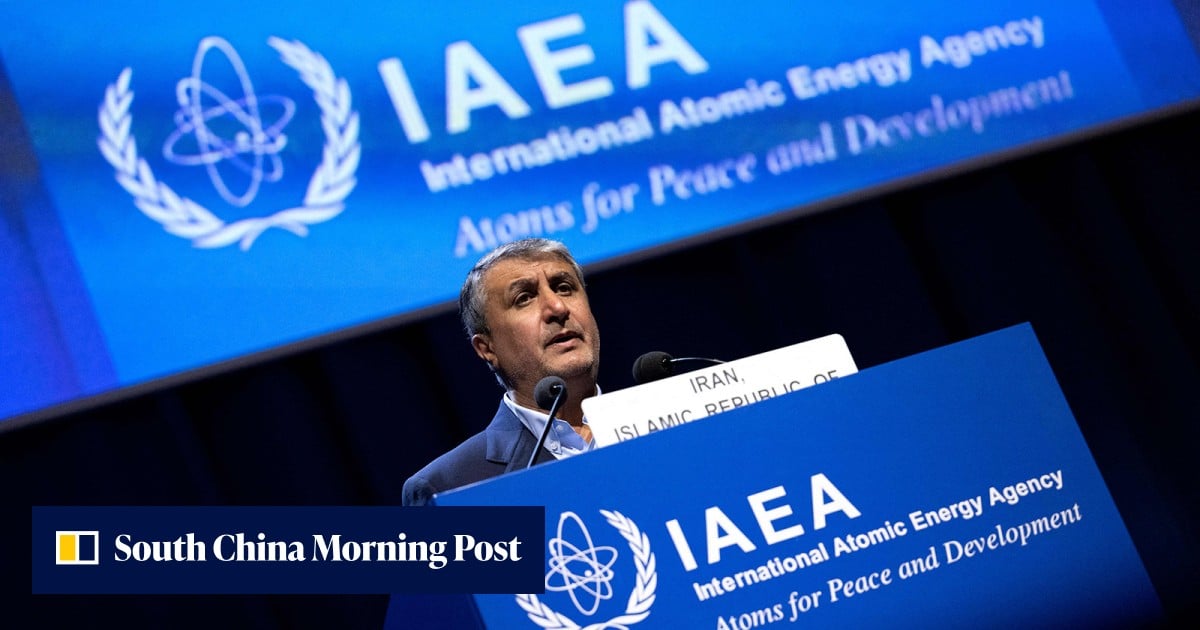
Iran protests as US prevents its nuclear chief attending IAEA meeting VIENNA, Sept 14 - The United States blocked Iran's nuclear chief from attending this week's U.N. atomic watchdog meeting in Vienna by opposing an exemption from so-called "snapback" U.N. sanctions, prompting protests from Tehran on Monday. Iranian nuclear chief Mohammad Eslami had been due to attend and address this week's International Atomic Energy Agency General Conference, an annual meeting of IAEA member states that began on Monday.
framing: assertive · carried by 1 article(s) · first seen 2026-09-14
The United States said it had objected to an exemption that would have allowed Eslami to travel despite sanctions reimposed under the so-called "snapback" mechanism at the U.N. Security Council.
2026-09-14 · The Straits Times
Iran protests as US prevents its nuclear chief attending IAEA meeting · assertive framing

Claims (14 extracted, 0 hedged)

Iran protests as US prevents its nuclear chief attending IAEA meeting VIENNA, Sept 14 - The United States blocked Iran's nuclear chief from attending this week's U.N. atomic watchdog meeting in Vienna by opposing an exemption from so-called "snapback" U.N. sanctions, prompting protests from Tehran on Monday. Iranian nuclear chief Mohammad Eslami had been due to attend and address this week's International Atomic Energy Agency General Conference, an annual meeting of IAEA member states that began on Monday. asserted
that → protest → Monday
At the opening, however, Iran said Austria had revoked Eslami's visa after originally granting him one. asserted
Austria → say → one
"The cancellation and so-called legal justification advanced for it are a stark indication of a political act and advanced formal politicisation of this organisation," Iran's ambassador to the IAEA told the conference. asserted
ambassador → call → conference
Iran's Foreign Ministry spokesperson Esmaeil Baghaei said the United States had pressured Austria into the move, while Iran and Russia said it formed part of a broader effort to prevent Iranian officials from obtaining visas for international travel. asserted
it → say → travel
The United States said it had objected to an exemption that would have allowed Eslami to travel despite sanctions reimposed under the so-called "snapback" mechanism at the U.N. Security Council. asserted
Eslami → say → Council
Eslami was among those targeted by sanctions lifted under a 2015 nuclear deal between Iran and major powers and the United States. asserted
Eslami → target → Iran
The deal unravelled after President Donald Trump pulled the U.S. out of it in 2018, and Western powers triggered the "snapback" mechanism last year to re-impose those sanctions. asserted
powers → unravel → sanctions
Iran and allies including Russia do not recognise the reimposed sanctions. asserted
Iran → include → sanctions
Austria said it had requested an exemption for Eslami. asserted
it → say → Eslami
"Austria, although being only the host state, submitted a request for an exemption to the travel ban to the Security Council sanctions committee, which was rejected," Ambassador Christian Ebner told the conference. asserted
Ebner → submit → conference
"As a consequence, Austria was obliged to deny one member of the Iranian delegation the entry into its territory," he said. asserted
he → oblige → territory
U.S. Ambassador Preston Wells Griffith III said his country had objected in New York to an exemption being granted, and that was why the application was denied. asserted
application → say → exemption
"The United States objected to the exemption request, which per the rules of the U.N. sanctions committee resulted in the U.N. Security Council denying the request," he said. asserted
he → object → request
"His (Eslami's) participation would have only resulted in Iran exploiting IAEA proceedings as a stage for propaganda while sidestepping substantive cooperation, undermining the credibility of the very body charged with verifying its nuclear commitments," he said, referring to a standoff over inspections. asserted
he → result → inspections
Give feedback · no sign-in needed

No sign-in needed for now. Your note is sent without a name, so it cannot be answered.

History Support