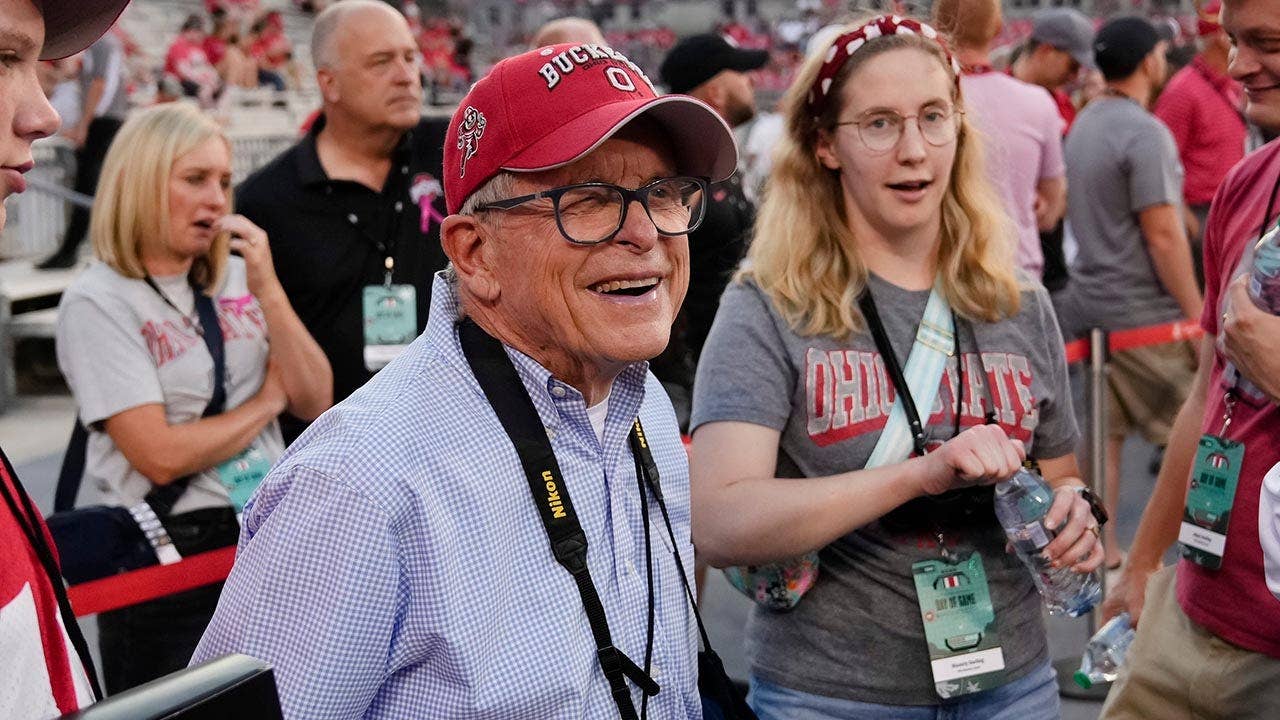
Photo via The Independent

NCAA sues Ohio governor over his executive order allowing schools to ignore new eligibility rule

Read the original at The Independent ↗
Cite

Pells, E. (2026, October 16). NCAA sues Ohio governor over his executive order allowing schools to ignore new eligibility rule. The Independent. https://www.independent.co.uk/news/world/americas/ncaa-ohio-mike-dewine-charlie-baker-tennessee-b3068281.html

Dated from the outlet's own feed. Check the original for its byline.

The Independent · collected 2026-10-16 · by Eddie Pells

Quick Summary

The NCAA filed a lawsuit against Ohio Governor Mike DeWine on Friday, arguing that his executive order allowing schools in Ohio to ignore a new rule denying fifth-year eligibility to players graduating from high school in 2022 gives Ohio colleges an unfair advantage. The lawsuit, filed in federal court, is part of ongoing legal battles over the NCAA's decision to exclude this specific class of athletes from additional years of play. Governor DeWine’s order aims to provide these athletes with another year of eligibility despite the new rule, which has caused controversy and led to multiple lawsuits across the country involving players like Filip Borovićanin.
Written by AI on 2026-10-16, from this article's own text only (the story summary below draws on all the coverage).
See how they differ ↓

AI analysis

Story summary

On October 16, 2026, the NCAA filed a federal lawsuit against Ohio Gov. Mike DeWine three days after he signed an executive order allowing athletes who graduated from high school in 2022 to compete for a fifth year despite new eligibility rules set by the NCAA. Under DeWine’s order, Ohio colleges and universities can permit these players to continue competing even though the NCAA excludes those who have already played four seasons. The lawsuit was filed in federal court in Ohio, with NCAA President Charlie Baker describing it as an “extraordinary step” to prevent DeWine from making it impossible for all schools to compete on a level playing field.

Written for “NCAA Sues Ohio Governor Over Executive Order” on 2026-11-21, grounded in this article and the 5 other(s) covering the same event.

How they differ

4 outlets covered “NCAA Sues Ohio Governor Over Executive Order”.

What each outlet says

One AI summary per outlet of its latest article on this story, written from that article alone and checked against it. Open the article for the outlet's own words.

The IndependentThis outlet16 Oct

The NCAA filed a lawsuit against Ohio Governor Mike DeWine on Friday, arguing that his executive order allowing schools in Ohio to ignore a new rule denying fifth-year eligibility to players graduating from high school in 2022 gives Ohio colleges an unfair advantage. The lawsuit, filed in federal court, is part of ongoing legal battles over the NCAA's decision to exclude this specific class of athletes from…

NCAA sues Ohio governor over his executive order allowing schools to ignore new eligibility rule (this article)
Toronto Star16 Oct

The NCAA has sued Ohio Governor Mike DeWine over his executive order allowing state universities to ignore the organization’s new eligibility rules for student athletes who graduated in 2022. The lawsuit, filed in federal court on Friday, aims to prevent what NCAA President Charlie Baker calls an “impossible” situation for schools trying to compete fairly under standard rules.

NCAA sues Ohio governor over his executive order allowing schools to ignore new eligibility rule →2 articles from Toronto Star on this story
Fox News17 Oct

The NCAA filed a lawsuit against Ohio Governor Mike DeWine on Friday, challenging his recent executive order which allows college athletes from the Class of 2022 to compete for a fifth year. This move directly contradicts an NCAA rule implemented in June that excludes such athletes from eligibility. The lawsuit was filed in federal court in Ohio and describes DeWine’s action as giving Ohio colleges an unfair…

NCAA moves to block Ohio Governor Mike DeWine's executive order expanding college athletes' eligibility →2 articles from Fox News on this story
New York Post16 Oct

The NCAA has filed a lawsuit against Ohio Governor Mike DeWine over his executive order allowing state universities to opt out of new eligibility rules for student athletes who graduated in 2022. The suit was initiated three days after DeWine’s action, which the NCAA contends undermines fair competition by granting an unfair advantage to Ohio institutions. The case centers on NCAA President Charlie Baker's assertion…

NCAA suing Ohio gov over ‘misguided’ executive order allowing schools to ignore new eligibility rule →

Where they agree and split

The full story: what happened, how it changed, and all 6 articles →

Compared with similar articles

This article reads leans right and hedges 0% of its claims. Each row says how that neighbour differs.
Toronto Star
Hedges 0 of 2 claims Outlet record 65/100
New York Post
Hedges 0 of 34 claims Outlet record 66/100
Fox News
Hedges 3 of 31 claims Outlet record 66/100
“Article A reports on Governor DeWine signing an executive order, while Article B discusses a subsequent legal action taken by the NCAA against this executive order.”
Toronto Star
Hedges 1 of 26 claims Outlet record 65/100
“Article A reports on Governor DeWine signing the executive order, while Article B covers a subsequent legal action taken by the NCAA in response to that order.”

Story

NCAA Sues Ohio Governor Over Executive Order
Sports · 6 article(s) covering the same event. Compare every outlet's account →
How this article was measured signals, leaning charts, publisher record, byline, topics and claims

Signals How these are calculated →

Claims extracted
29
sentences that state something as happening or true
Uncertain
0%
0 of 29 hedged ("reportedly", "may", "according to")
Leaning
Leans right
of the writing, not the subject · beta estimate
Publisher signals
59/100
The Independent's corrections and hedging, across everything collected from it. Not a measure of accuracy.
Outlets on this story
6
Sports
Same framing elsewhere
1
articles that frame the event the way this one does
Analyzed 2026-10-16 · how these are computed

How this is being covered How these are calculated →

Article leaning vs. publisher reliability
Source leaning vs. consistency

Publisher

The Independent · 4787 article(s) · 10 correction(s) detected
Running correction rate · 10 correction(s)

Who wrote this

Eddie Pells
18 article(s) here · 1 carrying a prediction
The House of Representatives will soon consider a slightly tweaked version of a bill already passed in the Senate that needs to be signed by the end of the year to become law.
Georgia stayed atop the latest College Football Playoff rankings, while surging Wake Forest moved up two spots and would be in the projected 12-team bracket if the postseason started this week.
So, what will they get wrong this week?
There are three more Tuesday-night rankings shows before the bracket is set on Dec. 6 — the day after the last round of conference title games that will go by the wayside when the playoff expands to 24 teams next season.
The biggest losers, they argued, would be the very programs that were pushing for it to go forward — the teams in the Southeastern Conference.
College football is one step closer to a postseason that will resemble the come-one-come-all nature of the pros.
After that, they could have been picking names out of a hat.
“Unfortunately, you may see an upset, but it may be harder for the smaller schools to make those longer runs in the tournament,” said Niko Medved, who was one excruciating buzzer-beater away from taking underdog Colorado State to the Sweet 16 in 2025 before he left to coach Minnesota a few weeks later.
Less than three months after reaching what many would say is the pinnacle of coaching — leading a program to an NCAA championship — Dusty May left Michigan for the NBA.
College football moved closer to a 24-team postseason after securing what a person familiar with the negotiations called a “handshake agreement” between the College Football Playoff and broadcast partner ESPN that would make up for the nine-figure sums the major conferences would lose by getting rid of their title games.
Also by Eddie Pells
Nothing else under this byline is closely related to this article, so these are simply their most recent.
All 18 articles by Eddie Pells →

Topics

DeWine Independent NCAA Ohio Tennessee

Subjects

NCAA ORG · 16× Ohio GPE · 5× DeWine PERSON · 4× Tennessee GPE · 2× Charlie Baker PERSON · 1× Danny White PERSON · 1× Filip Borovićanin PERSON · 1× Independent ORG · 1× Mike DeWine PERSON · 1× the Ohio Supreme Court ORG · 1×

Narrative

The NCAA has long explained that it knew excluding the Class of '22 from the five-year rule would cause those athletes hardship, but the decision was between them and the new class of high school recruits coming into college this year, many of whom would be displaced if the veterans were allowed another year.
framing: assertive · carried by 1 article(s) · first seen 2026-10-16
Under DeWine's order, public and private universities in Ohio would be able to allow the Class of ’22 athletes to play, even though the NCAA’s new guidance excludes those who have already played four seasons.

Claims (29 extracted, 0 hedged)

The NCAA sued the governor of Ohio on Friday, accusing him of trying to give college athletes in his state a “hall pass” to circumvent a rule that denies players who graduated high school in 2022 from a fifth year of eligibility. asserted
who → sue → eligibility
NCAA President Charlie Baker called the lawsuit, filed in federal court in Ohio, an “extraordinary step” designed to prevent Gov. Mike DeWine from making it “impossible for all schools to compete on a level playing field.” asserted
schools → call → field
DeWine issued an executive order Tuesday that undercut the NCAA rule, approved over the summer. asserted
that → issue → summer
That and the NCAA's federal lawsuit in reaction to it marks the latest tit-for-tat in a torrent of legal maneuverings that are creating new rules on a state-by-state basis. asserted
that → mark → basis
“This whole thing has become comical,” Danny White, the athletic director at Tennessee, said on social media in reaction to the NCAA announcement. asserted
White → become → announcement
Under DeWine's order, public and private universities in Ohio would be able to allow the Class of ’22 athletes to play, even though the NCAA’s new guidance excludes those who have already played four seasons. asserted
who → allow → seasons
The rule, passed in June, is the subject of multiple court fights. asserted
rule → pass → fights
In its court filing, the NCAA said it was trying "to halt a misguided attempt to give Ohio colleges and universities an unfair, unprecedented and unwarranted competitive advantage in stadiums and arenas throughout the country,” “College sports, like all sports, depend on participants following the rules. asserted
participants → say → rules
(DeWine) is attempting to give Ohio institutions a hall pass to break the rules," the lawsuit says. asserted
lawsuit → attempt → rules
In reaction to the governor's move, the Ohio Supreme Court said it would step in and determine the legality of the executive order. asserted
it → say → order
As part of that, it paused an appeals court ruling in a case there that had declared the ’22 athletes ineligible. asserted
athletes → pause → case
The court asked both sides to file briefs in the case, in which basketball player Filip Borovićanin is the lead plaintiff, by next Monday. asserted
Borovićanin → ask → Monday
Baker said the NCAA did not believe the Supreme Court's order did, in fact, declare those players immediately eligible to compete and said it would submit arguments in that case. asserted
it → say → case
That case, like others around the country, is becoming more urgent by the day, as it involves a handful of basketball players whose status for the upcoming season is in jeopardy. asserted
status → become → jeopardy
Among them: Gonzaga transfer Javon Bennett, Cincinnati's MJ Collins and Borovićanin himself, who played in an exhibition against Tennessee on Thursday night after DeWine's order put him back on the eligible list. asserted
order → play → list
The NCAA has long explained that it knew excluding the Class of '22 from the five-year rule would cause those athletes hardship, but the decision was between them and the new class of high school recruits coming into college this year, many of whom would be displaced if the veterans were allowed another year. asserted
veterans → explain → year
Ultimately, the NCAA made its decision based on which move harmed fewer people. asserted
move → make → people
The NCAA lawsuit goes through the history of the rule and the flood of legal actions that have come since. asserted
that → go → actions
One of the original cases, a federal lawsuit involving basketball player Brock Wisne, is leaning in the NCAA's direction, though victories there have only spawned more lawsuits in state court. asserted
victories → involve → court
“The results of this second wave of lawsuits were mixed, with the NCAA winning some and losing others,” it said. asserted
it → mix → others
“But the lawsuits unquestionably destabilized college sports, with ever-more disruptive lawsuits challenging foundational rules at the heart of organized sport.” asserted
lawsuits → destabilize → sport
During testimony in a similar case in Kentucky earlier this week, an NCAA attorney asked Louisville basketball coach Pat Kelsey why he was among those looking for Class of '22 athletes when the NCAA rules forbid that. asserted
rules → ask → that
“From a coach's standpoint, every time the NCAA says something, we all shrug our shoulders and say, ‘Is that going to stand up? asserted
that → say → shoulders
Is that a rule?’” Kelsey said. asserted
Kelsey → say → ?
“We don't think there are rules right now. asserted
We → think → ?
That's why we want guardrails, we want Congress to act, we want the chaos to end. asserted
chaos → want → guardrails
Because nobody knows what the crap is going on. asserted
crap → know → ?
The NCAA has long called for a federal law to tamp down on the lawsuits undermining its rules for hundreds of thousands of athletes across the country. asserted
NCAA → call → country
The Senate has sent the Protect College Sports Act to the House, where its fate is uncertain in this election year. asserted
fate → send → year
Give feedback · no sign-in needed

No sign-in needed for now. Your note is sent without a name, so it cannot be answered.

History Support