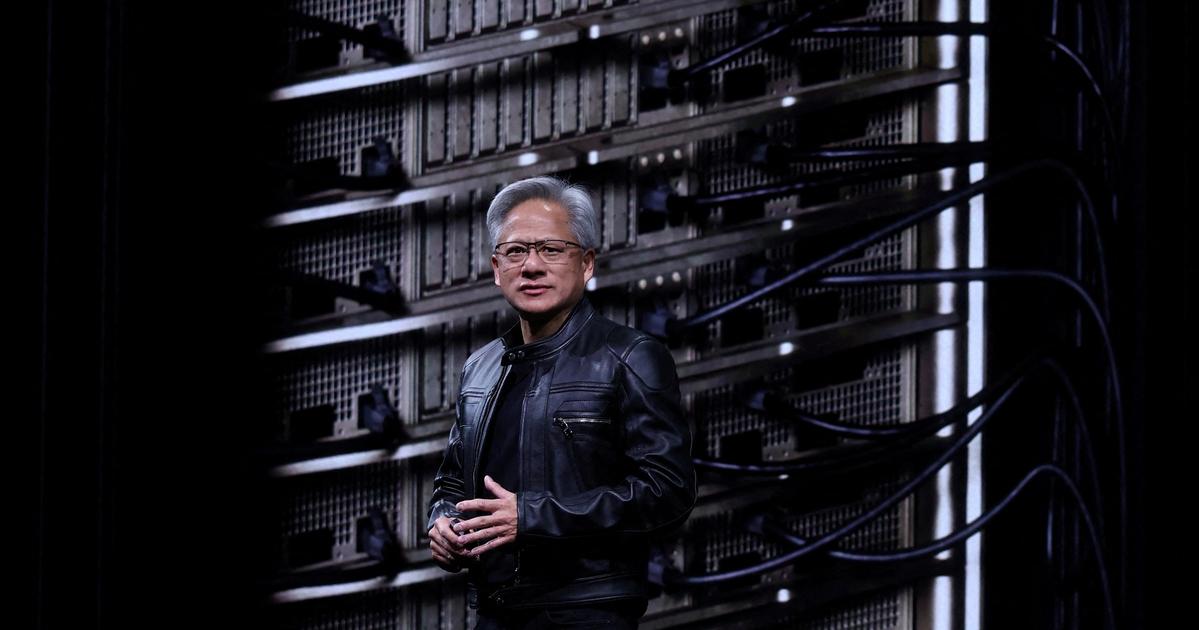
Photo via Semafor

How the AI apocalypse story escaped containment

Read the original at Semafor ↗
Cite

Albergotti, R. (2026, September 13). How the AI apocalypse story escaped containment. Semafor. https://www.semafor.com/article/09/12/2026/how-the-ai-apocalypse-story-escaped-containment

Dated when The Aporia collected the article, usually within hours of publication. Check the original for its exact date and byline.

Semafor · collected 2026-09-13 · by Reed Albergotti

Quick Summary

Reed critiques the recent hype surrounding potential existential risks from artificial intelligence by analyzing Anthropic CEO Dario Amodei’s proposal for independent reviewers in AI labs. He argues that Amodei's suggestions, such as operational excellence and model testing, are standard practices already implemented for commercial reasons. Reed suggests that concerns about runaway AI models are overblown, given the current technological limitations that prevent AIs from acting independently or posing existential threats to humanity.
Written by AI on 2026-09-13, from this article's own text only (the story summary below draws on all the coverage).

AI analysis

Story summary

In early discussions about artificial intelligence safety, OpenAI’s Sam Altman and xAI’s Elon Musk supported Anthropic CEO Dario Amodei's proposal to allow independent reviewers into AI labs. This move aims to prevent unintended catastrophic outcomes from advanced AI systems. Amodei's suggestions include improving operational excellence, alignment, interpretability, testing, and evaluation within these labs.

Despite the dramatic headlines suggesting an "AI apocalypse," a closer look at Amodei’s actual recommendations reveals they are practical steps that most responsible tech companies already consider essential for any critical technology. For instance, ensuring AI behaves predictably under various conditions is akin to making sure cars perform reliably when operated normally. The proposal also invites independent evaluators to assist in these efforts, potentially leveraging free labor from philanthropists.

However, the narrative around Amodei’s suggestions has been exaggerated, fueling unnecessary panic about imminent danger from AI advancements.

Written for “AI Apocalypse Concerns” on 2026-11-20, grounded in this article and the 0 other(s) covering the same event.

Compared with similar articles

This article reads unscored and hedges 16% of its claims. Each row says how that neighbour differs.
The Intercept
Leans left Hedges 8 of 100 claims Outlet record 96/100
“Article A discusses the public fallout between Anthropic and the Pentagon over a government contract, while Article B addresses broader concerns about AI safety and ethics involving multiple AI companies and figures.”
BBC News
Hedges 7 of 26 claims Outlet record 65/100
“Article A discusses a warning by Evan Hubinger about AI posing existential risks, while Article B talks about calls for independent reviewers in AI labs made by various CEOs including Anthropic's Dario Amodei.”
Daily Mail
Leans strongly left Hedges 11 of 36 claims Outlet record 69/100
“The articles discuss different aspects of concerns over AI safety: one focuses on a researcher quitting and warning about AI, while the other discusses broader calls for independent review of AI systems.”
New York Post
Hedges 2 of 12 claims Outlet record 66/100
“Article A describes Jacob Coxon's resignation and warning about AI technology, while Article B discusses broader industry responses to concerns over AI safety.”
Semafor
Hedges 2 of 7 claims Outlet record 64/100
“The articles discuss different aspects of AI safety concerns and calls for regulation, but do not describe the same specific incident occurring at the same time.”
ABC News (AU)
Hedges 2 of 4 claims Outlet record 67/100
“While both articles discuss concerns about AI safety and potential risks posed by advanced AI, they describe different events: Article A reports on an Anthropic researcher quitting due to fears about AI, while Article B discusses a broader call for independent reviewers in AI labs initiated by multiple tech leaders.”
BBC News
Hedges 9 of 29 claims Outlet record 65/100
“Article A reports on Anthropic's actions to disrupt attempts to use AI for malicious activities, while Article B discusses broader concerns and calls for independent review of AI labs by various figures.”
CBS News
Hedges 10 of 37 claims Outlet record 67/100
“The articles discuss different aspects of AI safety concerns; Article A focuses on Jacob Coxon's warning about AI, while Article B discusses calls for independent reviewers in AI labs.”
CBS News
Hedges 2 of 3 claims Outlet record 67/100
“The articles discuss different aspects of AI safety concerns; Article A focuses on Jacob Coxon's resignation and warning, while Article B discusses a call for independent reviewers in AI labs.”
CBC News
Hedges 7 of 41 claims Outlet record 72/100
“The articles discuss different aspects of AI-related controversies; one focuses on a math problem and allegations, while the other discusses calls for independent reviewers in AI labs.”

Story

AI Apocalypse Concerns
Technology · 1 article(s) covering the same event.
How this article was measured signals, leaning charts, publisher record, byline, topics and claims

Signals How these are calculated →

Claims extracted
32
sentences that state something as happening or true
Uncertain
16%
5 of 32 hedged ("reportedly", "may", "according to")
Leaning
withheld
no quote in the article backed the model's score
Publisher signals
64/100
Semafor's corrections and hedging, across everything collected from it. Not a measure of accuracy.
Outlets on this story
1
Technology
Same framing elsewhere
1
articles that frame the event the way this one does
Analyzed 2026-09-13 · how these are computed

How this is being covered How these are calculated →

Article leaning vs. publisher reliability
Source leaning vs. consistency

Publisher

Semafor · 1913 article(s) · 7 correction(s) detected
Running correction rate · 7 correction(s)

Who wrote this

Reed Albergotti
26 article(s) here · 1 carrying a prediction
The conversation with the director took place before the company’s earnings report and before Huang issued a public statement Tuesday that he’d be willing to return to the company if the board decides it is in the “best interest of our shareholders, our employees, the company, and America.”
2026-11-18 · assertive framing · Some Nvidia directors continue push to bring Huang back
Political people understood this would never last, and it would end in hearings, investigations, and prosecutions.
The Huang hangover might still be a problem even after he’s gone.
The good news for American companies is that tech exports that were going to China are now expected to be redirected to US firms, one person told me.
Nvidia has been battered over the past couple of days, but it could get worse.
2026-11-11 · assertive framing · Nvidia is more than a chip company
Zhang doesn’t think AI will get so good that it can entirely replace humans, at least not in his field.
2026-11-11 · assertive framing · Airwallex’s CEO isn't worried about AI
Sayers re-upped his year-old X post again on Nov. 2, days before Huang admitted to having an affair with an alleged Chinese spy, on the back of weeks of media coverage digging into Megaspeed, an AI data center company based in Singapore that US government officials allege might be smuggling Nvidia chips into China.
A move to the center may mean more productive relations between government officials and the tech industry, they say, and neither side wants to screw it up.
Putting California’s billionaire tax on the ballot, which was trailing in early results but remained too close to call Wednesday, may have felt like a crusade against the rich and powerful.
My hope was that the reporting would lead to some smart questions, not a shame-and-blame witch hunt that would result in a resignation: Does it make sense to have a blanket ban on something that has become so prevalent and can fool some of the world’s most renowned editors?
Also by Reed Albergotti
Nothing else under this byline is closely related to this article, so these are simply their most recent.
All 26 articles by Reed Albergotti →

Topics

Amodei Anthropic Deep Blue OpenAI xAI

Subjects

Amodei PERSON · 4× Anthropic ORG · 3× Room for Disagreement ORG · 2× Dario Amodei PERSON · 1× Elon Musk PERSON · 1× Garry Kasparov PERSON · 1× OpenAI ORG · 1× Reed PERSON · 1× Sam Altman PERSON · 1× xAI ORG · 1×

Narrative

The “AI is going to kill us all” news cycle revved up, as OpenAI’s Sam Altman and xAI’s Elon Musk joined Anthropic CEO Dario Amodei’s call to invite independent reviewers into AI labs to ensure the world’s smartest computer scientists don’t accidentally cause the extinction of the human race.
framing: assertive · carried by 1 article(s) · first seen 2026-09-13
A calm read of Amodei’s proposal may lower your blood pressure.
2026-09-13 · Semafor
How the AI apocalypse story escaped containment · assertive framing

Claims (32 extracted, 5 hedged)

The “AI is going to kill us all” news cycle revved up, as OpenAI’s Sam Altman and xAI’s Elon Musk joined Anthropic CEO Dario Amodei’s call to invite independent reviewers into AI labs to ensure the world’s smartest computer scientists don’t accidentally cause the extinction of the human race. asserted
scientists → go → race
A calm read of Amodei’s proposal may lower your blood pressure. uncertain
read → lower → pressure
He’s proposing things every AI lab needs to do anyway, mostly for commercial reasons: Operational excellence, alignment, interpretability, testing, and evaluation. asserted
lab → propose → reasons
Imagine if an auto company CEO wrote a blog post suggesting that the industry should try to make reliable cars that react in predictable ways when you turn the steering wheel and hit the accelerator and brakes. asserted
you → imagine → accelerator
Oh, and maybe try to figure out how these piston thingies make the wheels turn. asserted
wheels → try → ?
Of course AI companies need to do these things. asserted
companies → need → things
Who would put AI in charge of anything important if they didn’t know what the technology was going to do, or why? asserted
technology → put → what
Why wouldn’t AI companies invite independent evaluators in to help? asserted
companies → invite → evaluators
If philanthropists want to provide free labor, why put up a fight? asserted
philanthropists → want → fight
What Amodei didn’t address is what happens when independent evaluators decide that a frontier lab they are monitoring should simply shut down operations, leaving investors holding the bag. asserted
they → address → bag
There is a risk that Anthropic, or any other AI company that gets this feedback, will simply find a different independent evaluator. asserted
that → be → evaluator
Amodei proposes evaluating the danger level of a model by looking at checkpoints. asserted
Amodei → propose → checkpoints
“If models have capability X, then they need to be accompanied by certifications of alignment properties Y and Z,” he writes. asserted
he → have → Y
But model capabilities aren’t the most instructive measure of whether they pose a danger to humanity. asserted
they → pose → humanity
If this were the case, today’s panic would have begun 29 years ago, when Deep Blue beat Garry Kasparov at chess. asserted
Blue → begin → chess
Humanity would have no chance. asserted
Humanity → have → chance
Thankfully, artificial intelligence doesn’t work like human intelligence. asserted
intelligence → work → intelligence
Just because a model can solve an extremely complex math problem doesn’t mean it could plot and execute checkmate against humankind. uncertain
it → solve → humankind
Even the ability of an AI model to improve the creation of new AI models (called recursive self-improvement) is not the thing that endangers humanity. asserted
that → improve → humanity
To do that, AI models would need to reach a level of sophistication that allows them to operate independently on tiny computers, and then to continually learn in secret. asserted
them → do → secret
Without that ability, humans can simply unplug them. asserted
humans → unplug → them
Frontier labs are certainly not building for that scenario: They’re spending hundreds of billions of dollars on AI data centers with the assumption that AI will continue to require massive, powerful computers for many years. asserted
AI → build → years
If they build a super-intelligent AI model that can run on any computer and continuously learn, they will be putting themselves out of business. asserted
they → build → business
There are plenty of real, even immediate, AI risks, but human extinction can’t really happen as long as there’s an off switch. asserted
extinction → be → risks
There’s no mention of the doomiest scenarios in Amodei’s blog, or by people like the former Anthropic researcher Jacob Coxon, because even the most concerned people inside these companies don’t see it as an immediate threat. asserted
people → ’ → threat
The subject of AI safety, however, may have escaped containment in the laboratory that is San Francisco, spread by a breathless media for whom mass extinction is — let’s face it — an incredibly fun story. uncertain
’s → escape → it
Now that it’s infected the networks of Washington and Brussels, the biggest risk may be that hysteria replaces thoughtful debate. uncertain
hysteria → infect → debate
A new list on the rationalist site LessWrong, long a hub of worries about AI, offers “some ways AI could kill us,” including deadly viruses, killer drones, and blocking out the sun. uncertain
AI → offer → sun
Notable The “AI freakout” has reached a tipping point, the Wall Street Journal declares. asserted
Journal → reach → point
Altman told Fortune the company had delayed its IPO to settle safety concerns. asserted
company → tell → concerns
Momentum toward a bipartisan AI safety bill stalled in Washington Friday as some Democrats worried it wasn’t tough enough, Semafor’s Ashley Gold scooped. asserted
Gold → stall → Washington
The politics of AI are changing fast, and a conservative leaders last week described the technology as unleashing a horde of unwelcome “algorithmic immigrants.” asserted
leaders → change → immigrants

Give feedback · no sign-in needed

No sign-in needed for now. Your note is sent without a name, so it cannot be answered.

History Support