Photo via TIME

Nighttime Light Exposure Is Linked to Heart Changes

Read the original at TIME ↗
Cite

Greenwood, V. (2026, September 12). Nighttime Light Exposure Is Linked to Heart Changes. TIME. https://time.com/article/2026/09/11/light-exposure-at-night-is-linked-to-heart-changes/

Dated when The Aporia collected the article, usually within hours of publication. Check the original for its exact date and byline.

TIME · collected 2026-09-12 · by Veronique Greenwood

Quick Summary

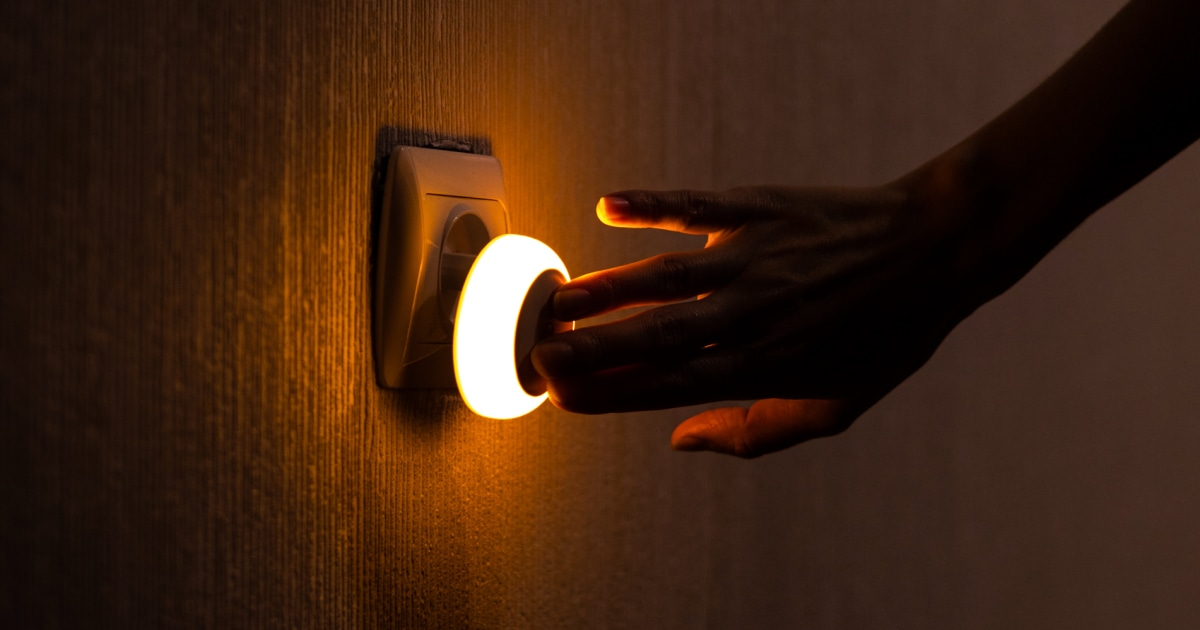
A recent study published in the European Heart Journal on September 9 found that individuals exposed to light at night while sleeping tend to have structural changes in their hearts compared to those who sleep in darkness. Using data from fitness monitors with light sensors worn by participants of the UK Biobank, researchers discovered that people routinely exposed to even low levels of nighttime light (3 lux or roughly equivalent to three candles held three feet away) showed heart wall thickening and reduced pumping efficiency, indicative of increased cardiac workload. This research adds more evidence linking nighttime light exposure with potential cardiovascular risks.
Written by AI on 2026-09-12, from this article's own text only (the story summary below draws on all the coverage).
See how they differ ↓

AI analysis

Story summary

A new study published in the European Heart Journal suggests that exposure to even minimal nighttime lighting can harm heart health. Researchers from Tulane University analyzed data from 11,071 participants in the UK Biobank and found that people exposed to at least 3 lux of light during sleep—equivalent to a dimly lit room—had changes in their heart structure and function. These changes indicate increased strain on the heart, which could explain higher risks of coronary artery disease, heart attack, heart failure, and stroke previously linked to nighttime light exposure. Dr. Thomas Münzel from the University Medical Center of Johannes Gutenberg University emphasizes that darkness is crucial for cardiovascular health, akin to blood pressure control and clean air.

Written for “Nightlight Heart Damage Risk” on 2026-11-22, grounded in this article and the 1 other(s) covering the same event.

How they differ

2 outlets covered “Nightlight Heart Damage Risk”.

What each outlet says

One AI summary per outlet of its latest article on this story, written from that article alone and checked against it. Open the article for the outlet's own words.

TimeThis outlet12 Sep

A recent study published in the European Heart Journal on September 9 found that individuals exposed to light at night while sleeping tend to have structural changes in their hearts compared to those who sleep in darkness. Using data from fitness monitors with light sensors worn by participants of the UK Biobank, researchers discovered that people routinely exposed to even low levels of nighttime light (3 lux or…

Nighttime Light Exposure Is Linked to Heart Changes (this article)
NBC News11 Sep

A new study published in the European Heart Journal suggests that getting too much light at night while sleeping can lead to potential heart damage. Researchers analyzed data from 11,071 participants and found that any increase in light exposure above 3 lux during nighttime sleep was associated with measurable cardiac damage, including a 2.4% larger left ventricle and a 1.9% reduction in the heart's ability to…

Heart damage may occur from getting too much light at night while we sleep, study finds →

Compared with similar articles

This article reads unscored and hedges 14% of its claims. Each row says how that neighbour differs.
NBC News
Hedges 5 of 32 claims Outlet record 74/100

Story

Nightlight Heart Damage Risk
Health · 2 article(s) covering the same event. See how they differ ↑
How this article was measured signals, leaning charts, publisher record, byline, topics and claims

Signals How these are calculated →

Claims extracted
22
sentences that state something as happening or true
Uncertain
14%
3 of 22 hedged ("reportedly", "may", "according to")
Leaning
not political
takes no side on a contested political question
Publisher signals
60/100
TIME's corrections and hedging, across everything collected from it. Not a measure of accuracy.
Outlets on this story
2
Health
Same framing elsewhere
1
articles that frame the event the way this one does
Analyzed 2026-09-12 · how these are computed

How this is being covered How these are calculated →

Article leaning vs. publisher reliability
Source leaning vs. consistency

Publisher

TIME · 1081 article(s) · 2 correction(s) detected
Running correction rate · 2 correction(s)

Who wrote this

Veronique Greenwood
13 article(s) here · 1 carrying a prediction
But in recent years, the idea of a “virtual cell”—a computer model so detailed, with such a close resemblance to the real thing, that scientists could run experiments on it instead of in the lab—has entered the conversation.
“I was wondering, as a sleep researcher, what sleep would do to that,” he says.
2026-11-12 · assertive framing · Getting Too Little Sleep Makes You Easier to Scam
When it’s hot and humid, the body might not be able to cool down quickly enough to avoid the muscle damage that could lead to rhabdomyolysis.
If he’d been hit, the injuries could have been severe, as Schroeder, who is a pediatrician and research scientist at Lucile Packard Children’s Hospital Stanford, well knows.
Every so often, after a marathon, headlines will pop up about a marathon runner collapsing and dying during or shortly after the race.
2026-10-30 · assertive framing · Is Running a Marathon Good for Your Heart?
Uncovering the links between certain infections and cancers raises the hope that by preventing infection, one could prevent certain malignancies.
2026-10-13 · assertive framing · These Infections Are Linked to 12% of New Cancer Cases
At the same time, Russian authorities have reportedly quarantined as many as 200 people, which public-health experts say would be an unusual response to an isolated case of pneumonia.
2026-10-07 · assertive framing · What Worries Experts About the Russia 'Plague' Incident
They may include painful body aches as well as fever and can last up to 10 days.
2026-10-02 · assertive framing · What to Know About the Dengue Outbreak in the U.S.
Keeping active in older age pays dividends Encouraging older people to take it slowly might sound like reasonable advice, says Margaret Danilovich, a physical therapist and instructor at Northwestern University and an author of the new paper.
2026-09-30 · assertive framing · Walking Faster May Help Reverse Frailty
As millions of people aged 60 and older received the shots, researchers watched and waited to see whether the efficacy numbers seen in clinical trials, which were quite high, would be mirrored in the real world.
2026-09-21 · assertive framing · RSV Vaccines Are Highly Effective in Older Adults
Also by Veronique Greenwood
Nothing else under this byline is closely related to this article, so these are simply their most recent.
All 13 articles by Veronique Greenwood →

Topics

Biobank Harvard Medical School Tulane University the European Heart Journal

Subjects

Angus Burns PERSON · 1× Biobank ORG · 1× Harvard Medical School ORG · 1× Lu Qi PERSON · 1× Tulane University ORG · 1× the European Heart Journal ORG · 1×

Narrative

After sorting the participants into those with minimal light exposure at night, and those who routinely slept with at least 3 lux of light streaming over them (the equivalent of roughly three candles held three feet away), the researchers examined these scans for structural and functional changes, like the thickness of the heart’s walls and the movement of the valves that keep blood pumping.
framing: assertive · carried by 1 article(s) · first seen 2026-09-12
Recent research has found that might be a problem.
2026-09-12 · TIME
Nighttime Light Exposure Is Linked to Heart Changes · assertive framing

Claims (22 extracted, 3 hedged)

Now, however, it’s rare to find yourself in total darkness. asserted
it → ’ → darkness
Recent research has found that might be a problem. uncertain
that → find → ?
Light exposure at night has been linked to higher rates of diabetes, obesity, and hypertension. asserted
exposure → link → diabetes
Last year, researchers connected it to higher rates of heart failure and other cardiovascular problems over 10 years. asserted
researchers → connect → years
Publishing in the European Heart Journal on September 9, another research team now reports that compared to people sleeping in darkness, people exposed to light at night tend to have structural changes in their hearts. asserted
people → publish → hearts
The changes indicate that the organ is working harder than usual, the researchers say, providing further support for the idea that nighttime light exposure is connected to worse cardiovascular outcomes. asserted
exposure → indicate → outcomes
How does light at night affect health? asserted
light → affect → health
This study drew on data from fitness monitors that were worn for a week by a subset of participants in the UK Biobank, which collects health and lifestyle information on half a million people. asserted
which → draw → people
The monitors contain a light sensor, which allows for an objective measurement of light exposure, says Dr. Lu Qi, a professor of epidemiology at Tulane University and an author of the new study. asserted
Qi → contain → study
“That's very unique, because most previous studies have used self-reported light exposure,” he says. asserted
he → use → exposure
The other unique feature of the study involved cardiac MRIs that were taken of peoples’ hearts after they had worn the fitness monitors but before they developed any diagnosable heart problems. asserted
they → involve → problems
After sorting the participants into those with minimal light exposure at night, and those who routinely slept with at least 3 lux of light streaming over them (the equivalent of roughly three candles held three feet away), the researchers examined these scans for structural and functional changes, like the thickness of the heart’s walls and the movement of the valves that keep blood pumping. asserted
that → sort → blood
They found that the hearts of people exposed to nighttime light had thicker walls and were less effective at pumping. asserted
hearts → find → walls
These changes do not themselves indicate heart disease, but precede its development, says Qi. asserted
Qi → indicate → development
These results—correlational as they are—add greater detail to the picture sketched by earlier work finding a correlation between light at night and a higher risk of heart disease, says Angus Burns, an instructor in medicine at Harvard Medical School who co-wrote a paper last year on the trend. asserted
who → add → trend
“They show the same associations of light at night with stroke, myocardial infarction, heart failure,” he says. asserted
he → show → stroke
“The place where it really extends the literature is the MRI scans of the heart, which was fantastic. asserted
which → extend → heart
With this kind of study, it’s impossible to eliminate the possibility that these heart problems and light exposure are both linked with another unknown factor in these people’s lives. asserted
problems → ’ → lives
But overall, the research suggests that light exposure at night may be a driver of metabolic and cardiovascular problems. uncertain
exposure → suggest → problems
It’s not entirely clear what was causing the light exposure seen in the data—whether it was lights on elsewhere in the house, lights on in the room, a tablet or other screen on nearby, or perhaps a television left on. asserted
it → ’ → room
But for the moment, the best rule of thumb is to get the room as dark as possible, these studies suggest. asserted
studies → get → thumb
Draw an eye mask over your eyes—and know that it could be helping your heart. uncertain
it → draw → heart
Give feedback · no sign-in needed

No sign-in needed for now. Your note is sent without a name, so it cannot be answered.

History Support