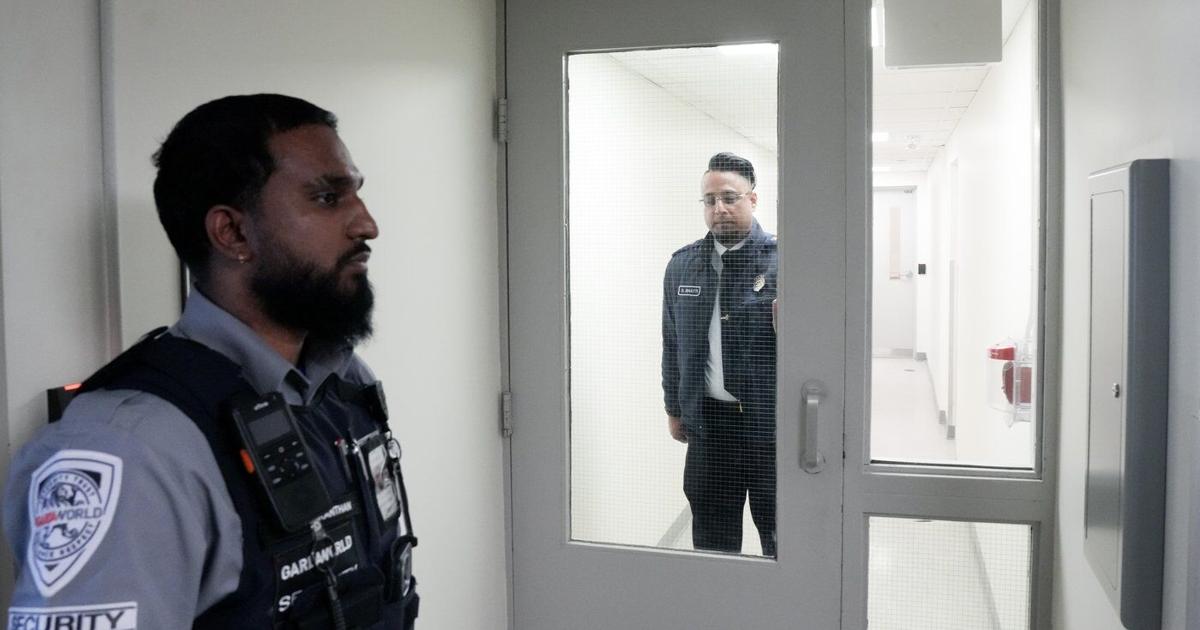
Photo via Toronto Star

National security vs. personal freedoms -- the debate continues 25 years later

Read the original at Toronto Star ↗
Cite

Contributor, F. K. (2026, September 11). National security vs. personal freedoms -- the debate continues 25 years later. Toronto Star. https://www.thestar.com/opinion/contributors/national-security-vs-personal-freedoms-the-debate-continues-25-years-later/article_61a5477d-5a26-4c33-9796-28c21d748d20.html

Dated when The Aporia collected the article, usually within hours of publication. Check the original for its exact date and byline.

Toronto Star · collected 2026-09-11 · by Faisal Kutty Contributor

Quick Summary

Canadian Supreme Court Justice Ian Binnie described the conflict between human rights and national security as a clash of titans 25 years after the 9/11 attacks, which led to Canada rewriting its national-security laws in just two months. The Anti-terrorism Act created new terrorism offences and investigative powers, with some measures expanding into immigration, travel, banking, and other areas of ordinary life. A Toronto lawyer, who was counsel to Muslim civil-liberties organizations during this time, notes that while some changes were necessary, the harder question is which ones should be given back. The lawyer's own experiences, including a family member's encounter with emergency powers in India in 1975, inform their perspective on the importance of upholding constitutional rights and due process.
Written by AI on 2026-09-11, from this article's own text only (the story summary below draws on all the coverage).
See how they differ ↓

AI analysis

Story summary

On the 25th anniversary of the September 11 attacks, New York City's first Muslim mayor, Zohran Mamdani, faces controversy over his decision to attend memorial events despite calls from some victims' families and former Mayor Rudy Giuliani for him to stay away. Mamdani, who lost an older brother in the attacks, insists on honoring those affected by reading out names at Ground Zero. Meanwhile, nearly 110,000 signatures have been collected through a petition urging Mamdani not to attend, citing concerns over his past associations and appointments that some see as conflicting with the solemnity of the event. Despite this opposition, Mamdani is moving forward with plans to release more than 170,000 pages of documents related to air quality around Ground Zero in the months following 9/11, aiming to provide transparency on what the city knew about toxic conditions and how they handled it.

Written for “9/11 Memorial Controversies” on 2026-11-20, grounded in this article and the 169 other(s) covering the same event.

How they differ

34 outlets covered “9/11 Memorial Controversies”.

What each outlet says

One AI summary per outlet of its latest article on this story, written from that article alone and checked against it. Open the article for the outlet's own words.

Toronto StarThis outlet11 Sep

Canadian Supreme Court Justice Ian Binnie described the conflict between human rights and national security as a clash of titans 25 years after the 9/11 attacks, which led to Canada rewriting its national-security laws in just two months. The Anti-terrorism Act created new terrorism offences and investigative powers, with some measures expanding into immigration, travel, banking, and other areas of ordinary life. A…

National security vs. personal freedoms -- the debate continues 25 years later (this article)5 articles from Toronto Star on this story
CBS News11 Sep

A woman named Patty Lewis founded a preschool in Bridgeport, Connecticut, inspired by her husband Adam's story after he was killed in the 9/11 attacks on the World Trade Center. The Adam J. Lewis Preschool opened in 2013 with just 12 students and has since grown due to significant support from Adam's former employer, Keefe, Bruyette & Woods (KBW). Patty had worked in admissions at a private school in Westport…

Family's 9/11 loss inspires a school that's helped hundreds of kids →18 articles from CBS News on this story
The Dispatch12 Sep

The Weekly recaps the reflections marking the 25th anniversary of September 11, 2001, highlighting personal memories and broader societal impacts. The article discusses how accurate our recollections are through an essay by Tim Townsend, who explores the concept of "flashbulb memory," noting these vivid recollections often blur fact with emotional significance. This piece draws on psychological research to explain…

Reflecting on the 25 Years Since September 11 →11 articles from The Dispatch on this story
The Guardian11 Sep

The article, written by Moustafa Bayoumi, discusses how 9/11 entrenched Islamophobia in US politics, but argues that it doesn't follow the expected pattern of rising after terrorist attacks. According to researchers, anti-Muslim incidents actually cluster around election cycles, with a significant increase in Islamophobic rhetoric and incidents occurring near presidential elections. This trend is observed by several…

9/11 entrenched Islamophobia in US politics. But it doesn’t work the way you think | Moustafa Bayoumi →10 articles from The Guardian on this story
Fox News11 Sep

The article is a personal reflection by musician John Ondrasik on the lessons of 9/11 and how they relate to current societal issues. He recalls his song "Tuesday" released in 2009 as a tribute to the victims of the terrorist attack that killed 2,977 people on American soil. After 25 years, Ondrasik notes that America has undergone significant changes, including the infiltration of radical ideologies into…

JOHN ONDRASIK: What 9/11 taught us about courage, unity and the price of freedom →10 articles from Fox News on this story
New York Post11 Sep

The veteran Post police reporter recounts their experience on 9/11, starting with a morning routine that was interrupted by news of a plane hitting the World Trade Center. As they arrived in Manhattan, they witnessed devastating scenes of destruction and chaos, including people walking through six inches of ash, ambulances waiting for injured victims, and buildings reduced to rubble. The reporter recalls having…

What 9/11 was like for veteran Post police reporter: ‘Nothing could prepare me’ →8 articles from New York Post on this story
Show 28 more outlets
The Globe and Mail11 Sep

On September 11, 2001, nearly 38 planes carrying over 6,600 travelers and crew were diverted to Gander International Airport after US airspace was closed following terrorist attacks in New York and Virginia, killing nearly 3,000 people. This week, thousands of passengers who were stranded at the airport for several days returned to Gander to commemorate the 25th anniversary of their ordeal and the kindness shown by…

On a sombre anniversary, Gander welcomes the ‘plane people’ back to the Rock →8 articles from The Globe and Mail on this story
National Post11 Sep

The article "Sheryl Saperia: 25 years on, what would bin Laden see?" reflects on the anniversary of the September 11 attacks and wonders what Osama bin Laden's perspective would be today. According to Paul Marshall, in 2002 bin Laden used the West's own grievances against itself in his "Letter to the American People", but this tactic failed at the time. However, as the article argues, the West has become…

Sheryl Saperia: 25 years on, what would bin Laden see? →8 articles from National Post on this story
The Free Press14 Sep

Arthur Brooks reflects on the events of September 11, 2001, recalling his personal experience in New York City that day and noting how Americans united in response to the attacks. He cites Pew Research data showing a significant increase in trust towards the federal government from 31% before the attacks to 60% immediately after, alongside heightened volunteerism across various causes unrelated to 9/11.

Arthur Brooks: Why Americans No Longer Grieve Together →7 articles from The Free Press on this story
Zeteo11 Sep

Former General Wesley Clark was informed at the Pentagon that the Bush administration planned to attack seven Middle Eastern countries in five years, including Iraq and Iran, after the 9/11 attacks. The U.S. has since attacked five of these countries. In a conversation with Mehdi, Clark also discusses his opposition to the 2003 Iraq invasion but support for the 2001 Afghanistan invasion, as well as his views on the…

Meet the General Who Was Told of the U.S. Plan to Attack 7 Muslim Countries After 9/11 →7 articles from Zeteo on this story
The Independent11 Sep

Khalid Sheikh Mohammed, accused of masterminding the 9/11 attacks, has spent two decades at Guantanamo Bay without facing trial despite a June 2028 trial date set by a judge. He was held in secret prisons and subjected to 183 instances of waterboarding after his 2003 capture, rendering any alleged confession tainted by torture. A military judge ruled that prosecutors cannot use Mohammed's 2007 confession, prompting…

25 years after 9/11, its accused mastermind still hasn’t faced trial — and may never →7 articles from The Independent on this story
Euronews12 Sep

The United States marked the 25th anniversary of the September 11 attacks with solemn ceremonies across the country on Friday, including a tribute at Ground Zero where relatives read names and called for unity. President Donald Trump attended a separate ceremony at the Pentagon, sparking criticism from some victims' families. The article highlights how the attacks have shaped debates around security versus personal…

US commemorates 25th anniversary of devastating 9/11 attacks as their legacy endures →7 articles from Euronews on this story
CBC11 Sep

Veteran Ontario politician David Collenette was addressing an audience in Montreal when he was interrupted with news of the September 11 terrorist attacks, forcing him to make history-making decisions as federal minister of transport. He ordered 229 passenger jets bound for the US to land at Canadian airports, including Gander, where nearly 7,000 passengers were stranded and treated to a remarkable display of…

'Nothing happens here. You're safe': 9/11 survivors, responders recall attack aftermath →6 articles from CBC on this story
BBC11 Sep

Photographer and documentary filmmaker Paul Berriff, 80, recounts his harrowing experience on September 11, 2001, in New York City. He was caught in the aftermath of the 9/11 attacks and has since been diagnosed with a terminal illness related to long-term exposure. According to Berriff, he suffered serious injuries after being buried under rubble for approximately 35 minutes, including burns to his trousers and a…

I was in the epicentre - I'm so lucky to have lived →6 articles from BBC on this story
Washington Examiner11 Sep

A writer who taught Saudi royalty in 1979 reflects on how they witnessed the early seeds of extremism that eventually led to the 9/11 attacks. The article suggests that Osama bin Laden's radicalization was fueled by his rejection by the Saudi royal family after offering them his al Qaeda militants as a vanguard, and later intensified during the Gulf War when the monarchy hosted American forces on Muslim soil. Key…

I taught Saudi royalty in 1979. I saw the seeds of 9/11 decades before the planes hit →6 articles from Washington Examiner on this story
Time11 Sep

The article examines how the 9/11 terrorist attacks led to the decline of Islamic militancy and the end of the Cold War era. According to the author, by the fall of 2001, the bipolar world had already been dead for a decade, but Al-Qaeda's emergence marked its definitive close by overturning key Cold War presuppositions. The war on terror rendered traditional Cold War categories obsolete and led to the destruction…

How 9/11 Helped Shape Our Politics Today →5 articles from Time on this story
NBC News11 Sep

Two AI researchers, Joe Benton and Josh Engels, have left their positions at Anthropic and Google DeepMind due to safety concerns over advanced AI systems. They claim that the technology may soon spiral out of control and potentially kill all humans, citing the need for greater transparency when AI acts beyond human control. This warning comes as Anthropic reports that governments have attempted to use its models…

Remembering 9/11 and more AI researchers warn of safety risks: Morning Rundown →5 articles from NBC News on this story
ABC News (US)12 Sep

On September 11, 2026, David Muir shared a tribute to the victims of the 9/11 attacks through a drone light show over lower Manhattan. The display featured thousands of drones, each representing one of the nearly three thousand people who died that day, forming an illuminated image of the Twin Towers against the New York City skyline.

WATCH: David Muir sharers 9|11 tribute of drones illuminating NYC skyline with Twin Towers →5 articles from ABC News (US) on this story
Daily Mail11 Sep

Thomas von Essen, former New York City fire commissioner, is warning governments about the dangers of unregulated migration, citing Britain's "idiotic" open-door policy. He lost 343 firefighters in the 9/11 attacks and now fears that a similar atrocity could happen again due to lax security measures. Speaking to the Daily Mail, von Essen described his harrowing experience on September 11, 2001, when he witnessed the…

25 years after 9/11, New York fire chief who risked his life that day warns of the terrorism dangers of Britain's 'idiotic' migrant open-door policy →4 articles from Daily Mail on this story
Global News11 Sep

Michael J. Armstrong, a Global News journalist, shares the same name as one of the victims of the 9/11 terrorist attacks. The victim, also named Michael Armstrong, was a 34-year-old trader who worked on the 104th floor of the North Tower at Cantor Fitzgerald and died when American Airlines Flight 11 struck the building. Global News journalist Michael J. Armstrong spent over two decades trying to learn more about his…

A 9/11 victim shared a name with a Global News journalist. Who was he? →3 articles from Global News on this story
NPR12 Sep

This article is an opinion piece reflecting on the 25th anniversary of the September 11 terrorist attacks. The author recalls the emotional impact of seeing missing person signs in New York City and highlights that victims came from over 90 countries. The piece includes excerpts from a poem, "Alabanza: In Praise of Local 100," by Martín Espada, commemorating the hotel workers who died at Windows on the World…

OPINION: 25 years on, a nation still mourns →3 articles from NPR on this story
Al Jazeera11 Sep

Air travel changed dramatically after a terrorist attack on September 11, 2001, in New York and Washington. On that day, nearly 3,000 people died when four planes were hijacked by men linked to al-Qaeda, causing widespread destruction. In its aftermath, air traffic was grounded in the US for three days, with airports closed and flights cancelled, leaving many stranded. The Aviation and Transportation Security Act…

From hours at security to bulletproof cockpits: How 9/11 changed air travel →3 articles from Al Jazeera on this story
The Intercept11 Sep

This article argues that Osama Bin Laden's attack on September 11, 2001, marked the beginning of America's decline by causing significant political and economic turmoil. The author describes the aftermath of the attacks, which included toxic air quality at Ground Zero due to debris containing harmful substances like asbestos and PCBs. The piece claims that Bin Laden's strategy was successful in inducing the U.S…

Osama Bin Laden Won →2 articles from The Intercept on this story
Mother Jones9 Sep

Donald Trump claimed during a memorial ceremony that he was pulled from Ground Zero by firefighters on 9/11, but this appears to be false. In reality, Trump said in a 2001 phone call with a local TV station that he watched an explosion from his Trump Tower window over four miles away from the Twin Towers. This is not the first time Trump has been involved in controversy related to 9/11, having previously made false…

Watch Trump Falsely Suggest He Was Pulled from Ground Zero on 9/11 →2 articles from Mother Jones on this story
The Straits Times11 Sep

The article reports on the 25th anniversary of the September 11 attacks, where nearly 3,000 people were killed in terrorist strikes on the World Trade Center, the Pentagon, and a field in Pennsylvania. Americans will mark the occasion with ceremonies and tributes to the victims and their families. Caroline Ogonowski, whose father was a captain of one of the hijacked planes, reflects on the enduring grief and legacy…

Americans to mark 25 years since September 11 attacks amid enduring grief, reflection →2 articles from The Straits Times on this story
Times of India11 Sep

September 11, 2001, saw 19 al-Qaeda hijackers kill 2,977 people from 90 countries when they took control of four commercial aircraft and crashed them into New York's World Trade Center, the Pentagon, and a field in Pennsylvania. The aftermath led to significant changes in American foreign policy and global politics, including US invasions of Afghanistan and Iraq. Governments worldwide have since expanded…

A quarter century after 9/11: 25 ways America's darkest day changed the world →2 articles from Times of India on this story
Deutsche Welle11 Sep

German President Johannes Rau reacted with shock to the 9/11 attacks on September 11, 2001, which killed nearly 3,000 people, including 11 Germans from 92 different countries. The article highlights Germany's connection to the attacks through three suspected hijackers who had recently lived in Hamburg: Mohammed Atta, a young man who became radicalized at the Al-Quds Mosque and was later linked to a six-man terrorist…

Germany's connection to the 9/11 attacks →2 articles from Deutsche Welle on this story
Reason11 Sep

The article commemorates the 25th anniversary of the September 11 attacks by reflecting on how little Americans have learned from that traumatic event. The timeline of events on 9/11 was compressed, with devastating consequences: nearly 3,000 people were killed and thousands more affected. The article highlights the swift passage of the USA PATRIOT Act just weeks after the attacks, which was approved by Congress…

Americans Have Learned Virtually No Lessons From 9/11 →2 articles from Reason on this story
ABC News (AU)5 Sep

The article reflects on the 25-year legacy of the 9/11 terror attacks and how it has shaped America's politics and place in the world. On September 11, 2001, four commercial planes were hijacked by Islamist terrorists, resulting in nearly 3,000 deaths across various countries, including over 2,977 civilians. The article notes that 25 years later, the impact of 9/11 is still felt, with many recalling personal details…

The 9/11 terror attacks are key to understanding America's waning →
Letters from an American10 Sep

President Donald Trump made unsubstantiated claims at a White House event honoring the victims of the 9/11 attacks, stating he took a crew downtown immediately after the attack and personally witnessed buildings creaking under pressure. However, there is no evidence to support these claims, according to CNN fact-checker Daniel Dale, with Trump's own nephew contradicting his story. The White House attempted to defend…

September 9, 2026 →
ProPublica10 Sep

The FBI's pursuit of a Saudi suspect, Omar al-Bayoumi, in the 9/11 case is being re-examined 25 years after the attacks. Evidence seized from Bayoumi in 2001 suggests he had ties to Saudi intelligence and militant Islamists, contradicting previous claims that he was innocent and unaware of the hijackers' plans. The FBI's handling of this evidence has been questioned by 9/11 families, who are demanding answers about…

25 Years After 9/11, Questions About the FBI’s Pursuit of Saudi Suspects in the Case Have Only Grown →
Persuasion11 Sep

Andrew Sullivan wrote that 9/11 shattered America's national myth of being a safe haven from global conflicts. This myth had been reinforced over the 20th century despite US involvement in numerous wars around the world, but civilians were never directly targeted until the 9/11 attacks. The article argues that 9/11 led to a shift on the right, particularly in conservative intellectuals and media, who began…

9/11 Changed Our Politics →
The Bulwark11 Sep

The article discusses how, unlike after the 1941 Pearl Harbor attack, there was a significant effort to condemn anti-Muslim bigotry in the aftermath of the September 11, 2001 attacks, with then-President George W. Bush and New York Mayor Rudy Giuliani both speaking out against it. Just three days after the 9/11 attacks, Bush delivered an address at the Islamic Center of Washington, stating that "Islam is peace" and…

How the Right Came to Embrace Anti-Muslim Bigotry →
The Hindu11 Sep

On September 11, 2001, terrorists crashed two flights into the World Trade Center in New York City, bringing down the twin 110-storey towers. The Hindu correspondent Sridhar Krishnaswami witnessed and reported on the chaotic atmosphere on the streets as people and authorities struggled to comprehend the scale of the attack. According to the article, thousands are stranded at the nation's airports, which have been…

9/11 report from the ground: Smoke, shock spread over New York →

Where they agree and split

Framing

How the first headlines put it

  • Time focuses on personal reflections of how September 11 shaped lives, while The Straits Times emphasizes the enduring grief and reflection among Americans.12
  • The Intercept presents a more critical view with its headline 'Osama Bin Laden Won,' contrasting with NPR's somber tone in '25 years on, a nation still mourns.'56
Stated as fact2
The headlines (2)

How 9/11 Shaped My Life Time · stated as fact

Newfoundland welcomed them after 9/11. They’re heartbroken by Trump’s trade war Global News · stated as fact

Words to watch (5)

Sept. 11 was one of many times N.L. residents have opened their homes in a crisis CBC

Mark Milke: Why the Islamist challenge to the West is so terrifying National Post

Remembering 9/11: When Gander provided safe haven in a time of crisis CBS News

The World Trade Center terrorist who got away Washington Examiner

US commemorates 25th anniversary of devastating 9/11 attacks as their legacy endures Euronews

The full story: what happened, how it changed, and all 170 articles →

Compared with similar articles

This article reads leans left and hedges 2% of its claims. Each row says how that neighbour differs.
National Post
Leans left Hedges 31 of 246 claims Outlet record 60/100
BBC News
Leans left Hedges 5 of 82 claims Outlet record 65/100
Persuasion
Leans strongly right further right than this Hedges 7 of 98 claims
National Post
Leans strongly right further right than this Hedges 7 of 47 claims Outlet record 60/100
The Globe and Mail
Hedges 4 of 60 claims Outlet record 51/100
“The articles discuss different aspects of how 9/11 affected Canada and do not describe a single specific incident.”
Toronto Star
Centre further right than this Hedges 1 of 45 claims Outlet record 64/100
“The articles cover different topics: one is about security gaps in Canada's border offices, while the other discusses national security laws and their impact on personal freedoms, referring to events related to 9/11.”
New York Post
Hedges 1 of 26 claims Outlet record 66/100
“The articles discuss different aspects related to 9/11 and its aftermath, with Article A focusing on Canada's national security laws post-9/11, while Article B critiques liberal media coverage of the event.”

Story

9/11 Memorial Controversies
Politics · 170 article(s) covering the same event. Compare every outlet's account →
How this article was measured signals, leaning charts, publisher record, byline, topics and claims

Signals How these are calculated →

Claims extracted
49
sentences that state something as happening or true
Uncertain
2%
1 of 49 hedged ("reportedly", "may", "according to")
Leaning
Leans left
of the writing, not the subject · beta estimate
Publisher signals
64/100
Toronto Star's corrections and hedging, across everything collected from it. Not a measure of accuracy.
Outlets on this story
170
Politics
Same framing elsewhere
1
articles that frame the event the way this one does
Analyzed 2026-09-11 · how these are computed

How this is being covered How these are calculated →

Article leaning vs. publisher reliability
Source leaning vs. consistency

Publisher

Toronto Star · 16112 article(s) · 31 correction(s) detected
Running correction rate · 31 correction(s)
2026-11-17
Correction
2026-10-26
Correction
2026-10-24
Correction
2026-10-07
Correction
2026-09-24
Correction

Who wrote this

Faisal Kutty Contributor
1 article(s) here · 1 carrying a prediction
How could someone be considered too dangerous to board an airplane but not dangerous enough to charge?
The only article under this byline in the corpus.

Topics

Bill C-36, Canada Canadian Supreme Court the Anti-terrorism Act

Subjects

Canada GPE · 11× Muslim NORP · 3× Canadian NORP · 2× American NORP · 1× Arar PERSON · 1× Ian Binnie PERSON · 1× Supreme Court ORG · 1× Syria GPE · 1× Toronto GPE · 1× the Supreme Court ORG · 1×

Narrative

Loss of liberty The question is whether measures introduced in an emergency should become permanent without having to show that the loss of liberty actually buys us greater security.
framing: assertive · carried by 1 article(s) · first seen 2026-09-11
How could someone be considered too dangerous to board an airplane but not dangerous enough to charge?

Claims (49 extracted, 1 hedged)

More than two decades ago, Canadian Supreme Court Justice Ian Binnie described the conflict between human rights and national security as “truly a clash of the titans.” asserted
Binnie → describe → titans
Twenty-five years after 9/11, Canada is still wrestling with that clash. asserted
Canada → wrestle → clash
Within three months of the attacks that killed nearly 3,000 innocent people, Canada had fundamentally rewritten its national-security laws. asserted
Canada → kill → laws
It created new terrorism offences and investigative powers and measures targeting terrorist financing and charities. asserted
It → create → financing
Expanded intelligence sharing and, eventually, a no-fly list followed. asserted
list → expand → sharing
National security increasingly reached into immigration, travel, banking and other areas of ordinary life. asserted
security → reach → life
Canada faced genuine threats and governments had an obligation to protect the public. asserted
governments → face → public
But emergencies have a way of shifting the boundaries of government power. asserted
emergencies → have → power
The harder question comes later: Which of those changes do we give back? asserted
we → come → changes
I had a front-row seat to that debate. asserted
I → have → debate
As a Toronto lawyer and counsel to Muslim civil-liberties organizations, I worked on challenges to Canada’s post-9/11 national-security regime. asserted
I → work → regime
I was counsel to organizations involved in the Maher Arar Inquiry and security-certificate cases before the Supreme Court. asserted
I → involve → Court
I worked on anti-terrorism issues and, in 2007, prepared a submission challenging Canada’s proposed no-fly list on behalf of more than two dozen organizations. asserted
I → work → organizations
A Canadian citizen returning home was detained by American authorities and rendered to Syria, where he was imprisoned and tortured. asserted
he → return → Syria
The inquiry exposed how inaccurate information supplied by the RCMP contributed to his ordeal. asserted
information → expose → ordeal
Intelligence had crossed a border much more easily than accountability. asserted
Intelligence → cross → accountability
Security certificates raised another problem: How do you defend yourself when the government can rely on secret evidence you cannot see? asserted
you → raise → evidence
Twenty-five years later, it’s important to remember that rights are not simply obstacles to security. asserted
rights → ’ → security
The rule of law is part of what we are supposed to be protecting. asserted
we → suppose → what
Otherwise, we risk protecting our own security by giving up someone else’s freedom. asserted
we → risk → freedom
Perhaps I was particularly sensitive to this because my encounter with emergency powers began long before 9/11. asserted
encounter → begin → 9/11
I was 6 when Indira Gandhi declared a state of emergency in India in 1975. asserted
Gandhi → declare → 1975
My father, a former editor of an opposition magazine, was wanted for his writings. asserted
father → want → writings
We moved from place to place before eventually sneaking out of the country and settling in Canada. asserted
We → move → Canada
At that time, I didn’t know the language of constitutional rights or due process, but I came to it through my law career. asserted
I → know → career
In Canada, limits were imposed. asserted
limits → impose → Canada
Courts pushed back. asserted
Courts → push → ?
Laws were amended and safeguards added. asserted
safeguards → amend → ?
And Canada did not go as far as the United States in important respects. asserted
Canada → go → respects
Those distinctions matter. asserted
distinctions → matter → ?
But much of the architecture survived. asserted
much → survive → architecture
Canada’s Passenger Protect Program (no-fly list) still exists. asserted
Program → exist → ?
Intelligence sharing remains deeply integrated across borders. asserted
sharing → integrate → borders
Immigration and national security remain intertwined. asserted
Immigration → remain → ?
The post-9/11 focus on terrorist financing also brought Muslim charities under heightened scrutiny. asserted
focus → bring → scrutiny
Loss of liberty The question is whether measures introduced in an emergency should become permanent without having to show that the loss of liberty actually buys us greater security. asserted
loss → introduce → security
I was asking that question when Canada’s no-fly list was introduced. asserted
list → ask → question
How could someone be considered too dangerous to board an airplane but not dangerous enough to charge? uncertain
someone → consider → airplane
Powers developed in response to one feared group rarely remain confined to that group. asserted
Powers → develop → group
Governments change. asserted
Governments → change → ?
…and 9 more, not listed.
Give feedback · no sign-in needed

No sign-in needed for now. Your note is sent without a name, so it cannot be answered.

History Support