Photo via The Straits Times

Florida can enforce state law barring young kids from social media, appeals court rules

Read the original at The Straits Times ↗
Cite

The Straits Times. (2026, October 15). Florida can enforce state law barring young kids from social media, appeals court rules. The Straits Times. https://www.straitstimes.com/world/united-states/florida-can-enforce-state-law-barring-young-kids-from-social-media-appeals-court-rules

Dated from the outlet's own feed. Check the original for its byline.

The Straits Times · collected 2026-10-15 · by The Straits Times

Quick Summary

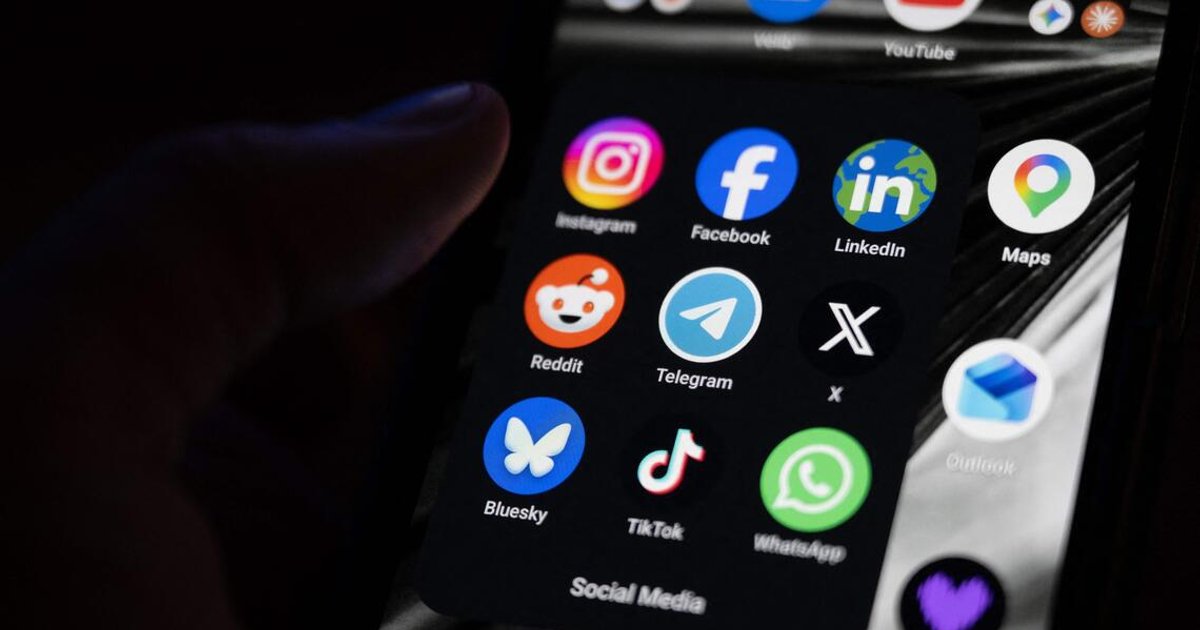
On October 14, a federal appeals court in Atlanta allowed Florida to enforce a state law prohibiting children under 14 from accessing social media platforms like Instagram and TikTok. The ruling overturned a lower court’s preliminary injunction that had blocked the law, which targets social media features deemed addictive. Tech industry groups opposing the law argue it violates free speech protections but lost their appeal unanimously. The decision also permits Florida to proceed with its lawsuit against Snap, claiming the company violated the law by allowing underage account creation.
Written by AI on 2026-10-15, from this article's own text only (the story summary below draws on all the coverage).
See how they differ ↓

AI analysis

Story summary

On October 14, 2026, a three-judge panel from the Eleventh Circuit Court of Appeals in Atlanta ruled unanimously to allow Florida to enforce its state law (H.B. 3) barring children under 14 from accessing social media platforms such as Instagram and TikTok. The appeals court rejected arguments by tech industry groups that the law violates the First Amendment, stating that it is a content-neutral regulation designed to protect minors from potential harmful effects of social media addiction. According to Florida's argument, social media companies use "addictive features" like push notifications and auto-play that can overstimulate the reward center in children’s developing brains, leading to compulsive overuse and mental health issues such as depression and anxiety. The court held that H.B. 3 advances important governmental interests unrelated to suppressing free speech and does not burden substantially more speech than necessary. Industry groups like NetChoice have expressed intent to continue legal challenges, aiming to protect Floridians' rights to free expression online.

Written for “Florida Social Media Law Ruling” on 2026-11-22, grounded in this article and the 2 other(s) covering the same event.

How they differ

3 outlets covered “Florida Social Media Law Ruling”.

What each outlet says

One AI summary per outlet of its latest article on this story, written from that article alone and checked against it. Open the article for the outlet's own words.

The Straits TimesThis outlet15 Oct

On October 14, a federal appeals court in Atlanta allowed Florida to enforce a state law prohibiting children under 14 from accessing social media platforms like Instagram and TikTok. The ruling overturned a lower court’s preliminary injunction that had blocked the law, which targets social media features deemed addictive. Tech industry groups opposing the law argue it violates free speech protections but lost their…

Florida can enforce state law barring young kids from social media, appeals court rules (this article)
Reason14 Oct

The Eleventh Circuit Court ruled that Florida's social media restrictions on minors are likely constitutional under the First Amendment. The court upheld Florida’s argument that social-media companies use "addictive features" like push notifications and auto-play to overstimulate users' reward centers, making these platforms particularly harmful for developing brains. HB3 requires social-media platforms to prohibit…

Florida "Addictive Features" Social Media Restrictions on Minors Likely Constitutional, Eleventh Circuit Holds →
New York Post15 Oct

A Florida court has ruled that the state can enforce its social media law which restricts children under 14 from using social media platforms and requires parental consent for those aged 14 or 15. The 11th U.S. Circuit Court of Appeals upheld this ruling, stating that while the First Amendment is implicated, the law does so in a content-neutral manner aimed at protecting minors from excessive social media use. This…

Florida wins key ruling allowing it to enforce social media law targeting young teens →

Where they agree and split

Framing

How the first headlines put it

Stated as fact3
The headlines (3)

Florida "Addictive Features" Social Media Restrictions on Minors Likely Constitutional, Eleventh Circuit Holds Reason · stated as fact

Florida can enforce state law barring young kids from social media, appeals court rules The Straits Times · stated as fact

Florida wins key ruling allowing it to enforce social media law targeting young teens New York Post · stated as fact

The full story: what happened, how it changed, and all 3 articles →

Compared with similar articles

This article reads leans right and hedges 6% of its claims. Each row says how that neighbour differs.
New York Post
Leans right Hedges 0 of 14 claims Outlet record 66/100
Reason
Hedges 2 of 27 claims Outlet record 67/100
“The articles discuss different state laws (Florida's H.B. 3 vs. Georgia's SB 351), even though both relate to minors and social media access.”

Story

Florida Social Media Law Ruling
Politics · 3 article(s) covering the same event. Compare every outlet's account →
How this article was measured signals, leaning charts, publisher record, byline, topics and claims

Signals How these are calculated →

Claims extracted
18
sentences that state something as happening or true
Uncertain
6%
1 of 18 hedged ("reportedly", "may", "according to")
Leaning
Leans right
of the writing, not the subject · beta estimate
Publisher signals
64/100
The Straits Times's corrections and hedging, across everything collected from it. Not a measure of accuracy.
Outlets on this story
3
Politics
Same framing elsewhere
1
articles that frame the event the way this one does
Analyzed 2026-10-15 · how these are computed

How this is being covered How these are calculated →

Article leaning vs. publisher reliability
Source leaning vs. consistency

Publisher

The Straits Times · 5701 article(s) · 7 correction(s) detected
Running correction rate · 7 correction(s)

Who wrote this

The Straits Times
4015 article(s) here · 0 carrying a prediction
Ben-Gvir replied in an X post that Eisenkot's condemnation amounted to selling out to Arab parties, which could be part of a possible new government.
Ex British PM Theresa May tells successor to ‘move on’ from Brexit AI generated
Its annual summit is seen as an important opportunity to signal that nations are willing to work together to find solutions and help finance the myriad problems caused by rising temperatures.
"If you step aside at the height of a victory you helped secure, you would show voters that the Democratic Party heeded their call for change.
Annual inflation hit 11% in October and prices are expected to rise further this year, economists say, leaving many Ukrainians feeling the pinch and less able to spend on eating out.
While no one obtained everything they might have desired, everyone can find a place for themselves within this text—that is the very essence of consensus.
At least 14 people missing after Russian drone hit building in Kyiv region, Zelenskiy says KYIV, Nov 22 - At least 14 people may still be trapped under the rubble of a residential building that was struck by a Russian drone on Sunday morning in Ukraine's Kyiv region, President Volodymyr Zelenskiy said.
Ferguson said at a news conference that the ICE agents may have broken a state law limiting facial coverings for law enforcement, and that he was looking into how they accessed the jet bridge.
Before departing for his overseas trip, Trump told reporters that he might meet Kim in China.
The latest draft expressed “deep concern” that global warming would cross 1.5 deg C above pre-industrial levels in the next few years.
2026-11-22 · assertive framing · Fossil fuels still missing from latest COP31 draft deal
Also by The Straits Times
Nothing else under this byline is closely related to this article, so these are simply their most recent.
All 4015 articles by The Straits Times →

Topics

ATLANTA Florida H.B. 3 Instagram Snap

Subjects

Snap ORG · 6× Florida GPE · 5× ATLANTA GPE · 2× Instagram ORG · 2× Snapchat ORG · 2× TikTok ORG · 2× Uthmeier PERSON · 2× the 11th Circuit ORG · 2× 11th US Circuit Court of Appeals ORG · 1× Kevin Newsom PERSON · 1×

Narrative

In a statement after the ruling on Oct 14, Paul Taske, director of the NetChoice Litigation Center, said the group is “currently evaluating all of our options as we continue the fight to ensure Floridians’ rights to free expression online are protected, and parents remain in the driver’s seat when it comes to making decisions for their families”.
framing: assertive · carried by 1 article(s) · first seen 2026-10-15

Claims (18 extracted, 1 hedged)

Florida can enforce state law barring young kids from social media, appeals court rules AI generated asserted
court → enforce → media
A federal appeals court on Oct 14 allowed Florida to enforce a state law barring children under 14 from accessing social media platforms like Instagram, TikTok or Snapchat, rejecting tech industry groups’ claims that the law violates the US Constitution’s free speech protections. uncertain
law → allow → protections
In a unanimous ruling, a three-judge panel on the Atlanta-based 11th US Circuit Court of Appeals vacated a lower court’s preliminary injunction blocking the law, known as H.B. 3. asserted
panel → base → H.B.
The court said the law does not regulate the content hosted by social media sites and therefore does not run afoul of the First Amendment. asserted
law → say → Amendment
“HB3 applies to platforms wholly without regard to the topics discussed or the ideas or messages conveyed on them,” wrote Circuit Judge Kevin Newsom, an appointee of President Donald Trump. asserted
Newsom → apply → Trump
“Truth Social is just as likely as Instagram to be affected by HB3.” asserted
Social → affect → HB3
Representatives for Florida Attorney-General James Uthmeier, who defended the law, did not immediately respond to a request for comment. asserted
who → defend → comment
The law bars social media platforms that have so-called addictive features, which include things like video autoplay and infinite scroll, from allowing children under the age of 14 to create accounts. asserted
children → bar → accounts
Tech industry groups NetChoice and the Computer & Communications Industry Association, which count Meta Platforms, TikTok and Snap as members, had sued in 2024 to block the law. asserted
which → count → law
In a statement after the ruling on Oct 14, Paul Taske, director of the NetChoice Litigation Center, said the group is “currently evaluating all of our options as we continue the fight to ensure Floridians’ rights to free expression online are protected, and parents remain in the driver’s seat when it comes to making decisions for their families”. asserted
it → say → families
Snap sued Florida was among the first of several states to pass a law regulating social media use for children amid a broader reckoning over the apps’ role in young people’s mental health. asserted
Florida → sue → health
After H.B. 3 took effect, Uthmeier sued Snapchat owner Snap in April 2025, accusing it of illegally employing features that addict children and opening accounts for children aged 13 and younger. asserted
that → take → children
S nap said H.B. 3 and the lawsuit sought to restrict teens’ speech online in violation of the US Constitution. asserted
H.B. → say → Constitution
A few months later, the judge overseeing the industry groups’ lawsuit granted their request for a preliminary injunction blocking the law’s enforcement, saying H.B. 3 was likely unconstitutional. asserted
H.B. → oversee → enforcement
Uthmeier appealed that ruling to the 11th Circuit, and the court had stayed the injunction while it weighed the case. asserted
it → appeal → case
Separately, a lower court overseeing Florida’s case against Snap had rejected the state’s request in August 2025 to order Snap to comply with H.B. 3, also finding the law likely violated constitutional rights. asserted
law → oversee → rights
But in a second ruling on Oct 14, the 11th Circuit vacated that decision and said the case should move forward in state court, not federal asserted
case → vacate → court
A representative for Snap declined to comment. asserted
representative → decline → Snap
Give feedback · no sign-in needed

No sign-in needed for now. Your note is sent without a name, so it cannot be answered.

History Support