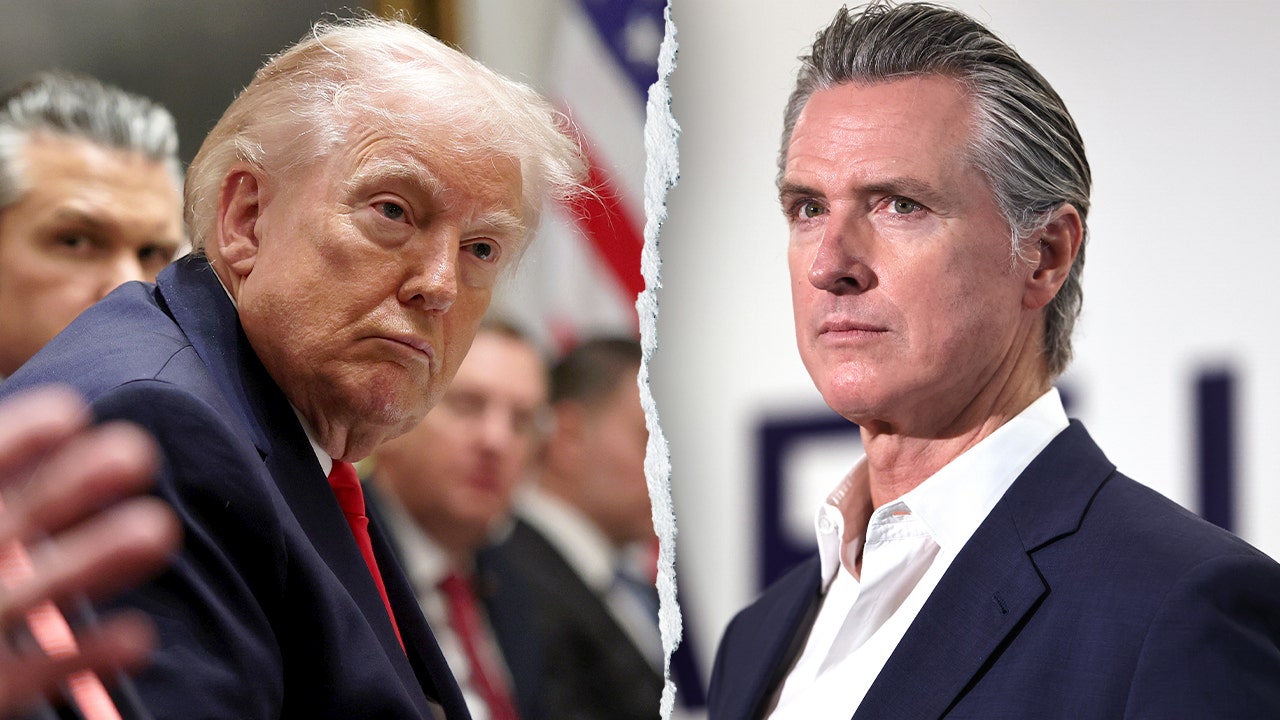
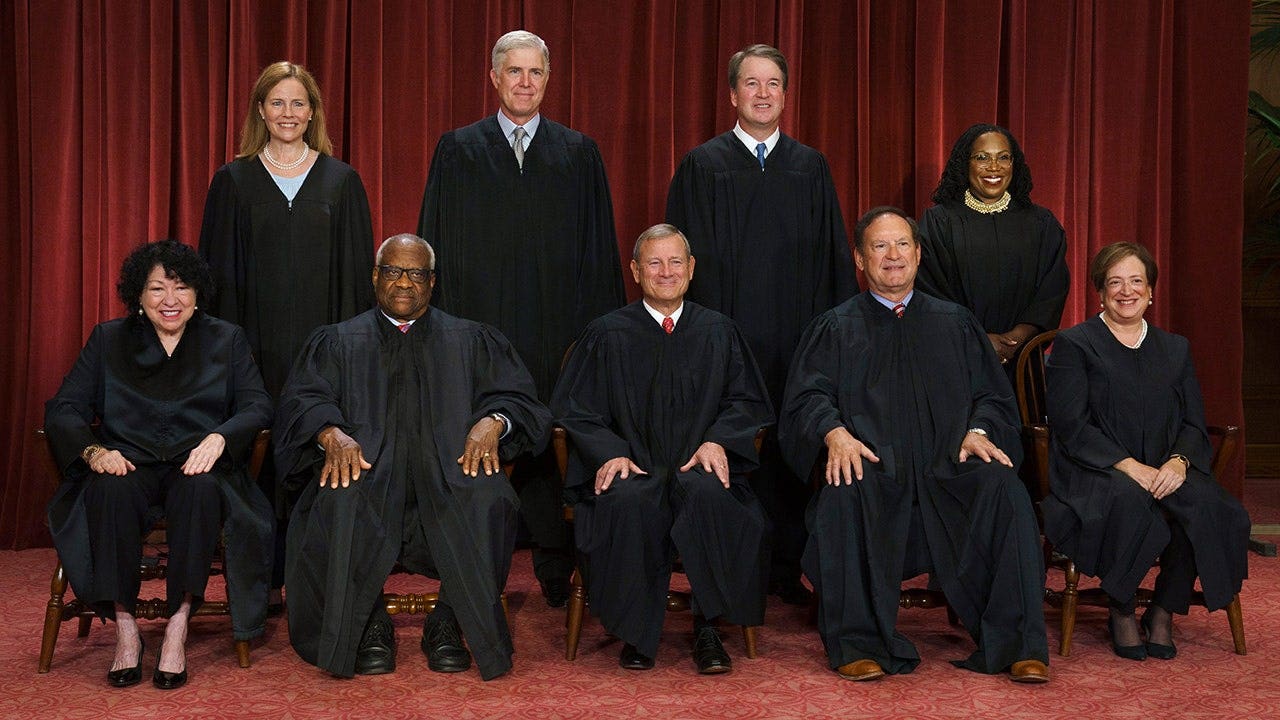
Photo via The Guardian

Immigration, climate, guns: key Trump policies to be tested at supreme court

Read the original at The Guardian ↗
Cite

Baio, A. (2026, October 14). Immigration, climate, guns: key Trump policies to be tested at supreme court. The Guardian. https://www.theguardian.com/us-news/2026/oct/14/trump-supreme-court-explainer

Dated from the outlet's own feed. Check the original for its byline.

The Guardian · collected 2026-10-14 · by Ariana Baio

Quick Summary

The Supreme Court is set to review four cases related to key Trump policies: energy companies' liability for climate change damages in Suncor Energy Inc v County Commissioners of Boulder County; the indefinite detention of immigrants awaiting deportation in Rhoney v Barbosa da Cunha; expedited deportations to third countries without legal contest in Department of Homeland Security v DVD; and a state-funded preschool program's impact on religious freedom in St Mary Catholic Parish v Roy. The cases address environmental accountability, immigration enforcement practices, and constitutional protections for religious organizations under state laws.
Written by AI on 2026-10-14, from this article's own text only (the story summary below draws on all the coverage).

AI analysis

Story summary

The Supreme Court is set to review key policies from former President Trump's tenure, including cases involving climate change accountability and immigration detention practices. In 2018, officials in Boulder County, Colorado, sued ExxonMobil and Suncor Energy, claiming damages caused by fossil fuel burning. The companies argued the case should be heard in federal court rather than state court. With Justice Samuel Alito recused due to a conflict of interest, the outcome could result in a 4-4 tie, leaving lower court rulings intact.

Additionally, the Court will consider Rhoney v Barbosa da Cunha, challenging Trump's policy that indefinitely detains immigrants awaiting deportation, regardless of their threat level or likelihood to flee. This marks a shift from previous practices where undocumented immigrants could be released on bond if they were not considered dangerous flight risks.

Written for “Trump Policies At Supreme Court” on 2026-11-20, grounded in this article and the 0 other(s) covering the same event.

Compared with similar articles

This article reads leans right and hedges 14% of its claims. Each row says how that neighbour differs.
Fox News
Leans strongly right further right than this Hedges 0 of 15 claims Outlet record 66/100
“The articles discuss different legal cases involving the Trump administration and distinct constitutional issues.”
Fox News
Hedges 8 of 31 claims Outlet record 66/100
“Article A discusses potential outcomes and warnings from experts about a Supreme Court climate case, while Article B mentions the specifics of the Suncor Energy Inc v County Commissioners of Boulder County case to be tested at the Supreme Court.”

Story

Trump Policies At Supreme Court
Politics · 1 article(s) covering the same event.
How this article was measured signals, leaning charts, publisher record, byline, topics and claims

Signals How these are calculated →

Claims extracted
29
sentences that state something as happening or true
Uncertain
14%
4 of 29 hedged ("reportedly", "may", "according to")
Leaning
Leans right
of the writing, not the subject · beta estimate
Publisher signals
64/100
The Guardian's corrections and hedging, across everything collected from it. Not a measure of accuracy.
Outlets on this story
1
Politics
Same framing elsewhere
1
articles that frame the event the way this one does
Analyzed 2026-10-14 · how these are computed

How this is being covered How these are calculated →

Article leaning vs. publisher reliability
Source leaning vs. consistency

Publisher

The Guardian · 2625 article(s) · 9 correction(s) detected
Running correction rate · 9 correction(s)

Who wrote this

Ariana Baio
50 article(s) here · 1 carrying a prediction
Occasionally, while listening to other people speak, the US president will close his eyes for several seconds, appearing as though he is falling asleep.
John Cornyn of Texas, who is leaving the US Senate after nearly 24 years following his primary loss to a Trump-backed challenger, told the Associated Press he would not support T Elliot Gaiser, a 37-year-old official in the justice department, to serve on a district court in northern Texas.
“I wish people would lay off the secretary,” Bedford added.
The Trump administration has warned Elizabeth Warren, the senior Democratic senator expected to chair the powerful Senate banking committee, she could face potential “significant legal consequences” if she fails to preserve records related to investigations into Donald Trump.
Julia Brownley of California wrote on Facebook that Johnson “closed the vote” before she could make it to the House floor. “As I and many of my colleagues were rushing to the floor to support Hegseth’s impeachment, Mike Johnson closed the vote before we could,” Brownley wrote.
Bernie Sanders, a progressive senator from Vermont, said on Tuesday he would not support Chuck Schumer’s bid to serve as the Democratic leader in the US Senate, joining a growing cohort of Democrats calling for a change in leadership.
President Trump will never waver in fighting for and protecting the American people.”
Means told CBS News that Wiles and her “very close-knit crew”, including James Blair and Richard Walters, two White House deputy chiefs of staff; Walker Barrett, a policy adviser; and Tony Fabrizio, a pollster for Trump, “explicitly catered to special interests against the will of the voters”.
On Friday, Trump announced on Truth Social that Miller – his most controversial aide – would replace Susie Wiles, his former chief of staff.
Donald Trump will be blocked from putting a “rightwinger” on the US supreme court, according to Chuck Schumer, the soon-to-be Senate majority leader, in remarks that were a preview of how Democrats intend to wield their power come January.
Also by Ariana Baio
Nothing else under this byline is closely related to this article, so these are simply their most recent.
All 50 articles by Ariana Baio →

Topics

Boulder County Catholic ExxonMobil Suncor Energy Suncor Energy Inc

Subjects

Catholic NORP · 3× Colorado GPE · 2× Cook County GPE · 2× ExxonMobil ORG · 2× Suncor Energy ORG · 2× Trump PERSON · 2× Boulder GPE · 1× Boulder County GPE · 1× Samuel Alito PERSON · 1× Suncor Energy Inc ORG · 1×

Narrative

Two Catholic parishes say their preschools were precluded from participating in a state-funded universal pre-school program because it required them to sign a nondiscrimination agreement that prevented them from denying admission to families who do not align with Catholic values – such as same-sex couples.
framing: assertive · carried by 1 article(s) · first seen 2026-10-14
The case could potentially end in a 4-4 split because Justice Samuel Alito recused himself, citing a conflict of interest.

Claims (29 extracted, 4 hedged)

1. Suncor Energy Inc v County Commissioners of Boulder County The case centers on a question raised in dozens of similar lawsuits: how can states, cities or counties hold energy companies accountable for contributing to climate change through fossil fuel burning. asserted
companies → center → burning
In 2018, officials in Boulder, Colorado, sued ExxonMobil and Suncor Energy, alleging damages to the state’s environment from burning fossil fuels. asserted
officials → sue → fuels
ExxonMobil and Suncor Energy argued the lawsuit was incorrectly brought in state court instead of federal court. asserted
lawsuit → argue → court
Justices are being asked to decide if the lawsuit can move forward. asserted
lawsuit → ask → ?
The case could potentially end in a 4-4 split because Justice Samuel Alito recused himself, citing a conflict of interest. uncertain
Alito → end → interest
2. Rhoney v Barbosa da Cunha The case is a challenge to the Trump administration’s practice of indefinitely detaining immigrants who are arrested in the US and awaiting deportation. asserted
who → detain → deportation
Previously, undocumented immigrants who had been living in the US could be released back into their communities on bond, as long as they did not pose a threat to safety nor were considered a flight risk. uncertain
they → live → safety
But last year, the administration reinterpreted the statute to mean any migrant who entered the US illegally should be held in detention while awaiting legal proceedings. asserted
who → reinterpret → proceedings
The reinterpretation has led to a huge surge in the number of migrants held in detention centers and disputes in lower courts. asserted
reinterpretation → lead → courts
Department of Homeland Security v DVD The case focuses on the Trump administration’s swift deportations of immigrants to “third countries”, or countries other than their own, without allowing them to contest their removals. asserted
them → focus → removals
The administration has entered into a series of agreements with other countries that have agreed to safely accept immigrants who cannot be deported to their home countries. asserted
who → enter → countries
But several immigrants say they were not given sufficient “notice and opportunity” to raise concerns about fear of torture or persecution in the countries where they are being sent. asserted
they → say → countries
The supreme court will examine whether a lower court judge had the authority to pause the quick deportations and if the policy itself violates law, the constitution or international law. asserted
policy → examine → law
Already, the high court handed Trump a victory in the dispute by allowing officials to temporarily deport immigrants to third countries while legal proceedings continue. asserted
proceedings → hand → countries
The case is the latest example of the clash between states’ anti-discrimination laws and religious organizations’ right to exercise their values. asserted
case → exercise → values
Two Catholic parishes say their preschools were precluded from participating in a state-funded universal pre-school program because it required them to sign a nondiscrimination agreement that prevented them from denying admission to families who do not align with Catholic values – such as same-sex couples. asserted
who → say → couples
The Catholic parishes requested an exemption, which was denied. asserted
which → request → exemption
They say it violated their first amendment right because it excluded them from receiving state benefits that were “generally available”, and other pre-schools received exemptions, such as only admitting low-income families or children with disabilities. asserted
schools → say → disabilities
The conservative majority of the court has been largely sympathetic to plaintiffs in similar disputes, such as allowing a Colorado baker to refuse to create wedding cakes for same-sex couples. asserted
baker → allow → couples
5. Viramontes v Cook County & Grant v Higgins The consolidated cases serve as a vehicle for justices to expand access to semi-automatic firearms, such as AR-15-style rifles, by striking down state or local bans on the types of weapons. asserted
justices → consolidate → weapons
Residents of Cook county, Illinois, challenged a county ordinance banning the sale, transfer or possession of any “assault weapon” – which AR-15-style rifles fall under. asserted
rifles → challenge → which
Separately, a group of Connecticut residents challenged a similar state law that was enacted after the Sandy Hook elementary school shooting. asserted
that → challenge → shooting
Lawyers in the cases argue that banning AR-15s is unconstitutional because they are common-use firearms. asserted
they → argue → AR-15s
In recent years, the supreme court has expanded second amendment protections. asserted
court → expand → protections
In 2022, the court created a new test, requiring courts and legislators to determine whether a gun law conflicted with the United States’ “history and tradition” of firearm ownership. asserted
law → create → ownership
Republican National Committee v Mi Familia Vota The case centers on two Arizona laws, one requiring voter applicants to provide proof of citizenship, another allowing election officials to remove people believed to be noncitizens from voter rolls 90 days before an election. asserted
officials → center → election
Voting advocacy groups argue the laws, enacted in 2022, violate the National Voter Registration Act. asserted
laws → argue → Act
Donald Trump has long called for federal ID requirements and voter roll regulations to address his debunked claims of mass noncitizen fraud in elections. uncertain
Trump → call → elections
While a ruling in the case would not impact federal law, it could open the door for states to enact their own voter ID rules. uncertain
states → impact → rules

Give feedback · no sign-in needed

No sign-in needed for now. Your note is sent without a name, so it cannot be answered.

History Support