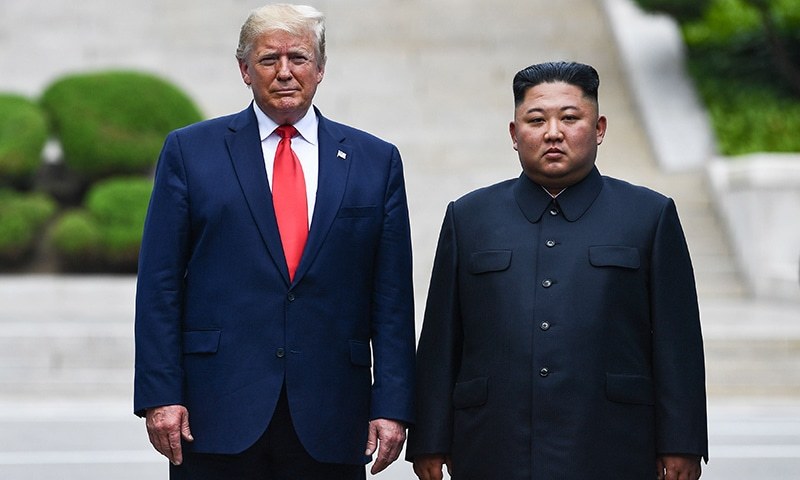
Photo via Dawn

'No choice': IMF says developing countries must cut spending despite Iran war shock

Read the original at Dawn ↗
Cite

AFP. (2026, October 13). 'No choice': IMF says developing countries must cut spending despite Iran war shock. Dawn. https://www.dawn.com/news/2036858/no-choice-imf-says-developing-countries-must-cut-spending-despite-iran-war-shock

Dated when The Aporia collected the article, usually within hours of publication. Check the original for its exact date and byline.

Dawn · collected 2026-10-13 · by AFP

Quick Summary

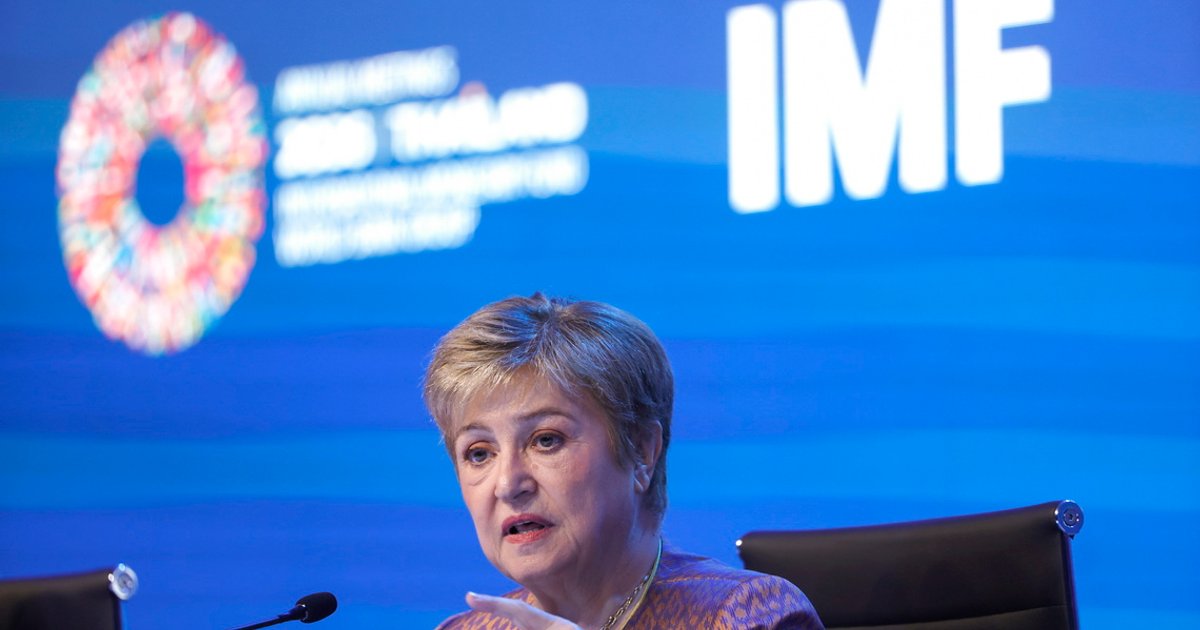
The International Monetary Fund (IMF) warned that developing countries, especially those heavily reliant on oil imports, face severe economic challenges due to the Iran war-induced energy crisis. IMF deputy director Petya Koeva Brooks stated during the organization’s Annual Meetings in Bangkok that these nations have no choice but to cut spending or risk debt restructuring amid rising inflation and depleted fiscal buffers. The IMF advises targeted subsidies while urging countries to rebuild financial reserves, highlighting the stark trade-offs for vulnerable nations already burdened by high debt levels.
Written by AI on 2026-10-13, from this article's own text only (the story summary below draws on all the coverage).
See how they differ ↓

AI analysis

Story summary

The recent International Monetary Fund (IMF) meeting in Bangkok highlighted several critical issues affecting global economies, with a particular focus on risks associated with artificial intelligence and debt. The overarching theme was economic caution amidst growing uncertainties.

### Key Takeaways

### Summary

The IMF’s warnings about AI and debt underscore the precarious state of global economic stability. While there is optimism regarding the UK's fiscal health, it highlights the broader challenges faced by other major economies dealing with high debt levels and inflationary pressures. The Bangkok meeting emphasized the need for countries to manage risks associated with new technologies while addressing long-term financial vulnerabilities.

### Next Steps

These insights are crucial for understanding the global economic landscape and planning future financial strategies.

Written for “IMF World Economic Forecasts And Risks” on 2026-11-20, grounded in this article and the 9 other(s) covering the same event.

How they differ

8 outlets covered “IMF World Economic Forecasts And Risks”.

What each outlet says

One AI summary per outlet of its latest article on this story, written from that article alone and checked against it. Open the article for the outlet's own words.

DawnThis outlet13 Oct

The International Monetary Fund (IMF) warned that developing countries, especially those heavily reliant on oil imports, face severe economic challenges due to the Iran war-induced energy crisis. IMF deputy director Petya Koeva Brooks stated during the organization’s Annual Meetings in Bangkok that these nations have no choice but to cut spending or risk debt restructuring amid rising inflation and depleted fiscal…

'No choice': IMF says developing countries must cut spending despite Iran war shock (this article)
The Hindu13 Oct

On October 13, 2026, the International Monetary Fund issued a warning about significant risks to the global financial system, including potential AI market corrections and severe cyber threats during its annual meeting in Bangkok. The IMF’s Global Financial Stability Report highlighted that lower-than-expected returns on AI investments could trigger market instability, while also emphasizing the increasing risk of…

IMF warns of AI market correction, cyber threats to financial system →3 articles from The Hindu on this story
Al Jazeera11 Oct

Finance officials from around the world are gathering in Bangkok this week for the annual meetings of the International Monetary Fund (IMF) and World Bank, focusing on the economic impacts of the ongoing US-Israel war on Iran, energy supply shocks, and rising interest rates. With 18,000 attendees registered, the event sees notable absences such as US Treasury Secretary Scott Bessent, who sent two senior officials…

War and high debt to dominate IMF-World Bank meetings in Bangkok →
The Guardian13 Oct

The International Monetary Fund (IMF) has warned that a potential crash in artificial intelligence (AI) share prices could destabilize global financial markets. In its latest Global Financial Stability Report, the IMF highlighted the high valuations and increasing debt levels of AI companies as significant risks. The report states that an AI correction would likely affect Asian markets most severely, with US…

Threat of AI share crash puts world financial stability at risk, says IMF →
Toronto Star13 Oct

The International Monetary Fund (IMF) has slightly increased its global growth forecast for this year to 3.1%, up from a previous estimate of 3.0% in July. The report notes that while AI is boosting economic activity, particularly in the U.S. and China, oil prices are expected to rise by nearly 41% this year, leading to higher inflation at 4.7%. IMF Managing Director Kristalina Georgieva highlighted during a meeting…

IMF raises its forecast for world growth this year but says economies will slow in 2027 →
CBC13 Oct

The International Monetary Fund (IMF) has slightly increased its global economic growth forecast for this year to 3.1%, up from its previous prediction of 3% in July, but warns about rising risks due to growing debt and the rapid expansion of artificial intelligence (AI). Released during the fall meetings of the IMF and World Bank in Bangkok, the report also projects that inflation will be at 4.7% this year before…

IMF warns of risks from AI boom and debt, but raises forecast for world growth →
Show 2 more outlets
Daily Mail13 Oct

Financial officials at the IMF summit in Bangkok are expressing significant concern over the rapid development of artificial intelligence, particularly its potential to destabilize the financial system. The British economy, heavily reliant on financial services that generate up to 12% of national wealth, is seen as especially vulnerable to AI-related disruptions. London’s status as a major global financial hub means…

Senior banking official told me he's stashing cash in case artificial intelligence crashes the financial system: ALEX BRUMMER →
BBC14 Oct

IMF officials have unexpectedly praised the UK's efforts to reduce its annual borrowing levels during their meeting in Thailand, distinguishing it from other G7 nations like the US, Germany, and Japan, which are increasing their borrowing. The IMF’s twice-yearly assessment shows that among the G7 countries, only the UK has a significant plan for reducing deficits by nearly 4% of its economy over the next few years…

Faisal Islam: What surprise praise for UK economy tells us about the Budget →

Where they agree and split

The full story: what happened, how it changed, and all 10 articles →

Compared with similar articles

This article reads unscored and hedges 6% of its claims. Each row says how that neighbour differs.
The Hindu
Hedges 1 of 19 claims Outlet record 78/100
The Hindu
Leans right Hedges 3 of 23 claims Outlet record 78/100
South China Morning Post
Hedges 1 of 2 claims Outlet record 62/100
“The articles discuss different aspects of financial concerns addressed by the IMF at their Annual Meetings in Bangkok but do not describe the same specific incident or occurrence.”
The Straits Times
Hedges 1 of 25 claims Outlet record 64/100
“The articles describe different aspects of economic warnings and conflicts related to Iran and Saudi Arabia but report distinct events.”
Al Jazeera
Hedges 4 of 12 claims Outlet record 60/100
“The articles discuss related economic forecasts by the IMF due to the Iran war but describe different aspects and recommendations, not a single specific incident.”
BBC News
Leans right Hedges 1 of 23 claims Outlet record 65/100
“While both articles mention the IMF and its meetings in Thailand, they describe different aspects of the same conference — one focusing on developing countries' spending cuts due to the Iran war shock and the other on praise for the UK's fiscal health.”
Al Jazeera
Hedges 1 of 19 claims Outlet record 60/100
“The articles discuss related topics but refer to different time periods within the IMF's annual meetings, with Article A focusing on a warning by an IMF deputy director and Article B summarizing the closing remarks of the Managing Director.”
South China Morning Post
Leans left Hedges 0 of 1 claims Outlet record 62/100
“The articles describe related events but not the same specific occurrence: Article A reports on an IMF warning at the Annual Meetings in Bangkok, while Article B covers a protest against the IMF's austerity call that occurred later.”
Al Jazeera
Leans left Hedges 3 of 21 claims Outlet record 60/100
“The articles cover related topics during the same meetings but describe different aspects and do not focus on the exact same specific incident.”
TIME
Leans left Hedges 2 of 26 claims Outlet record 60/100
“The articles discuss similar topics but do not describe the same specific event or incident occurring at exactly the same time and place.”

Story

IMF World Economic Forecasts And Risks
Economy/Business · 10 article(s) covering the same event. Compare every outlet's account →
How this article was measured signals, leaning charts, publisher record, byline, topics and claims

Signals How these are calculated →

Claims extracted
18
sentences that state something as happening or true
Uncertain
6%
1 of 18 hedged ("reportedly", "may", "according to")
Leaning
withheld
no quote in the article backed the model's score
Publisher signals
67/100
Dawn's corrections and hedging, across everything collected from it. Not a measure of accuracy.
Outlets on this story
10
Economy/Business
Same framing elsewhere
1
articles that frame the event the way this one does
Analyzed 2026-10-13 · how these are computed

How this is being covered How these are calculated →

Article leaning vs. publisher reliability
Source leaning vs. consistency

Publisher

Dawn · 3480 article(s) · 5 correction(s) detected
Running correction rate · 5 correction(s)

Who wrote this

AFP
1292 article(s) here · 1 carrying a prediction
They were referring to recursive self-improvement (RSI) — a term the industry uses to describe building advanced AI models that can autonomously create newer versions of themselves, which critics worry will hasten doomsday scenarios.
And Ukraine fears this winter could be the worst yet.
World champions Spain will face France while England will play Norway in the quarterfinals of the UEFA Nations League after the draw took place on Friday.
In March, South Korea’s then-prime minister Kim Min-seok said that Trump thought a meeting with Kim would be “good”.
Rohingya refugees will undergo a Technical and Vocational Education and Training (TVET) programme in Turkiye which would last three to six months.
2026-11-20 · assertive framing · Malaysia plans to resettle 10,000 Rohingya in Turkiye
Russian attacks damaged two of Kyiv's bridges, the mayor of the Ukrainian capital said on Friday (November 20, 2026), as Moscow launched a fresh wave of missiles and drones. "
2026-11-20 · assertive framing · Russian strikes damage two bridges in Kyiv: Mayor
His role will be filled in an acting capacity by current Defense Department Chief Information Officer Kirsten Davies, who has more appropriate credentials and has been Senate-confirmed, the source said.
The crisis, just like previous energy shocks, would certainly leave "lasting marks", the agency warned.
And the three-way meeting was set to last "no more than an hour", Kremlin spokesman Dmitry Peskov told Russian state media Wednesday (November 18, 2026).
Anthropic will begin trading on Thursday on the Nasdaq exchange after pricing its initial public offering at $83 a share, above its expected range and toppling SpaceX’s IPO to set a new record.
Wire or desk byline, not an individual reporter.
Also by AFP
Nothing else under this byline is closely related to this article, so these are simply their most recent.
All 1292 articles by AFP →

Topics

AFP Annual Meetings IMF Iran The International Monetary Fund

Subjects

IMF ORG · 6× Koeva Brooks PERSON · 4× AFP ORG · 3× Iran GPE · 2× Bangkok GPE · 1× Petya Koeva Brooks PERSON · 1× Taiwan GPE · 1× Tehran GPE · 1× The International Monetary Fund ORG · 1× Washington GPE · 1×

Narrative

The IMF has called on countries to offer narrow, targeted subsidies in the wake of the crisis, while also recommending all governments work to rebuild fiscal buffers and address rising debt after years of fighting economic shocks since the pandemic. “Our messages indeed apply to most countries, but again, the trade-offs and the choices that have to be made are much more difficult for the most vulnerable countries,” Koeva Brooks said.
framing: assertive · carried by 1 article(s) · first seen 2026-10-13
In its World Economic Outlook, the IMF raised its forecast for 2026 global growth, largely on the back of advanced economies enjoying a boost from AI-related investments and economic activity.

Claims (18 extracted, 1 hedged)

The International Monetary Fund (IMF) warned on Tuesday that while low-income developing countries were dealing with the disproportionate impacts of the Iran war-fuelled energy shock, many had “no choice” but to cut spending or potentially face debt restructuring. asserted
many → warn → restructuring
Speaking to AFP on the sidelines of the organisation’s Annual Meetings in Bangkok, IMF deputy director of research, Petya Koeva Brooks, said that the heavily indebted oil-importing countries were facing the worst of the energy shock, and had difficult choices in helping their citizens through the crisis. asserted
countries → speak → crisis
“Unfortunately, after years of the global economy being hit [by] shock after shock, debt levels have increased quite a lot, and at the same time, inflation has become a problem,” she said. asserted
she → hit → time
The US war on Iran has plunged the Middle East into conflict and sent global energy prices soaring, as Tehran’s retaliatory action targeted Washington’s Gulf allies and curtailed oil and gas supplies. asserted
action → plunge → supplies
Those prices have begun to bleed into other goods, with the crisis also having an effect on crucial fertiliser supplies. asserted
crisis → begin → supplies
The IMF has called on countries to offer narrow, targeted subsidies in the wake of the crisis, while also recommending all governments work to rebuild fiscal buffers and address rising debt after years of fighting economic shocks since the pandemic. “Our messages indeed apply to most countries, but again, the trade-offs and the choices that have to be made are much more difficult for the most vulnerable countries,” Koeva Brooks said. asserted
Brooks → call → countries
The IMF’s World Economic Outlook, released on Tuesday, identified low-income developing countries that are net oil importers and are not exposed to the ongoing artificial intelligence technology investment boom as being the most vulnerable to the shocks from the Iran war. asserted
that → release → war
“For those countries that are most vulnerable, this is where the consumption basket is heavily weighted towards energy and food, and so indeed it is much much more difficult,” she said. “ asserted
she → weight → energy
The senior IMF official added that “many” low-income countries were in debt distress, or close to it, and that they should seek debt restructuring if they were not able to address the issue. asserted
they → add → issue
“Where debt is not sustainable, then resolving that debt and having orderly and timely restructuring is always better than waiting, because then the cost of restructuring down the road is going to be much higher,” she said. asserted
she → resolve → road
In its World Economic Outlook, the IMF raised its forecast for 2026 global growth, largely on the back of advanced economies enjoying a boost from AI-related investments and economic activity. asserted
IMF → raise → investments
Growth outcomes were highly uneven across economies, depending on their exposure to the war and whether they were integrated into AI supply chains. asserted
they → depend → chains
The world’s advanced economies were forecast to grow 2.1 per cent in 2026, with those in the AI supply chain such as Taiwan and South Korea posting significantly higher figures. asserted
those → forecast → figures
Koeva Brooks told AFP that if AI investment activity were to slow, the world economy “would see a negative impact on output, not only in advanced countries like the US but again through trade linkages also in Asia”. asserted
economy → tell → Asia
In the IMF’s worst-case scenario — of AI not delivering promised productivity gains — global GDP forecasts for 2028 would fall by as much as 0.4pc. asserted
forecasts → deliver → 0.4pc
Climate-related risks were another key part of the World Economic Outlook this year, and Koeva Brooks told AFP that some of the effects of a particularly intense El Niño phenomenon had already been taken into account in higher prices for certain food items. asserted
some → relate → items
The warming phase of a natural climate cycle, El Niño raises sea temperatures in the tropical Pacific, triggering changes in weather that can increase the risk of drought and flooding, and exacerbate man-made global warming. “We have a significant increase in beverage prices, in the prices of rice, and so on,” said Koeva Brooks. asserted
Brooks → warm → rice
“Of course, it could turn out that the domino effect is even bigger than what we currently have.” uncertain
we → turn → what
Give feedback · no sign-in needed

No sign-in needed for now. Your note is sent without a name, so it cannot be answered.

History Support