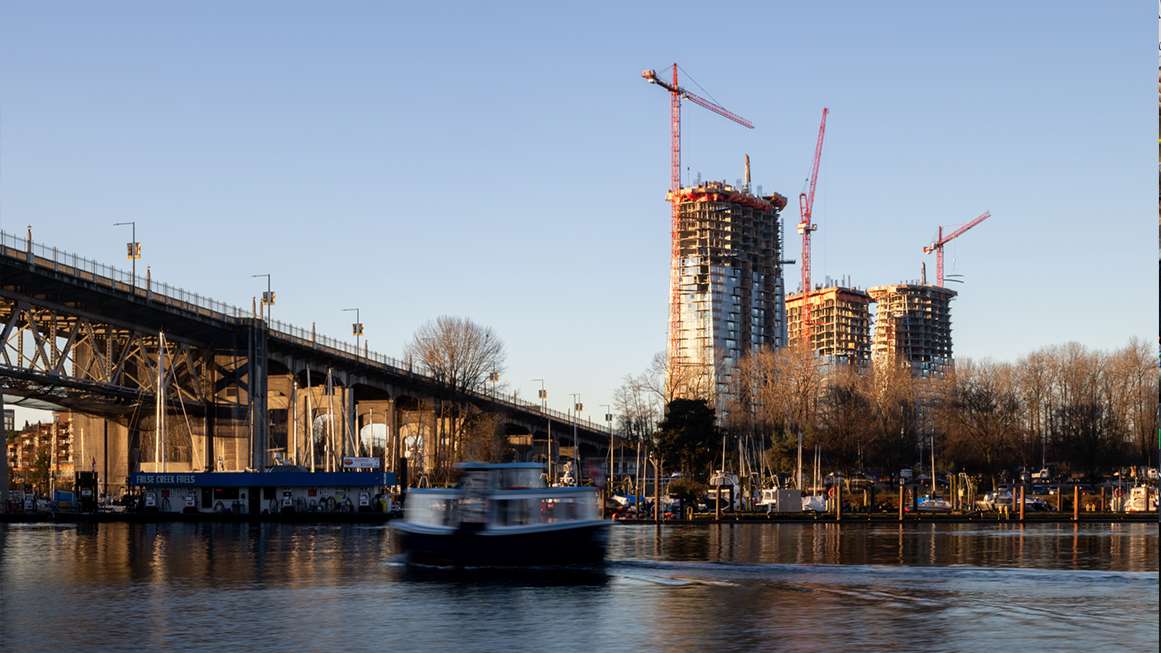
Photo via Reason

Canada's First Nations Are Using Their Land To Build Dense Housing

Read the original at Reason ↗
Cite

Britschgi, C. (2026, October 11). Canada's First Nations Are Using Their Land To Build Dense Housing. Reason. https://reason.com/2026/10/11/vancouvers-first-nation-yimbyism/

Dated when The Aporia collected the article, usually within hours of publication. Check the original for its exact date and byline.

Reason · collected 2026-10-11 · by Christian Britschgi

Quick Summary

In Vancouver, Canada, the Squamish Nation is developing a 6,000-unit residential high-rise called Senakw on a 10-acre former rail yard freed from zoning restrictions by a court ruling in 2002. The project faces local opposition but proceeds due to the nation's control over its land. Other First Nations are also building similar developments across Vancouver, indicating a trend of Indigenous-led housing initiatives beyond municipal regulations.
Written by AI on 2026-10-11, from this article's own text only (the story summary below draws on all the coverage).

AI analysis

Story summary

In Vancouver, Canada, First Nations are developing large-scale housing projects on their lands to address the city's severe housing shortage. In 2002, a Canadian court ruled that land seized from the Squamish Nation over a century ago must be returned, freeing this reclaimed land from restrictive zoning laws. The Squamish Nation then held a referendum in 2019 and approved plans for a significant residential project called Senakw, which will include 6,000 units. Additionally, the MST Development Corporation, jointly owned by three First Nations—the Musqueam Indian Band, the Squamish Nation, and the Tsleil-Waututh Nation—is developing six separate projects across 160 acres of land. These developments are seen as potential models for deregulatory housing solutions, contrasting with the tight zoning restrictions in Vancouver itself.

Written for “First Nations Land for Housing Projects” on 2026-11-20, grounded in this article and the 0 other(s) covering the same event.

Compared with similar articles

This article reads leans strongly right and hedges 8% of its claims. Each row says how that neighbour differs.
The Globe and Mail
Hedges 18 of 182 claims Outlet record 51/100
“The articles discuss different aspects of housing and population changes in Vancouver but do not describe the same specific incident or time.”
CBC News
Hedges 2 of 46 claims Outlet record 72/100
“The articles discuss different subjects related to housing and zoning but are not describing the same specific incident.”
Toronto Star
Leans right further left than this Hedges 7 of 72 claims Outlet record 64/100
“The articles discuss different approaches and locations for addressing housing issues, with Article A focusing on Olivia Chow and Brad Bradford's campaigns in Toronto and Article B discussing First Nations' land development in Vancouver.”
Toronto Star
Leans strongly left further left than this Hedges 1 of 23 claims Outlet record 64/100
“The articles discuss different aspects of housing issues in Canada but describe distinct events and initiatives.”

Story

First Nations Land for Housing Projects
Politics · 1 article(s) covering the same event.
How this article was measured signals, leaning charts, publisher record, byline, topics and claims

Signals How these are calculated →

Claims extracted
24
sentences that state something as happening or true
Uncertain
8%
2 of 24 hedged ("reportedly", "may", "according to")
Leaning
Leans strongly right
of the writing, not the subject · beta estimate
Publisher signals
67/100
Reason's corrections and hedging, across everything collected from it. Not a measure of accuracy.
Outlets on this story
1
Politics
Same framing elsewhere
1
articles that frame the event the way this one does
Analyzed 2026-10-11 · how these are computed

How this is being covered How these are calculated →

Article leaning vs. publisher reliability
Source leaning vs. consistency

Publisher

Reason · 1449 article(s) · 4 correction(s) detected
Running correction rate · 4 correction(s)

Who wrote this

Christian Britschgi
25 article(s) here · 1 carrying a prediction
Several Los Angeles County community groups and public housing residents are suing to block a new rule from the Trump administration's Department of Housing and Urban Development (HUD) that would require all public housing residents to verify that they are either citizens or immigrants who are eligible for federal housing assistance.
In 2024, Prince George's County gave final planning approval to the $5 billion Brightseat Tech Park project, which would have created a massive hyperscale data center on the site of the old mall.
2026-11-12 · assertive framing · It Takes More Than 1 Activist To Kill a Data Center
Some interesting findings when you dig into the ad data and results. pic.twitter.com/EZlGYBRG6u — Dave Vorland (@DaveV15) November 4, 2026 But that could be explained by all candidates turning against data centers.
2026-11-04 · assertive framing · It Was a Data Center Election After All
The votes are still being counted, but news outlets have already called the D.C. mayor's race for Councilmember Janeese Lewis George.
Today, voters (who didn't vote early or vote by mail, at least) will go to the polls to pick their national, state, and local elected officials and decide a long list of ballot initiatives.
2026-11-03 · assertive framing · The Housing Ballot Initiatives To Watch
Early voting is still ongoing in Washington, D.C.'s elections, but everyone already knows who the winner of the mayoral race is going to be.
Texas might finally turn blue, and the man poised to do it is a mask-wearing, trans rights–supporting, Gnostic Gospel–quoting liberal from Austin.
When the 21st Century ROAD to Housing Act was still a work in progress, the Senate briefly inserted a ban on corporate ownership of single-family rental housing so sweeping that it might well have killed off the small but growing build-to-rent sector.
While Congress' new housing law officially eliminates the chassis requirement, actually implementing this deregulatory change will require a number of additional federal rules and further local and state deregulation.
2026-10-13 · assertive framing · Code Games 2.0
The best the homeowners could do was petition the then-queen to intervene on their behalf.
Also by Christian Britschgi
Nothing else under this byline is closely related to this article, so these are simply their most recent.
All 25 articles by Christian Britschgi →

Topics

America Canada Squamish Nation Vancouver the Squamish Nation

Subjects

Vancouver GPE · 7× Canada GPE · 2× First Nation NORP · 2× Squamish Nation GPE · 2× America GPE · 1× Canadian NORP · 1× Hong Kong GPE · 1× Squamish GPE · 1× the Squamish Nation GPE · 1× the Squamish Nation's GPE · 1×

Narrative

In addition to the exclusively Squamish Senakw, MST Development Corporation, jointly owned by the Musqueam Indian Band, Squamish Nation, and Tsleil-Waututh Nation, is in the process of developing six separate projects across 160 acres of land.
framing: assertive · carried by 1 article(s) · first seen 2026-10-11
The best the homeowners could do was petition the then-queen to intervene on their behalf.
2026-10-11 · Reason
Canada's First Nations Are Using Their Land To Build Dense Housing · assertive framing

Claims (24 extracted, 2 hedged)

It can be easy to be pessimistic about the potential for zoning reform to solve America's housing crisis. asserted
reform → solve → crisis
Time and again, headlines herald a major zoning reform that ultimately proves unproductive. asserted
that → herald → reform
Those in need of a deregulatory white pill need only look to the First Nation housing developments rising around the city of Vancouver, Canada. asserted
Those → look → Vancouver
Development in Vancouver itself is hemmed in by the standard thicket of zoning restrictions and urban growth controls. asserted
Development → hem → restrictions
That's not the case on a 10-acre former rail yard owned by the Squamish Nation. asserted
That → own → Nation
In 2002, a Canadian court ruled that the government had to return some of the land seized from the nation a century ago. asserted
government → rule → nation
A consequence of the transfer was that the Squamish land was freed from the labyrinthine land use controls constraining housing growth in the rest of the metro area. asserted
land → free → area
In 2019, Squamish Nation voters exercised their newfound freedom to build by approving via referendum a 6,000-unit residential high-rise development known as Senakw. asserted
voters → exercise → Senakw
It's one of several First Nation housing developments being constructed in ultra-high-priced metro Vancouver. asserted
It → construct → Vancouver
Many of the homeowners in the low-slung areas of municipal Vancouver near the Senakw project did not care for Hong Kong levels of density in their backyard. asserted
Many → care → backyard
Local elected officials decried the development as little more than a revenge plot by the Indigenous peoples. asserted
officials → elect → peoples
But the Squamish Nation's control over its own land meant these complaints had no legal force. asserted
complaints → mean → force
The best the homeowners could do was petition the then-queen to intervene on their behalf. uncertain
homeowners → do → behalf
She declined. asserted
She → decline → ?
The first tenants began moving into Senakw this May. uncertain
tenants → begin → Senakw
Throughout the greater Vancouver region and other parts of Canada, more First Nations are using their freedom from land use regulations to build new housing developments. asserted
Nations → use → developments
In addition to the exclusively Squamish Senakw, MST Development Corporation, jointly owned by the Musqueam Indian Band, Squamish Nation, and Tsleil-Waututh Nation, is in the process of developing six separate projects across 160 acres of land. asserted
Corporation → own → land
Vancouver's First Nation housing developments have something for everyone. asserted
developments → have → everyone
Leftists can sing the praises of the people choosing to turn their communally owned land into social housing, complete with dedicated low-income units. asserted
Leftists → sing → units
Greens can enjoy the fact that the Senakw project is being built with a minimal number of parking spaces. asserted
project → enjoy → spaces
Libertarians can correctly point out that this experiment in carbon-neutral, socialized housing was made possible by radical deregulation and the capital provided by private, profit-seeking developers. asserted
experiment → point → developers
While it's being built by a miniature nation-state, investors are only providing the capital needed for it because they expect to profit from the market rents the new units will fetch. asserted
units → build → rents
The only people who still manage to be upset are the NIMBYs. asserted
who → manage → ?
This article originally appeared in print under the headline "Vancouver's First Nation YIMBYism." asserted
article → appear → headline

Give feedback · no sign-in needed

No sign-in needed for now. Your note is sent without a name, so it cannot be answered.

History Support