Photo via Washington Examiner

Voters understand what Trump has done to raise prices better than what inflationary Democrats will do

Read the original at Washington Examiner ↗
Cite

III, W. J. A. (2026, October 9). Voters understand what Trump has done to raise prices better than what inflationary Democrats will do. Washington Examiner. https://www.washingtonexaminer.com/news/campaigns/congressional/4760312/voters-trump-raise-prices-inflation-democrats/

Dated when The Aporia collected the article, usually within hours of publication. Check the original for its exact date and byline.

Washington Examiner · collected 2026-10-09 · by W. James Antle III

Quick Summary

This article discusses how President Trump's approval ratings on handling inflation are low due to voters' dissatisfaction with rising prices linked to his policies like tariffs and the tense relationship with Iran. While Democrats also contributed to inflation under Biden’s presidency, the public seems more aware of how Trump’s actions directly impact price levels. Republican candidates in close races are distancing themselves from these aspects of Trump's policy to appeal to economically concerned voters.
Written by AI on 2026-10-09, from this article's own text only (the story summary below draws on all the coverage).

AI analysis

Story summary

Voters elected President Donald Trump to address affordability issues but now disapprove of his handling of inflation at 27.3%, with 69.3% disapproving. Despite some progress on affordability fronts, relief hasn't been felt yet. The article suggests that voters better understand how tariffs and the Iran conflict raise prices compared to how Democratic spending proposals fuel inflation. This is particularly relevant given that Democrats seem to view high inflation under President Joe Biden as an unfortunate coincidence rather than a direct consequence of their policies. Inflation hit a 41-year high during Biden's presidency, yet Democrats are positioned to win another election by focusing on affordability.

Written for “Trump Inflation Blame” on 2026-11-21, grounded in this article and the 0 other(s) covering the same event.

Compared with similar articles

This article reads leans strongly right and hedges 8% of its claims. Each row says how that neighbour differs.
CBS News
Leans strongly left further left than this Hedges 16 of 86 claims Outlet record 66/100
“The articles discuss different aspects of Trump's economic performance and voter sentiment but do not describe the same specific incident or occurrence.”
The Bulwark
Leans left further left than this Hedges 1 of 4 claims
“The articles discuss different aspects of Trump's economic policies and voter sentiment towards inflation but do not describe the same specific incident or occurrence.”
The Sydney Morning Herald
Leans left further left than this Hedges 4 of 46 claims Outlet record 61/100
“The articles discuss different aspects of Trump's impact on inflation and his attempts to influence public perception, but do not describe the same specific incident or time frame.”
NBC News
Leans left further left than this Hedges 6 of 48 claims Outlet record 74/100
“The articles discuss different aspects of inflation under different contexts and timeframes, with no indication that they are describing the exact same specific incident.”
CBS News
Leans left further left than this Hedges 0 of 2 claims Outlet record 66/100
“The articles discuss different aspects of Trump's presidency and its impact on inflation, but do not describe the same specific incident or occurrence.”
ABC News (US)
Leans left further left than this Hedges 2 of 34 claims Outlet record 66/100
“The articles discuss different aspects of inflation and affordability concerns around election time but describe separate events and contexts.”

Story

Trump Inflation Blame
Politics · 1 article(s) covering the same event.
How this article was measured signals, leaning charts, publisher record, byline, topics and claims

Signals How these are calculated →

Claims extracted
38
sentences that state something as happening or true
Uncertain
8%
3 of 38 hedged ("reportedly", "may", "according to")
Leaning
Leans strongly right
of the writing, not the subject · beta estimate
Publisher signals
67/100
Washington Examiner's corrections and hedging, across everything collected from it. Not a measure of accuracy.
Outlets on this story
1
Politics
Same framing elsewhere
1
articles that frame the event the way this one does
Analyzed 2026-10-09 · how these are computed

How this is being covered How these are calculated →

Article leaning vs. publisher reliability
Source leaning vs. consistency

Publisher

Washington Examiner · 5274 article(s) · 11 correction(s) detected
Running correction rate · 11 correction(s)

Who wrote this

W. James Antle III
18 article(s) here · 1 carrying a prediction
Senate Minority Leader Chuck Schumer (D-NY) should be on top of the world right now, but questions swirl about how long he will remain atop the Democratic caucus.
2026-11-20 · mixed framing · Chuck Schumer’s last stand
New White House chief of staff Stephen Miller will be a key player in whether any bipartisan immigration deal gets done or is even seriously talked about as the Trump administration adjusts to the new normal of big Democratic congressional majorities.
Last week’s midterm elections produced stunning Democratic victories across the country, but maybe they shouldn’t have been such a surprise.
The New York Times and Washington Post ran stories admitting they were having trouble getting Republicans to answer their polls and therefore couldn’t guarantee their accuracy.
2026-11-06 · assertive framing · Blue wave crashes
Control of the Senate may come down to whether the Republican and rural voters who are not responding to polls turn out on Election Day.
The Democrats had a bad weekend before the midterm elections, but for Republicans it could be too little, too late.
Former President Barack Obama’s Saturday appearance with Michigan Democratic Senate candidate Abdul el Sayed will be hailed as a moment of party unity, but it will also represent a changing of the guard.
President Donald Trump may have just had his worst week in Washington of his second term.
2026-10-17 · mixed framing · Trump’s week from hell
Moreover, even when importers eat the tariffs rather than pass them on to consumers, voters may associate any elevated prices with the Trump tariffs anyway.
“I think it would be a very challenging path for her and it’s going to be a very noisy field,” LinkedIn co-founder Reid Hoffman, a deep-pocketed Harris 2024 backer, said at a Politico event last week.
Also by W. James Antle III
Chuck Schumer’s last stand
2026-11-20 · Washington Examiner
Nothing else under this byline is closely related to this article, so these are simply their most recent.
All 18 articles by W. James Antle III →

Topics

Democrats Iran Michigan Nebraska Republican

Subjects

Trump PERSON · 10× Iran GPE · 7× Democrats NORP · 4× Michigan GPE · 4× Rogers ORG · 4× Biden PERSON · 3× Nebraska ORG · 2× New York City GPE · 2× Republican NORP · 2× Joe Biden PERSON · 1×

Narrative

There are reasons Democrats are poised to win another election talking about affordability despite their role in bringing about today’s elevated prices when inflation hit a 41-year high under former President Joe Biden.
framing: assertive · carried by 1 article(s) · first seen 2026-10-09
Moreover, even when importers eat the tariffs rather than pass them on to consumers, voters may associate any elevated prices with the Trump tariffs anyway.

Claims (38 extracted, 3 hedged)

There are reasons Democrats are poised to win another election talking about affordability despite their role in bringing about today’s elevated prices when inflation hit a 41-year high under former President Joe Biden. asserted
inflation → be → Biden
The most obvious is that voters elected President Donald Trump to fix the problem and they don’t feel much relief yet despite progress on some affordability fronts. asserted
they → elect → fronts
Trump’s job approval rating on inflation is just 27.3%, according to the RealClearPolitics polling average, with 69.3% disapproving. uncertain
% → accord → average
That’s worse than Trump’s overall approval rating (37.6%) or his job approval on Iran (32.6%). asserted
That → ’ → Iran
But there is also a less obvious reason Trump is at a disadvantage here: Voters better understand how tariffs and the Iran war raise prices than the ways in which Democratic spending proposals fuel inflation. asserted
proposals → be → inflation
This is especially true of Democrats themselves, who appear to regard the high inflation under Biden as some sort of unfortunate coincidence. asserted
who → appear → coincidence
Tariffs directly raise prices on imported goods and contribute to other price hikes. asserted
Tariffs → raise → hikes
Not all goods are imports and not all prices rise, but enough of them do. asserted
enough → rise → them
Moreover, even when importers eat the tariffs rather than pass them on to consumers, voters may associate any elevated prices with the Trump tariffs anyway. uncertain
voters → eat → tariffs
The Iran war has disrupted the flow of oil from the Strait of Hormuz. asserted
war → disrupt → Hormuz
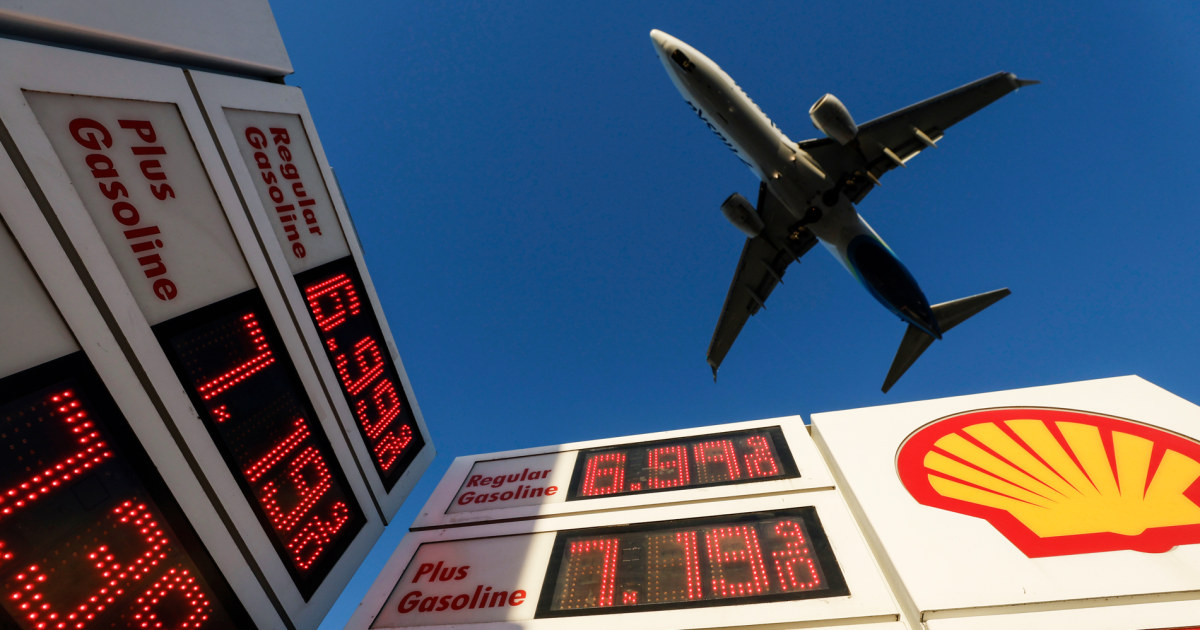
This is raising gasoline and diesel prices, making even voters otherwise inclined to support Republican candidates upset. asserted
voters → raise → candidates
Trump has acknowledged this himself. asserted
Trump → acknowledge → this
“Right after the election, oil prices are going to be tumbling downward,” he told reporters before Republicans gathered in Dallas last month. asserted
Republicans → go → Dallas
“I think it’s going to take a little bit longer than the midterm.” asserted
it → think → midterm
“It’s going to end very soon, and your prices are going to come down,” Trump said on the campaign trail in Nebraska on Tuesday. asserted
Trump → go → Tuesday
“All your prices have been tumbling down.” asserted
prices → tumble → ?
Trump was campaigning in deep-red Nebraska as Sen. Pete Ricketts (R-NE) finds himself in an unexpectedly close race amid voter economic dissatisfaction. asserted
Ricketts → campaign → dissatisfaction
In his remarks at the Nebraska State Fair, Trump added that prices at the pump were temporary and preferable to Iran taking out a U.S. city with a nuclear weapon. asserted
Iran → add → weapon
Inflation is cumulative, and it was always going to be difficult for Trump to satisfy voters who expected him to lower consumer prices to where they were during his first term. asserted
they → go → term
Former Rep. Mike Rogers, the Republican nominee for Senate in the battleground state of Michigan, is among the GOP candidates who have distanced themselves from both the war and the tariffs in recent weeks. asserted
who → distance → weeks
“Here in Michigan, we know that Canada is not our enemy,” Rogers said in a direct-to-camera commercial. asserted
Rogers → know → commercial
“We need to end this tariff war — now. asserted
We → need → war
As Michigan’s senator, I’ll bring both parties together to lower your prices. asserted
I → bring → prices
That’s job No. 1.” asserted
That → ’ → ?
Rogers previously said much the same thing about Iran. asserted
Rogers → say → Iran
“The war with Iran needs to end, and end quickly,” Rogers said in a video posted on social media last month. asserted
Rogers → need → media
“Michigan families can’t afford to wait.” asserted
families → afford → ?
Rogers is running against Abdul el Sayed, one of a handful of socialists Democrats have nominated for Senate this year. asserted
Democrats → run → Senate
The socialists have run against the high cost of living despite supporting higher levels of federal spending than that which touched off the first big wave of broad-based inflation in decades under Biden. asserted
which → run → Biden
Two of the biggest disasters of Biden’s presidency, the inflationary post-COVID spending and the border crisis triggered by immigration non-enforcement, were backed by the socialist wing of the party. asserted
Two → trigger → party
New York City Mayor Zohran Mamdani owes his office to a campaign that was mainly about affordability in last year’s elections. asserted
that → owe → elections
The Democrats elected governors in Virginia and New Jersey weren’t socialists, though they exaggerated their centrism, but also campaigned against high prices. asserted
they → elect → prices
Mamdani’s New York City was an expensive place to live even before inflation took off under Biden. asserted
inflation → live → Biden
Rep. Alexandria Ocasio-Cortez (D-NY), a fellow socialist, won her 2018 Democratic primary in part by campaigning on cost-of-living issues. asserted
Cortez → win → issues
These Democrats, like Biden before them, argue the government can spend its way to affordability by subsidizing expensive things. asserted
government → argue → things
Not all voters see spending as a catalyst for inflation. asserted
voters → see → inflation
But they do understand why it has become more expensive to fill up the tank, which Trump does not deny, and what happens to goods that are subject to tariffs. asserted
that → understand → tariffs
That could help Democrats win the midterm elections with an affordability message while running on inflationary policies. uncertain
Democrats → help → policies

Give feedback · no sign-in needed

No sign-in needed for now. Your note is sent without a name, so it cannot be answered.

History Support