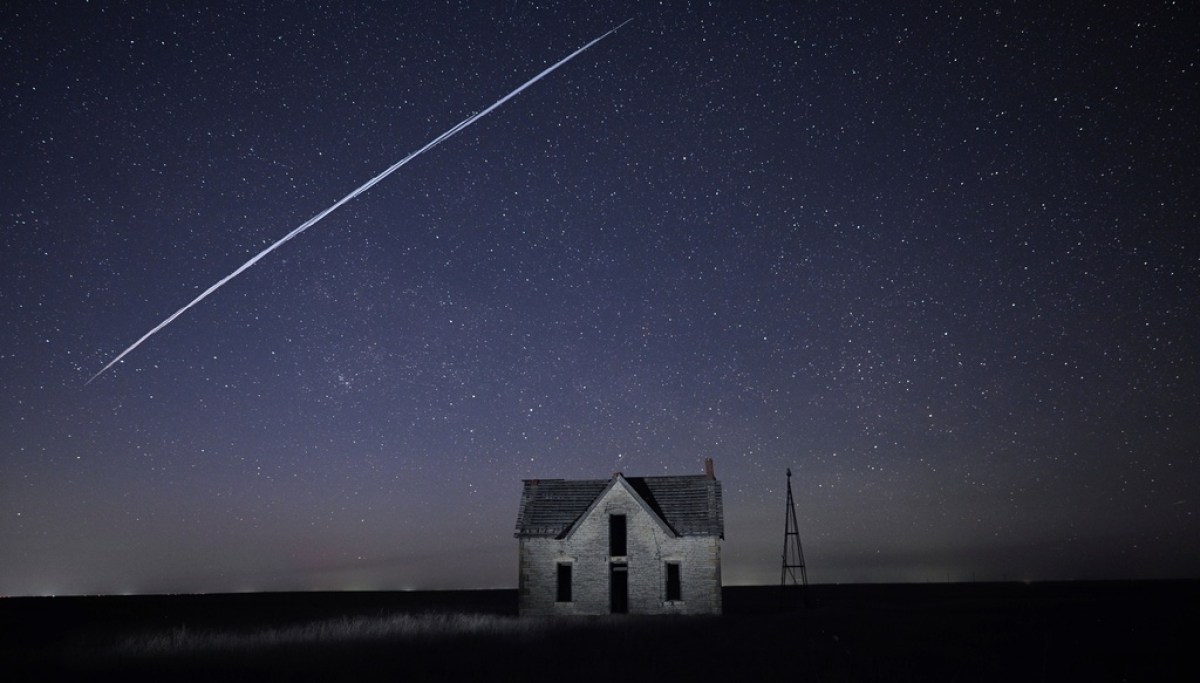
Photo via Washington Examiner

SpaceX moves to turn Starlink into next major US mobile carrier

Read the original at Washington Examiner ↗
Cite

Zimmermann, D. (2026, October 9). SpaceX moves to turn Starlink into next major US mobile carrier. Washington Examiner. https://www.washingtonexaminer.com/news/business/4760524/spacex-starlink-major-us-mobile-carrier/

Dated when The Aporia collected the article, usually within hours of publication. Check the original for its exact date and byline.

Washington Examiner · collected 2026-10-09 · by David Zimmermann

Quick Summary

SpaceX announced on Thursday plans to convert its Starlink satellite network into a major U.S. mobile carrier, acquiring low-band spectrum that allows signals to penetrate walls and other obstacles. The deal involves up to 14 megahertz of paired spectrum in the 800 MHz band and requires final approval from the FCC. SpaceX claims this move will enable seamless connectivity for Starlink users even indoors, potentially challenging existing carriers Verizon, AT&T, and T-Mobile.
Written by AI on 2026-10-09, from this article's own text only (the story summary below draws on all the coverage).
See how they differ ↓

AI analysis

Story summary

Elon Musk's SpaceX announced plans to turn its Starlink satellite network into a major U.S. mobile carrier capable of competing with companies like AT&T and Verizon. The company acquired nationwide low-band spectrum licenses in the 800 MHz band, worth approximately $8 billion, enabling signals to pass through walls and other obstacles. This acquisition is contingent on final approval from the Federal Communications Commission (FCC), chaired by Brendan Carr. SpaceX’s plan involves deploying a flexible architecture that combines satellite-to-mobile connectivity with an advanced terrestrial network to ensure broad coverage. Traditional telecom companies, such as AT&T, T-Mobile, and Verizon, reacted negatively to this news, seeing it as a potential threat to their market dominance.

Written for “Starlink Cell Service Expansion” on 2026-11-20, grounded in this article and the 1 other(s) covering the same event.

How they differ

2 outlets covered “Starlink Cell Service Expansion”.

What each outlet says

One AI summary per outlet of its latest article on this story, written from that article alone and checked against it. Open the article for the outlet's own words.

Washington ExaminerThis outlet9 Oct

SpaceX announced on Thursday plans to convert its Starlink satellite network into a major U.S. mobile carrier, acquiring low-band spectrum that allows signals to penetrate walls and other obstacles. The deal involves up to 14 megahertz of paired spectrum in the 800 MHz band and requires final approval from the FCC. SpaceX claims this move will enable seamless connectivity for Starlink users even indoors, potentially…

SpaceX moves to turn Starlink into next major US mobile carrier (this article)
New York Post9 Oct

SpaceX is expanding into cellular services by acquiring billions of dollars' worth of cellular spectrum licenses, aiming to complement its Starlink satellite network with a terrestrial component. FCC approval is required for SpaceX to proceed, and while FCC Chairman Brendan Carr expressed support, shares of major telecom companies like AT&T, T-Mobile, and Verizon dropped in response to the news. The company plans to…

SpaceX takes major step toward offering cell service, putting big telecom on edge →

Compared with similar articles

This article reads unscored and hedges 6% of its claims. Each row says how that neighbour differs.
South China Morning Post
Leans left Hedges 1 of 3 claims Outlet record 62/100
“Article A discusses Elon Musk criticizing Indian telecom oligarchs for blocking Starlink, while Article B talks about SpaceX's plans to turn Starlink into a major U.S. mobile carrier.”
New York Post
Hedges 0 of 15 claims Outlet record 66/100
Reason
Leans strongly right Hedges 2 of 54 claims Outlet record 67/100
“Article A describes SpaceX's announcement to transform Starlink into a major mobile carrier through acquiring nationwide low-band spectrum, while Article B discusses broader issues with FCC regulations and does not specifically cover the same incident or time.”
BBC News
Hedges 4 of 31 claims Outlet record 65/100
“The articles cover different aspects of SpaceX's Starlink project: one about turning it into a major U.S. mobile carrier, and the other about Musk's dispute with Mukesh Ambani over entering the Indian market.”

Story

Starlink Cell Service Expansion
Technology · 2 article(s) covering the same event. See how they differ ↑
How this article was measured signals, leaning charts, publisher record, byline, topics and claims

Signals How these are calculated →

Claims extracted
18
sentences that state something as happening or true
Uncertain
6%
1 of 18 hedged ("reportedly", "may", "according to")
Leaning
not political
takes no side on a contested political question
Publisher signals
67/100
Washington Examiner's corrections and hedging, across everything collected from it. Not a measure of accuracy.
Outlets on this story
2
Technology
Same framing elsewhere
1
articles that frame the event the way this one does
Analyzed 2026-10-09 · how these are computed

How this is being covered How these are calculated →

Article leaning vs. publisher reliability
Source leaning vs. consistency

Publisher

Washington Examiner · 5208 article(s) · 11 correction(s) detected
Running correction rate · 11 correction(s)

Who wrote this

David Zimmermann
161 article(s) here · 1 carrying a prediction
After serving two terms, Gov. Gavin Newsom (D-CA) will leave Sacramento in January 2027 to let Gov.-elect Xavier Becerra (D-CA) take his place.
Sen.-elect Scott Colom (D-MS) is set to become the fourth Senate Democrat who has an identical twin outside the upper chamber of Congress.
Treasury Secretary Scott Bessent directly blamed the Commerce Department for delaying the broader administration’s intent to place Nvidia customer Megaspeed on a special blacklist of companies that could pose a national security threat.
But now that she is out as chief of staff, it appears that the White House staff’s interactions with registered lobbyists will be cut down dramatically.
“We will continue to treat this with urgency until full mitigation, and we will share a full Post-Incident Report with root cause and defense-in-depth actions after mitigation is complete.”
A coalition of nonprofit organizations sued the top five artificial intelligence companies on Thursday, asking a California court to order a stop to the development of new models that could escape human oversight and cause catastrophe.
The move will most likely keep them stuck in committee until Democrats take control of the lower chamber of Congress in January 2027.
The plaintiffs filed the lawsuit in D.C. federal court on Tuesday, arguing that the structure will permanently overshadow the grave sites of former President John F. Kennedy, former Attorney General Robert F. Kennedy, and other prominent members of the Kennedy family.
Rather, the company’s concern rested primarily in how narrative attacks shaped public perception regarding these races, which, in turn, affect how journalists or pollsters may evaluate voter sentiment.
“Tesla will be winding down production of the Cybertruck at Gigafactory Texas around the middle of next year to make room for increased Cybercab production,” Musk posted on X early Friday morning.
Also by David Zimmermann
Nothing else under this byline is closely related to this article, so these are simply their most recent.
All 161 articles by David Zimmermann →

Topics

AT&T SpaceX Starlink Starlink Mobile Verizon

Subjects

Starlink ORG · 6× SpaceX ORG · 5× AT&T ORG · 3× FCC ORG · 2× Musk PERSON · 2× Starlink Mobile ORG · 2× Starlink Mobile’s ORG · 2× T-Mobile ORG · 2× Verizon ORG · 2× U.S. GPE · 1×

Narrative

“While Starlink Mobile’s global 2 GHz mid-band spectrum will provide high-bandwidth capacity in the United States, this new low-band spectrum will provide a coverage layer that ensures Starlink Mobile’s signal penetrates through obstacles, such as walls, and can provide service to customers’ devices even when they are in buildings,” the company added.
framing: assertive · carried by 1 article(s) · first seen 2026-10-09
The aerospace company, led by Elon Musk, struck a deal to acquire a nationwide low-band spectrum that will advance Starlink’s wireless capabilities by enabling the signal to pass through walls and other obstacles.
2026-10-09 · Washington Examiner
SpaceX moves to turn Starlink into next major US mobile carrier · assertive framing

Claims (18 extracted, 1 hedged)

SpaceX announced a plan on Thursday to transform its Starlink satellite constellation into the next major U.S. mobile carrier capable of competing with Verizon, AT&T, and T-Mobile. asserted
SpaceX → announce → Verizon
The aerospace company, led by Elon Musk, struck a deal to acquire a nationwide low-band spectrum that will advance Starlink’s wireless capabilities by enabling the signal to pass through walls and other obstacles. asserted
that → lead → walls
Low-band frequencies can travel long distances and penetrate dense structures. asserted
frequencies → travel → structures
SpaceX said its newly acquired low-band spectrum license portfolio goes up to 14 megahertz of paired spectrum in the 800 megahertz band. asserted
portfolio → say → band
The plan is subject to final approval from the Federal Communications Commission, led by Brendan Carr. asserted
plan → lead → Carr
“Once we receive final FCC approval, Starlink Mobile will deploy a flexible architecture combining our satellite-to-mobile constellation in space with an advanced terrestrial deployment that can seamlessly connect devices everywhere,” SpaceX said in a press release. asserted
SpaceX → receive → release
“While Starlink Mobile’s global 2 GHz mid-band spectrum will provide high-bandwidth capacity in the United States, this new low-band spectrum will provide a coverage layer that ensures Starlink Mobile’s signal penetrates through obstacles, such as walls, and can provide service to customers’ devices even when they are in buildings,” the company added. asserted
company → provide → buildings
“Critically, most existing mobile devices already support this underused band.” asserted
devices → exist → band
Over 11,100 Starlink satellites are in low-Earth orbit, providing high-speed, low-latency broadband internet from space to mobile users around the world. asserted
satellites → provide → world
The service is particularly useful for people in remote locations, where cell towers cannot reach. asserted
towers → reach → locations
Musk said the new development is a “very big deal” and the “last critical piece of the spectrum puzzle needed for SpaceX to provide complete phone coverage in America.” asserted
SpaceX → say → America
Once operational, Starlink’s nationwide low-band spectrum could pose a direct challenge to the three main legacy phone carriers. uncertain
spectrum → pose → carriers
Verizon, AT&T, and T-Mobile formed a joint satellite venture this year to eliminate what they call cellular “dead zones,” areas that Starlink Mobile would serve. asserted
Mobile → form → that
AT&T CEO John Stankey recently expressed skepticism that, contrary to Musk’s hopes, Starlink’s satellite signals would be able to penetrate buildings, walls, or other barriers. asserted
signals → express → buildings
“If you have a lower-band spectrum, then it will have some decent penetration into some buildings,” Stankey said at a technology conference last month. asserted
Stankey → have → conference
“But it’s not going to penetrate the skin of a high-rise. asserted
it → go → rise
It’s not going to penetrate a stadium where people are congregated to watch a World Cup game and be able to have the social experiences that they demand in those circumstances. asserted
they → go → circumstances
This week, SpaceX moved one step closer to its goal of building its direct-to-device Starlink Mobile service after the FCC approved the aerospace company’s application to deploy and operate 15,000 next-generation Starlink satellites. asserted
FCC → move → satellites
Give feedback · no sign-in needed

No sign-in needed for now. Your note is sent without a name, so it cannot be answered.

History Support