Photo via The Sydney Morning Herald

Oliver Curtis’ transformation from jailbird to corporate kingpin has gone awry

Read the original at The Sydney Morning Herald ↗
Cite

Bonyhady, N. (2026, October 8). Oliver Curtis’ transformation from jailbird to corporate kingpin has gone awry. The Sydney Morning Herald. https://www.smh.com.au/technology/oliver-curtis-transformation-from-jailbird-to-corporate-kingpin-has-gone-awry-20261008-p613se.html?ref=rss&utm_medium=rss&utm_source=rss_feed

Dated when The Aporia collected the article, usually within hours of publication. Check the original for its exact date and byline.

The Sydney Morning Herald · collected 2026-10-08 · by Nick Bonyhady

Quick Summary

Oliver Curtis, formerly incarcerated at Cooma Correctional Centre, was poised to see his AI data centre company Firmus go public with a $43.7 billion valuation this October. However, the planned sharemarket listing faced setbacks when investment bankers reduced the initial share price from $11 to $8.25 due to investor concerns over the high valuation and limited revenue. Curtis, who owns about 13% of Firmus before the listing, could lose up to a billion dollars in paper wealth if the company’s shares drop by $2.75 per share. The article highlights the rapid growth of Firmus compared to its actual performance, with only two operational data centres and reported revenue of just $50 million last year.
Written by AI on 2026-10-08, from this article's own text only (the story summary below draws on all the coverage).
See how they differ ↓

AI analysis

Story summary

Oliver Curtis, the husband of socialite publicist Roxy Jacenko and founder of Sydney-based AI company Firmus Technologies, scrapped plans for a mega stock market listing worth over $44 billion due to "recent market volatility and prevailing market conditions." The decision came after investors became wary of Firmus's high valuation and limited revenue. Initially targeting the Australian Securities Exchange (ASX), Curtis now seeks private funding and alternative public or private market options, warning that Australia risks losing tech talent and businesses if it fails to attract investment for innovative ventures. Despite the setback, Curtis remains optimistic about Firmus's future and emphasizes its potential as a "global Australian tech success story." The collapse of this listing highlights broader challenges in attracting significant investment for ambitious startups, particularly those focused on cutting-edge technologies like AI. (Updated as of October 12, 2026).

Written for “Firmus Float Fiasco” on 2026-11-20, grounded in this article and the 11 other(s) covering the same event.

How they differ

5 outlets covered “Firmus Float Fiasco”.

What each outlet says

One AI summary per outlet of its latest article on this story, written from that article alone and checked against it. Open the article for the outlet's own words.

Sydney Morning HeraldThis outlet8 Oct

Oliver Curtis, formerly incarcerated at Cooma Correctional Centre, was poised to see his AI data centre company Firmus go public with a $43.7 billion valuation this October. However, the planned sharemarket listing faced setbacks when investment bankers reduced the initial share price from $11 to $8.25 due to investor concerns over the high valuation and limited revenue. Curtis, who owns about 13% of Firmus before…

Oliver Curtis’ transformation from jailbird to corporate kingpin has gone awry (this article)3 articles from Sydney Morning Herald on this story
ABC News (AU)12 Oct

The article discusses the failure of Firmus Technologies' capital-raising attempt in Australia and questions whether this reflects broader issues within the AI investment sector. It highlights concerns over the company's lack of experience, vague business plans, and significant financial risks. The piece also draws a comparison to Elon Musk’s SpaceX IPO, noting similarities in their ambitious yet risky approaches…

Is the Firmus fiasco a crack in the AI boom? →4 articles from ABC News (AU) on this story
Daily Mail12 Oct

Oliver Curtis, co-founder of Firmus Technologies, speaks out about the company's failed $44 billion initial public offering in Australia last week. Curtis blames Australians' skepticism towards risk-taking entrepreneurs for driving startups like his overseas and vows that history will view Firmus as a global tech success story despite its current struggles to secure local investment. The article highlights Curtis’s…

From $44billion dream to Firmus flop: Oliver Curtis breaks his silence to blast 'dim' Australians - and vows he'll be proved right: 'Watch this space' →3 articles from Daily Mail on this story
The Guardian8 Oct

Firmus Technologies, an AI datacentre company, is facing significant challenges to its high valuation of nearly $44 billion just weeks before its expected stock market debut on the ASX. Sources indicate that Firmus may be reducing its valuation or even postponing its initial public offering due to investor skepticism. The company abruptly withdrew from a parliamentary inquiry into artificial intelligence…

Datacentre company Firmus’s high flying valuation may be coming back down to earth ahead of expected ASX debut →
BBC9 Oct

Firmus, an AI data center company backed by Nvidia, has canceled its planned initial public offering (IPO) due to market volatility and uncertainty about long-term returns for investments in AI technology. The IPO was initially valued at over $30 billion but faced skepticism from investors like UniSuper regarding the company's high valuation and potential debt levels. Firmus will now seek private funding instead…

Nvidia-backed AI data centre firm scraps mega stock market listing →

Where they agree and split

Framing

How the first headlines put it

Stated as fact4
The headlines (4)

Roxy Jacenko's billionaire husband Oliver Curtis rocked by $13billion blow as plans for one of Australia's biggest-ever floats are thrown into doubt Daily Mail · stated as fact

Datacentre company Firmus’s high flying valuation may be coming back down to earth ahead of expected ASX debut The Guardian · stated as fact

Major share market float of Firmus in trouble as interest wanes ABC News (Australia) · stated as fact

Oliver Curtis’ transformation from jailbird to corporate kingpin has gone awry Sydney Morning Herald · stated as fact

The full story: what happened, how it changed, and all 12 articles →

Compared with similar articles

This article reads unscored and hedges 14% of its claims. Each row says how that neighbour differs.
ABC News (AU)
Hedges 5 of 34 claims Outlet record 67/100
The Sydney Morning Herald
Hedges 2 of 61 claims Outlet record 61/100
The Guardian
Hedges 4 of 26 claims Outlet record 64/100
“While both articles discuss Firmus Technologies' impending ASX debut and valuation issues, Article A focuses on the company withdrawing from a parliamentary inquiry and potentially shelving its IPO, while Article B emphasizes the reduction in share price for institutional investors prior to listing. These are related but distinct developments.”
Daily Mail
Hedges 2 of 34 claims Outlet record 69/100
“While both articles discuss Oliver Curtis and his company Firmus's failed IPO, they are not describing the exact same incident. Article A focuses on the immediate aftermath of the bankers cutting the share price, while Article B covers Curtis' subsequent comments after the event.”
Daily Mail
Leans left Hedges 4 of 33 claims Outlet record 69/100
“The articles discuss Oliver Curtis and his company Firmus, but they describe different aspects of events related to Curtis's business venture. Article A focuses on the failed IPO plans for Firmus in October, while Article B discusses broader commentary about second chances and tall poppy syndrome following a bruising experience with the abandoned float.”
BBC News
Hedges 2 of 20 claims Outlet record 65/100
“While both articles discuss Firmus's decision to postpone or scrap its IPO, Article A focuses on the immediate impact of a price cut by bankers before the IPO was officially cancelled, while Article B reports the definitive cancellation of the listing due to market conditions.”
The Sydney Morning Herald
Leans right Hedges 2 of 35 claims Outlet record 61/100
“Article A discusses the cutting of Firmus's share price and concerns about its listing on ASX, while Article B focuses on Curtis's reaction to the collapse of his company's attempt to list at a high valuation. Both articles refer to similar events but describe different specific occurrences.”
ABC News (AU)
Hedges 1 of 30 claims Outlet record 67/100
“While both articles discuss Firmus's IPO issues, Article A reports on the price cut and its hanging status, whereas Article B mentions the float being pulled entirely. This suggests a progression or change in events rather than describing the same specific moment.”

Story

Firmus Float Fiasco
Economy/Business · 12 article(s) covering the same event. Compare every outlet's account →
How this article was measured signals, leaning charts, publisher record, byline, topics and claims

Signals How these are calculated →

Claims extracted
29
sentences that state something as happening or true
Uncertain
14%
4 of 29 hedged ("reportedly", "may", "according to")
Leaning
not political
takes no side on a contested political question
Publisher signals
61/100
The Sydney Morning Herald's corrections and hedging, across everything collected from it. Not a measure of accuracy.
Outlets on this story
12
Economy/Business
Same framing elsewhere
1
articles that frame the event the way this one does
Analyzed 2026-10-08 · how these are computed

How this is being covered How these are calculated →

Article leaning vs. publisher reliability
Source leaning vs. consistency

Publisher

The Sydney Morning Herald · 7728 article(s) · 16 correction(s) detected
Running correction rate · 16 correction(s)

Who wrote this

Nick Bonyhady
21 article(s) here · 1 carrying a prediction
Little wonder then that Trump has claimed not to have been briefed that Huang had an affair with a woman US intelligence services concluded was working for Chinese state security, contested whether she was indeed a spy, and praised the notion that Nvidia could reinstate its former boss.
The cuts were foreshadowed earlier this month, when it was reported up to 400 jobs could be slashed.
On Tuesday, it became clear who will be the kingmaker, if not the king, under the rules that govern votes on the future of failed companies.
Personal computers, this masthead reported in September 1995, would be able to match the “dizzying pace as the most advanced arcade game,” powered by chips created by a little known, privately held Silicon Valley firm called Nvidia.
The bank will repay a total of $169 million to staff, including superannuation and interest.
As Australians grapple with the collapse of the once mighty business that predates Federation, here’s everything you need to know about what’s happened and what we can expect from here.
2026-11-06 · assertive framing · Six things to know about David Jones on the brink
That may turn out to be the easy part.
2026-11-02 · mixed framing · The staggering irony of the Binance hack
The question is: will the market, and the ASX that operates it, adopt the same attitude?
Zohran Mamdani may be the exception that proves the rule.
But the man, who was not represented by a lawyer in contrast to Atlassian’s use of external solicitors at K&L Gates and an employment-law barrister, did not provide any medical evidence about how his ADHD caused him to act at work. “The absence of medical evidence before the court was acknowledged by the applicant who said that he could only speak to his lived experience,” Stellios noted.
Also by Nick Bonyhady
Nothing else under this byline is closely related to this article, so these are simply their most recent.
All 21 articles by Nick Bonyhady →

Topics

ASX Australia Cooma Correctional Centre Firmus The Australian Financial Review

Subjects

Firmus ORG · 10× Curtis PERSON · 4× Australia GPE · 2× ASX ORG · 1× CDC ORG · 1× Cooma Correctional Centre ORG · 1× Meta ORG · 1× Nvidia ORG · 1× Oliver Curtis PERSON · 1× The Australian Financial Review ORG · 1×

Narrative

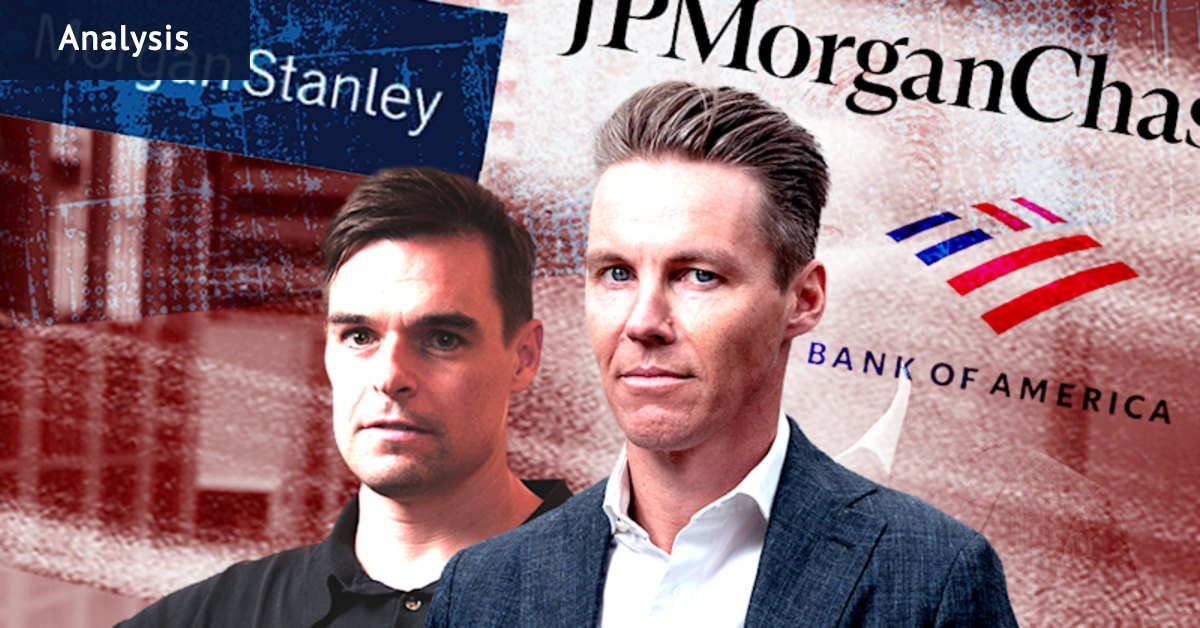
Instead, the seven-year-old start-up’s plans for a sharemarket listing were hanging in the balance on Thursday morning, after its bankers cut the share price for the big institutions that buttress an ASX float before it starts trading from $11 to $8.25.
framing: assertive · carried by 1 article(s) · first seen 2026-10-08
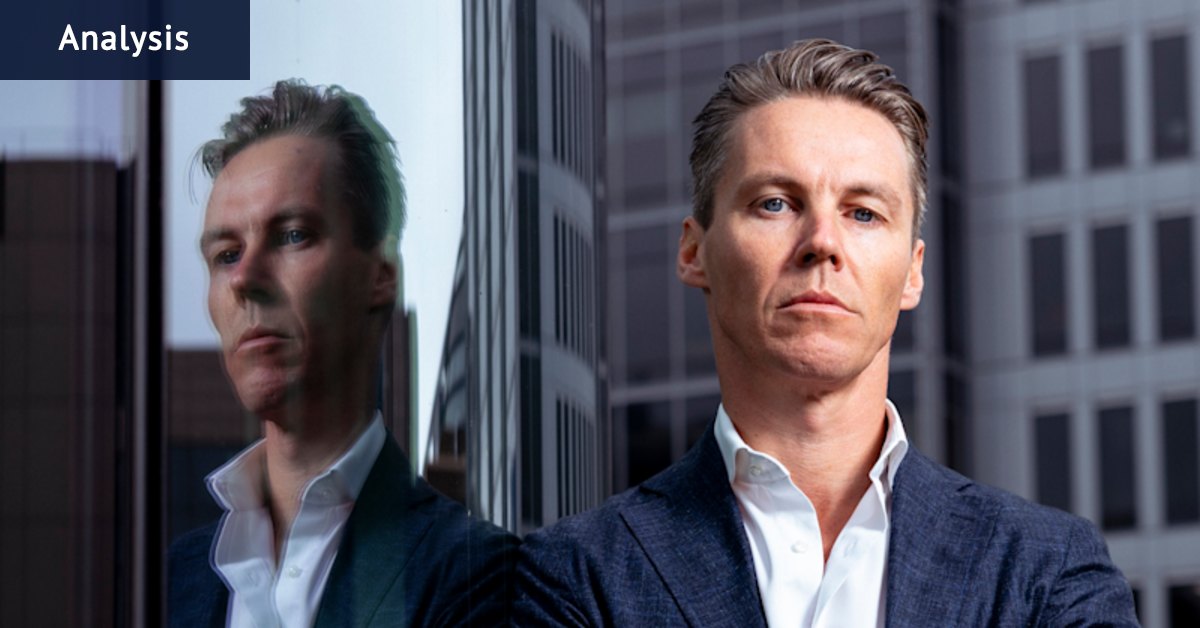
Had the AI data centre company he co-founded, Firmus, gone public at a $43.7 billion valuation this month, Curtis’ corporate apotheosis would have been complete.
2026-10-08 · The Sydney Morning Herald
Oliver Curtis’ transformation from jailbird to corporate kingpin has gone awry · assertive framing

Claims (29 extracted, 4 hedged)

October was supposed to be former Cooma Correctional Centre resident Oliver Curtis’ moment not just of redemption, but ascension. asserted
October → suppose → redemption
Had the AI data centre company he co-founded, Firmus, gone public at a $43.7 billion valuation this month, Curtis’ corporate apotheosis would have been complete. asserted
apotheosis → co → valuation
Instead, the seven-year-old start-up’s plans for a sharemarket listing were hanging in the balance on Thursday morning, after its bankers cut the share price for the big institutions that buttress an ASX float before it starts trading from $11 to $8.25. asserted
it → hang → 8.25
And there were concerns the whole listing scheduled for October 23 could topple over. uncertain
listing → be → October
Curtis, who is Firmus’ chief executive and largest individual shareholder, owning about 13 per cent before the planned sharemarket listing, stood to end up with a stake worth billions if everything went to plan. asserted
everything → own → plan
Valuing such a shareholding amid the tumult of a public offering is difficult, but if the company’s shares drop the $2.75 to $8.25 The Australian Financial Review reported, that could imply a drop in Curtis’ paper wealth in the region of $1 billion. uncertain
that → value → billion
Investors had got cold feet, wary of Firmus’ high price, comparatively minimal revenue and aggressive forecasts of building lots of data centres around the world, running them efficiently and selling their output to AI giants like Meta. asserted
Investors → get → Meta
The company had surged from seeking a $1.2 billion valuation in late 2024, to raising money at a $6 billion valuation in November 2025, $15 billion in August this year, and then trying to more than double that again this month. asserted
company → surge → that
Of course, what goes up need not come down in financial markets. asserted
goes → go → markets
Just look at Nvidia, where the AI chipmaker’s shares are up more than 1000 per cent over five years to $US237 ($340). asserted
shares → look → US237
That makes some sense, at least to AI bulls: its revenue has risen more than tenfold too. asserted
revenue → make → bulls
Firmus, by contrast, has all of two data centres in operation and reportedly recorded just $50 million revenue last year. uncertain
Firmus → have → revenue
Its target valuation was a cool 874 times that revenue number, to say nothing of profit. asserted
valuation → say → profit
And this week, it had to concede that its marquee partnership with established Australia data centre company CDC, touted as being worth potentially more than $70 billion, was over. asserted
partnership → have → CDC
Curtis is not the only one in line for a major hit if the listing goes bad. asserted
listing → go → hit
His co-founders Jonathan Levee and Tim Rosenfield both have significant stakes in the company, as does his father and former Firmus chairman, Nick Curtis. asserted
father → have → company
Unless things go irredeemably, catastrophically wrong, all will remain wealthy men. asserted
all → go → ?
They just won’t be on the fast track to being cash billionaires when the restrictions on share sales that come with a public offering lapse. asserted
that → come → offering
Former NRL player Wes Maas restructured his $2.5 billion-odd industrial materials and construction company earlier this year around his plans to build facilities for Firmus. asserted
Maas → restructure → Firmus
Its shares were down by about a quarter on Thursday, valuing it at close to $1.9 billion. asserted
shares → value → billion
Ellerston Capital’s JAADE fund, which is accessible to more or less any well-off Australian, too has become a proxy for Firmus because it has a stake in the privately held start-up. asserted
it → become → up
In a disclosure document published on September 30, the fund was declaring it believes “the Firmus IPO has a relatively high degree of certainty” and cited analysis from the company’s bankers indicating it could be worth up to $US99 billion ($142 billion). uncertain
it → publish → bankers
To state the obvious: that now looks far-fetched. asserted
that → state → obvious
Karl Redenbach, the chief executive of a small start-up called AgenticScale that is trying to raise $US20 million and hopes to eventually list its business setting up micro AI facilities on the Nasdaq exchange in America, said Firmus was “incredible”. asserted
Firmus → call → America
“I’m bullish because I’ve been in the US, and every client we talk to [says] the demand is not just there, but growing exponentially,” Radenbach said. asserted
Radenbach → ’m → US
While he said his business was different to Firmus’ plans for large-scale so-called AI factories, he found both were tapping into the same demand for more capable AI agents that is beginning to surge. asserted
that → say → agents
One venture capitalist, who is not a Firmus investor and spoke on condition of anonymity, said he had received numerous pitches like Radenbach’s since Firmus-mania began. asserted
mania → speak → Radenbach
Whether they continue after this week is another question. asserted
continue → continue → week
The Business Briefing newsletter delivers major stories, exclusive coverage and expert opinion. asserted
newsletter → deliver → stories
Give feedback · no sign-in needed

No sign-in needed for now. Your note is sent without a name, so it cannot be answered.

History Support