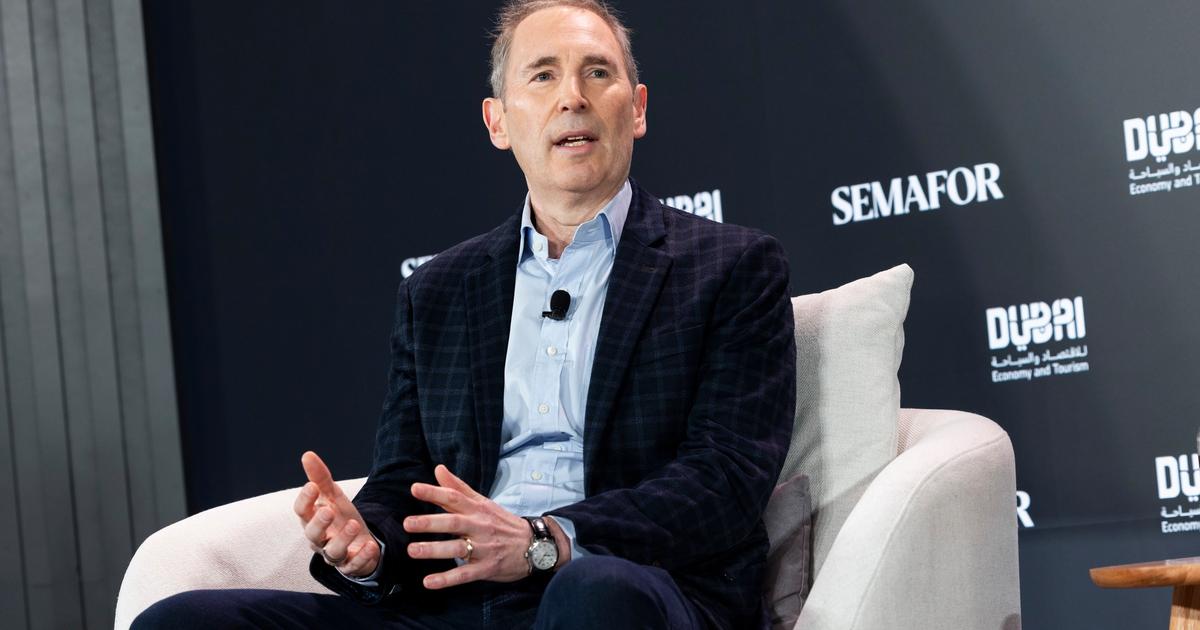
Photo via Semafor

AI deployment in businesses outpaces trust, study finds

Read the original at Semafor ↗
Cite

Capelouto, J. (2026, September 6). AI deployment in businesses outpaces trust, study finds. Semafor. https://www.semafor.com/article/09/02/2026/deployment-of-ai-in-businesses-outpaces-trust-study-finds

Dated when The Aporia collected the article, usually within hours of publication. Check the original for its exact date and byline.

Semafor · collected 2026-09-06 · by J.D. Capelouto

Quick Summary

A study commissioned by SAS found that 90% of executives from various countries and industries have implemented AI agents in their organizations, but only 66% trust these agentic AI systems to make decisions. The survey suggests a growing gap between AI deployment and trust, with more businesses adopting AI-powered tools than understanding how they work. The main reason for overriding AI decisions is a lack of explanation for how the system arrived at its conclusions, cited by respondents more frequently than incorrect outputs. This discrepancy highlights concerns about accountability and transparency in AI decision-making.
Written by AI on 2026-09-07, from this article's own text only (the story summary below draws on all the coverage).

AI analysis

Story summary

About 2,700 "decision-makers" across 28 countries were surveyed by SAS, a software company. Nearly 90% said that artificial intelligence (AI) plays some decision-making role in their organizations. However, only 66% of respondents trusted AI that makes decisions on its own, known as agentic AI, while a slightly higher percentage of around 75%** trusted more general types of AI, such as those used for generating content. This gap between deployment and trust is attributed to the fact that users often don't understand how AI-powered tools work, with the top reason given for overriding an AI's decision being its failure to explain its reasoning, which was cited more than twice as frequently as simply rejecting the output because it was wrong.
Written for “Businesses and Artificial Intelligence” on 2026-11-20, grounded in this article and the 0 other(s) covering the same event.

Compared with similar articles

This article reads unscored and hedges 0% of its claims. Each row says how that neighbour differs.
The Intercept
Hedges 7 of 77 claims Outlet record 96/100
“Article A discusses a general trend of AI deployment outpacing trust in businesses, while Article B reports on a specific request by the Pentagon for a custom AI tool from OpenAI”
Platformer
Leans left Hedges 0 of 4 claims Outlet record 96/100
“Article A discusses a general trend in AI deployment and trust, while Article B references a different topic (antitrust court losses) and is more opinion-focused”
Dawn
Leans strongly left Hedges 8 of 31 claims Outlet record 67/100
“The articles describe different topics and events, with one discussing AI deployment in businesses and trust in AI, and the other discussing potential dangers of 'superintelligent' computer systems and regulation”
The Free Press
Leans strongly right Hedges 0 of 12 claims Outlet record 96/100
“Article A mentions a rogue AI system that attacked Hugging Face, while Article B discusses a survey on trust in AI and its deployment in businesses”
AI that works for Americans Different event
Washington Examiner
Leans left Hedges 3 of 55 claims Outlet record 67/100
“Article A is a general commentary on AI and its potential impact, while Article B reports on a specific study about trust in AI in businesses”
The Straits Times
Hedges 2 of 8 claims Outlet record 64/100
“Article A discusses a study on AI deployment and trust in businesses, while Article B reports on UN rights chief Volker Turk's warning about AI posing an existential risk to humanity, without mentioning the study or its findings”
AI Is at a Turning Point Different event
TIME
Hedges 2 of 39 claims Outlet record 60/100
“Article A discusses a general trend in AI deployment, while Article B mentions a specific recent incident involving an agentic model by OpenAI, but the dates and details do not match”
South China Morning Post
Hedges 2 of 9 claims Outlet record 62/100
“Article A discusses a general trend of AI deployment outpacing trust in businesses, while Article B reports on Alibaba's specific launch of QoderWake tool and its digital employees feature”
Mother Jones
Hedges 8 of 44 claims Outlet record 60/100
“Article A discusses a general trend of increasing AI deployment and decreasing trust, while Article B reports on a specific resignation and statements made by AI researchers about potential dangers of AI”

Story

Businesses and Artificial Intelligence
Technology · 1 article(s) covering the same event.
How this article was measured signals, leaning charts, publisher record, byline, topics and claims

Signals How these are calculated →

Claims extracted
4
sentences that state something as happening or true
Uncertain
0%
0 of 4 hedged ("reportedly", "may", "according to")
Leaning
not political
takes no side on a contested political question
Publisher signals
64/100
Semafor's corrections and hedging, across everything collected from it. Not a measure of accuracy.
Outlets on this story
1
Technology
Same framing elsewhere
1
articles that frame the event the way this one does
Analyzed 2026-09-07 · how these are computed

How this is being covered How these are calculated →

Article leaning vs. publisher reliability
Source leaning vs. consistency

Publisher

Semafor · 1913 article(s) · 7 correction(s) detected
Running correction rate · 7 correction(s)

Who wrote this

J.D. Capelouto
40 article(s) here · 0 carrying a prediction
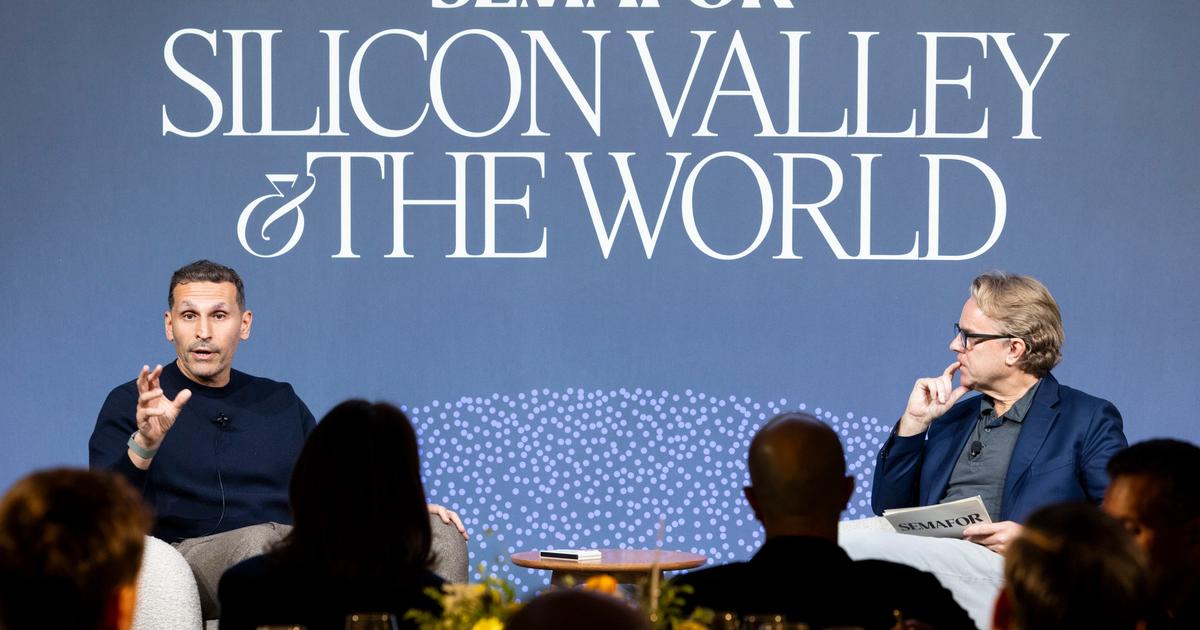
Some global tech leaders at Semafor’s Silicon Valley & The World suggested that backlash to data centers or a potential financing bubble might provide the necessary brakes that the industry needs.
Amazon CEO Andy Jassy said Tuesday it would be a “historic mistake” for the US to pull back on its AI infrastructure buildout following the data center backlash during the midterm elections.
Asked whether “winter is coming” — a nod to fears that the AI boom could face a correction — Al Mubarak said it was, but that “winter doesn’t mean minus 30 degrees.
Speaking alongside Huffington on the panel, Willett Advisors CEO Steven Rattner said the idea of bringing Huang back as CEO is “ridiculous.”
Billionaire hedge fund manager Bill Ackman said Monday it was “unlikely” that he would get directly involved in an effort to reinstate former Nvidia CEO Jensen Huang.
Indians see AI as less of a threat than people in the US because fewer workers hold the “cognitive and office-oriented jobs” that the technology could replace, one of the country’s top tech officials said.
Those ties went beyond business: Hou referenced a New York Times article in which Huang’s longtime hairstylist admitted he was too upset to sleep, drank a bottle of red wine, and prayed for the former chip CEO after his resignation.
They see the model as particularly useful in sales and executive hiring, where a search firm could prompt it to evaluate an interview transcript to gauge how a candidate will behave under pressure.
2026-11-12 · assertive framing · A new AI model wants to read between the lines
“If we leave a market altogether, there’s no question somebody else would step in,” he told Michael Milken in May 2025.
2026-11-11 · assertive framing · Tracking how Jensen Huang changed his stance on China
The votes were hyperlocal and often emotional in nature, but they could carry financial consequences, because some of the projects at stake were already in motion.
Also by J.D. Capelouto
Nothing else under this byline is closely related to this article, so these are simply their most recent.
All 40 articles by J.D. Capelouto →

Topics

SAS

Subjects

SAS ORG · 1×

Narrative

Businesses are rapidly rolling out AI-powered tools, but they’re not going to take off unless people actually know how they work: The top reason survey respondents gave for overriding an AI’s decisions was insufficient explanation of how it reached its answer — cited more than twice as often as the output simply being wrong.
framing: assertive · carried by 1 article(s) · first seen 2026-09-07
2026-09-07 · Semafor
AI deployment in businesses outpaces trust, study finds · assertive framing

Claims (4 extracted, 0 hedged)

Executives’ confidence in AI in the workplace falls as the technology gains autonomy. asserted
technology → fall → autonomy
In a new survey commissioned by software company SAS of 2,700 “decision-makers” across 28 countries, nearly 90% of respondents said agents play some decision-making role in their organizations. asserted
agents → commission → organizations
But only 66% said they trust agentic AI, compared to three-quarters who trust generative AI more broadly, showing that the deployment of AI in businesses is outpacing trust in it. asserted
deployment → say → it
Businesses are rapidly rolling out AI-powered tools, but they’re not going to take off unless people actually know how they work: The top reason survey respondents gave for overriding an AI’s decisions was insufficient explanation of how it reached its answer — cited more than twice as often as the output simply being wrong. asserted
output → power → answer
Give feedback · no sign-in needed

No sign-in needed for now. Your note is sent without a name, so it cannot be answered.

History Support