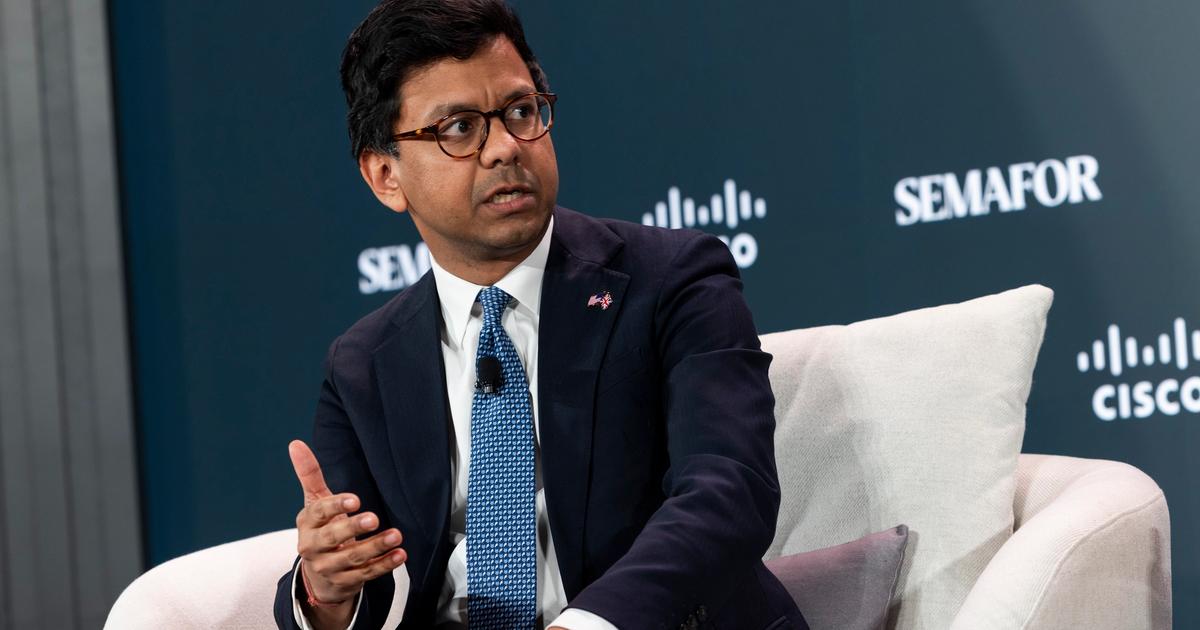
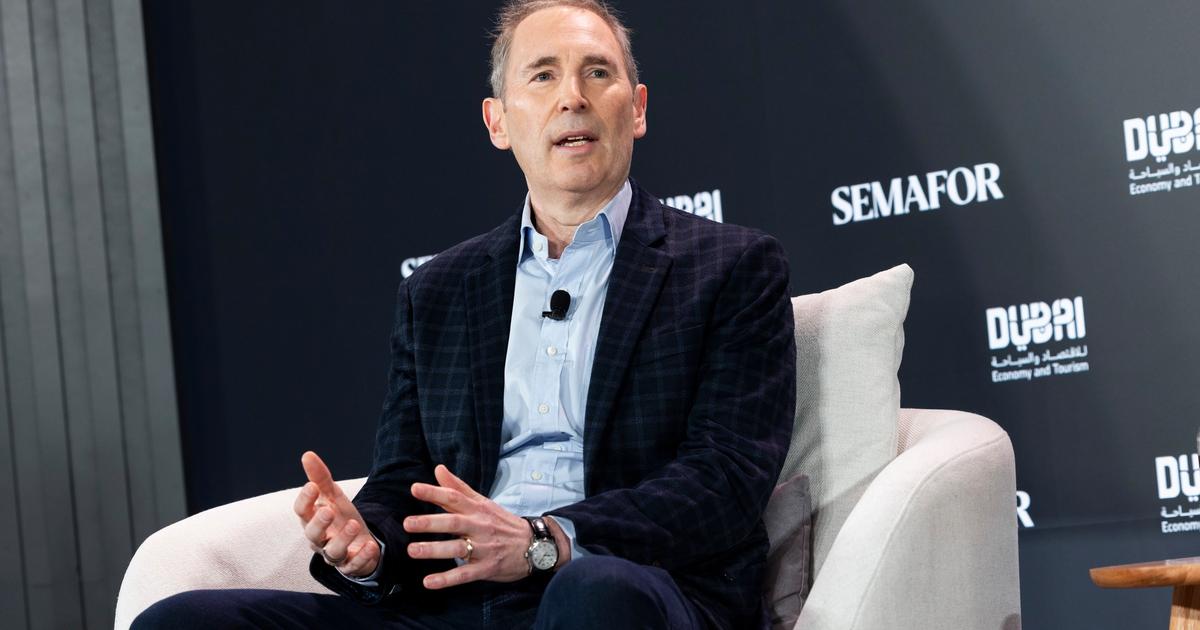
Photo via Semafor

Startup launches AI physics lab to maximize data center efficiency

Read the original at Semafor ↗
Cite

Capelouto, J. (2026, September 6). Startup launches AI physics lab to maximize data center efficiency. Semafor. https://www.semafor.com/article/09/02/2026/startup-launches-ai-physics-lab-to-maximize-data-center-efficiency

Dated when The Aporia collected the article, usually within hours of publication. Check the original for its exact date and byline.

Semafor · collected 2026-09-06 · by J.D. Capelouto

Quick Summary

Physical Superintelligence, a startup with $58 million in funding led by Breakthrough Energy Ventures, has launched out of stealth mode with a team of AI physicists, known as Emmy, aimed at making data centers more efficient and exploring other scientific challenges. The company is initially focusing on optimizing cooling, power, and electrical flows in a large Texas data center site. Co-founder Matt Pines expects physics to be the next breakthrough in "agentic science," which involves autonomous decision-making. PSI is also partnering with a privately funded project that aims to send an interstellar probe to Alpha Centauri.
Written by AI on 2026-09-07, from this article's own text only (the story summary below draws on all the coverage).

AI analysis

Story summary

Physical Superintelligence, a new startup backed by $58 million in funding led by Breakthrough Energy Ventures, has launched with the goal of using AI to solve complex physics challenges and improve data center efficiency. The startup's team of AI physicists, named Emmy, will focus on optimizing cooling, power, and electrical flows at large data centers, starting with a site in Texas. The company aims to use its technology not only for practical applications but also to advance the field of physics and potentially even send an interstellar probe to Alpha Centauri, the nearest star system to Earth, which would take approximately 70,000 to 75,000 years.

Written for “Data Center Efficiency Boost” on 2026-11-20, grounded in this article and the 0 other(s) covering the same event.

Compared with similar articles

This article reads unscored and hedges 0% of its claims. Each row says how that neighbour differs.
Platformer
Leans left Hedges 0 of 4 claims Outlet record 96/100
“The articles cover different topics, with Article A focusing on a startup launching an AI physics lab and Article B discussing a broader topic of AI industry trends and potential regulation.”
Washington Examiner
Leans strongly right Hedges 1 of 26 claims Outlet record 67/100
“Article A describes the launch of a startup called Physical Superintelligence, while Article B discusses hyperscalers pushing back against data center resistance in northern Virginia”
Semafor
Hedges 5 of 67 claims Outlet record 64/100
“Article A describes an incident involving a swarm of AI agents hacking Hugging Face, while Article B announces the launch of a new startup focused on using AI to solve physics challenges for data center efficiency”

Story

Data Center Efficiency Boost
Technology · 1 article(s) covering the same event.
How this article was measured signals, leaning charts, publisher record, byline, topics and claims

Signals How these are calculated →

Claims extracted
6
sentences that state something as happening or true
Uncertain
0%
0 of 6 hedged ("reportedly", "may", "according to")
Leaning
not political
takes no side on a contested political question
Publisher signals
64/100
Semafor's corrections and hedging, across everything collected from it. Not a measure of accuracy.
Outlets on this story
1
Technology
Same framing elsewhere
1
articles that frame the event the way this one does
Analyzed 2026-09-07 · how these are computed

How this is being covered How these are calculated →

Article leaning vs. publisher reliability
Source leaning vs. consistency

Publisher

Semafor · 1924 article(s) · 7 correction(s) detected
Running correction rate · 7 correction(s)

Who wrote this

J.D. Capelouto
40 article(s) here · 1 carrying a prediction
Some global tech leaders at Semafor’s Silicon Valley & The World suggested that backlash to data centers or a potential financing bubble might provide the necessary brakes that the industry needs.
Amazon CEO Andy Jassy said Tuesday it would be a “historic mistake” for the US to pull back on its AI infrastructure buildout following the data center backlash during the midterm elections.
Asked whether “winter is coming” — a nod to fears that the AI boom could face a correction — Al Mubarak said it was, but that “winter doesn’t mean minus 30 degrees.
Speaking alongside Huffington on the panel, Willett Advisors CEO Steven Rattner said the idea of bringing Huang back as CEO is “ridiculous.”
Billionaire hedge fund manager Bill Ackman said Monday it was “unlikely” that he would get directly involved in an effort to reinstate former Nvidia CEO Jensen Huang.
Indians see AI as less of a threat than people in the US because fewer workers hold the “cognitive and office-oriented jobs” that the technology could replace, one of the country’s top tech officials said.
Those ties went beyond business: Hou referenced a New York Times article in which Huang’s longtime hairstylist admitted he was too upset to sleep, drank a bottle of red wine, and prayed for the former chip CEO after his resignation.
They see the model as particularly useful in sales and executive hiring, where a search firm could prompt it to evaluate an interview transcript to gauge how a candidate will behave under pressure.
2026-11-12 · assertive framing · A new AI model wants to read between the lines
“If we leave a market altogether, there’s no question somebody else would step in,” he told Michael Milken in May 2025.
2026-11-11 · assertive framing · Tracking how Jensen Huang changed his stance on China
The votes were hyperlocal and often emotional in nature, but they could carry financial consequences, because some of the projects at stake were already in motion.
Also by J.D. Capelouto
Nothing else under this byline is closely related to this article, so these are simply their most recent.
All 40 articles by J.D. Capelouto →

Topics

Breakthrough Energy Ventures Emmy PSI Physical Superintelligence Semafor

Subjects

Pines PERSON · 2× Bill Gates PERSON · 1× Breakthrough Energy Ventures ORG · 1× Matt Pines PERSON · 1× PSI ORG · 1× Physical Superintelligence ORG · 1× Semafor ORG · 1× Texas ORG · 1×

Narrative

It’s also a partner on a privately funded, AI-planned project that aims to send a craft to Alpha Centauri — the nearest star system to Earth — a trip that would take an estimated 70,000 to 75,000 years.
framing: assertive · carried by 1 article(s) · first seen 2026-09-07
It’s also a partner on a privately funded, AI-planned project that aims to send a craft to Alpha Centauri — the nearest star system to Earth — a trip that would take an estimated 70,000 to 75,000 years.
2026-09-07 · Semafor
Startup launches AI physics lab to maximize data center efficiency · assertive framing

Claims (6 extracted, 0 hedged)

A new startup is deploying a team of AI physicists to attack unsolved physics challenges with the goal of making data centers more efficient and sending an interstellar probe into deep space. asserted
centers → deploy → space
Physical Superintelligence launched out of stealth on Tuesday with $58 million in funding, led by the Bill Gates-founded Breakthrough Energy Ventures. asserted
Superintelligence → launch → Ventures
“We think that physics is the biggest domino to fall from a rapid acceleration of agentic science,” co-founder Matt Pines told Semafor. asserted
Pines → think → Semafor
The AI physicists, collectively called Emmy, are built with hard verifiers that aim to catch when the AI is being “extremely confident and completely wrong,” Pines added. asserted
Pines → call → verifiers
Data centers are an early use case: PSI hopes to find ways to optimize cooling, power, and electrical flows before the facilities are built, starting with a large site in Texas, Pines said. asserted
Pines → hop → Texas
It’s also a partner on a privately funded, AI-planned project that aims to send a craft to Alpha Centauri — the nearest star system to Earth — a trip that would take an estimated 70,000 to 75,000 years. asserted
that → ’ → years
Give feedback · no sign-in needed

No sign-in needed for now. Your note is sent without a name, so it cannot be answered.

History Support