Photo via The Straits Times

WHO endorses lifestyle changes over GLP-1 drugs in child obesity fight

Read the original at The Straits Times ↗
Cite

The Straits Times. (2026, October 7). WHO endorses lifestyle changes over GLP-1 drugs in child obesity fight. The Straits Times. https://www.straitstimes.com/world/who-endorses-lifestyle-changes-over-glp-1-drugs-in-child-obesity-fight

Dated when The Aporia collected the article, usually within hours of publication. Check the original for its exact date and byline.

The Straits Times · collected 2026-10-07 · by The Straits Times

Quick Summary

On October 7, the World Health Organization released guidelines recommending lifestyle changes such as diet and exercise over weight-loss drugs like GLP-1 for treating child obesity. The guidelines emphasize that medication and surgery should only be considered after non-drug interventions have failed, especially noting insufficient safety data for children under 10. With about 400 million people aged 5 to 19 being overweight in 2024, including 170 million with obesity, the organization underscores the importance of comprehensive support for healthy living and sustainable behavior change.
Written by AI on 2026-10-07, from this article's own text only (the story summary below draws on all the coverage).
See how they differ ↓

AI analysis

Story summary

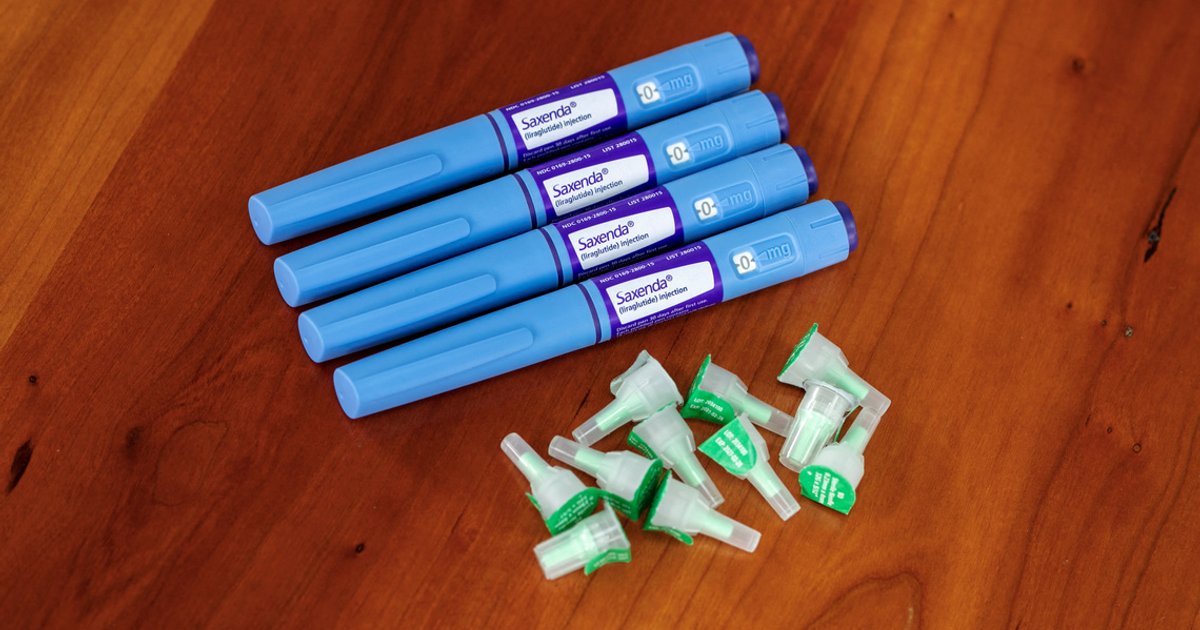
On October 7, WHO released its first global guidelines addressing rising childhood obesity rates. According to UNICEF, obesity now surpasses being underweight as the most common form of malnutrition among school-aged children and adolescents worldwide. The WHO recommends comprehensive support focusing on healthy eating, physical activity, and sustainable behavior change rather than relying solely on medical interventions like weight-loss drugs such as Saxenda or bariatric surgery.

For adolescents aged 10 to 19, the guidelines suggest considering GLP-1 drugs only after supervised lifestyle interventions have failed. For those with severe obesity who are physically and mentally mature, bariatric surgery can be considered if six months of ineffective treatment has been documented. However, for children under 10 years old, diet, physical activity, and behavioral support are endorsed instead due to safety concerns regarding medications and surgical options.

Luz María De Regil, director of the Department of Nutrition and Food Safety at WHO, emphasized that current evidence is insufficient on GLP-1 drugs but noted ongoing research could lead to revised recommendations.

Written for “WHO Guidance On Child ObesityTreatment” on 2026-11-21, grounded in this article and the 1 other(s) covering the same event.

How they differ

2 outlets covered “WHO Guidance On Child ObesityTreatment”.

What each outlet says

One AI summary per outlet of its latest article on this story, written from that article alone and checked against it. Open the article for the outlet's own words.

The Straits TimesThis outlet7 Oct

On October 7, the World Health Organization released guidelines recommending lifestyle changes such as diet and exercise over weight-loss drugs like GLP-1 for treating child obesity. The guidelines emphasize that medication and surgery should only be considered after non-drug interventions have failed, especially noting insufficient safety data for children under 10. With about 400 million people aged 5 to 19 being…

WHO endorses lifestyle changes over GLP-1 drugs in child obesity fight (this article)
CBC7 Oct

The World Health Organization (WHO) has issued its first-ever guidelines on managing childhood obesity, recommending a range of interventions including medication like GLP-1 treatments in some cases. The guidance states that medical treatment or surgery should only be considered for youth aged 10 to 19 if lifestyle changes have not been effective and under strict conditions. Dr. Marina Ybarra, a pediatric…

Should kids living with obesity be on GLP-1s? New global guidance says yes — in some cases →

Compared with similar articles

This article reads leans left and hedges 33% of its claims. Each row says how that neighbour differs.
CBC News
Hedges 4 of 34 claims Outlet record 72/100

Story

WHO Guidance On Child ObesityTreatment
Health · 2 article(s) covering the same event. See how they differ ↑
How this article was measured signals, leaning charts, publisher record, byline, topics and claims

Signals How these are calculated →

Claims extracted
15
sentences that state something as happening or true
Uncertain
33%
5 of 15 hedged ("reportedly", "may", "according to")
Leaning
Leans left
of the writing, not the subject · beta estimate
Publisher signals
64/100
The Straits Times's corrections and hedging, across everything collected from it. Not a measure of accuracy.
Outlets on this story
2
Health
Same framing elsewhere
1
articles that frame the event the way this one does
Analyzed 2026-10-07 · how these are computed

How this is being covered How these are calculated →

Article leaning vs. publisher reliability
Source leaning vs. consistency

Publisher

The Straits Times · 5640 article(s) · 7 correction(s) detected
Running correction rate · 7 correction(s)

Who wrote this

The Straits Times
3923 article(s) here · 1 carrying a prediction
The apparent compromise of the National Crime Information Center database would mark the second intrusion involving an FBI system in recent months and the latest in a string of cyber incidents that have alarmed US officials over the past week.
Electrify the world Australia’s Climate Minister Chris Bowen, who was shuttling between delegations to seek compromises, said he would work over the “coming hours, for as long as it takes, to get the job done”.
New York City’s Rikers Island jail complex would close by 2032 under a sweeping plan announced Nov 20 by Mayor Zohran Mamdani of New York City, whose strategy for finally shuttering the notorious facility hinges on substantially reducing the number of people kept behind bars.
Prosecutors have alleged that while placing his 911 call, Rinderknecht asked the artificial intelligence app ChatGPT on his phone whether someone could be found at fault for lighting a fire “because of your cigarettes”, to which ChatGPT replied, “Yes”.
A placard beside Trump’s podium listed a series of broad agreements the president had reached with Chinese President Xi Jinping and Russian President Vladimir Putin, which included a reaffirmation that nuclear war would be futile for all nations involved.
He told groups of subordinates that they had become so rich that he couldn’t motivate them simply with money, according to three people who spoke on the condition of anonymity to discuss confidential conversations.
The closed freeway lanes recall stems from unusual circumstances where a Waymo vehicle may enter and continue driving in a closed freeway lane, the company said, adding it is still working on the recall remedy.
Araqchi says Iran wants diplomacy to end war; Trump says terms unacceptable Nov 20 - Iran's Foreign Minister Abbas Araqchi said Tehran still hoped diplomacy could end its war with the United States, while US President Donald Trump said Iran wanted a deal but one that was not acceptable to him.
While You Were Sleeping: 5 stories you might have missed, Nov 21, 2026 Trump, Xi agree military AI decisions should involve humans US President Donald Trump and Chinese President Xi Jinping agreed humans should always be involved in military decisions that use artificial intelligence technologies, even as the two countries compete for AI supremacy, Treasury Secretary Scott Bessent said on Nov 20.
US Vice President Vance declines to say he would have ordered Iran strikes WASHINGTON, Nov 20 - US Vice President JD Vance on Friday declined to say whether he would have authorized strikes on Iran to prevent the country from developing a nuclear weapon, sidestepping President Donald Trump's calls for him to say the attacks were necessary and that he would carry them out again.
Also by The Straits Times
Nothing else under this byline is closely related to this article, so these are simply their most recent.
All 3923 articles by The Straits Times →

Topics

Saxenda The World Health Organization UNICEF WHO the Department of Nutrition and Food Safety

Subjects

WHO ORG · 5× De Regil ORG · 1× Luz María De Regil PERSON · 1× Novo Nordisk's ORG · 1× REUTERS ORG · 1× The World Health Organization ORG · 1× UNICEF ORG · 1× the Department of Nutrition and Food Safety ORG · 1× the European Union ORG · 1× the United States GPE · 1×

Narrative

"The foundation of obesity care for children and adolescents is not medicine or surgery, but access to comprehensive support that enables healthy eating, physical activity and sustainable behaviour change," De Regil said.
framing: mixed · carried by 1 article(s) · first seen 2026-10-07
The health agency said weight-loss drugs may be considered for adolescents aged 10 to 19 with obesity but only after supervised interventions have failed.
2026-10-07 · The Straits Times
WHO endorses lifestyle changes over GLP-1 drugs in child obesity fight · mixed framing

Claims (15 extracted, 5 hedged)

WHO endorses lifestyle changes over GLP-1 drugs in child obesity fight Oct 7 - asserted
WHO → endorse → fight
The World Health Organization on Wednesday recommended diet, exercise and counseling over popular weight-loss drugs in its first global guidelines addressing rising obesity among younger children. asserted
Organization → recommend → children
According to UNICEF data, obesity has surpassed being underweight as the most common form of malnutrition in school children and adolescents worldwide. uncertain
obesity → accord → children
The health agency said weight-loss drugs may be considered for adolescents aged 10 to 19 with obesity but only after supervised interventions have failed. uncertain
interventions → say → obesity
Bariatric surgery could be considered for physically and mentally mature adolescents with severe obesity after six months of unsuccessful treatment, it said. uncertain
it → consider → treatment
For children under 10, WHO endorsed diet, physical activity and combined behavioral support instead of obesity medication, surgery or devices because of doubts over their safety and long-term effectiveness. asserted
WHO → endorse → safety
Luz María De Regil, director of the Department of Nutrition and Food Safety, said there is currently insufficient evidence on GLP-1 drugs, though researchers are monitoring efficacy and safety trials and may revise that assessment as more data emerges. uncertain
data → say → assessment
"The foundation of obesity care for children and adolescents is not medicine or surgery, but access to comprehensive support that enables healthy eating, physical activity and sustainable behaviour change," De Regil said. asserted
Regil → enable → eating
Some GLP-1 medicines are already approved for weight-loss in younger patients. asserted
medicines → approve → patients
Novo Nordisk's Wegovy and Saxenda can be used by certain adolescents 12 and older in the United States and the European Union. asserted
Wegovy → use → States
The EU also allows Saxenda for some children aged six to 11. asserted
EU → allow → children
For children and adolescents with obesity, WHO strongly suggested tailored diets, physical activity and behavioral programs involving caregivers, with supervised digital support cited as optional. uncertain
support → suggest → caregivers
Healthy diets and physical activity must also be accessible and affordable because treatment alone cannot halt rising obesity, WHO said. asserted
WHO → halt → obesity
About 400 million people aged 5 to 19 were overweight in 2024, including 170 million living with obesity, WHO said. asserted
WHO → age → obesity
Obesity prevalence in the group has quadrupled since 1990. asserted
prevalence → quadruple → 1990
Give feedback · no sign-in needed

No sign-in needed for now. Your note is sent without a name, so it cannot be answered.

History Support