Photo via The Sydney Morning Herald

‘Double standard’: Business groups urge ATO to reverse its credit card ban

Read the original at The Sydney Morning Herald ↗
Cite

Visontay, E. (2026, October 7). ‘Double standard’: Business groups urge ATO to reverse its credit card ban. The Sydney Morning Herald. https://www.smh.com.au/business/small-business/double-standard-business-groups-urge-ato-to-reverse-its-credit-card-ban-20261007-p613lj.html?ref=rss&utm_medium=rss&utm_source=rss_feed

Dated when The Aporia collected the article, usually within hours of publication. Check the original for its exact date and byline.

The Sydney Morning Herald · collected 2026-10-07 · by Elias Visontay

Quick Summary

The Australian Taxation Office (ATO) has faced criticism from business groups after announcing its decision to stop accepting credit card payments for tax by November 30. Business lobby groups argue this move disproportionately affects small businesses and entrepreneurs who rely on credit cards for cash flow flexibility. The ATO justifies the ban, stating that only 2.3% of tax payments were made via credit cards in the 2024 financial year, primarily by high net-worth individuals or major organizations. However, business leaders like Andrew McKellar from the Australian Chamber of Commerce and Industry claim this shows a "double standard" and urge the ATO to reconsider its stance.
Written by AI on 2026-10-07, from this article's own text only (the story summary below draws on all the coverage).

AI analysis

Story summary

The Australian Taxation Office (ATO) has drawn criticism from business groups for its decision to stop accepting credit card payments starting November 1. The ATO convened a meeting with business lobby groups on October 4 after announcing the change on October 1, which coincides with a national ban on credit card surcharges introduced by the Reserve Bank aimed at saving consumers about $1.6 billion annually. Business leaders argue that this move will severely impact entrepreneurs and smaller businesses that rely on flexible cash flow management during off-peak periods. The ban is part of broader reforms to Australia’s payment systems, which also include a lower cap on “interchange fees,” leading to an estimated $660 million reduction for major banks like Macquarie Bank.

Written for “ATO Credit Card Ban” on 2026-11-20, grounded in this article and the 0 other(s) covering the same event.

Compared with similar articles

This article reads leans left and hedges 0% of its claims. Each row says how that neighbour differs.
ABC News (AU)
Hedges 0 of 18 claims Outlet record 67/100
The Sydney Morning Herald
Outlet record 61/100
“The articles discuss related events but do not describe the same specific incident; Article A covers business groups urging the ATO to reverse its decision, while Article B likely discusses the ATO's stance on the surcharge ban itself.”
The Sydney Morning Herald
Hedges 9 of 95 claims Outlet record 61/100
“The articles describe different aspects of a broader issue; Article A discusses organizations' responses to the abolition of credit card fees, while Article B focuses on business groups urging the ATO to reverse its decision to stop accepting credit cards.”
ABC News (AU)
Hedges 0 of 35 claims Outlet record 67/100
“Article A discusses the initial outcry and calls for reversal of the ATO's credit card ban, while Article B reports on a later attempt by a minister to smooth over the government's response to the same policy change.”
ABC News (AU)
Hedges 0 of 20 claims Outlet record 67/100
“Article A describes the initial announcement and meeting between the ATO and business groups over the credit card ban, while Article B reports on a later decision to delay the ban after government intervention.”
The Sydney Morning Herald
Hedges 1 of 25 claims Outlet record 61/100
“While both articles discuss the ATO's decision to stop accepting credit card payments, they describe different aspects and outcomes related to this issue.”
Daily Mail
Hedges 1 of 22 claims Outlet record 69/100
“While both articles discuss the ATO's decision to ban credit card payments and the subsequent pushback from the business community, they describe different stages of the event - Article A reports on a meeting convened in response to initial outcry, while Article B discusses the Treasurer's announcement of a delay.”
The Sydney Morning Herald
Hedges 2 of 21 claims Outlet record 61/100
“While both articles discuss the ATO's decision to ban credit card payments and subsequent reversals, they describe different stages of the event: Article A covers the initial meeting between business groups and the ATO after the announcement, while Article B reports on the Treasurer's intervention and allocation of funds.”
The Sydney Morning Herald
Hedges 0 of 3 claims Outlet record 61/100
“While both articles discuss the ATO's decision to ban credit card payments and reactions from the business community, Article B mentions a small business owner being interviewed or quoted while Article A does not focus on any specific individual's reaction.”
ABC News (AU)
Leans left Hedges 2 of 31 claims Outlet record 67/100
“The articles discuss related issues but do not clearly refer to the exact same meeting or occurrence. ARTICLE A focuses on a specific meeting between business groups and the ATO, while ARTICLE B discusses broader pressure on the federal government due to the credit card ban.”

Story

ATO Credit Card Ban
Economy/Business · 1 article(s) covering the same event.
How this article was measured signals, leaning charts, publisher record, byline, topics and claims

Signals How these are calculated →

Claims extracted
24
sentences that state something as happening or true
Uncertain
0%
0 of 24 hedged ("reportedly", "may", "according to")
Leaning
Leans left
of the writing, not the subject · beta estimate
Publisher signals
61/100
The Sydney Morning Herald's corrections and hedging, across everything collected from it. Not a measure of accuracy.
Outlets on this story
1
Economy/Business
Same framing elsewhere
1
articles that frame the event the way this one does
Analyzed 2026-10-07 · how these are computed

How this is being covered How these are calculated →

Article leaning vs. publisher reliability
Source leaning vs. consistency

Publisher

The Sydney Morning Herald · 7728 article(s) · 16 correction(s) detected
Running correction rate · 16 correction(s)

Who wrote this

Elias Visontay
20 article(s) here · 1 carrying a prediction
Bunnings will cut 350 local jobs under part of a deal to move technology jobs offshore as the hardware giant continues its artificial intelligence-led push in an “increasingly competitive retail environment”.
2026-11-17 · assertive framing · Bunnings slashes 350 tech jobs, offshoring to India
The trophies contain about 1.69 kilograms of 18-carat gold, which Adrian Dickens, founder of Melbourne’s Circa Ad Jewels, told this masthead would be worth about $233,000 each, for a combined total of $699,000.
The Australian Securities and Investments Commission (ASIC) has commenced civil penalty proceedings against the nation’s biggest bank, alleging that CBA’s terms and conditions for its CommBiz online banking platform were misleading because they failed to clearly and accurately disclose all the fees that customers would be charged for direct debit and direct credit payments.
“A false sense of urgency” created by time-limited offers and countdown timers on websites when the offers will actually continue beyond the stated end date will also be scrutinised by the watchdog.
As Australians grapple with the collapse of the once mighty business that predates Federation, here’s everything you need to know about what’s happened and what we can expect from here.
2026-11-06 · assertive framing · Six things to know about David Jones on the brink
Uber will have to pay more than $81 million in payroll taxes to the state of New South Wales after the High Court dismissed the rideshare giant’s appeal arguing it was a “payment collection agent” and that funds sent to drivers were not wages.
“At a time when most consumers are doing it tough, you’d think that companies might give us all a break,” said CHOICE chief executive Monique Perry.
“There is no certainty at this time that this process will result in receipt of a binding proposal, or that any transaction will ultimately be consummated,” the statement said.
They might not have sirens or carry guns, but when inspectors from the property taskforce come knocking on the doors of real estate agencies, they can be just as intimidating as police.
Earlier this year, China announced it will require physical buttons for critical controls in new cars sold in the country.
Also by Elias Visontay
Bunnings slashes 350 tech jobs, offshoring to India
2026-11-17 · The Sydney Morning Herald
CBA sued for overcharging tens of thousands of businesses
2026-11-11 · The Sydney Morning Herald
Nothing else under this byline is closely related to this article, so these are simply their most recent.
All 20 articles by Elias Visontay →

Topics

ATO Australia Macquarie Bank The Australian Taxation Office the Reserve Bank

Subjects

ATO ORG · 10× Andrew McKellar PERSON · 1× Australia GPE · 1× DEFT ORG · 1× Macquarie Bank ORG · 1× Small Business Stewardship Group ORG · 1× The Australian Taxation Office ORG · 1× the Australian Chamber of Commerce and Industry ORG · 1× the Reserve Bank ORG · 1× the Tax Office ORG · 1×

Narrative

However, the business community criticised the short notice period provided and said the looming deadline has left many operators in the lurch, especially those on payment plans who had intended to rely on the flexibility of credit cards to manage their cashflow during down periods of the year.
framing: assertive · carried by 1 article(s) · first seen 2026-10-07
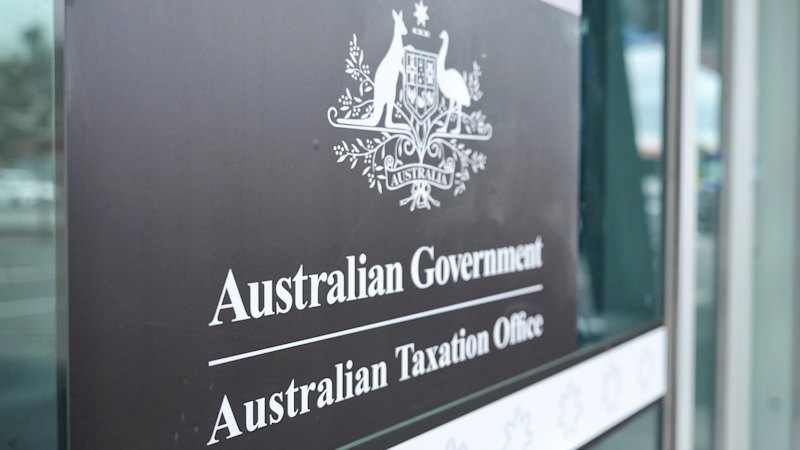
The business community is stepping up its calls on the tax office to rethink its abrupt decision to stop accepting credit card payments, warning that entrepreneurs and smaller businesses that need cash flow flexibility will be hit the hardest.
2026-10-07 · The Sydney Morning Herald
‘Double standard’: Business groups urge ATO to reverse its credit card ban · assertive framing

Claims (24 extracted, 0 hedged)

The business community is stepping up its calls on the tax office to rethink its abrupt decision to stop accepting credit card payments, warning that entrepreneurs and smaller businesses that need cash flow flexibility will be hit the hardest. asserted
that → step → hardest
The Australian Taxation Office (ATO) convened a meeting with business lobby groups on Wednesday after an outcry over its move to scrap credit cards as a payment method from the end of November – a change it announced on October 1 as a national ban on credit card surcharges came into effect. asserted
ban → convene → effect
The surcharge ban, which is estimated to save consumers about $1.6 billion annually, was introduced by the Reserve Bank as part of a sweeping overhaul of Australia’s payment systems. asserted
which → estimate → systems
The reforms also include a lower cap on “interchange fees,” which merchants pay to a customer’s bank to accept their card transaction. asserted
merchants → include → transaction
Various parts of the economy have scrambled to prepare for the changes over the past six months. asserted
parts → scramble → months
Retailers and restaurants have warned they would have to absorb extra transaction processing costs, and be forced to raise menu and product prices accordingly. asserted
they → warn → prices
Major banks – facing a $660 million reduction due to lower interchange fees – have already wound back the generosity of credit card sign-on bonuses and rewards points earning rates, as their cards’ perks and benefits were traditionally funded by those fees. asserted
perks → face → fees
Businesses which either didn’t or couldn’t absorb costs or increase prices have instead moved to no longer accept credit cards as a payment method. asserted
which → absorb → method
A large chunk of the nation’s renters are among those who have found they can no longer pay by credit card after Macquarie Bank removed the option from its popular DEFT rent processing platform. asserted
Bank → find → platform
The ATO’s credit card ban, revealed to members of its Small Business Stewardship Group on the eve of the surcharge ban, was one of the most significant developments resulting from the reforms. asserted
ban → reveal → reforms
It will take effect on November 30. asserted
It → take → November
The ATO insisted the change would not affect most taxpayers, with only 2.3 per cent of tax payments in the 2024 financial year made through a credit card. asserted
cent → insist → card
The agency said the majority of these were made by high net-worth individuals or major organisations. asserted
majority → say → individuals
However, the business community criticised the short notice period provided and said the looming deadline has left many operators in the lurch, especially those on payment plans who had intended to rely on the flexibility of credit cards to manage their cashflow during down periods of the year. asserted
who → criticise → year
Frustration was so high that the ATO held another meeting with members of the stewardship group on Wednesday morning. asserted
ATO → hold → morning
Andrew McKellar, chief executive of the Australian Chamber of Commerce and Industry, was in Tuesday’s meeting and said his group had been leading a push to reverse the ATO’s credit card ban. asserted
group → say → ban
“We are very concerned about the impact it will have on hundreds of thousands of small businesses across the country,” he said, adding that ATO’s decision showed “a clear double standard”. asserted
decision → have → standard
“Government is telling small business to absorb the hit from the surcharge ban and its cost, while the Tax Office is saying a different set of rules applies to it,” he said, urging the ATO and the government to “go back to the drawing board”. asserted
he → tell → board
They are doing it tough, with rising costs and a fourth interest rate increase last week,” McKellar said. asserted
McKellar → do → costs
“It is clear the ATO should listen to small business and reverse this credit card ban.” asserted
ATO → listen → ban
The Council of Small Business Organisations Australia, which is also a member of the ATO’s stewardship group, said it had also raised concerns about the impact of the decision during the talks. asserted
it → say → talks
“Particularly for small businesses that use credit cards as a cash flow management tool, [COSBOA] believes the decision warrants a rethink,” the organisation said in a statement. asserted
organisation → use → statement
An ATO spokesman said that Wednesday’s “out of session meeting” with small business lobby groups was held “to answer follow-up questions and work through implementation and transitional arrangements for affected taxpayers”. asserted
meeting → say → taxpayers
Treasurer Jim Chalmers and Assistant Minister for Treasury Andrew Leigh declined to comment. asserted
Chalmers → decline → Treasury

Give feedback · no sign-in needed

No sign-in needed for now. Your note is sent without a name, so it cannot be answered.

History Support