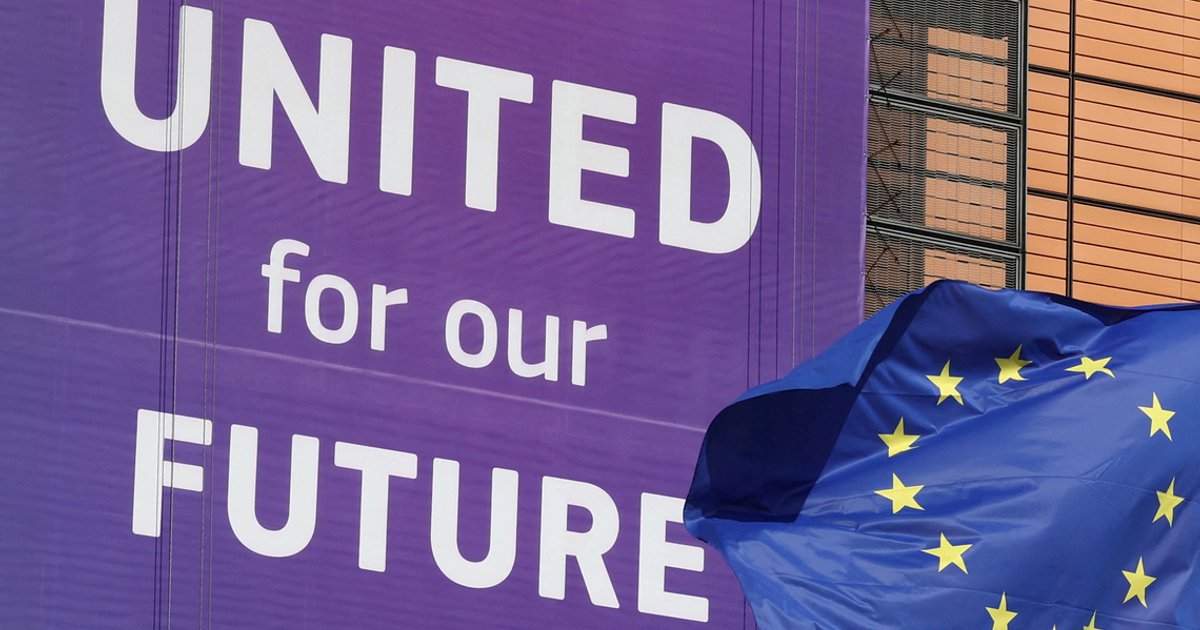
Photo via The Guardian

‘No more Viktor Orbán: EU plans 15-year probation period for new member states

Read the original at The Guardian ↗
Cite

Brussels, J. R. i. (2026, October 6). ‘No more Viktor Orbán: EU plans 15-year probation period for new member states. The Guardian. https://www.theguardian.com/world/2026/oct/06/eu-plans-15-year-probation-period-new-member-states-viktor-orban

Dated when The Aporia collected the article, usually within hours of publication. Check the original for its exact date and byline.

The Guardian · collected 2026-10-06 · by Jennifer Rankin in Brussels

Quick Summary

The European Commission proposes a 15-year probation period for new EU member states to prevent democratic backsliding, exemplified by Hungary’s Viktor Orbán, where sanctions can be imposed if these countries breach basic democratic standards. Marta Kos, the EU commissioner for enlargement, suggests quicker mechanisms than Article 7 of the EU treaty to address such issues. This plan aims to protect the bloc from future leaders who might undermine its values and decision-making processes.
Written by AI on 2026-10-06, from this article's own text only (the story summary below draws on all the coverage).
See how they differ ↓

AI analysis

Story summary

European Commission proposed measures on October 6 to prepare the EU for expansion to include countries like Montenegro, Albania, Ukraine, and Moldova. The proposals aim to safeguard against democratic backsliding by new members, such as suspending voting rights during a 15-year probation period if they fail to adhere to EU values. The Commission also suggested gradually integrating future members into EU programs in sectors like energy, transport, digital, and defense, with strict criteria for each scheme. Ursula von der Leyen, the European Commission President, emphasized the need for institutional preparation as enlargement advances. These proposals require approval from the current 27 member states before implementation.

Written for “EU Democratic Safeguards” on 2026-11-22, grounded in this article and the 1 other(s) covering the same event.

How they differ

2 outlets covered “EU Democratic Safeguards”.

What each outlet says

One AI summary per outlet of its latest article on this story, written from that article alone and checked against it. Open the article for the outlet's own words.

The GuardianThis outlet6 Oct

The European Commission proposes a 15-year probation period for new EU member states to prevent democratic backsliding, exemplified by Hungary’s Viktor Orbán, where sanctions can be imposed if these countries breach basic democratic standards. Marta Kos, the EU commissioner for enlargement, suggests quicker mechanisms than Article 7 of the EU treaty to address such issues. This plan aims to protect the bloc from…

‘No more Viktor Orbán: EU plans 15-year probation period for new member states (this article)
The Straits Times6 Oct

On October 6, the European Commission proposed measures to prepare for the inclusion of new member states like Montenegro, Albania, Ukraine, and Moldova while safeguarding democratic values within the EU. The proposals include mechanisms to suspend voting rights for up to 15 years if a new member violates EU principles and limitations on financial aid to Ukraine’s agricultural sector. These reforms aim to balance…

EU Commission floats safeguards against democratic backsliding by new members →

Compared with similar articles

This article reads unscored and hedges 16% of its claims. Each row says how that neighbour differs.
The Straits Times
Leans right Hedges 1 of 10 claims Outlet record 64/100

Story

EU Democratic Safeguards
Politics · 2 article(s) covering the same event. See how they differ ↑
How this article was measured signals, leaning charts, publisher record, byline, topics and claims

Signals How these are calculated →

Claims extracted
32
sentences that state something as happening or true
Uncertain
16%
5 of 32 hedged ("reportedly", "may", "according to")
Leaning
withheld
no quote in the article backed the model's score
Publisher signals
64/100
The Guardian's corrections and hedging, across everything collected from it. Not a measure of accuracy.
Outlets on this story
2
Politics
Same framing elsewhere
1
articles that frame the event the way this one does
Analyzed 2026-10-06 · how these are computed

How this is being covered How these are calculated →

Article leaning vs. publisher reliability
Source leaning vs. consistency

Publisher

The Guardian · 3798 article(s) · 8 correction(s) detected
Running correction rate · 8 correction(s)

Who wrote this

Jennifer Rankin in Brussels
11 article(s) here · 1 carrying a prediction
The EU and UK will hold a long-awaited summit in Brussels on Friday – the second since Brexit – to hammer out the UK’s longer-term relationship with the bloc.
2026-11-19 · assertive framing · What is at stake at the EU-UK summit in Brussels?
She expressed confidence all 27 member states would stand behind the loan, despite four central and eastern European countries having already ruled themselves out.
Five EU member states have announced plans to set up an offshore centre in Rwanda for people with no legal right to stay in Europe, in a pilot scheme that is expected to face legal challenges and has been denounced as “a grave moral failing”.
Schneider said upgrading the status of the CEU, which is privately funded, in Budapest would be “a symbol for academic freedom [and] of resilience” but depended on goodwill and funding independent of the Hungarian government.
Officials said their investigation focused on legal content, where a single video might not be problematic, but the cumulative effect of watching scores of them on one theme could damage users’ mental health.
Andy Burnham will meet the EU leaders Ursula von der Leyen and António Costa on 20 November in Brussels, with the aim of signing three agreements – on food and drink, carbon markets and youth exchange – as well as pledging a “trusted partnership” on steel and defence industries.
EU leaders will press Andy Burnham at a summit in Brussels to contribute more to Ukraine’s defence effort in 2027.
Rutte said: “Nato will continue to work closely with our allies in the Black Sea, adjusting our deterrence and defence posture as needed.”
In an interview with the Guardian and other European newspapers, the EU commissioner for enlargement, Marta Kos, outlined proposals for special safeguards to protect the bloc from leaders who could flout democratic values and hold hostage decision making, a pattern of behaviour exemplified for many by the former Hungarian prime minister.
The French president, Emmanuel Macron, has reacted warmly to Andy Burnham’s suggestion that the UK could rejoin the EU.
Also by Jennifer Rankin in Brussels
Nothing else under this byline is closely related to this article, so these are simply their most recent.
All 11 articles by Jennifer Rankin in Brussels →

Topics

European Moldova The European Commission Ukraine article 7

Subjects

Kos PERSON · 5× Moldova GPE · 4× Ukraine GPE · 4× China GPE · 3× European NORP · 3× Russia GPE · 3× Viktor Orbán PERSON · 2× Guardian ORG · 1× Marta Kos PERSON · 1× The European Commission ORG · 1×

Narrative

Ukraine and Moldova filed applications to join the EU days after the Russian attack, a step that jolted life into EU accession efforts in the western Balkans, a region of 17.4 million people, where Russia and China are vying to gain influence.
framing: assertive · carried by 1 article(s) · first seen 2026-10-06
In an interview with the Guardian and other European newspapers, the EU commissioner for enlargement, Marta Kos, outlined proposals for special safeguards to protect the bloc from leaders who could flout democratic values and hold hostage decision making, a pattern of behaviour exemplified for many by the former Hungarian prime minister.

Claims (32 extracted, 5 hedged)

The European Commission wants to ensure there is no repeat Viktor Orbán among the next generation of EU member states, as it set out plans to prepare for the bloc’s enlargement into eastern Europe in the next few years. asserted
it → want → years
In an interview with the Guardian and other European newspapers, the EU commissioner for enlargement, Marta Kos, outlined proposals for special safeguards to protect the bloc from leaders who could flout democratic values and hold hostage decision making, a pattern of behaviour exemplified for many by the former Hungarian prime minister. uncertain
who → outline → minister
“No more Viktor Orbán,” said Kos. asserted
Kos → say → ?
“We have to have quicker mechanisms than only article 7 [a sanction that allows a member state’s voting rights to be suspended] if the newcomers would go against the rule of law, democracy or our values.” asserted
newcomers → have → law
Under the plans Kos published on Tuesday, any new EU member state would face a 15-year probation period, during which they could be stripped of voting rights or EU funds for breaching basic democratic values or loyalty to the EU, the principle of sincere cooperation. uncertain
they → publish → cooperation
The plans would have to be agreed by EU member states. asserted
plans → have → states
The EU treaty’s article 7 permits member states to remove voting rights from a rogue member state for a “serious and persistent breach” of democratic values. asserted
article → permit → values
But this so-called nuclear option has never been triggered, despite lengthy discussions about democratic backsliding in Poland and Hungary, under previous governments. asserted
option → call → governments
The ultimate sanction was never taken, largely because the two central European allies used their veto power to protect each other. asserted
allies → take → other
Under the new proposals, the threshold for suspending voting rights – or another punishment – for breach of democratic standards, would be lower. asserted
threshold → suspend → standards
An EU official said: “This is a big innovation and an important message to citizens in more enlargement-sceptical countries that we have a very strong framework even if something went wrong after enlargement.” asserted
something → say → enlargement
But officials acknowledged the time-limited safeguard would eventually expire. asserted
safeguard → acknowledge → ?
“If this [safeguard] would be unlimited, we would … have the situation where we have first and second-class members,” Kos said. asserted
Kos → have → members
The call for stricter safeguards comes amid new momentum in EU enlargement, with Montenegro, Albania, Moldova and Ukraine all identified as frontrunners. asserted
Montenegro → come → frontrunners
The full-scale invasion of Ukraine in February 2022 injected new life into EU expansion, an issue which had long been moribund. asserted
which → inject → issue
Ukraine and Moldova filed applications to join the EU days after the Russian attack, a step that jolted life into EU accession efforts in the western Balkans, a region of 17.4 million people, where Russia and China are vying to gain influence. asserted
Russia → file → influence
The EU’s existing 27 member states must agree unanimously to admit new member states, with scepticism notably high among French and Czech voters. asserted
scepticism → exist → voters
Nevertheless, Kos said she believed enlargement was politically possible. asserted
enlargement → say → ?
“Member states also understand what is at stake,” she said, pointing to the contest for influence in eastern Europe and the Balkans. asserted
she → understand → Europe
She named Russia and China as “external disruptive forces, who are after our candidates”. asserted
who → name → candidates
Describing enlargement as “our strategic interest”, she said: “If we are not able to integrate our neighbourhood, somebody else is coming [and] weaponising them against us.” asserted
somebody → describe → us
As an example, she said Russia had “invested millions” trying to deter countries from a European path, citing elections in Moldova, an EU candidate country, and Armenia, which is seeking closer EU ties. asserted
which → say → ties
China, on the other hand, she suggested, uses its economic clout as an investor to influence countries. uncertain
she → suggest → countries
EU officials hope to open negotiations with Ukraine and Moldova on two negotiating areas of EU law next week. asserted
officials → hope → law
Specifically, these are the “clusters” – thematic groups of negotiating files – for internal market and competitiveness, a vast swathe of the EU rulebook covering economic and monetary policy, tax policy, research and media. asserted
these → negotiate → policy
Kos said it was “much too early to speculate” on whether a country at war or with a frozen conflict on its territory could become an EU member. uncertain
country → say → territory
She confirmed that Ukrainian grain farmers would not get EU subsidies while facing restrictions on the EU market. asserted
farmers → confirm → market
Officials said Ukraine, known as the breadbasket of Europe and a vital supplier to Africa and the Middle East in prewar times, had a different scale of production to EU member states. asserted
Ukraine → say → states
EU leaders will discuss the ideas next week, when they will confront difficult choices. asserted
they → discuss → choices
In order to avoid gridlock in a potential EU of 35 members, governments will be invited to waive veto rights on issues such as taxation and sanctions policy – and accept they may not always have a European commissioner in Brussels. uncertain
they → avoid → Brussels
Attempts to shrink the size of the European Commission in the past have run into opposition, notably from Irish voters who rejected the Lisbon treaty in 2008, in part because they objected to the loss of a permanent Irish top official. asserted
they → shrink → official
Ireland voted in favour of the treaty the following year, after EU leaders pledged the EU executive would continue to have one commissioner per member state. asserted
executive → vote → state
Give feedback · no sign-in needed

No sign-in needed for now. Your note is sent without a name, so it cannot be answered.

History Support