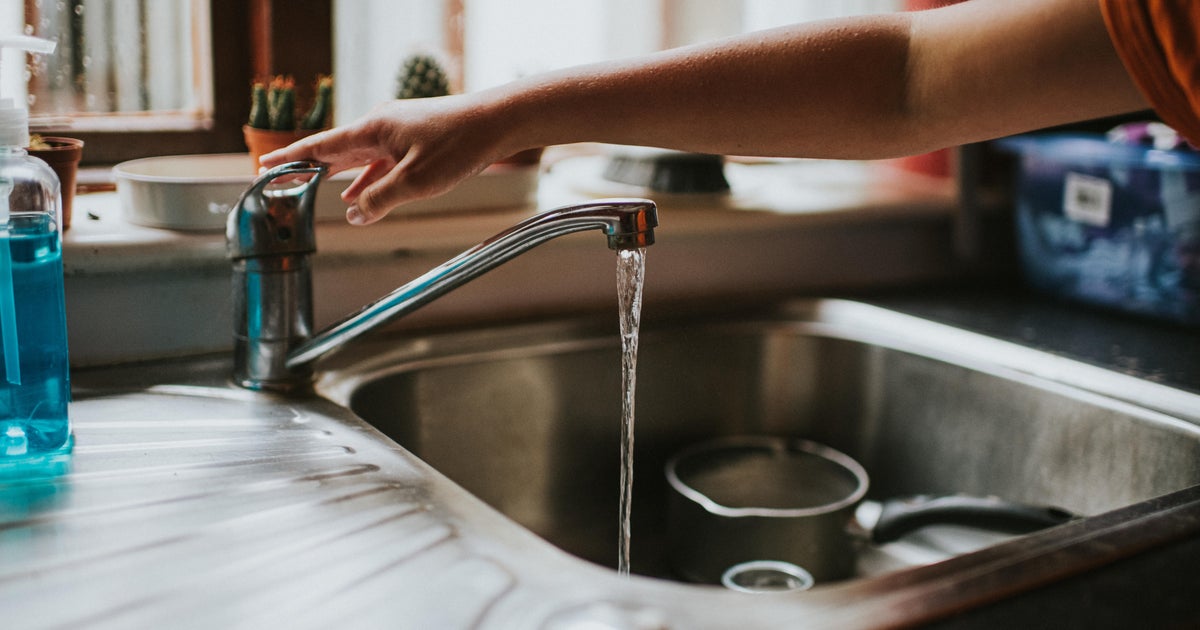
Photo via The Guardian

US households pay 62% more for water than they did a decade ago, study finds

Read the original at The Guardian ↗
Cite

Yang, M. (2026, October 6). US households pay 62% more for water than they did a decade ago, study finds. The Guardian. https://www.theguardian.com/us-news/2026/oct/06/households-drinking-water-cost-study

Dated when The Aporia collected the article, usually within hours of publication. Check the original for its exact date and byline.

The Guardian · collected 2026-10-06 · by Maya Yang

Quick Summary

A new study by Food & Water Watch reveals that US household water costs have increased by 62% over the past decade, surpassing inflation and grocery price increases. Analyzing data from the largest 500 community water systems serving approximately 45% of the U.S. population, the study found that while average annual bills rose to $531 in 2025 for a typical household using 60,000 gallons of water, costs varied widely, with some areas seeing increases as high as 177%. The research highlights significant disparities between publicly owned and corporate-owned water systems, where the latter charged nearly twice as much on average.
Written by AI on 2026-10-06, from this article's own text only (the story summary below draws on all the coverage).
See how they differ ↓

AI analysis

Story summary

Food & Water Watch, a Washington DC-based non-profit, reports that US households are paying 62% more for drinking water than they did a decade ago. The study analyzed billing data from the 500 largest community water systems in the US serving about 155 million people, or roughly 45% of the country's population. In 2025, the average household using 60,000 gallons of water paid $531 for drinking water service, marking a significant increase from the previous decade. This rise outpaces overall inflation, which has increased by 39%, and is double the rate of grocery price increases at 30%.

The American Water Works Association (AWWA) cites infrastructure renewal, resilience, and regulatory requirements as key cost drivers threatening drinking water affordability. The AWWA predicts that if communities rely solely on revenue from water bills to address these needs, average annual household drinking water bills would rise from $429 in 2025 to $969 by 2050, more than doubling in real terms. Additionally, federal support for the nation's water infrastructure has declined; since fiscal year 2022, Congress has appropriated at least $1 billion below authorized funding levels for a federal fund supporting state water projects.

Written for “Water Price Increase Usa” on 2026-11-22, grounded in this article and the 1 other(s) covering the same event.

How they differ

2 outlets covered “Water Price Increase Usa”.

What each outlet says

One AI summary per outlet of its latest article on this story, written from that article alone and checked against it. Open the article for the outlet's own words.

The GuardianThis outlet6 Oct

A new study by Food & Water Watch reveals that US household water costs have increased by 62% over the past decade, surpassing inflation and grocery price increases. Analyzing data from the largest 500 community water systems serving approximately 45% of the U.S. population, the study found that while average annual bills rose to $531 in 2025 for a typical household using 60,000 gallons of water, costs varied…

US households pay 62% more for water than they did a decade ago, study finds (this article)
CBS News7 Oct

A study by the nonprofit Food and Water Watch reveals that American households are paying 62% more for water now compared to a decade ago, with costs varying widely across different regions and utilities. The study attributes rising expenses to increased infrastructure investments and climate change adaptation efforts, noting declining federal support for water systems. In 2025, the average annual water bill among…

Americans are paying 62% more for water than a decade ago, study finds →

Compared with similar articles

This article reads leans left and hedges 15% of its claims. Each row says how that neighbour differs.
CBS News
Leans left Hedges 1 of 19 claims Outlet record 66/100

Story

Water Price Increase Usa
Economy/Business · 2 article(s) covering the same event. See how they differ ↑
How this article was measured signals, leaning charts, publisher record, byline, topics and claims

Signals How these are calculated →

Claims extracted
40
sentences that state something as happening or true
Uncertain
15%
6 of 40 hedged ("reportedly", "may", "according to")
Leaning
Leans left
of the writing, not the subject · beta estimate
Publisher signals
63/100
The Guardian's corrections and hedging, across everything collected from it. Not a measure of accuracy.
Outlets on this story
2
Economy/Business
Same framing elsewhere
1
articles that frame the event the way this one does
Analyzed 2026-10-06 · how these are computed

How this is being covered How these are calculated →

Article leaning vs. publisher reliability
Source leaning vs. consistency

Publisher

The Guardian · 2681 article(s) · 10 correction(s) detected
Running correction rate · 10 correction(s)

Who wrote this

Maya Yang
62 article(s) here · 1 carrying a prediction
Zohran Mamdani, New York City’s mayor, has signed a bill that will bring the city’s horse-drawn carriage industry to an end by 1 June 2028.
William Brunner, the captain-on-watch of the nearby Madison Stone tow boat across the cruise ship, told Fox8 he initially heard the tanker’s distress call on his radio.
The National Transportation Safety Board (NTSB) will investigate the cause of the crash with assistance from the NPS, officials added.
Authorities investigating a bomb found recently at an ethanol production plant in Peoria, Illinois, have taken a suspect into custody, according to the mayor there.
Voters across the US reflected on the significance of Colom’s victory, with many older voters expressing hope that it could signal a new chapter for a state and region marked by a long history of racism and segregation.
The historic SS United States has reached the end of its journey at sea, sinking Wednesday off the coast of Destin, Florida, where it will begin a new life underwater as an artificial reef.
Rivera-Deleon, originally from the Bronx, was arrested for “allegedly raping a woman in Central Park on October 24, 2026”, the New York City police department (NYPD) said, adding that he will also be charged with two rapes that occurred in the park in 2023 and 2021.
The US Food and Drug Administration (FDA) has issued a new warning on GLP-1 medications – which can facilitate weight loss – over a rare eye condition that could lead to sudden and permanent blindness.
The justices wrote that the case’s plaintiffs, which include the Center for Biological Diversity, a Big Bend river guide and a church preservation group, “claim that construction in the Big Bend sector will diminish their ability to use and enjoy the area”.
Parents and teachers across the US are criticizing Google’s announcement that schools choosing to block AI tools could also lose access to Google Search.
Also by Maya Yang
Nothing else under this byline is closely related to this article, so these are simply their most recent.
All 62 articles by Maya Yang →

Topics

Food & Water Watch Food & Water Watch’s New Hampshire Washington DC West Virginia

Subjects

West Virginia GPE · 4× Food & Water Watch ORG · 3× Grant PERSON · 2× New Hampshire GPE · 2× Puerto Rico GPE · 2× Food & Water Watch’s ORG · 1× Louisiana GPE · 1× Mary Grant PERSON · 1× Oregon GPE · 1× Washington DC GPE · 1×

Narrative

In a separate statement, the American Water Works Association (AWWA), a non-profit whose membership includes more than 4,300 utilities supplying roughly 80% of North America’s drinking water and treating nearly half its wastewater, pointed to infrastructure renewal, resilience and regulatory requirements as key cost drivers threatening drinking water affordability. “If communities rely exclusively on revenue from water bills to address these needs, average annual household drinking water bills would rise from $429 in 2025 to $969 by 2050 (2025 dollars) – more than doubling in real terms,” AWWA spokesperson Greg Kail said.
framing: assertive · carried by 1 article(s) · first seen 2026-10-06
Grant said communities could face increasingly difficult choices as they struggle to secure additional public investment.

Claims (40 extracted, 6 hedged)

US households are paying 62% more for drinking water than they did a decade ago – outpacing inflation, grocery prices and household incomes, according to a new study. uncertain
they → pay → study
Food & Water Watch, a Washington DC-based non-profit, analyzed 2025 billing data from the 500 largest community water systems in the US, which together serve about 155 million people, or 45% of the country’s population. asserted
which → base → population
The analysis compared current rates with data from a similar Food & Water Watch survey conducted in 2015. asserted
analysis → compare → 2015
The study does not include wastewater or storm water charges, which are often billed separately from drinking water service. asserted
which → include → service
In 2025, the average household using 60,000 gallons of water paid $531 for drinking water service, according to the study. uncertain
household → use → study
However, costs varied widely, with annual bills ranging from $133 at the cheapest system to $1,416 at the most expensive. asserted
bills → vary → expensive
Water prices rose 1.6 times faster than overall inflation between 2015 and 2025. asserted
prices → rise → 2015
Consumer prices increased 39% during that period, compared with a 62% jump in water bills, according to the study. uncertain
prices → increase → study
Water costs also rose more than twice as fast as groceries, which increased 30%, and eggs, which rose 28%. asserted
which → rise → groceries
Water bills also rose faster than household incomes, increasing 19% more than the national median household income between 2014 and 2024, the study found. asserted
study → rise → 2014
Mary Grant, Food & Water Watch’s water program director and a co-author of the study, said: “Water bills are increasing much faster than many households can keep up with and these escalating water costs impact every corner of the country. asserted
costs → say → country
Low-income households are being hit the hardest. asserted
households → hit → ?
“Corporate water abuses, federal disinvestment and climate change are supercharging water rate hikes across the country.” asserted
abuses → supercharge → country
Water bills in New Hampshire jumped 177% over the decade, followed by Oregon at 114% and West Virginia at 95%. asserted
bills → jump → %
In Louisiana, Maryland and West Virginia, water bills grew at roughly twice the rate of state median household incomes, while in New Hampshire water bills increased nearly five times faster. asserted
bills → grow → Hampshire
The study also found a major disparity between publicly owned and for-profit water systems. asserted
study → find → systems
Corporate-owned utilities charged the average household $823 a year, compared with $494 for publicly owned systems – a difference of $329, or 67%. asserted
utilities → own → 329
Corporate systems accounted for just 11% of the 500 systems the study analyzed but represented 44% of the 25 most expensive systems. asserted
study → account → systems
The study added that 70% of the top 10 were owned by for-profit corporations. asserted
% → add → corporations
California accounted for 52% of the 25 most expensive water systems. asserted
California → account → systems
By contrast, all 25 of the least expensive systems were publicly owned. asserted
25 → own → systems
About 60% of the least expensive systems were in the south, including many in Florida and Georgia, the study found. asserted
study → include → Florida
Water was even less affordable for low-income households, according to the study. uncertain
Water → accord → study
Water bills exceeded the study’s affordability threshold in 93% of systems, costing more than 1.5% of income for the poorest fifth of households. asserted
bills → exceed → households
Only Idaho and Utah stayed below the threshold. asserted
Idaho → stay → threshold
West Virginia and Puerto Rico faced the heaviest financial burdens, the study found. asserted
study → face → burdens
Water bills consumed about 11% of income for low-income households in West Virginia and roughly 20% in Puerto Rico, which the study described as “simply unaffordable by any metric”. asserted
study → consume → metric
Grant of Food & Water Watch said water systems must make updates to repair “ageing water lines and help clean up toxic contamination from lead pipes, Pfas forever chemicals, nitrate pollution from industrial agriculture, the list goes on”. asserted
list → say → agriculture
She added: “Corporate control of water systems exacerbates this affordability crisis, as big water monopolies take away local control, prioritize profit and hike water prices even higher.” asserted
monopolies → add → prices
Grant said communities could face increasingly difficult choices as they struggle to secure additional public investment. uncertain
they → say → investment
“Without real solutions to hold polluters accountable, establish local affordability programs and expand federal support, systems serving vulnerable communities could face the impossible choice: forgo an urgent water safety project or price many out of water service,” she said. uncertain
she → hold → service
In a separate statement, the American Water Works Association (AWWA), a non-profit whose membership includes more than 4,300 utilities supplying roughly 80% of North America’s drinking water and treating nearly half its wastewater, pointed to infrastructure renewal, resilience and regulatory requirements as key cost drivers threatening drinking water affordability. “If communities rely exclusively on revenue from water bills to address these needs, average annual household drinking water bills would rise from $429 in 2025 to $969 by 2050 (2025 dollars) – more than doubling in real terms,” AWWA spokesperson Greg Kail said. asserted
Kail → include → terms
“That would mean an estimated 30.4m households – or 21.5% – would spend more than 2.5% of their income on drinking water, and 53.5m households – 37.8% – would exceed a 1.5% income threshold. asserted
households → mean → threshold
An estimated $13.6bn per year in assistance would be needed by 2050 to keep water bills below commonly understood affordability benchmarks,” Kail added. asserted
Kail → need → benchmarks
Meanwhile, the National Association of Water Companies (NAWC), a trade association representing privately owned water and wastewater utilities, said it had not reviewed the Food & Water Watch study but emphasized the growing costs of maintaining water systems. asserted
it → represent → systems
“Affordability is a legitimate challenge for many households and one that NAWC and its members take seriously,” NAWC spokesperson Jenn Kocher said, citing costs tied to ageing infrastructure, Pfasand lead regulations, cybersecurity and severe weather. asserted
Kocher → take → infrastructure
Kocher also highlighted customer-assistance programs offered by private water companies, saying: “Many regulated, private water companies offer robust assistance programs that help low-income customers maintain service and manage bills. asserted
customers → highlight → bills
These programs are often overlooked in rate comparisons. asserted
programs → overlook → comparisons
“By comparison, many government-owned utilities face legal or other restrictions on cross-subsidizing customers, which can limit the types of assistance programs they are able to provide,” she added. asserted
she → own → programs
“Evaluating affordability based solely on published rate schedules can produce a misleading picture of what many customers actually pay after assistance and conservation programs are taken into account,” Kocher continued. asserted
Kocher → evaluate → account
Give feedback · no sign-in needed

No sign-in needed for now. Your note is sent without a name, so it cannot be answered.

History Support