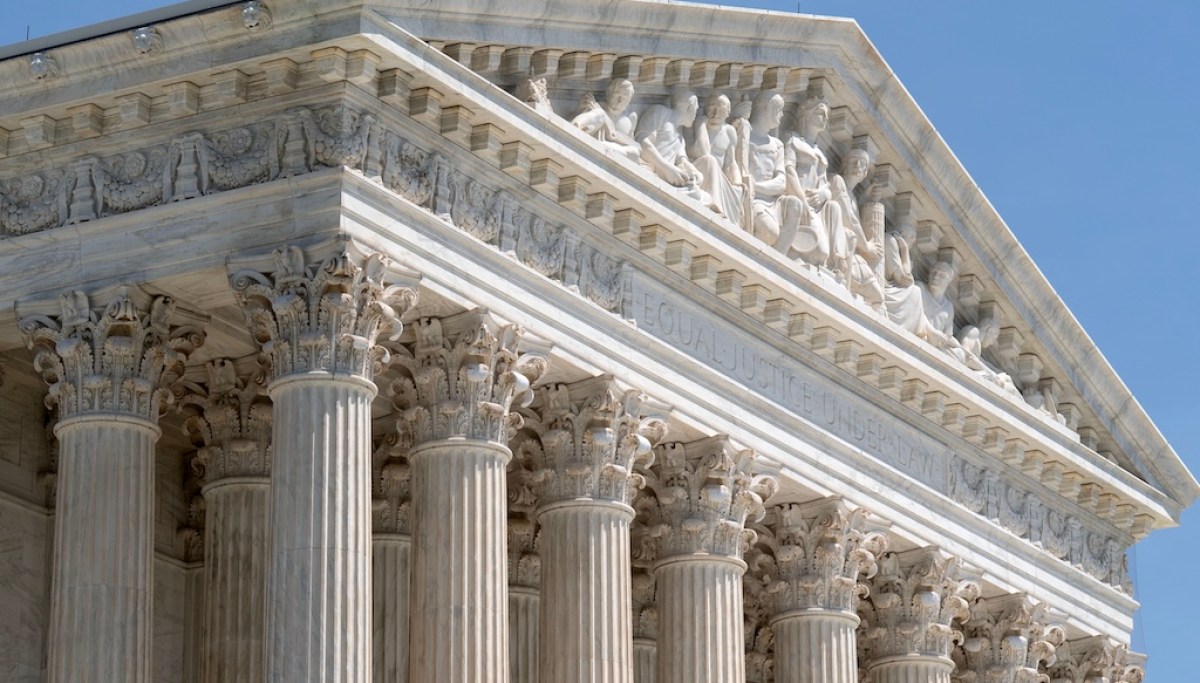
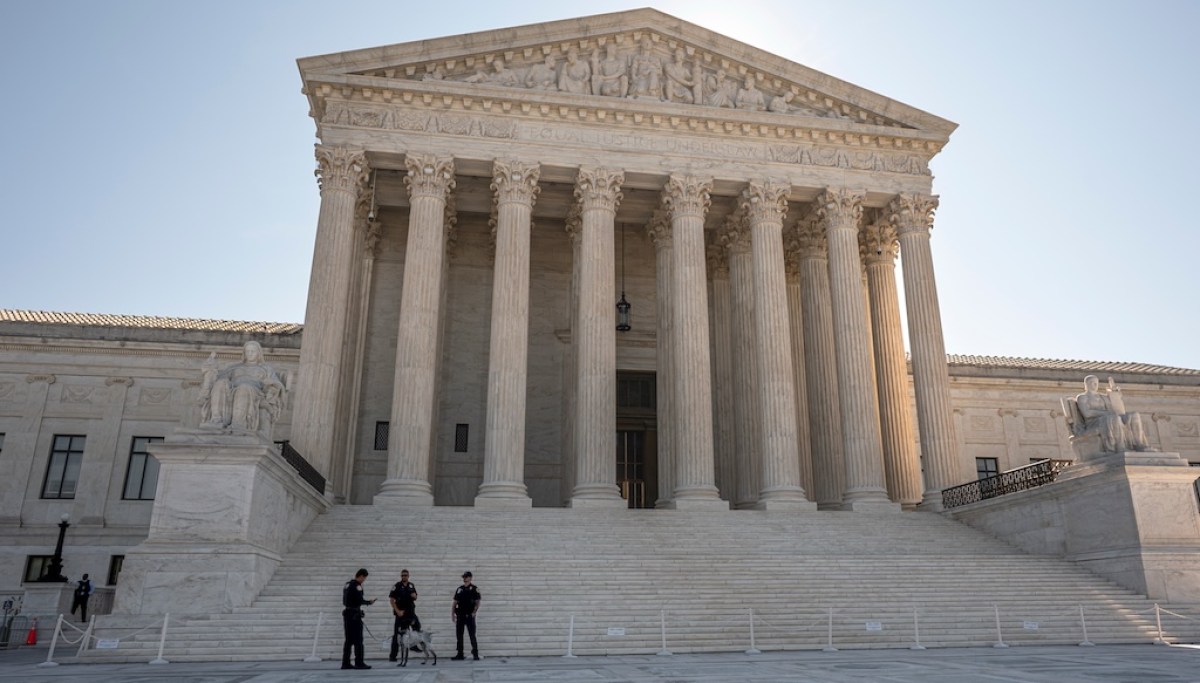
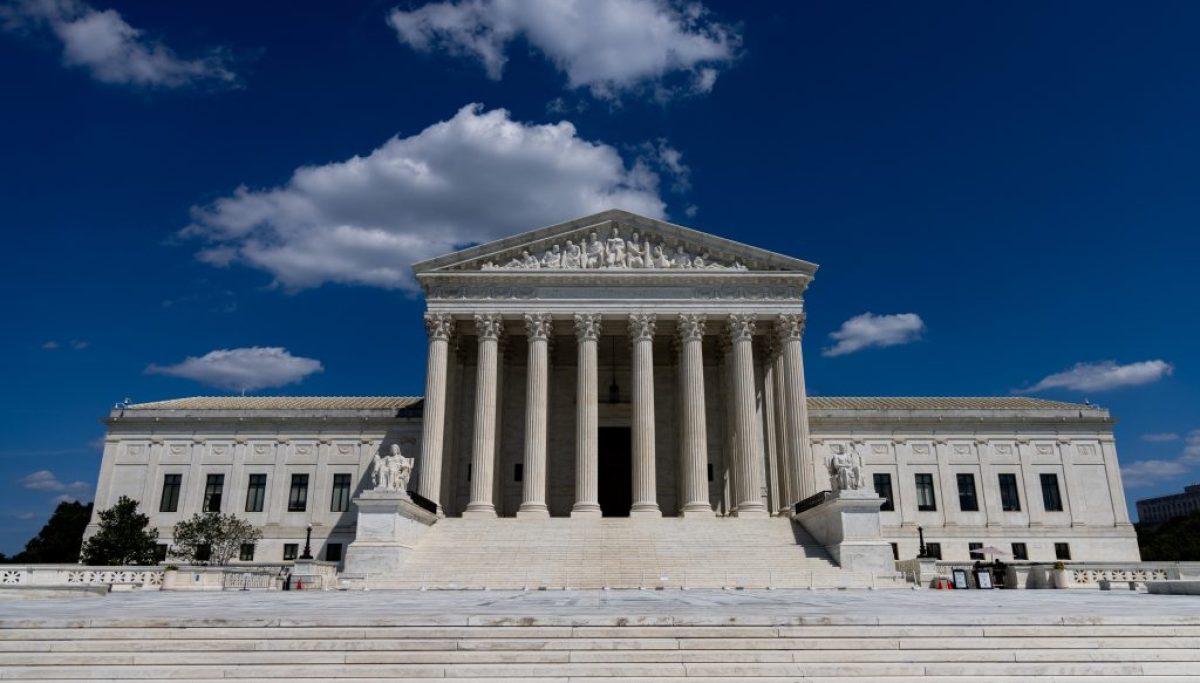
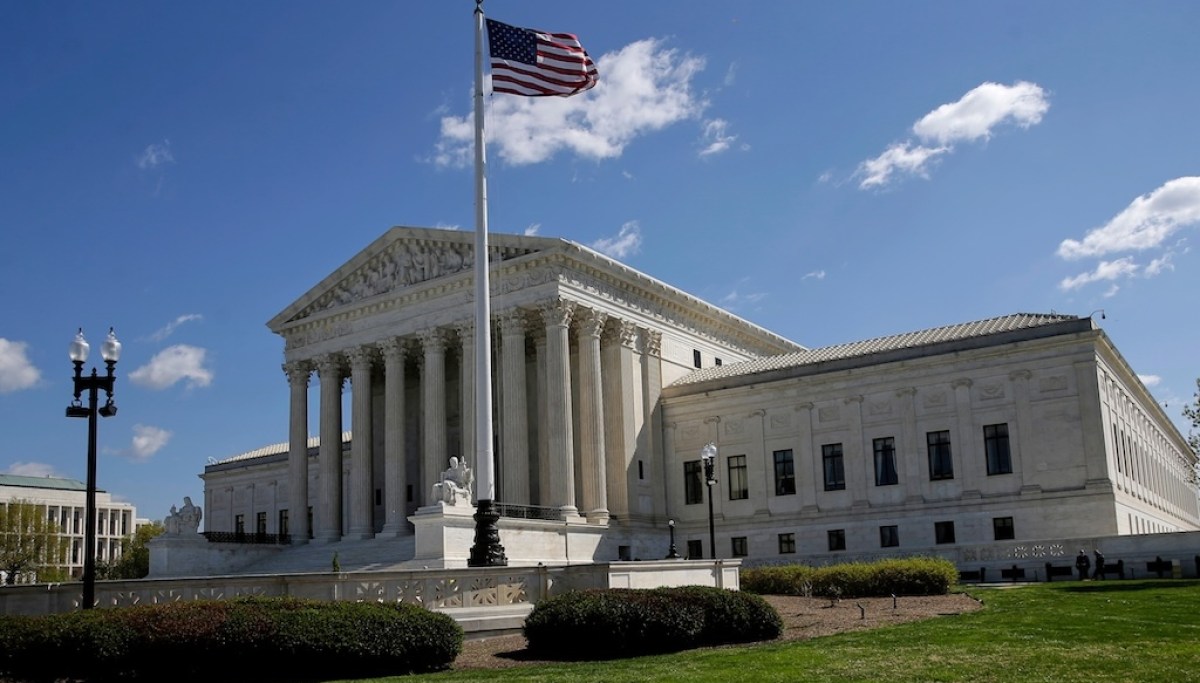
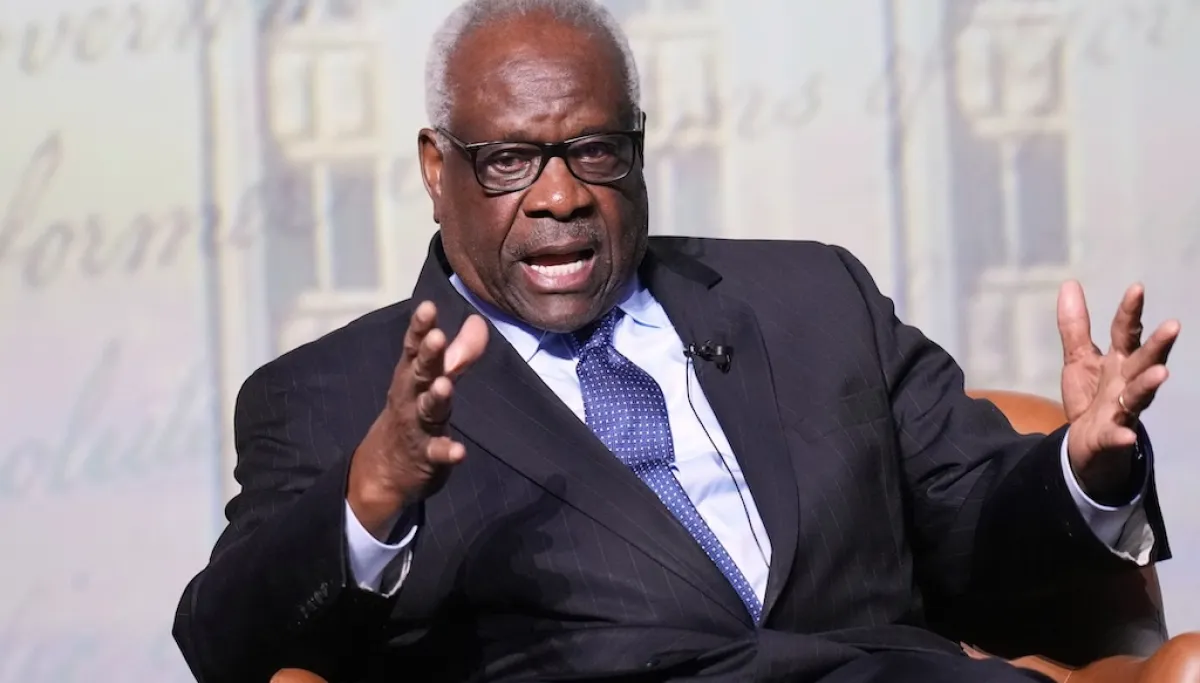
Photo via Washington Examiner

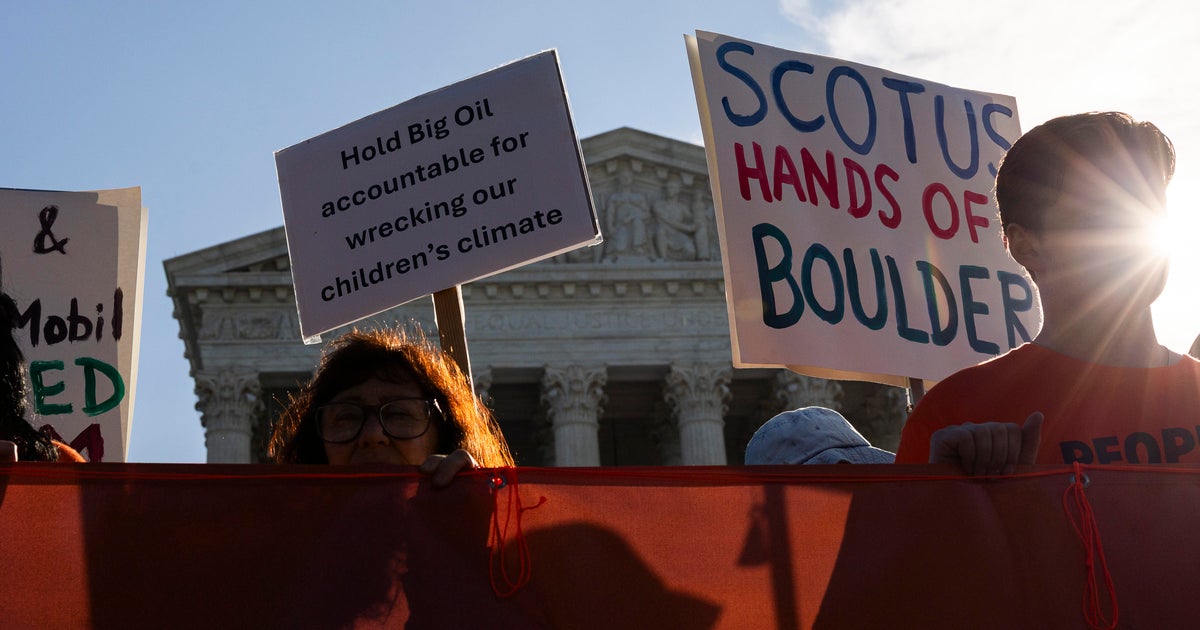
Supreme Court appears split on allowing Boulder’s costly climate change lawsuit to proceed

Read the original at Washington Examiner ↗
Cite

Birle, J. (2026, October 5). Supreme Court appears split on allowing Boulder’s costly climate change lawsuit to proceed. Washington Examiner. https://www.washingtonexaminer.com/news/supreme-court/4753643/supreme-court-appears-split-boulder-colorado-costly-climate-change-lawsuit/

Dated when The Aporia collected the article, usually within hours of publication. Check the original for its exact date and byline.

Washington Examiner · collected 2026-10-05 · by Jack Birle

Quick Summary

During Supreme Court oral arguments in Suncor Energy v. County Commissioners of Boulder County, justices were divided on whether to allow Boulder County's climate change lawsuit against oil companies to proceed. The case hinges on the Clean Air Act’s federal jurisdiction over air pollution and constitutional limits on states’ regulatory powers. Justice Elena Kagan questioned if cross-border pollution could be regulated by affected states, while Chief Justice John Roberts worried about the lack of limiting principles for similar lawsuits across jurisdictions.
Written by AI on 2026-10-05, from this article's own text only (the story summary below draws on all the coverage).
See how they differ ↓

AI analysis

Story summary

The Supreme Court opened its new term on Monday by hearing arguments in Suncor Energy v. Boulder County, a landmark case that could determine whether states and local governments can sue oil and gas companies for climate change damages. The case, which began in 2018 when Boulder County sued Exxon Mobil and Suncor Energy, accuses these companies of contributing to climate-related harms through their fossil fuel operations. The lawsuit aims to hold the companies financially responsible for local climate impacts using state tort laws.

If the Supreme Court allows such lawsuits, it could set a precedent for similar cases across the nation, potentially affecting industries that emit carbon and leading to increased costs for consumers due to higher legal liabilities. Conversely, if the court rules against Boulder County, it would limit states' ability to use their courts for addressing national policy issues like climate change through tort law, thereby protecting manufacturers from an expanding patchwork of lawsuits based on complex environmental problems.

Written for “Supreme Court Climate Case” on 2026-11-21, grounded in this article and the 35 other(s) covering the same event.

How they differ

12 outlets covered “Supreme Court Climate Case”.

What each outlet says

One AI summary per outlet of its latest article on this story, written from that article alone and checked against it. Open the article for the outlet's own words.

Washington ExaminerThis outlet5 Oct

During Supreme Court oral arguments in Suncor Energy v. County Commissioners of Boulder County, justices were divided on whether to allow Boulder County's climate change lawsuit against oil companies to proceed. The case hinges on the Clean Air Act’s federal jurisdiction over air pollution and constitutional limits on states’ regulatory powers. Justice Elena Kagan questioned if cross-border pollution could be…

Supreme Court appears split on allowing Boulder’s costly climate change lawsuit to proceed (this article)9 articles from Washington Examiner on this story
CBS News6 Oct

The U.S. Supreme Court heard oral arguments regarding an attempt by energy companies to prevent a lawsuit filed by Boulder County and the city of Boulder, Colorado. The plaintiffs aim to hold these companies responsible for damages caused by global climate change. Eight justices participated in the hearing.

U.S. Supreme Court wrestles with bid by energy companies to block major climate suit →7 articles from CBS News on this story
Fox News10 Oct

Energy policy experts warn that a Supreme Court decision in favor of climate change lawsuits against oil companies could lead to the bankruptcy of these firms and significant increases in gas prices. The case, Suncor v. Boulder, centers on whether federal law preempts state legal claims seeking damages from fossil fuel producers for alleged climate-related harms. During oral arguments, Justice Clarence Thomas…

Supreme Court climate case could bankrupt oil companies, send gas prices soaring, experts warn →5 articles from Fox News on this story
NPR5 Oct

Today marks the start of a significant Supreme Court term with arguments in a major climate change case where Boulder, Colorado is suing Suncor and Exxon Mobil for misleading the public about fossil fuel harms. Meanwhile, Brazil's presidential race will head to a runoff between Luiz Inácio Lula da Silva and Flávio Bolsonaro after neither candidate secured enough votes in the first round.

SCOTUS hears major climate change case. And, Brazil's presidential race goes to runoff →3 articles from NPR on this story
NBC News5 Oct

The Supreme Court's new term starts with a case where oil companies seek to dismiss lawsuits filed by cities like Boulder, Colorado, claiming the companies should pay damages for climate change impacts. The lawsuit against Exxon Mobil and Suncor Energy alleges these firms misled consumers about greenhouse gas effects, while the defendants deny wrongdoing and argue that federal jurisdiction, not states, is…

New Supreme Court term begins with a climate change case seeking to hold energy companies liable →3 articles from NBC News on this story
Reason5 Oct

The Supreme Court is set to hear oral arguments in the case of Suncor Energy v. Boulder County on October 9th, where fossil fuel companies are arguing that all state-law-based tort lawsuits regarding climate change damages should be preempted by federal law. This could have significant implications for environmental and climate policy in the United States. The author will discuss this case at two events: one at Penn…

Unpacking the Suncor Oral Argument →2 articles from Reason on this story
Show 6 more outlets
Los Angeles Times5 Oct

During a Supreme Court hearing, justices expressed skepticism about allowing state-based lawsuits against oil producers over climate change damages. Justices Brett Kavanaugh and Elena Kagan suggested that such claims might be preempted by federal law under the Clean Air Act. The case involves Colorado’s ruling that Boulder County can sue for damages in local court, which could impact similar pending litigation in…

Supreme Court sounds wary of state-based climate change suits against oil producers →2 articles from Los Angeles Times on this story
The Straits Times5 Oct

The US Supreme Court is set to hear arguments in Suncor v Boulder on October 5, where plaintiffs from Colorado are suing oil companies for damages related to climate change. The case involves claims that ExxonMobil and Suncor knowingly caused and concealed the dangers of fossil fuels, resulting in significant financial losses due to extreme weather events. At stake is whether federal law pre-empts these state-level…

US Supreme Court hears bid to shut the door on climate suits →
ABC News (US)5 Oct

The Supreme Court's new term starts with significant cases involving climate change, gun rights, and immigration policies. In the climate change case, energy companies Suncor and ExxonMobil seek to block lawsuits in Boulder, Colorado, where local officials claim these companies should contribute financially to damages caused by climate change. The court will also examine challenges to state laws banning certain…

Supreme Court term begins with cases on climate change, immigration and gun rights →
Toronto Star5 Oct

The Supreme Court's new term begins with significant cases addressing climate change, gun control, and immigration policies. Energy companies like Suncor and ExxonMobil are challenging lawsuits in Boulder, Colorado, which seek to hold them financially responsible for damages caused by climate change. Additionally, the court will consider challenges to state laws banning assault-style weapons and Trump's deportation…

A new Supreme Court term begins with cases on climate change, immigration and gun rights →
The Guardian5 Oct

The US Supreme Court will hear arguments on Monday concerning Suncor Energy’s and ExxonMobil’s bid to block climate damage lawsuits brought by Boulder County. Local officials argue that these oil companies should cover some of the costs associated with climate impacts, while the companies assert federal law prevents state courts from handling such cases. If the court rules in favor of the fossil fuel industry, it…

US supreme court to hear big oil’s bid to block climate damage lawsuits →
CBC6 Oct

The U.S. Supreme Court heard arguments on whether local governments can sue oil and gas companies for climate damages in state courts. Boulder, Colorado, is suing Suncor and ExxonMobil to recover costs from climate-related disasters like the Marshall Fire, which caused $2 billion in damage. Chief Justice John Roberts expressed concern about a potential flood of similar lawsuits across the country, while Justice…

What U.S. Supreme Court judges said at a hearing on climate damages from oil and gas →

Where they agree and split

Agreed

AI · cited, from two or more outlets

  • The case involves whether state courts can hear lawsuits against energy companies for damages related to climate change.13
Quoted from the coverage (2)

About a dozen states have banned semiautomatic rifles like AR-15s, which are often called assault weapons.

4 outlets

Justice Elena Kagan compared the climate change lawsuits to previous claims against tobacco and opioid companies brought by states on behalf of their citizens.

4 outlets

Disputed

Picked by our model, which is sometimes wrong

  • CBS News and The Guardian present different perspectives on the potential impact of the Supreme Court's decision, with CBS focusing on the procedural aspects while The Guardian emphasizes the broader implications for climate accountability.13

Framing

How the first headlines put it

  • CBS News and The Straits Times both frame the case as a bid to shut down climate change lawsuits, but CBS focuses more on the procedural aspects while The Straits Times highlights the broader implications.12
  • ABC News frames the Supreme Court's new term with multiple high-profile cases including climate change, immigration, and gun rights, whereas Fox News emphasizes the potential financial impact on oil companies if the court rules in favor of local governments.45
The full story: what happened, how it changed, and all 36 articles →

Compared with similar articles

This article reads unscored and hedges 10% of its claims. Each row says how that neighbour differs.
The Guardian
Leans left Hedges 5 of 36 claims Outlet record 64/100
Washington Examiner
Hedges 9 of 22 claims Outlet record 67/100
Washington Examiner
Leans left Hedges 12 of 56 claims Outlet record 67/100
Los Angeles Times
Hedges 19 of 57 claims Outlet record 95/100
Washington Examiner
Leans strongly right Hedges 2 of 34 claims Outlet record 67/100
NPR
Hedges 8 of 52 claims Outlet record 60/100
NBC News
Leans left Hedges 7 of 33 claims Outlet record 78/100
Washington Examiner
Hedges 7 of 40 claims Outlet record 67/100
Reason
Hedges 2 of 10 claims Outlet record 67/100
CBS News
Hedges 6 of 46 claims Outlet record 66/100

Story

Supreme Court Climate Case
Environment · 36 article(s) covering the same event. Compare every outlet's account →
How this article was measured signals, leaning charts, publisher record, byline, topics and claims

Signals How these are calculated →

Claims extracted
20
sentences that state something as happening or true
Uncertain
10%
2 of 20 hedged ("reportedly", "may", "according to")
Leaning
not political
takes no side on a contested political question
Publisher signals
67/100
Washington Examiner's corrections and hedging, across everything collected from it. Not a measure of accuracy.
Outlets on this story
36
Environment
Same framing elsewhere
1
articles that frame the event the way this one does
Analyzed 2026-10-05 · how these are computed

How this is being covered How these are calculated →

Article leaning vs. publisher reliability
Source leaning vs. consistency

Publisher

Washington Examiner · 5250 article(s) · 11 correction(s) detected
Running correction rate · 11 correction(s)

Who wrote this

Jack Birle
55 article(s) here · 1 carrying a prediction
The Supreme Court ruled 6-3 earlier this year in Trump v. Slaughter that the president could fire officials at most independent agencies within the executive branch, but held 5-4 in the case Trump v. Cook that the Federal Reserve was uniquely insulated from the broad at-will firing power the president enjoys over the executive branch.
The Supreme Court will hear a major Second Amendment case over state assault weapons bans next month, but Justice Clarence Thomas is calling on the high court to consider another major legal war over gun laws in the coming terms.
“Implicit bias training” is a type of diversity, equity, and inclusion program, which proponents argue educates people about bias they may have against different races or people of the opposite sex, while opponents claim it pushes a hard-left view of race and sex.
President Donald Trump has touted plans to renovate East Potomac Golf Links and build a “World Class Championship Golf Course,” posting plans last month that would remove the popular public access and paths along the golf course on Hains Point.
The Supreme Court announced Friday it will hear a case over the legality of President Donald Trump’s January 2025 executive order that largely barred people from applying for asylum at the southern border.
A Utah judge ruled on Monday that Tyler Robinson will go to trial in 2028 on murder charges related to the September 2025 killing of conservative activist Charlie Kirk.
As Sen. Cindy Hyde-Smith (R-MS) narrowly trails her Democratic challenger Scott Colom by just a few hundred votes in the unexpectedly close Senate race in Mississippi, Republicans are now hoping a Supreme Court loss on late-arriving mail ballots earlier this year will help save their senator from being the latest victim of the blue tsunami.
President Donald Trump’s first term in office was highlighted by the avalanche of judicial nominees he was able to get confirmed to the bench, but with Democrats set to take control of the Senate in January, the race is on to push through nominations before time runs out next year.
The coalition of Catholic schools argued that asking them to admit families who do not follow Catholic teachings would sacrifice their beliefs, which they say violates their First Amendment rights.
Also by Jack Birle
Nothing else under this byline is closely related to this article, so these are simply their most recent.
All 55 articles by Jack Birle →

Topics

Boulder Boulder County Suncor The Supreme Court the Clean Air Act

Subjects

Boulder GPE · 6× Suncor ORG · 5× The Supreme Court ORG · 3× Boulder County GPE · 2× Colorado GPE · 2× Harris PERSON · 2× Roberts PERSON · 2× County Commissioners of Boulder County ORG · 1× Democrat NORP · 1× Suncor Energy v. ORG · 1×

Narrative

Suncor lawyer Kannon Shanmugam argued to the justices that Boulder’s lawsuit should be dismissed both because the Clean Air Act gives the federal government jurisdiction over the regulation of greenhouse gas emissions and air pollution, and because the Constitution does not allow states to regulate matters beyond their borders.
framing: assertive · carried by 1 article(s) · first seen 2026-10-05
The case is expected to have sweeping ramifications for similar lawsuits that climate activists and Democrat-led jurisdictions have attempted to bring against oil companies, either broadly allowing them to continue or shutting them down as barred by federal law.

Claims (20 extracted, 2 hedged)

The Supreme Court appeared split over whether to allow Boulder County, Colorado’s climate-change damages lawsuit against oil companies to proceed, with the justices appearing to have reservations about both sides’ sweeping arguments during Monday’s hearing. asserted
justices → appear → hearing
The high court heard oral arguments in Suncor Energy v. County Commissioners of Boulder County on whether a lawsuit brought by Boulder County, which seeks to hold oil companies accountable for their alleged role in global climate change, can proceed. asserted
companies → hear → change
The case is expected to have sweeping ramifications for similar lawsuits that climate activists and Democrat-led jurisdictions have attempted to bring against oil companies, either broadly allowing them to continue or shutting them down as barred by federal law. asserted
them → expect → law
Suncor lawyer Kannon Shanmugam argued to the justices that Boulder’s lawsuit should be dismissed both because the Clean Air Act gives the federal government jurisdiction over the regulation of greenhouse gas emissions and air pollution, and because the Constitution does not allow states to regulate matters beyond their borders. asserted
states → argue → borders
Shanmugam emphasized the constitutional argument, leading to pushback from some of the justices. asserted
Shanmugam → emphasize → justices
Chief Justice John Roberts and Justice Elena Kagan both questioned whether there are situations in which pollution caused in one state could be subject to a different state’s laws if it is directly harming the other state. uncertain
it → question → state
Several of the justices questioned why Shanmugam was not just making the argument that the Clean Air Act forecloses the lawsuit, which they noted would be easier under the high court’s precedents. asserted
they → question → precedents
Principal Deputy Solicitor General Sarah Harris argued in support of Suncor for the Department of Justice and similarly faced sharp questions about whether the Constitution forecloses the lawsuit. asserted
Constitution → argue → lawsuit
Justice Brett Kavanaugh asked Harris why the high court’s previous rulings on the Clean Air Act, which assert that air pollution is a federal matter, are not enough to form the basis of her argument on why the Boulder lawsuit should be tossed. asserted
lawsuit → ask → argument
Harris claimed that both arguments, regarding the constitutionality of the law and the Clean Air Act, would individually be enough for Suncor to win. asserted
Suncor → claim → law
Several justices expressed concern over the scope of Boulder’s arguments to keep its lawsuit alive, specifically over how broad the ensuing lawsuits could be. uncertain
lawsuits → express → lawsuit
Kevin Russell, the lawyer arguing for Boulder, was immediately questioned by Justice Clarence Thomas over what the limiting principle for lawsuits over climate change damages would be. asserted
principle → argue → damages
Roberts expressed concern about allowing the lawsuit to proceed, asking what would prevent other cities and states from emulating Boulder’s lawsuit and piling up challenges against these companies over global climate change without any limits. asserted
what → express → limits
So it’s not as if anything other than your litigation is going to address it. asserted
anything → ’ → it
So as a practical matter, what should happen?” Roberts asked. asserted
Roberts → happen → matter
Monday’s oral arguments only featured an eight-justice bench, after Justice Samuel Alito recused himself from the case last week. asserted
Alito → feature → case
Alito did not explain his rationale, but he has previously recused himself from climate change cases over his financial interests in oil companies. asserted
he → explain → companies
The eight-person bench leaves open the chance of a rare 4-4 deadlock, which would leave the issues in the case unresolved, as if the Supreme Court had never taken it up. asserted
Court → leave → it
The eight-justice panel on Monday did not appear clearly convinced by arguments from Suncor and the DOJ that Boulder’s lawsuit is constitutionally foreclosed, but a majority appeared open to shutting down the county’s lawsuit on the grounds that the Clean Air Act preempts Colorado state law. asserted
Act → appear → law
The Suncor case was the first the Supreme Court heard in its new term, and the justices are expected to issue a ruling as soon as early 2027. asserted
justices → hear → 2027
Give feedback · no sign-in needed

No sign-in needed for now. Your note is sent without a name, so it cannot be answered.

History Support