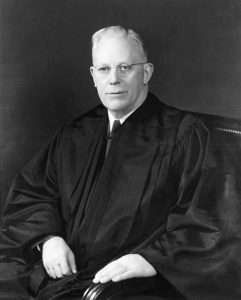
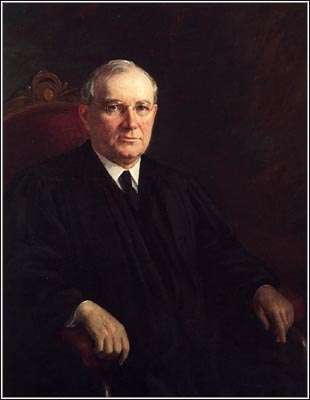
Photo via Reason

Today in Supreme Court History: October 5, 1953

Read the original at Reason ↗
Cite

Blackman, J. (2026, October 5). Today in Supreme Court History: October 5, 1953. Reason. https://reason.com/volokh/2026/10/05/today-in-supreme-court-history-october-5-1953-6/

Dated when The Aporia collected the article, usually within hours of publication. Check the original for its exact date and byline.

Reason · collected 2026-10-05 · by Josh Blackman

Quick Summary

No summary of this article yet; the story summary below covers the event.

AI analysis

Story summary

On October 5, 1953, the Supreme Court heard arguments in *Baker v. Carr*, a case that would eventually lead to the landmark decision establishing the principle of "one person, one vote." This case challenged the malapportionment of Tennessee's legislative districts, where some rural areas had as much representation as urban areas despite having significantly fewer residents. The Court’s ruling on this day was pivotal because it set the stage for future cases that would require states to redraw their electoral maps based on population, ensuring more equitable representation. This legal milestone helped prevent gerrymandering and ensured fairer democratic processes in state legislatures across the United States.
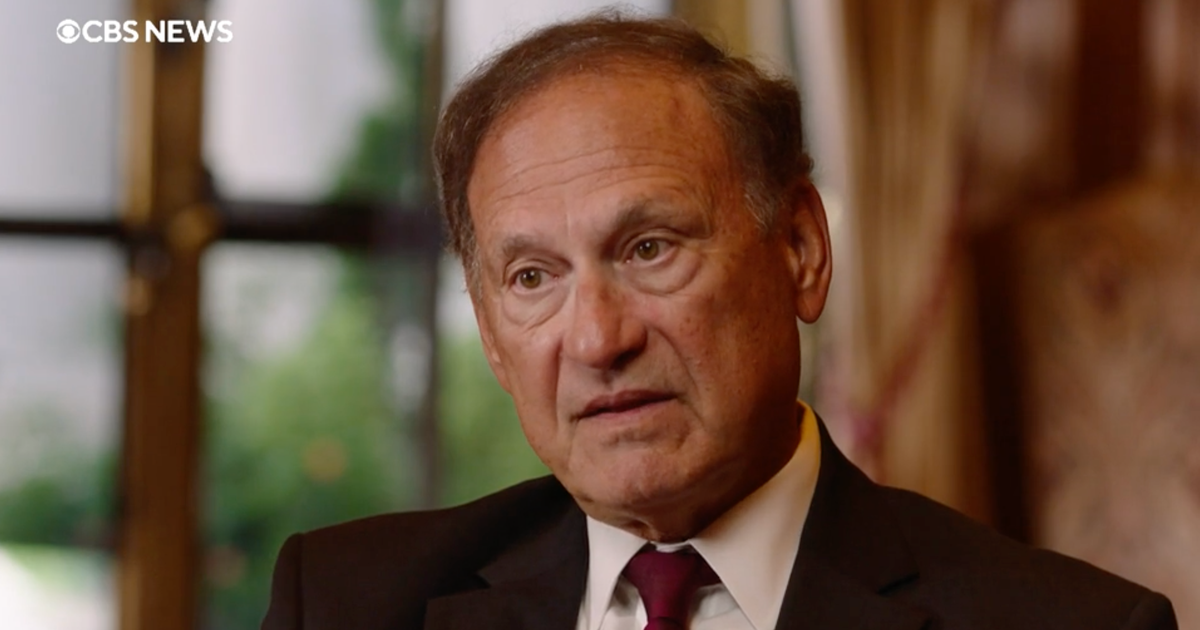
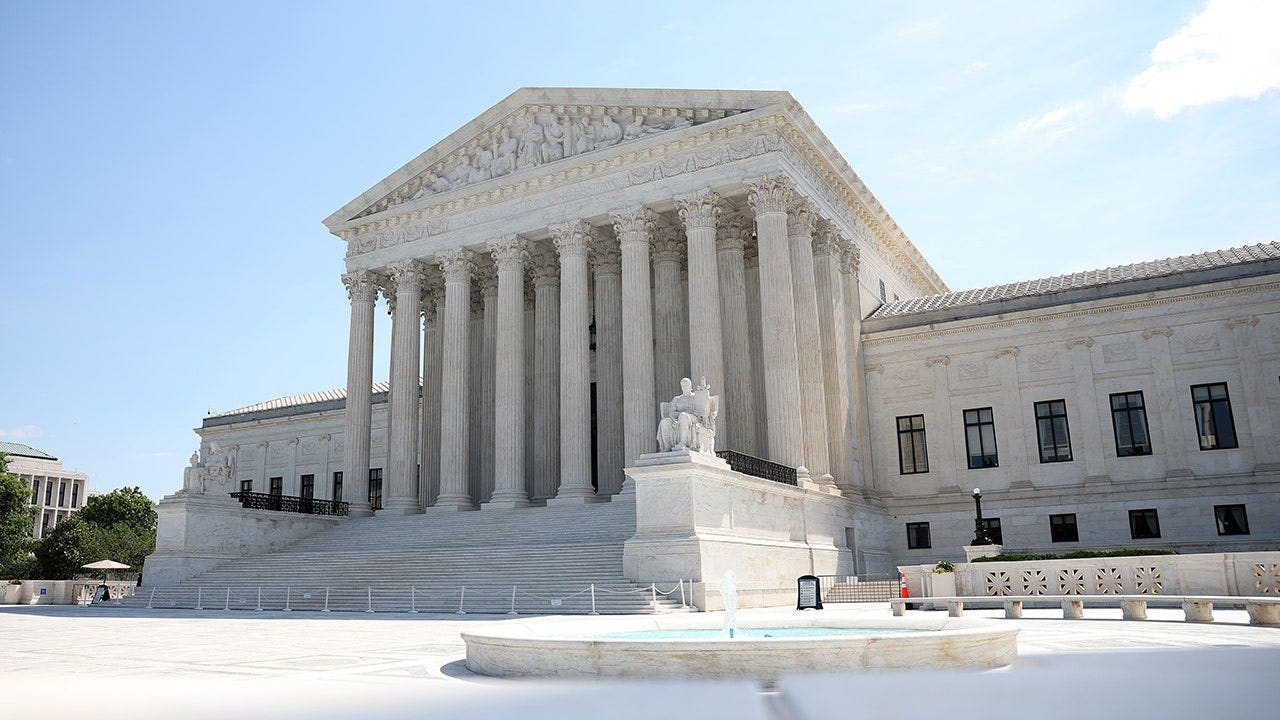
Written for “Supreme Court History” on 2026-11-21, grounded in this article and the 0 other(s) covering the same event.

Compared with similar articles

This article reads unscored and hedges an unknown share of its claims. Each row says how that neighbour differs.
CBS News
Leans left Hedges 16 of 344 claims Outlet record 66/100
“The articles describe different events related to Supreme Court Justice Samuel Alito, but they are not reporting on the same specific incident.”
Reason
Leans right Hedges 6 of 65 claims Outlet record 67/100
“The articles discuss different topics related to the Supreme Court but describe distinct events and timelines.”
Fox News
Leans right Hedges 6 of 42 claims Outlet record 66/100
“Article A discusses the Supreme Court's new term starting on October 5, 2026, while Article B references historical events from October 5, 1953.”

Story

Supreme Court History
Politics · 1 article(s) covering the same event.
How this article was measured signals, leaning charts, publisher record, byline, topics and claims

Signals How these are calculated →

Claims extracted
0
sentences that state something as happening or true
Uncertain
no claims
nothing to measure
Leaning
not political
takes no side on a contested political question
Publisher signals
67/100
Reason's corrections and hedging, across everything collected from it. Not a measure of accuracy.
Outlets on this story
1
Politics
Same framing elsewhere
none derived
Analyzed 2026-10-05 · how these are computed

How this is being covered How these are calculated →

Article leaning vs. publisher reliability
Source leaning vs. consistency

Publisher

Reason · 1464 article(s) · 4 correction(s) detected
Running correction rate · 4 correction(s)

Who wrote this

Josh Blackman
110 article(s) here · 0 carrying a prediction
The results are worth a careful study to forecast the future religious landscape in the United States, and how those numbers will affect debates about religious liberty.
Secretary of State Marco Rubio delivered the Olson Lecture, White House Counsel Will Scharf had a fireside chat, White House Advisor May Mailman discussed over-regulation, and Gene Hamilton favored restrictive immigration policy on behalf of America First Legal Foundation.
2026-11-15 · assertive framing · The Mayflower Extract
In the Spring of 2026, I communicated to the White House Counsel's Office that, if a vacancy opened on the Eighth Circuit, would be interested in being considered for the vacancy.
The goal, of course, was to ensure that states with one or more Democratic senators would not be able to block all circuit court nominees.
2026-11-13 · assertive framing · At Large Circuit Nominees?
First, it is good to be back at the Mayflower--well at least good for those of us who made it in.
2026-11-13 · assertive framing · Back At The Mayflower
Even if a Republican wins the 2028 presidential election, it will be virtually impossible for the Senate to flip red during his term.
2026-11-11 · assertive framing · Who Is Left On The Bench For 2033?
Maybe Trump determined that he needed as many judges confirmed before January, so the identity of the judge didn't matter.
2026-11-11 · assertive framing · The President Nominates Circuit Judges, Not Senators
Given the large Democratic Senate majority and unfavorable maps for 2028 and 2030, a Republican Senate with the votes to confirm originalist judges may not return until 2033 at the earliest.
I have known both of these sharp legal minds for some time, and would welcome their addition to the bench.
"The loudest voices that people hear are these megachurches, and they think that's what we're all doing," said the Rev. Janet Maykus.
2026-11-09 · assertive framing · Talarico's Christianity
Also by Josh Blackman
The Mayflower Extract
2026-11-15 · Reason
Nothing else under this byline is closely related to this article, so these are simply their most recent.
All 110 articles by Josh Blackman →

Topics

No topics tagged.

Subjects

No subjects extracted.

Narrative

No narrative derived. That requires at least one asserted claim.

Claims (0 extracted, 0 hedged)

No claims extracted from this article.
Give feedback · no sign-in needed

No sign-in needed for now. Your note is sent without a name, so it cannot be answered.

History Support