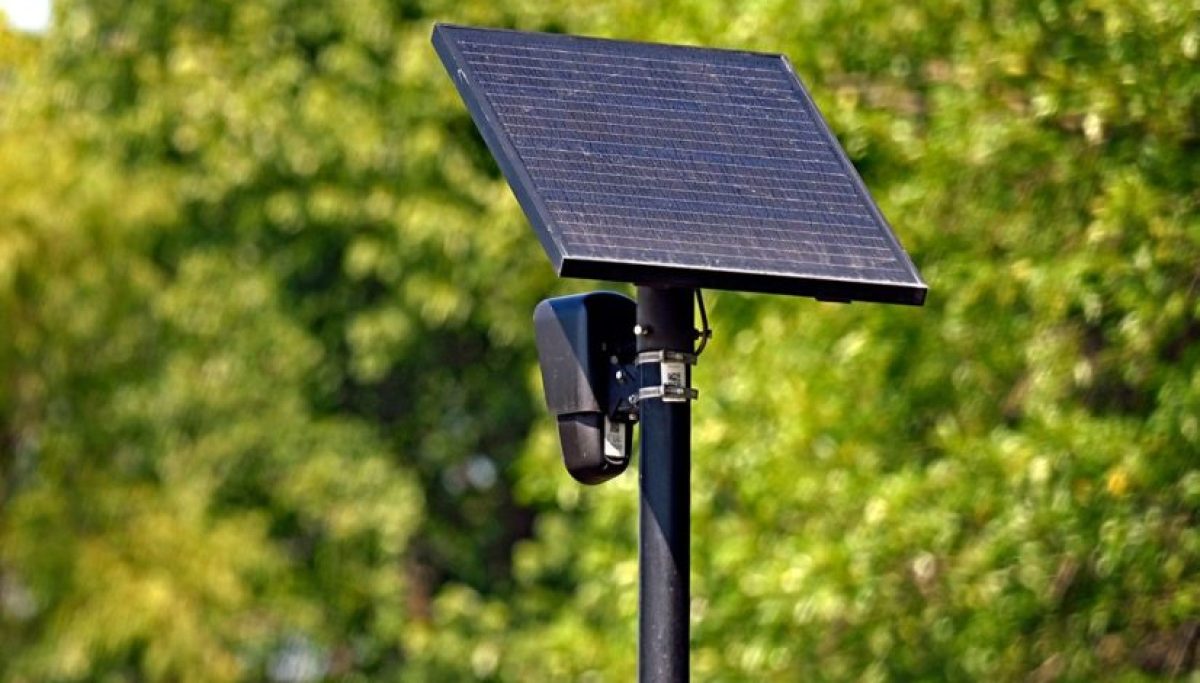
Photo via 404 Media

Federal Judge Rules a Flock Search Was ‘Indiscriminate Mass Surveillance’ and Unconstitutional

Read the original at 404 Media ↗
Cite

Koebler, J. (2026, October 2). Federal Judge Rules a Flock Search Was ‘Indiscriminate Mass Surveillance’ and Unconstitutional. 404 Media. https://www.404media.co/federal-judge-rules-a-flock-search-was-indiscriminate-mass-surveillance-and-unconstitutional/

Dated when The Aporia collected the article, usually within hours of publication. Check the original for its exact date and byline.

404 Media · collected 2026-10-02 · by Jason Koebler

Quick Summary

A federal judge in Oklahoma, Sara Hill, ruled that using Flock's automated license plate reader system to conduct warrantless searches violates the Fourth Amendment. The case involved an officer searching a California-registered vehicle and using Flock data as evidence for drug trafficking charges without probable cause or a warrant. Judge Hill determined this practice is unconstitutional due to its nature as "indiscriminate mass surveillance," emphasizing that law enforcement should obtain warrants before accessing such data. This decision highlights the increasing scrutiny on the use of ALPR technology by police departments across the United States.
Written by AI on 2026-10-02, from this article's own text only (the story summary below draws on all the coverage).
See how they differ ↓

AI analysis

Story summary

In Oklahoma, Federal Judge Sara Hill ruled that a police officer violated the Fourth Amendment when he searched a license plate in Flock’s automated license plate reader (ALPR) system, simply because it was from California. The judge found that this use of ALPR systems was an unconstitutional warrantless search and not supported by probable cause. The case involved Tulsa County Deputy Sheriff Freddie Alaniz who stopped Melisa Kyle for minor traffic violations and used Flock to access a month’s worth of her vehicle's travel history across multiple states. Judge Hill noted that such searches risk creating a nationwide "dragnet" of mass surveillance, and ordered evidence obtained after the search suppressed. There are currently more than 100,000 warrantless searches of the Flock system every month according to audit logs.

Written for “Flock Camera Surveillance Ruling” on 2026-11-21, grounded in this article and the 1 other(s) covering the same event.

How they differ

2 outlets covered “Flock Camera Surveillance Ruling”.

What each outlet says

One AI summary per outlet of its latest article on this story, written from that article alone and checked against it. Open the article for the outlet's own words.

404 MediaThis outlet2 Oct

A federal judge in Oklahoma, Sara Hill, ruled that using Flock's automated license plate reader system to conduct warrantless searches violates the Fourth Amendment. The case involved an officer searching a California-registered vehicle and using Flock data as evidence for drug trafficking charges without probable cause or a warrant. Judge Hill determined this practice is unconstitutional due to its nature as…

Federal Judge Rules a Flock Search Was ‘Indiscriminate Mass Surveillance’ and Unconstitutional (this article)
Washington Examiner3 Oct

A federal judge in Tulsa ruled that use of Flock license plate reader technology by a sheriff’s deputy violated the Fourth Amendment, arguing it constitutes an unconstitutional search due to the risk of mass surveillance. Judge Sara E. Hill suppressed evidence obtained after the ALPR data search, finding the deputy's access to over 50 sightings of Melisa Kyle’s vehicle across multiple states was unjustified under…

Judge rules Flock cameras violate the Fourth Amendment →

Compared with similar articles

This article reads leans strongly left and hedges 6% of its claims. Each row says how that neighbour differs.
Washington Examiner
Leans strongly left Hedges 2 of 29 claims Outlet record 67/100
Washington Examiner
Hedges 0 of 13 claims Outlet record 67/100
“Article A reports on legislation introduced by lawmakers to ban Flock Safety's cameras, while Article B discusses a federal judge ruling on the constitutionality of using Flock's system in a specific case.”
Daily Mail
Leans left further right than this Hedges 4 of 69 claims Outlet record 69/100
“The articles describe different legal rulings involving distinct incidents of alleged unconstitutional surveillance, occurring in different locations and times.”

Story

Flock Camera Surveillance Ruling
Crime & Law · 2 article(s) covering the same event. See how they differ ↑
How this article was measured signals, leaning charts, publisher record, byline, topics and claims

Signals How these are calculated →

Claims extracted
49
sentences that state something as happening or true
Uncertain
6%
3 of 49 hedged ("reportedly", "may", "according to")
Leaning
Leans strongly left
of the writing, not the subject · beta estimate
Publisher signals
95/100
404 Media's corrections and hedging, across everything collected from it. Not a measure of accuracy.
Outlets on this story
2
Crime & Law
Same framing elsewhere
1
articles that frame the event the way this one does
Analyzed 2026-10-02 · how these are computed

How this is being covered How these are calculated →

Article leaning vs. publisher reliability
Source leaning vs. consistency

Publisher

404 Media · 223 article(s) · 0 correction(s) detected
No corrections detected for this publisher. That may mean careful reporting, or simply that nothing has been checked.

Who wrote this

Jason Koebler
30 article(s) here · 1 carrying a prediction
And outages or hacks that previously wouldn’t have been noted at all suddenly get more attention and become part of the narrative.
2026-11-17 · assertive framing · BREAKING: Everything
In his 6,500-word manifesto earlier this year, Mark Zuckerberg said people would use Meta’s AI agents to “work 24/7 on your behalf to improve your relationships, health, career, finances, home management, hobbies, and more.”
2026-11-17 · assertive framing · A Man and His Muse AI Agent Sue Meta
When writer and musician Samantha Shokin noticed her cover of a public domain Bulgarian folk song had been copyright struck on YouTube, she assumed it would be easy to fix.
2026-11-16 · assertive framing · AI-Powered Copyright Hell
The policy tweaks show that big AI corporations will protect other big corporations when their users find ways to use LLMs to circumvent the artificial constraints that hardware manufacturers put on their devices.
2026-11-10 · assertive framing · Come and Take It
Trump has pardoned crypto criminals, his family has made billions of dollars in cryptocurrency scams, and has overseen the rise of a gambling and prediction market-based “economy” rife with insider trading and misery (the idea of the administration doing anything to crack down on this is so implausible that to even suggest it could happen is laughable).
But if you're in the EU or UK, you might be in luck and can object to that use of your data, as some users have pointed out.
2026-10-28 · assertive framing · Objection, your honor
“But there’s a lot of work associated with maintaining software so there may be a lot of instances where the software may not be reliable enough to use—I don’t know how many companies are going to be adopting these clones.”
In fact, with a small amount of Googling and/or clicking around social media, it is easy to find out everything you would ever need to know about the robot and what happened here.
Hill's decision will not set a binding precedent and there are several other cases throughout the nation considering the legality of warrantless ALPR searches.
Humoring the idea that LLMs are or could be conscious is a third-rail topic among many people who study and criticize AI.
Also by Jason Koebler
BREAKING: Everything
2026-11-17 · 404 Media
A Man and His Muse AI Agent Sue Meta
2026-11-17 · 404 Media
AI-Powered Copyright Hell
2026-11-16 · 404 Media
Come and Take It
2026-11-10 · 404 Media
Nothing else under this byline is closely related to this article, so these are simply their most recent.
All 30 articles by Jason Koebler →

Topics

California Flock Fourth Amendment Mazda Oklahoma

Subjects

Alaniz PERSON · 9× California GPE · 6× Hill ORG · 5× Kyle PERSON · 5× Mazda ORG · 3× Oklahoma GPE · 2× 404 Media ORG · 1× Freddie Alaniz PERSON · 1× Sara Hill PERSON · 1× Tulsa County GPE · 1×

Narrative

The officer’s “use of the ALPR Systems was an Unconstitutional Warrantless Search,” and “was not supported by probable cause, and it was done without a warrant in violation of [the defendant’s] Fourth Amendment rights,” the judge, Sara Hill, wrote, implying that the law enforcement officer should have obtained a warrant before searching for the vehicle in Flock’s system.
framing: assertive · carried by 1 article(s) · first seen 2026-10-02
Hill's decision will not set a binding precedent and there are several other cases throughout the nation considering the legality of warrantless ALPR searches.

Claims (49 extracted, 3 hedged)

A federal judge in Oklahoma ruled Thursday that a police officer violated the Fourth Amendment rights of a woman accused of meth trafficking when he searched her license plate in Flock’s automated license plate reader system simply because her license plate was from California, then used her travel history as part of the reason to search her car. asserted
plate → rule → car
The judge’s opinion is one of the first times a federal judge has decided Flock searches can be unconstitutional, and suggested that Flock’s network is “a type of indiscriminate mass surveillance.” uncertain
network → decide → surveillance
The officer’s “use of the ALPR Systems was an Unconstitutional Warrantless Search,” and “was not supported by probable cause, and it was done without a warrant in violation of [the defendant’s] Fourth Amendment rights,” the judge, Sara Hill, wrote, implying that the law enforcement officer should have obtained a warrant before searching for the vehicle in Flock’s system. asserted
officer → support → system
Hill's decision will not set a binding precedent and there are several other cases throughout the nation considering the legality of warrantless ALPR searches. asserted
decision → set → searches
Hill argued that previous judge opinions saying Flock searches were not a Fourth Amendment violation because they track cars in public do not consider the context that Flock’s nationwide network is quickly “approaching dragnet-type law enforcement practice,” and that courts should update their understanding of the technology moving forward. asserted
courts → argue → technology
The circumstances of the court case are really interesting and highlight how commonplace Flock searches have become for police, and the depth of the information they can reveal. asserted
they → highlight → information
In May, a Tulsa County Deputy Sheriff named Freddie Alaniz was parked along the side of the highway in Oklahoma when he saw a Mazda SUV driven by a woman named Melisa Kyle with a California license plate pass by. uncertain
SUV → name → plate
“Alaniz then pulled his vehicle on the highway to follow the Mazda for no apparent reason other than the fact that it had a California license plate. asserted
it → pull → plate
Alaniz also ran a query on the Flock system for the California license plate number on the Mazda SUV,” Hill wrote. asserted
Hill → run → SUV
Alaniz then ostensibly pulled Kyle over for changing lanes without a turn signal. asserted
Alaniz → pull → signal
Alaniz interrogated Kyle about her travel “while he continued to review the ALPR systems for the car she was driving,” the judge wrote. asserted
judge → interrogate → car
Alaniz made Kyle recount everything she had done in the last several days, and compared it to the Flock data. asserted
she → make → data
He told her that because she was only in California for a short period of time, he suspected her of trafficking drugs. asserted
he → tell → drugs
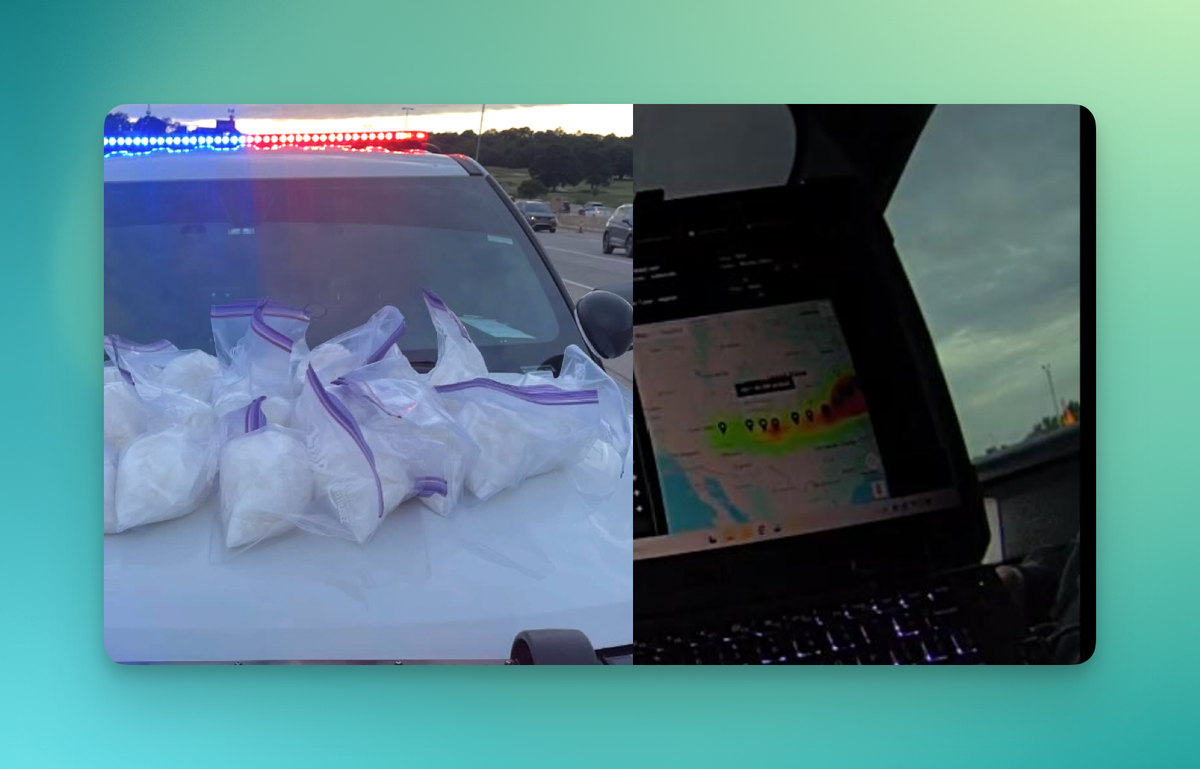
He used her travel history as seen in the Flock system as part of the justification to search her car; she was found to have 91 pounds of meth in the vehicle. asserted
she → use → vehicle
Hill ruled that all Flock evidence and all evidence from Alaniz’s search of the car must be thrown out. asserted
evidence → rule → car
“The Fourth Amendment requires courts to draw a line when the cost is too great. asserted
cost → require → line
Alaniz’s search in just the ALPR system provided him with more than 50 individual records of Kyle’s whereabouts across the country for an entire month,” Hill wrote. asserted
Hill → provide → month
“The Court finds that because the ALPR systems Alaniz used to search Kyle’s historical location information intruded on her reasonable expectation of privacy in the whole of her physical movements, it was a search under the Fourth Amendment. asserted
it → find → Amendment
Based on the information in the record, the only reason Alaniz conducted that search was because he saw her license plate was from California. asserted
plate → base → California
“The factors that the government relies upon are the same type of circumstances that everyday Americans encounter on long road trips for many legitimate reasons. asserted
Americans → rely → reasons
Many of us drive longer than we want to get to a desired destination, or to no destination at all other than the road and sights ahead,” she added. asserted
she → drive → road
The decision is a landmark one, and comes in the aftermath of the Supreme Court’s Chatrie v United States decision that found police accessing a person’s digital data, including cell phone location data, constituted a search. asserted
accessing → come → search
It recognizes one thing that courts ignore which is the sheer breadth of these systems, that they collect so much information about so many people in a way that sets them apart. asserted
that → recognize → them
This decision ascribes appropriate weight to the fact police are building out this massive database that can reveal incredibly intimate details of people’s lives,” Michael Soyfer, a lawyer at the Institute for Justice, which has studied Flock camera abuse and is litigating several cases on Fourth Amendment grounds, told 404 Media. asserted
which → ascribe → Media
“It’s extremely important. asserted
It → ’ → ?
The way courts have resolved these cases previously has been way too myopic and has ignored the depths of these systems and the sweeping modes of surveillance that allow police to reconstruct the movements of anyone in the country.” asserted
police → resolve → country
Hill’s opinion also comes on the back of a decision earlier this week in a case the Institute for Justice brought. asserted
Institute → come → Justice
In that, a jury found a traffic stop scheme involving license plate reader scans done by U.S. Border Patrol as part of a predictive policing unit were unconstitutional. asserted
scheme → find → unit
The new decision also immediately invalidates the core argument that Flock’s CEO Garrett Langley has made saying that Flock was not a constitutional issue. asserted
Flock → invalidate → argument
“You and I don’t get to pick what’s a constitutional violation and what’s not. asserted
what → get → ?
We have judges, we have elected officials, there’s a process for that. asserted
we → have → that
We follow the law, we follow the Constitution. asserted
we → follow → Constitution
So far, in our belief and what will be for a long time, the courts have deemed this is not a warrantless search; this is a valid product as it relates to the Fourth Amendment. asserted
it → deem → Amendment
So I don’t see any change there,” Langley told The Drive in July, adding the issue was “pretty cut and dry.” asserted
issue → see → July
Notably, Hill suggested that other courts that have ruled Flock searches do not constitute a Fourth Amendment search were likely wrong to do so, and that they have not considered the widespread and automated context of the AI-powered surveillance system. uncertain
they → suggest → system
Previous decisions that ruled ALPR searches do not require a warrant have leaned on a Supreme Court case called United States v Knotts, in which police put a tracking device in a chemical container after being tipped off that an employee of a chemical plant was stealing from their employer. asserted
employee → rule → employer
That case was decided in 1983 and found, “[a] person travelling in an automobile on public thoroughfares has no reasonable expectation of privacy in his movements from one place to another.” asserted
person → decide → another
But Hill wrote, “that language exists in the context of the facts presented in the case. asserted
language → write → case
Rather than a large-scale, dragnet-type surveillance system like the ALPR technology in this case, the Court in Knotts was confronted with much less sophisticated technology.” asserted
Court → confront → technology
“The Court acknowledges that people, in at least a broad sense, do not have a reasonable expectation of privacy in their movements on a public roadway,” Hill wrote. asserted
Hill → acknowledge → roadway
…and 9 more, not listed.
Give feedback · no sign-in needed

No sign-in needed for now. Your note is sent without a name, so it cannot be answered.

History Support