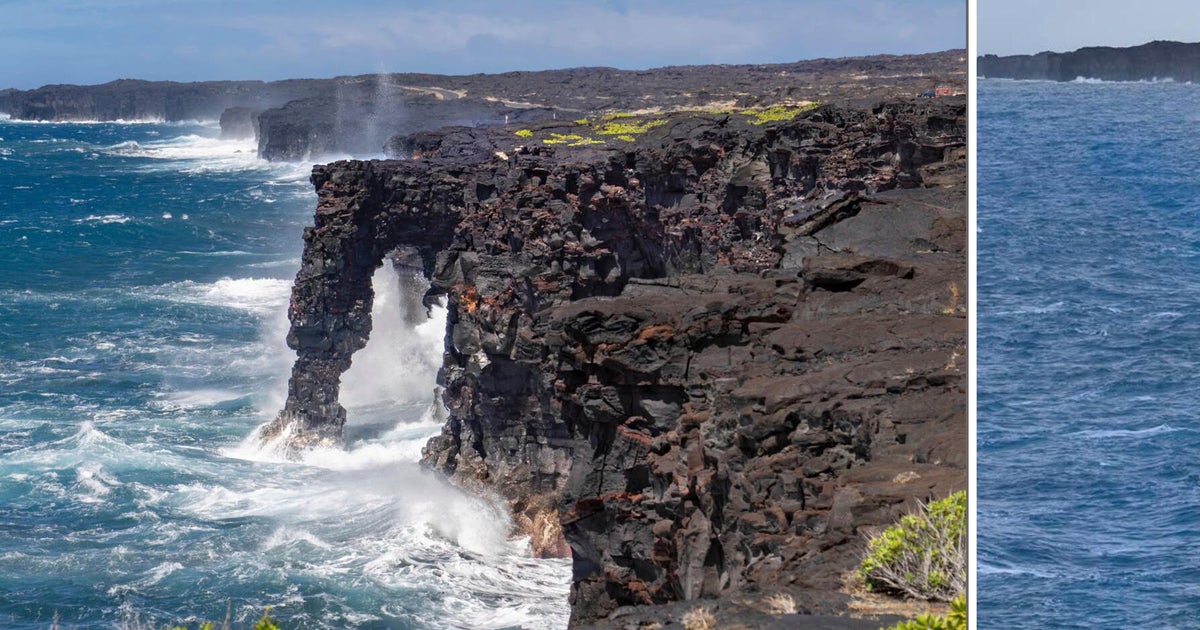
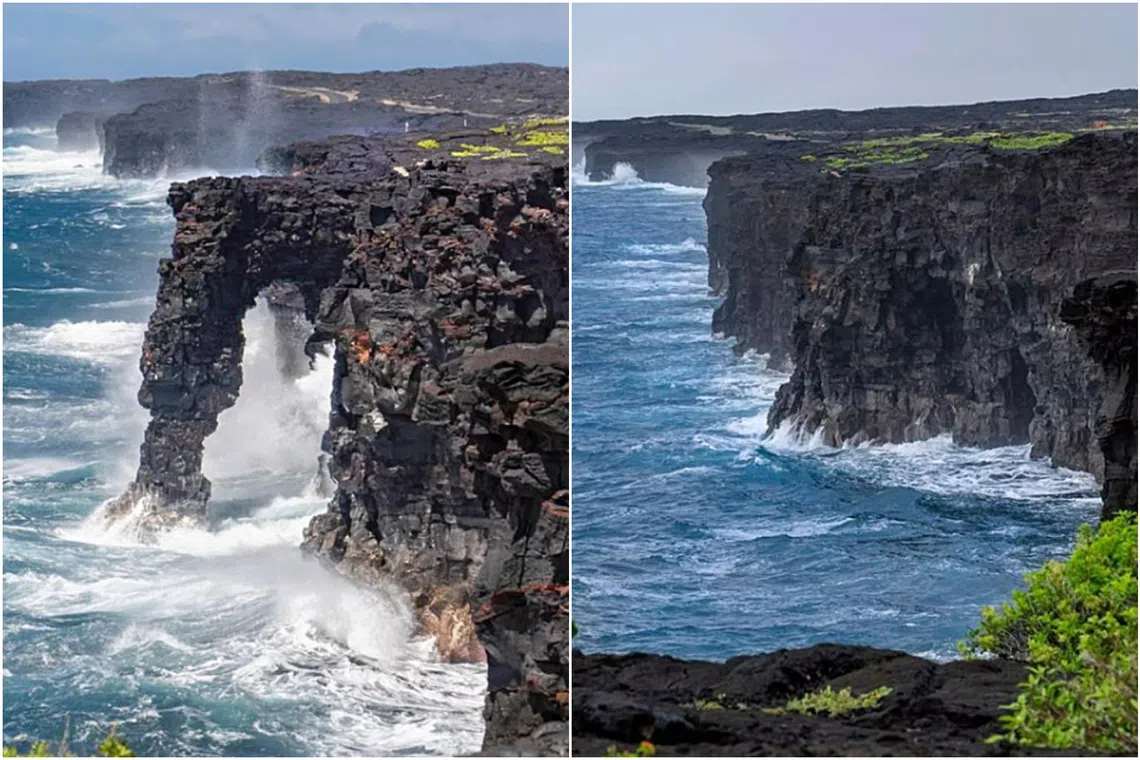
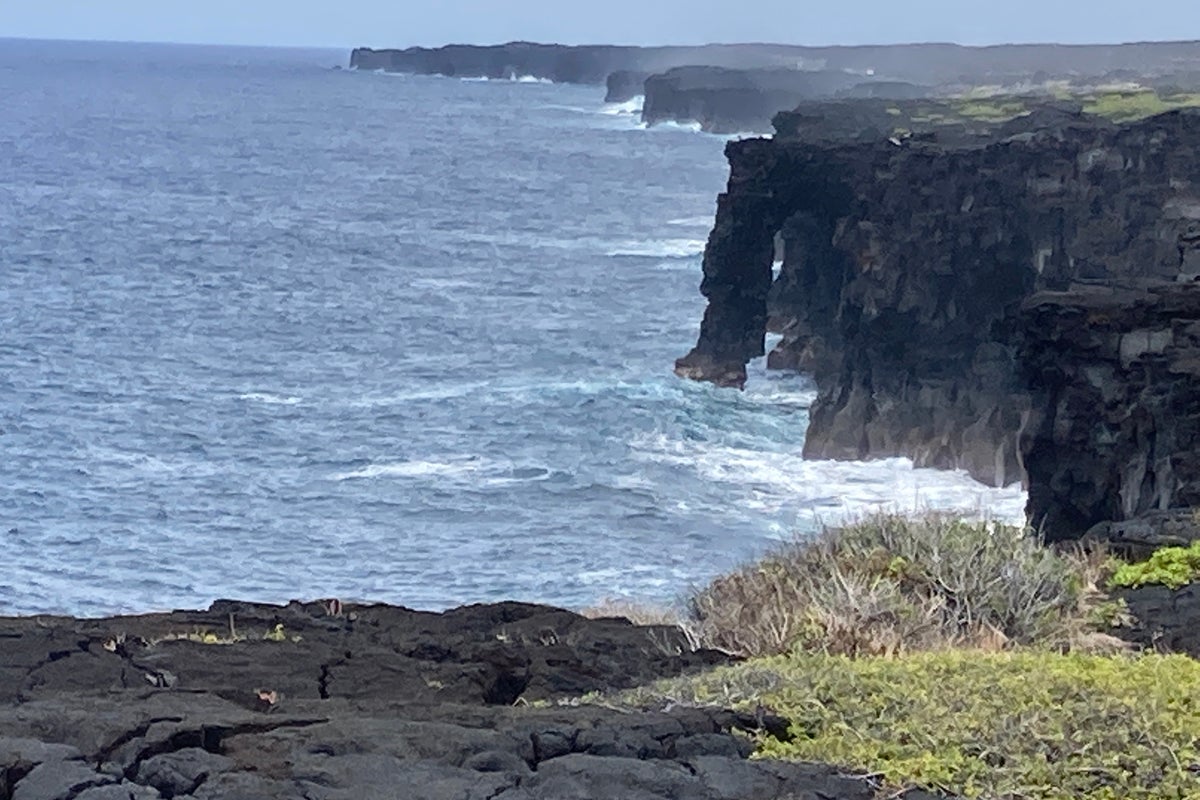
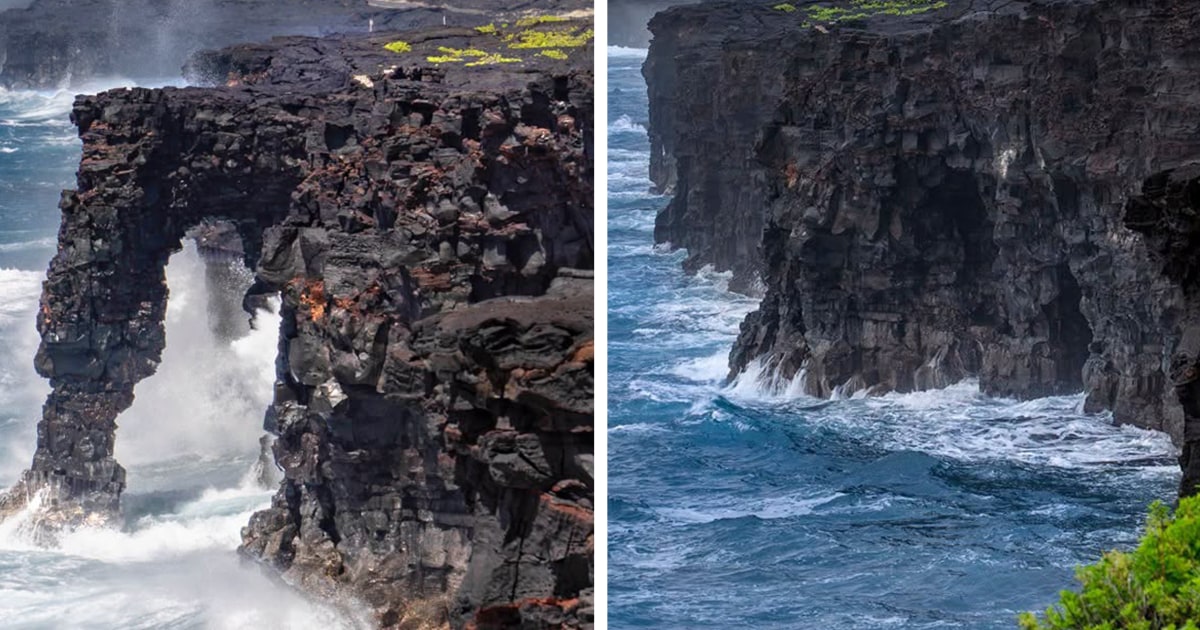
Photo via The Guardian

Hawaii’s centuries-old sea arch collapses into Pacific after series of rough storms

Read the original at The Guardian ↗
Cite

Campbell, L. (2026, October 2). Hawaii’s centuries-old sea arch collapses into Pacific after series of rough storms. The Guardian. https://www.theguardian.com/us-news/2026/oct/02/hawaii-holei-sea-arch-collapses

Dated when The Aporia collected the article, usually within hours of publication. Check the original for its exact date and byline.

The Guardian · collected 2026-10-02 · by Lucy Campbell

Quick Summary

Hawaii’s Hōlei sea arch, standing at approximately 90 feet tall and existing for over 550 years within Volcanoes National Park on the Big Island, collapsed into the Pacific Ocean after a series of rough storms in September. The exact date is unknown but was confirmed by the National Park Service (NPS) as having occurred between Wednesday, September 23, and Sunday, September 27, during Tropical Storm Nolo. This collapse followed years of instability due to past tropical systems, earthquakes from the 2018 Kīlauea volcanic eruption, and recent severe storms associated with an unusually active hurricane season linked to El Niño conditions and climate change.
Written by AI on 2026-10-02, from this article's own text only (the story summary below draws on all the coverage).
See how they differ ↓

AI analysis

Story summary

The Hōlei Sea Arch, a 550-year-old lava rock formation standing at approximately 90 feet tall in Hawaii Volcanoes National Park on the Big Island, collapsed into the Pacific Ocean sometime between September 23 and September 27, likely during Tropical Storm Nolo. The arch was still visible as of September 23 but had disappeared by September 27 when the park reopened. This collapse marks a significant loss to the region's natural wonders and tourist attractions, with thousands of people expressing grief on social media platforms like Facebook and Google Maps marking it as "permanently closed." Despite its beauty, experts warned that the arch's instability was anticipated due to ongoing erosion from waves and earthquakes caused by the 2018 Kīlauea volcano eruption. The National Park Service has issued warnings about unstable cliffs near the former site of the sea arch, urging visitors to stay back for safety reasons.

Written for “Holei Sea Arch Collapse” on 2026-11-20, grounded in this article and the 7 other(s) covering the same event.

How they differ

8 outlets covered “Holei Sea Arch Collapse”.

What each outlet says

One AI summary per outlet of its latest article on this story, written from that article alone and checked against it. Open the article for the outlet's own words.

The GuardianThis outlet2 Oct

Hawaii’s Hōlei sea arch, standing at approximately 90 feet tall and existing for over 550 years within Volcanoes National Park on the Big Island, collapsed into the Pacific Ocean after a series of rough storms in September. The exact date is unknown but was confirmed by the National Park Service (NPS) as having occurred between Wednesday, September 23, and Sunday, September 27, during Tropical Storm Nolo. This…

Hawaii’s centuries-old sea arch collapses into Pacific after series of rough storms (this article)
Daily Mail2 Oct

Hawaii's Hōlei Sea Arch, a natural rock formation standing for about 500 years in Hawaii Volcanoes National Park on the Big Island, collapsed into the Pacific Ocean between September 23 and 27. Authorities suspect this occurred during Tropical Storm Nolo while the park was closed. Tourists who visited just days before noticed it had vanished completely, prompting warnings from park authorities about unstable cliffs…

Hawaii's famed Hōlei Sea Arch landmark collapses into ocean after 500 years →
BBC2 Oct

Hawaii’s Hōlei Sea Arch, a 550-year-old lava rock formation about 90 feet tall, collapsed into the Pacific Ocean between September 23 and 27. The National Park Service had previously warned that this iconic structure would eventually crumble due to instability caused by earthquakes from the 2018 Kīlauea volcano eruption and Tropical Storm Nolo in recent weeks. Located on the Big Island within Volcanoes National…

Hawaii's iconic 550-year-old Hōlei Sea Arch collapses →
The Straits Times3 Oct

The Holei Sea Arch, an iconic 90-foot lava rock arch in Hawaii Volcanoes National Park on the Big Island, has collapsed into the Pacific Ocean. The collapse occurred around late September during Tropical Storm Nolo, which brought heavy rain and strong winds to the area. The park service posted before-and-after photos of the site on social media, noting its temporary nature due to erosion by sea waves over centuries…

The Holei Sea Arch, a centuries-old Hawaii wonder, crumbles into the Pacific →
NBC News3 Oct

The Hōlei Sea Arch, a 90-foot lava formation at Hawai’i Volcanoes National Park on Hawaii’s Big Island, collapsed sometime between September 23 and Sunday, likely due to erosion from ocean waves and Tropical Storm Nolo. The exact date of collapse is unknown, but it was confirmed by the National Park Service in a statement issued Thursday. The park service warns visitors about the danger of approaching unstable…

Hawaii’s picturesque Hōlei Sea Arch collapses into the ocean →
CBS News3 Oct

The Holei Sea Arch, a scenic cliff formation in Hawaii Volcanoes National Park on the Big Island, collapsed sometime between September 23 and 27, likely due to Tropical Storm Nolo passing through the area. The arch, standing about 90 feet high before its collapse, was already unstable and known for its temporary nature; it had existed for approximately 550 years. Park officials warn visitors to stay away from the…

Hawaii sea arch collapses into Pacific Ocean after storms batter island state →
Show 2 more outlets
The Independent3 Oct

The Holei Sea Arch in Hawaii Volcanoes National Park on the Big Island collapsed between September 23 and September 27, falling into the Pacific Ocean. At approximately 90 feet high before its collapse, this geological feature was a popular tourist attraction for about 550 years until it disintegrated during what may have been Tropical Storm Nolo's impact. The National Park Service warns visitors to stay away from…

Famed Hawaii tourist attraction collapses into the sea amid unstable cliff warning →
Toronto Star3 Oct

A large sea arch known as Holei Sea Arch in Hawaii Volcanoes National Park on Hawaii's Big Island has collapsed, standing at approximately 90 feet high before its fall between September 23 and September 27. The National Park Service attributes the collapse to potential instability caused by Tropical Storm Nolo during a park closure period and is now warning visitors about unstable cliffs in the area.

A famed Hawaii sea arch collapses, prompting NPS warnings of unstable cliffs →

Where they agree and split

Framing

How the first headlines put it

Stated as fact5
The headlines (5)

Hawaii's famed Hōlei Sea Arch landmark collapses into ocean after 500 years Daily Mail · stated as fact

Hawaii’s centuries-old sea arch collapses into Pacific after series of rough storms The Guardian · stated as fact

Hawaii's iconic 550-year-old Hōlei Sea Arch collapses BBC · stated as fact

The Holei Sea Arch, a centuries-old Hawaii wonder, crumbles into the Pacific The Straits Times · stated as fact

Hawaii’s picturesque Hōlei Sea Arch collapses into the ocean NBC News · stated as fact

The full story: what happened, how it changed, and all 8 articles →

Compared with similar articles

This article reads unscored and hedges 0% of its claims. Each row says how that neighbour differs.
CBS News
Hedges 1 of 11 claims Outlet record 67/100
The Straits Times
Hedges 3 of 17 claims Outlet record 64/100
Daily Mail
Hedges 2 of 21 claims Outlet record 69/100
Toronto Star
Hedges 1 of 2 claims Outlet record 64/100
The Independent
Hedges 2 of 16 claims Outlet record 59/100
BBC News
Hedges 0 of 15 claims Outlet record 65/100
NBC News
Hedges 2 of 12 claims Outlet record 78/100

Story

Holei Sea Arch Collapse
Environment · 8 article(s) covering the same event. Compare every outlet's account →
How this article was measured signals, leaning charts, publisher record, byline, topics and claims

Signals How these are calculated →

Claims extracted
16
sentences that state something as happening or true
Uncertain
0%
0 of 16 hedged ("reportedly", "may", "according to")
Leaning
not political
takes no side on a contested political question
Publisher signals
64/100
The Guardian's corrections and hedging, across everything collected from it. Not a measure of accuracy.
Outlets on this story
8
Environment
Same framing elsewhere
1
articles that frame the event the way this one does
Analyzed 2026-10-02 · how these are computed

How this is being covered How these are calculated →

Article leaning vs. publisher reliability
Source leaning vs. consistency

Publisher

The Guardian · 2625 article(s) · 9 correction(s) detected
Running correction rate · 9 correction(s)

Who wrote this

Lucy Campbell
19 article(s) here · 1 carrying a prediction
A laugh is audible, prompting the guard to yell: “All visitors will maintain an atmosphere of silence and respect at all times.”
“Brigitte-Doll will be making no further statements at this time.”
After months of campaigning, debate and analysis, Americans have been casting their ballots in these critical elections that will take the political temperature of the nation halfway through Donald Trump’s second term – and determine the trajectory of the remainder of his presidency.
The race is considered one of the most important contests of next week’s midterm elections, and will be key to determining control of the Senate.
The Last Ditch bar, in the small city of Greenfield, said in an Instagram post that it was searching for co-owners, new owners or a full sale, and that it would “soft close effective immediately”, with “only booked events” continuing while it closes this winter.
Those early votes are pacing well ahead of 2022Early voting is soaring compared with the last midterms in many of the battleground states, which will decide control of the Senate.
One day, it will be gone.
In the statement recently announcing that Jane Smith would no longer be its CEO, Family First Credit Union also apologized “for the concern, disappointment and pain this situation has caused”.
According to American Muckrakers, Jace Ratzlaff told Wheeler: “I assumed this would eventually surface.
“She struggled with the fear of not knowing when she would be released or whether she would end up wrongly convicted and imprisoned for years,” the lawsuit continues.
Also by Lucy Campbell
Nothing else under this byline is closely related to this article, so these are simply their most recent.
All 19 articles by Lucy Campbell →

Topics

El Niño Hawaii NPS Nolo the National Park Service

Subjects

Hawaii GPE · 3× NPS ORG · 2× the National Park Service ORG · 2× Hawaiian NORP · 1× the US Geological Survey ORG · 1×

Narrative

Forecasters have warned there is a high probability that this “supercharged” El Niño will reach a historic intensity, with its effects in strengthening the storms compounded by the broader overheating of the planet caused by the burning of fossil fuels.
framing: assertive · carried by 1 article(s) · first seen 2026-10-02
One day, it will be gone.

Claims (16 extracted, 0 hedged)

A famed centuries-old sea arch on Hawaii’s remote and rugged coastline has collapsed into the Pacific Ocean, the National Park Service confirmed on Friday, following a stretch of rough storms in the region in recent weeks. asserted
Service → collapse → weeks
The beloved landmark, Hōlei sea arch, stood at around 90ft high for over half a millennium in Hawaii’s Volcanoes national park, located on the dramatic southern coast of the Big Island. asserted
landmark → stand → Island
It was naturally formed around 550 years ago due to differential erosion by ocean waves. asserted
It → form → waves
The National Park Service (NPS) said the arch was still standing on Wednesday 23 September, when the park was temporarily closed during Tropical Storm Nolo, but had collapsed by Sunday night, on 27 September. asserted
park → say → September
“The arch formed in ancient lava flows by removing rock along cracks and weaker rocks,” the US Geological Survey said in a description of the arch in 2014. asserted
Survey → form → 2014
Every day the ocean crashes against the pillar of the arch, eroding it a little more. asserted
ocean → crash → it
One day, it will be gone. asserted
it → go → ?
Indeed, the cliffs on either side of the sea arch had shown signs of instability for years amid tropical systems and volcanic activity, the NPS said, meaning the arch’s collapse had long been expected. asserted
collapse → show → systems
Earthquakes during the 2018 Kīlauea volcanic eruption and summit collapse damaged the cliffs around the arch. asserted
Earthquakes → damage → arch
Then, in January 2020, new cracks and instability prompted the park to close the original viewing area and open a safer one further from the cliff edge three months later. asserted
cracks → prompt → edge
Later that year, huge surf from Tropical Storm Darby broke off a chunk of rock from the arch’s lower portion. asserted
surf → break → portion
The Hawaiian islands have seen an unusually high number of severe storms this year, with storm activity in the Pacific running above average during what is already the peak of hurricane season. asserted
what → see → season
Experts say the pattern is consistent with El Niño years, when the Pacific often sees more tropical storms and hurricanes. asserted
Pacific → say → storms
Nolo, which rapidly intensified into a hurricane on 24 September – causing Volcanoes national park to shutter - was the third major storm to devastate the islands of Hawaii in recent months. asserted
park → intensify → months
Residents were still recovering from hurricanes Lala in August and Lowell in early September, which had flooded homes and roads, toppled trees and caused power outages, when Nolo then battered the islands with heavy rain and high surf. asserted
Nolo → recover → rain
Forecasters have warned there is a high probability that this “supercharged” El Niño will reach a historic intensity, with its effects in strengthening the storms compounded by the broader overheating of the planet caused by the burning of fossil fuels. asserted
effects → warn → fuels
Give feedback · no sign-in needed

No sign-in needed for now. Your note is sent without a name, so it cannot be answered.

History Support