Photo via Semafor

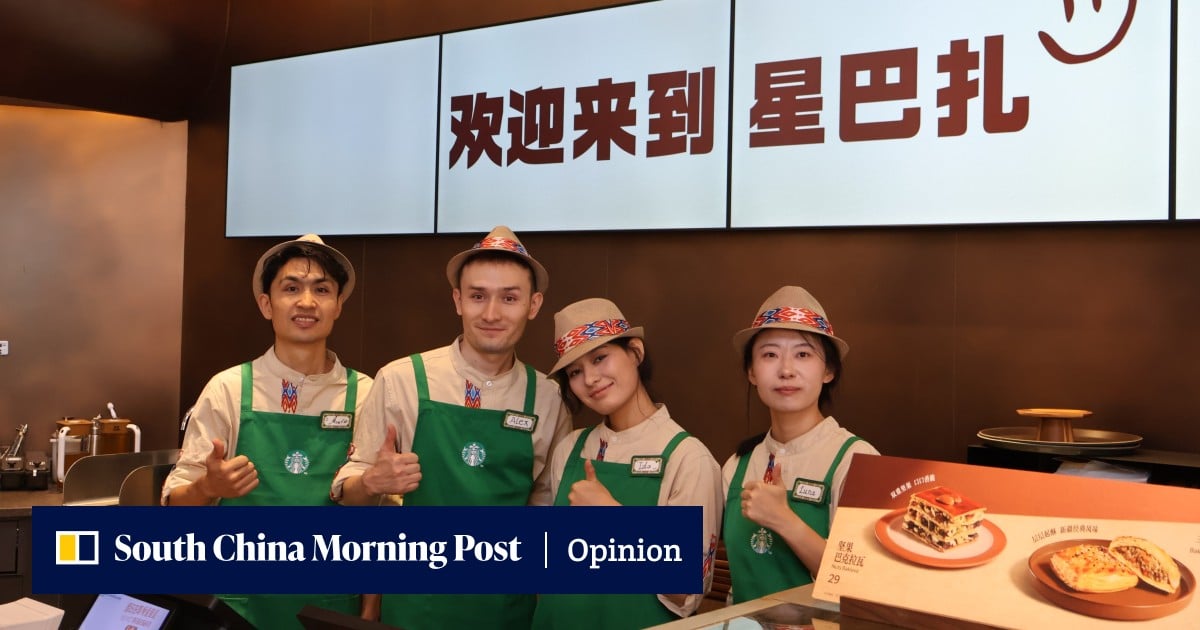
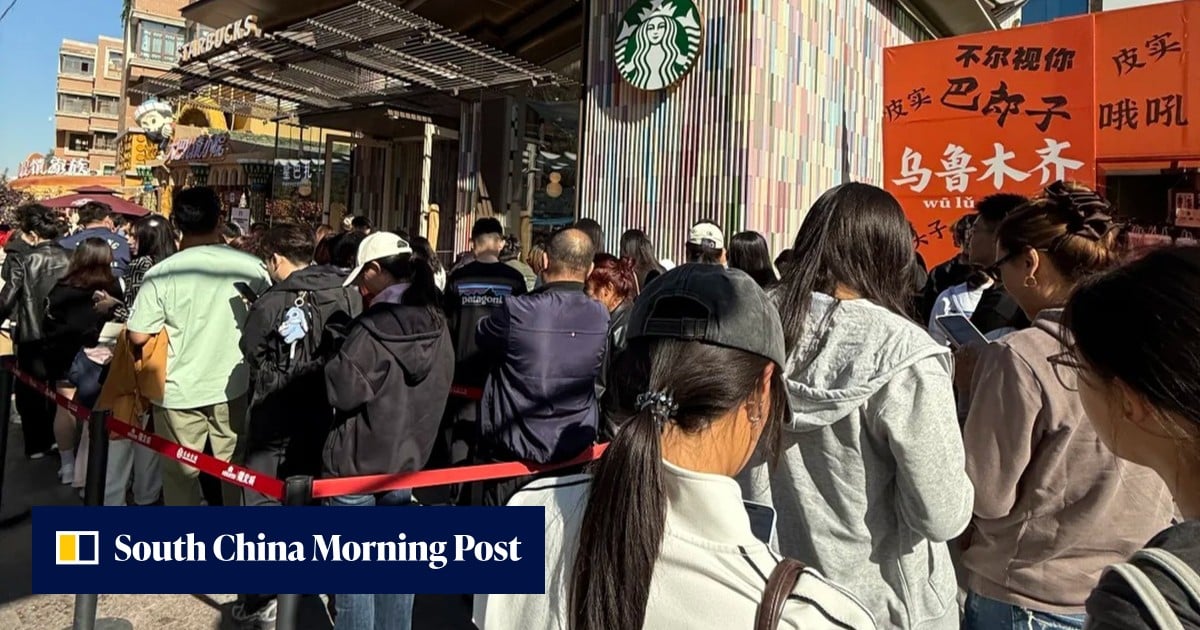
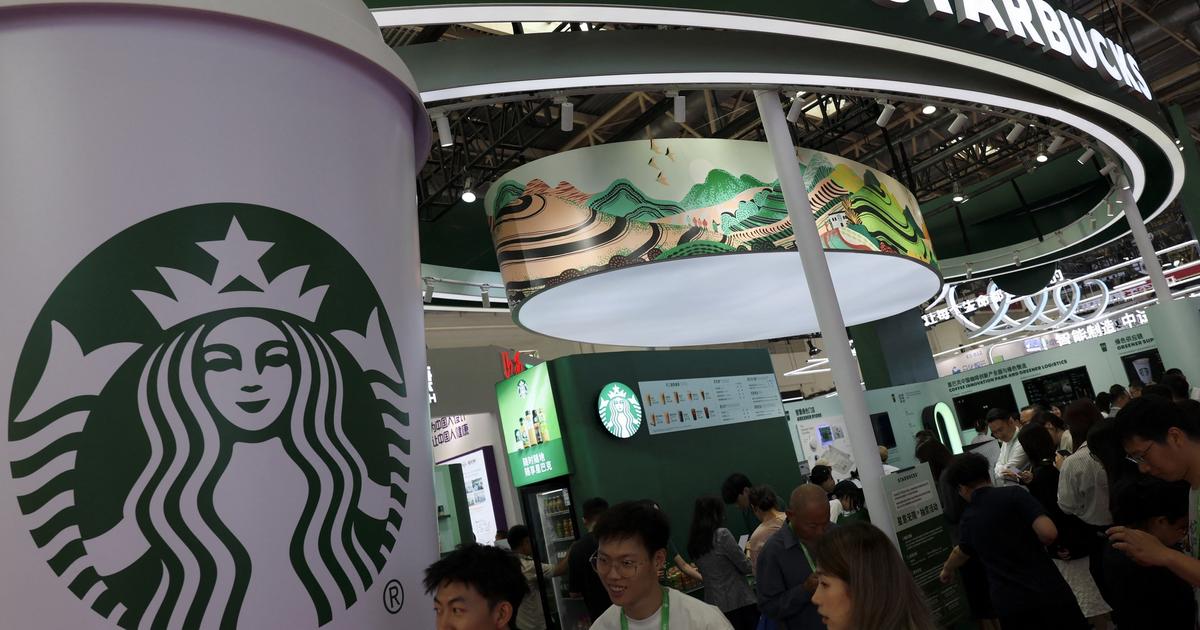
Starbucks opens first cafés in Xinjiang region

Read the original at Semafor ↗
Cite

Ruberry, B. (2026, October 1). Starbucks opens first cafés in Xinjiang region. Semafor. https://www.semafor.com/article/10/01/2026/starbucks-opens-first-cafs-in-xinjiang-region

Dated when The Aporia collected the article, usually within hours of publication. Check the original for its exact date and byline.

Semafor · collected 2026-10-01 · by Brendan Ruberry

Quick Summary

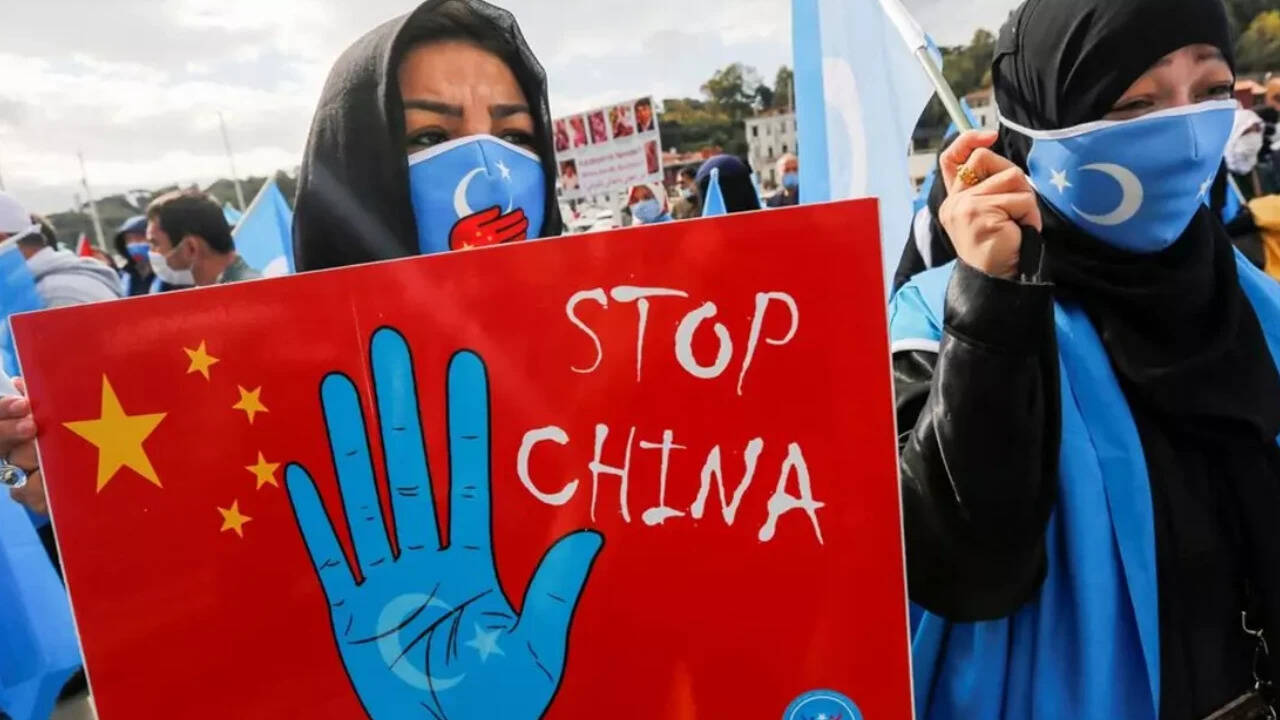
Starbucks has opened its first cafes in Xinjiang, China, drawing criticism from activists and U.S. lawmakers concerned about human rights violations in the region. Despite these concerns, Chinese state media reported significant foreign investment growth and tourism revenue increases in Xinjiang for 2025. The chairman of a US House committee accused Starbucks of being "morally bankrupt" for entering a region Beijing claims is improving economically but which critics say has been subject to severe repression of its Uyghur population.
Written by AI on 2026-10-01, from this article's own text only (the story summary below draws on all the coverage).
See how they differ ↓

AI analysis

Story summary

Starbucks opened its first two cafés in Xinjiang, China’s western region known for human rights concerns regarding the Uyghur population. The move has drawn criticism from US lawmakers, including John Moolenaar, who called it “morally bankrupt” and urged Starbucks to close the outlets immediately. These new stores are located at Urumqi's Grand Bazaar and international airport. Beijing maintains that its policies aim to combat terrorism rather than repress religious freedom but faces international accusations of detaining over 1 million Uyghurs. Despite this, Chinese state media reported a 22% year-on-year increase in new foreign-funded enterprises and a 10% rise in foreign investment, along with $53 billion generated from more than 300 million visitors in 2025.

Written for “Starbucks In Xinjiang” on 2026-11-23, grounded in this article and the 3 other(s) covering the same event.

How they differ

4 outlets covered “Starbucks In Xinjiang”.

What each outlet says

One AI summary per outlet of its latest article on this story, written from that article alone and checked against it. Open the article for the outlet's own words.

SemaforThis outlet1 Oct

Starbucks has opened its first cafes in Xinjiang, China, drawing criticism from activists and U.S. lawmakers concerned about human rights violations in the region. Despite these concerns, Chinese state media reported significant foreign investment growth and tourism revenue increases in Xinjiang for 2025. The chairman of a US House committee accused Starbucks of being "morally bankrupt" for entering a region Beijing…

Starbucks opens first cafés in Xinjiang region (this article)
Times of India2 Oct

US Representative John Moolenaar has called on Starbucks to close its two newly opened outlets in Urumqi, Xinjiang's capital city, due to alleged human rights abuses against Uyghurs. One store is located at the Grand Bazaar and the other at the international airport. Moolenaar described the move as "morally bankrupt," citing US accusations of widespread repression by Chinese authorities in the region. Starbucks has…

US lawmaker urges Starbucks to close Xinjiang outlet in China over Uyghur oppression →
The Independent2 Oct

US Representative John Moolenaar, chairman of the House Select Committee on China, has called for Starbucks to close its recently opened stores in Xinjiang, China, describing the move as "morally bankrupt." Moolenaar's statement came after Starbucks inaugurated two stores this week in Urumqi, capital of Xinjiang. The lawmaker accused the company of doing business in a region where the Chinese government is alleged…

Republican calls Starbucks ‘morally bankrupt’ for doing business in China’s Xinjiang and demands store closures →
South China Morning Post6 Oct

Congressman John Moolenaar criticized Starbucks for complying with Chinese regulations by closing some stores in Xinjiang. He accused the company of being morally bankrupt while also defending arms sales to Israel as acceptable. The comment came after the chairman of the House Select Committee on China called for Starbucks to close its stores there immediately due to concerns over human rights issues involving…

Can’t Uygurs drink Starbucks and taste American freedom? →

Where they agree and split

Framing

How the first headlines put it

Stated as fact3
The headlines (3)

Starbucks opens first cafés in Xinjiang region Semafor · stated as fact

US lawmaker urges Starbucks to close Xinjiang outlet in China over Uyghur oppression Times of India · stated as fact

Republican calls Starbucks ‘morally bankrupt’ for doing business in China’s Xinjiang and demands store closures The Independent · stated as fact

The full story: what happened, how it changed, and all 4 articles →

Compared with similar articles

This article reads leans left and hedges 0% of its claims. Each row says how that neighbour differs.
South China Morning Post
Leans left Hedges 0 of 4 claims Outlet record 62/100
“Article A describes the opening of Starbucks cafes in Xinjiang, while Article B focuses on a US Congressman's reaction to this decision.”
South China Morning Post
Hedges 1 of 2 claims Outlet record 62/100
“While both articles discuss Starbucks opening its first cafés in Xinjiang, Article A reports on the initial expansion and criticism, while Article B focuses on China's response to US lawmaker criticism following this event.”
Times of India
Leans right further right than this Hedges 3 of 19 claims Outlet record 58/100
“While both articles mention Starbucks opening its first stores in Xinjiang, Article A focuses on the event itself and its broader implications, while Article B reports a subsequent reaction from China's government to US criticism of the same event.”
Times of India
Hedges 0 of 18 claims Outlet record 58/100
“LLM unavailable”

Story

Starbucks In Xinjiang
World · 4 article(s) covering the same event. Compare every outlet's account →
How this article was measured signals, leaning charts, publisher record, byline, topics and claims

Signals How these are calculated →

Claims extracted
3
sentences that state something as happening or true
Uncertain
0%
0 of 3 hedged ("reportedly", "may", "according to")
Leaning
Leans left
of the writing, not the subject · beta estimate
Publisher signals
70/100
Semafor's corrections and hedging, across everything collected from it. Not a measure of accuracy.
Outlets on this story
4
World
Same framing elsewhere
1
articles that frame the event the way this one does
Analyzed 2026-10-01 · how these are computed

How this is being covered How these are calculated →

Article leaning vs. publisher reliability
Source leaning vs. consistency

Publisher

Semafor · 1965 article(s) · 9 correction(s) detected
Running correction rate · 9 correction(s)

Who wrote this

Brendan Ruberry
210 article(s) here · 0 carrying a prediction
US Treasury Secretary Scott Bessent warned Sunday that the Federal Reserve risks hurting the economy by overtightening policy, days after a tech-induced market correction intensified concerns that the AI bubble could be bursting.
President Donald Trump said Friday that the US would work with China to develop “joint guardrails” on AI, after an anti-tech backlash helped drive a historic rebuke of Republicans in midterm elections.
2026-11-22 · mixed framing · US, China eye ‘joint guardrails’ on AI
While Chinese AI labs would prefer to keep using Nvidia chips in the short run, Brookings expert Kyle Chan told Bloomberg’s Odd Lots podcast that US export controls have fueled Beijing’s efforts “to replicate the entire global semiconductor supply chain in China, which I don’t think any country has ever done before.”
2026-11-22 · assertive framing · US spy chief calls Nvidia chips 'jewels'
“If this fully checks out, it is clearly a historic milestone in mathematics,” a Fields Medal winner told Nature of the Riemann breakthrough, which involves how evenly prime numbers appear en route to infinity: “I think it’s likely to be correct.” Coming on the heels of OpenAI releasing more than 300 mathematical proofs developed with human oversight, the Riemann proof is a “remarkable thing we might see a lot more of in the future,” a math professor told The New York Times, “where there is a very skillful jockey riding a really fast horse.”
2026-11-22 · mixed framing · Claude helps topple Riemann problem
The trilateral talks at the APEC summit in Shenzhen will offer Putin a symbolic boost as Kyiv’s attacks have nearly halved Russia’s November oil refining, Reuters reported.
The debut could draw about $250 million in net retail buying — potentially twice as much as SpaceX’s record of $118 million in retail buying.
2026-11-19 · mixed framing · Anthropic prices IPO above target range
In addition to increasing stock buybacks, Nvidia’s interim CEO Colette Kress reportedly promised pay raises Wednesday in the chipmaker’s first employee town hall following Huang’s ouster, amid concerns the shake-up could drive a talent exodus; Kress added that the firm’s “passion to innovate” would not change.
2026-11-19 · mixed framing · Nvidia shares fall despite bumper earnings
The looming squeeze could intensify chip self-sufficiency initiatives that are already underway in Beijing, whose AI ecosystem still depends on American hardware: The clampdown “sets everyone back” in China, Tencent’s president acknowledged, but also hastens progress toward a future where “all Chinese players” rely on domestic compute.
The reportedly understated celebrations surrounding Anthropic’s debut appear to befit an internal culture that prides itself on building AI safely, wherein getting rich is accorded less priority than commonly held effective altruist beliefs: Employees’ new wealth is expected to enrich dozens of charitable and research-oriented organizations devoted to animal welfare, global health, and AI safety.
While firms may cope, “we can’t fix government technology, like our air traffic control system, by throwing more money into a broken system,” journalist Derek Thompson argued.
Also by Brendan Ruberry
Nothing else under this byline is closely related to this article, so these are simply their most recent.
All 210 articles by Brendan Ruberry →

Topics

Beijing China Muslim Uyghur Starbucks Xinjiang

Subjects

China GPE · 2× Starbucks ORG · 2× Xinjiang GPE · 2× American NORP · 1× Beijing GPE · 1× CCP ORG · 1× Chinese NORP · 1× House ORG · 1× Muslim Uyghur NORP · 1× Uyghurs NORP · 1×

Narrative

Beijing has denied allegations that it represses Xinjiang’s Muslim Uyghur population, and has invested heavily to rebrand the region, efforts that are paying off: Chinese state media reported a 22% year-on-year increase in new foreign-funded enterprises and a 10% rise in foreign investment in 2025, while more than 300 million foreign visitors generated $53 billion.
framing: assertive · carried by 1 article(s) · first seen 2026-10-01
2026-10-01 · Semafor
Starbucks opens first cafés in Xinjiang region · assertive framing

Claims (3 extracted, 0 hedged)

Starbucks opened its first cafés in China’s Xinjiang region, prompting criticism from activists and US lawmakers over the coffee giant’s decision to expand into an area widely scrutinized for human rights violations. asserted
Starbucks → open → violations
Beijing has denied allegations that it represses Xinjiang’s Muslim Uyghur population, and has invested heavily to rebrand the region, efforts that are paying off: Chinese state media reported a 22% year-on-year increase in new foreign-funded enterprises and a 10% rise in foreign investment in 2025, while more than 300 million foreign visitors generated $53 billion. asserted
visitors → deny → billion
The chairman of the US House committee on China called Starbucks’ move “morally bankrupt,” saying it “ties an iconic American brand to the CCP’s brutal campaign against the Uyghurs.” asserted
it → call → Uyghurs
Give feedback · no sign-in needed

No sign-in needed for now. Your note is sent without a name, so it cannot be answered.

History Support