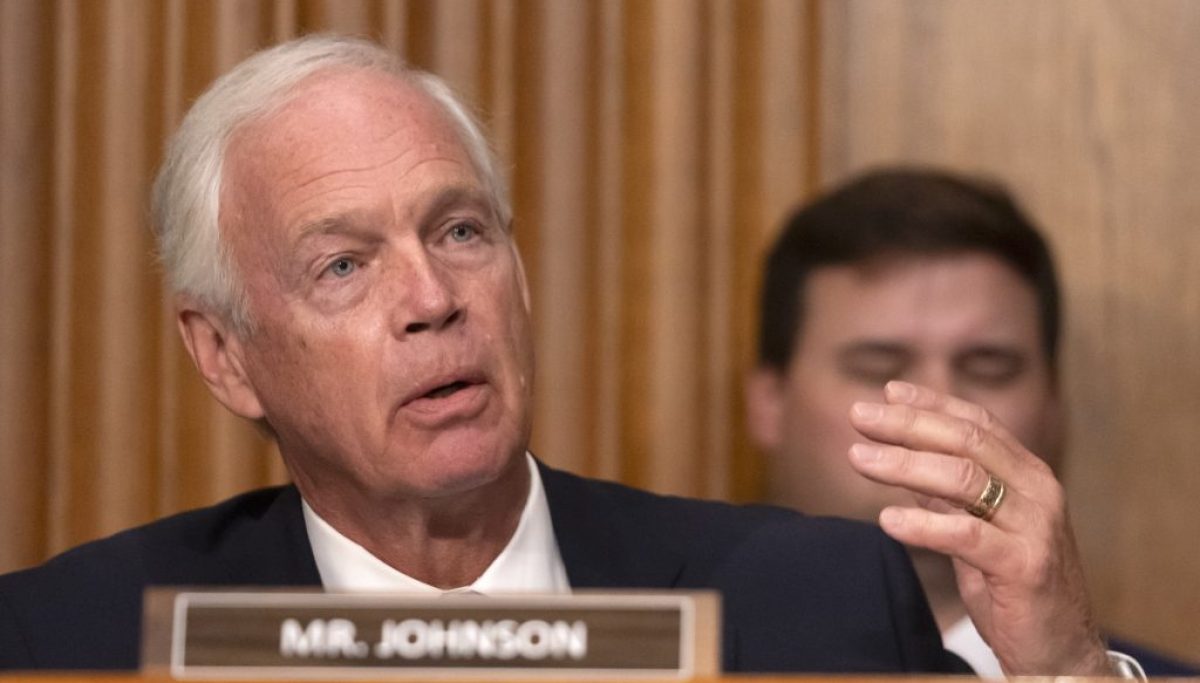
Photo via Washington Examiner

Yes, DEI can violate civil rights law

Read the original at Washington Examiner ↗
Cite

Examiner, W. (2026, October 1). Yes, DEI can violate civil rights law. Washington Examiner. https://www.washingtonexaminer.com/opinion/editorials/4746988/race-social-justice-trainings-yes-dei-can-violate-civil-rights-law/

Dated when The Aporia collected the article, usually within hours of publication. Check the original for its exact date and byline.

Washington Examiner · collected 2026-10-01 · by Washington Examiner

Quick Summary

A federal judge recently dismissed a lawsuit filed by Joshua Diemert, a former Seattle city employee who alleged racial discrimination due to mandatory diversity training. The trainings included statements like equating white people with cannibals and suggesting racism is inherent in their DNA. Despite these claims, Judge Jamal Whitehead ruled that such comments were part of a learning process rather than discriminatory acts. However, the U.S. Court of Appeals for the 9th Circuit disagreed, asserting that instances of discrimination against majority groups are not rare and should be treated equally under civil rights law.
Written by AI on 2026-10-01, from this article's own text only (the story summary below draws on all the coverage).

AI analysis

Story summary

A federal judge appointed by President Joe Biden imposed a heavier burden on white plaintiffs seeking to prove racial discrimination under the Civil Rights Act. This decision was recently overturned by the U.S. Court of Appeals for the 9th Circuit, which ruled that all Americans must be treated equally under the law without meeting different standards based on race. The case involved Joshua Diemert, a former employee of Seattle’s Human Services Department who worked there from 2013 to 2021 and received satisfactory performance reviews throughout his tenure.

Seattle has implemented the Race and Social Justice Initiative (RSJI) aimed at ending institutional racism within city government. Despite RSJI trainings technically being open to all races, in practice they were segregated; for example, one training was suggested only for those who identify as a person of color, while another was reserved for employees identifying as white. This segregation is seen as discriminatory by some critics and potentially violates the Civil Rights Act's prohibition against disparate treatment regardless of race.

Written for “DEI And Civil Rights Law” on 2026-11-23, grounded in this article and the 0 other(s) covering the same event.

Compared with similar articles

This article reads leans strongly right and hedges 17% of its claims. Each row says how that neighbour differs.
Fox News
Hedges 6 of 27 claims Outlet record 66/100
“While both articles discuss a ruling related to Seattle's DEI policies by a federal appeals court, they describe different aspects of it: Article A focuses on the general outcome and implications for anti-discrimination law, while Article B highlights specific details about the plaintiff and critiques a previous judge's decision.”
Daily Mail
Hedges 12 of 30 claims Outlet record 69/100
“Article A discusses a lawsuit filed by Joshua Diemert against Seattle for DEI training issues, while Article B comments on broader civil rights legal standards and briefly mentions Diemert's employment without referencing the specific lawsuit.”

Story

DEI And Civil Rights Law
Politics · 1 article(s) covering the same event.
How this article was measured signals, leaning charts, publisher record, byline, topics and claims

Signals How these are calculated →

Claims extracted
29
sentences that state something as happening or true
Uncertain
17%
5 of 29 hedged ("reportedly", "may", "according to")
Leaning
Leans strongly right
of the writing, not the subject · beta estimate
Publisher signals
66/100
Washington Examiner's corrections and hedging, across everything collected from it. Not a measure of accuracy.
Outlets on this story
1
Politics
Same framing elsewhere
1
articles that frame the event the way this one does
Analyzed 2026-10-01 · how these are computed

How this is being covered How these are calculated →

Article leaning vs. publisher reliability
Source leaning vs. consistency

Publisher

Washington Examiner · 5305 article(s) · 12 correction(s) detected
Running correction rate · 12 correction(s)

Who wrote this

Washington Examiner
51 article(s) here · 1 carrying a prediction
Whether students would learn more if schools banned phones was an open question.
2026-11-22 · assertive framing · Students learn more when schools lock up phones
Now, 16 years later, he has introduced a bill that would add $5 trillion in spending, add $8 trillion in debt, and risk pricing more young people out of their first home.
2026-11-21 · assertive framing · Ron Johnson’s plan to bankrupt America
This overdue step will require congressional oversight to make sure it is enforced.
2026-11-20 · assertive framing · Congress must hold Lutnick to the new China chip rule
Late last Friday, the Spanberger administration announced that it would not participate in the federal scholarship tax credit program, a new tax credit created by the One Big Beautiful Bill Act.
In May, a 19-year-old D.C. resident armed with a pistol fired more than 20 rounds in the Petworth neighborhood of the nation’s capital, injuring a boy who had been playing basketball at a recreation center.
2026-11-17 · mixed framing · Democrats aren’t serious about gun crime
If more spending made healthcare more affordable, healthcare would be the most affordable service in the United States by now.
2026-11-16 · assertive framing · More spending won’t make healthcare affordable
Republicans could pass another short-term continuing resolution to keep the government open into the new year, but doing so would leave Trump in a terrible bargaining position.
2026-11-13 · assertive framing · Trump, don’t make the Democrats’ obstruction easier
Clearly it weighed heavily with Jordan’s colleagues that leadership will be a very different job come January 2027 than it is today.
2026-11-12 · assertive framing · Jim Jordan fits the fight ahead
Democrats ran on a promise to make life more affordable for voters, but one of their top priorities after the election would drive energy prices higher.
New York City’s socialist mayor, Zohran Mamdani, promised not just to freeze rents for 1 million rent-stabilized apartments in the city, but also to build another 200,000 affordable units and preserve another 200,000.
2026-11-06 · mixed framing · The bill comes due for Mamdani’s rent freeze
Also by Washington Examiner
Students learn more when schools lock up phones
2026-11-22 · Washington Examiner
Ron Johnson’s plan to bankrupt America
2026-11-21 · Washington Examiner
Nothing else under this byline is closely related to this article, so these are simply their most recent.
All 51 articles by Washington Examiner →

Topics

Americans City RSJI the Civil Rights Act the U.S. Court of Appeals

Subjects

Diemert PERSON · 9× Whitehead PERSON · 4× City ORG · 2× RSJI ORG · 2× Americans NORP · 1× Joe Biden PERSON · 1× Joshua Diemert PERSON · 1× Seattle GPE · 1× the 9th Circuit ORG · 1× the U.S. Court of Appeals ORG · 1×

Narrative

They rejected Whitehead’s assertion that “instances of discrimination against the majority are rare and unusual,” instead noting that the Civil Rights Act’s “disparate treatment provision draws no distinctions between majority group plaintiffs and minority-group plaintiffs.”
framing: assertive · carried by 1 article(s) · first seen 2026-10-01
Again, the city stressed that the caucuses “are completely voluntary and no one will be turned away,” but then added that employees are encouraged to join “the caucus that aligns with how they identify racially.”
2026-10-01 · Washington Examiner
Yes, DEI can violate civil rights law · assertive framing

Claims (29 extracted, 5 hedged)

Should the Civil Rights Act protect all Americans equally, or must some meet a higher standard to prove racial discrimination? asserted
some → protect → discrimination
A federal judge appointed by President Joe Biden imposed a heavier burden on white plaintiffs, a distinction the U.S. Court of Appeals for the 9th Circuit rightfully rejected this week. asserted
Court → appoint → Circuit
From 2013 until 2021, Joshua Diemert worked for Seattle’s Human Services Department, assessing eligibility for the city’s Utility Discount Program. asserted
Diemert → work → Program
Throughout that entire span, Diemert had satisfactory performance reviews and no disciplinary record. asserted
Diemert → have → reviews
During his tenure with the city, Diemert was forced to attend two Race and Social Justice Initiative activities a year. asserted
Diemert → force → activities
RSJI is a citywide effort to “end institutional racism and race-based disparities in City government.” asserted
RSJI → end → government
But that is not how the training unfolds in practice. asserted
training → unfold → practice
The details for the “Internalized Racial Inferiority” training, for example, suggested that only those “who identify as a person of color” should attend, while the “Internalized Racial Superiority” training was suggested for “City employees who identify as white.” uncertain
who → suggest → white
In addition to the trainings, the city pushed employees to join racial affinity groups such as the “White Caucus,” the “African Descent Caucus,” and the “European Descent Community Group.” asserted
city → push → Caucus
Again, the city stressed that the caucuses “are completely voluntary and no one will be turned away,” but then added that employees are encouraged to join “the caucus that aligns with how they identify racially.” asserted
they → stress → caucus
The trainings Diemert was forced to attend were every bit as blatantly racist as they sound. asserted
they → force → ?
In one 2019 “Undoing Institutional Racism Workshop,” Diemert was informed that “all white people are cannibals.” asserted
people → inform → Workshop
In another, a trainer said that “racism is in white people’s DNA” and that “white people are like the devil.” asserted
people → say → devil
District Judge Jamal Whitehead dismissed all of Diemert’s evidence as irrelevant. asserted
Whitehead → dismiss → evidence
“The context in which statements are made matters,” Whitehead wrote, arguing that racially charged comments made during city-mandated struggle sessions “are better framed as attempts to express perspectives or challenge ideas within the training’s scope.” asserted
comments → make → scope
“Such comments made in the presence of a skilled facilitator can be addressed constructively, turning the moment into a learning opportunity, not a personal attack,” Whitehead concluded, without explaining how an authority figure paid by the city to liken you to the devil could be seen as anything other than a personal attack. uncertain
figure → make → attack
“We must acknowledge what history and common sense tell us,” Whitehead continued, “instances of discrimination against the majority are rare and unusual.” asserted
instances → acknowledge → majority
The three appellate judges were not so eager to dismiss Diemert’s claim. uncertain
judges → dismiss → claim
They rejected Whitehead’s assertion that “instances of discrimination against the majority are rare and unusual,” instead noting that the Civil Rights Act’s “disparate treatment provision draws no distinctions between majority group plaintiffs and minority-group plaintiffs.” asserted
provision → reject → plaintiffs
The majority went on to note that “race-conscious training programs may violate Title VII when they create a racially hostile work environment.” uncertain
they → go → environment
If Diemert’s factual allegations hold up at trial, such a violation will have been established in this case. asserted
violation → hold → case
The appellate court then went on to identify 11 racially charged incidents described by Diemert over the span of six years that were sufficiently severe to create a triable issue as to the existence of a hostile work environment. asserted
that → go → environment
In addition to the trainings above, Diemert alleges that he was discouraged from applying for a supervisory role because of his race, that he was told by a manager, “[W]hat could you possibly offer our department … being a straight white male,” and that another manager called him a “colonist” with “white privilege.” uncertain
manager → allege → privilege
“We conclude that these incidents were sufficiently numerous, frequent, and severe to create a triable issue as to the existence of a racially hostile work environment,” the appellate court concluded. asserted
court → conclude → environment
The Civil Rights Act does not contain one standard for racial minorities and another for everyone else. asserted
Act → contain → everyone
It protects employees from discrimination based on race, regardless of the race in question. asserted
It → protect → question
Diemert still must prove his allegations at trial, but he is entitled to have them judged under the same legal standard as any other employee. asserted
them → prove → employee
And after years in which diversity, equity, and inclusion programs have normalized increasingly extreme racial rhetoric in the workplace, lawsuits such as these are a necessary check. asserted
lawsuits → normalize → these
The 9th Circuit’s ruling is a reminder that no fashionable ideology places racial discrimination beyond the reach of civil rights law. asserted
ideology → place → law

Give feedback · no sign-in needed

No sign-in needed for now. Your note is sent without a name, so it cannot be answered.

History Support