Photo via Reason

John Roberts Overruled Trump's Tariffs. But He Can't Seem To Stop Trump's Ballroom.

Read the original at Reason ↗
Cite

Root, D. (2026, September 3). John Roberts Overruled Trump's Tariffs. But He Can't Seem To Stop Trump's Ballroom. Reason. https://reason.com/2026/09/03/john-roberts-overruled-trumps-tariffs-but-he-cant-seem-to-stop-trumps-ballroom/

Dated when The Aporia collected the article, usually within hours of publication. Check the original for its exact date and byline.

Reason · collected 2026-09-03 · by Damon Root

Quick Summary

The Supreme Court's Chief Justice John Roberts has been criticized for his handling of a case involving President Trump's plans to build a ballroom in the White House. Despite previously using his judicial authority to block Trump's tariffs and birthright citizenship executive order, Roberts dissented from a decision that allowed construction on the ballroom to proceed without congressional approval. The court's majority opinion cited unspecified "circumstances" as justification for allowing the project to move forward. This is in contrast to the court's handling of other high-profile cases under Trump's presidency.
Written by AI on 2026-09-03, from this article's own text only (the story summary below draws on all the coverage).
See how they differ ↓

AI analysis

Story summary

President Trump's White House ballroom construction project has been allowed to continue despite concerns about its legality. A 5-4 Supreme Court decision cleared the way for the project, which is estimated to cost over $900 million and will be privately funded. Chief Justice John Roberts, in dissent, stated that the project is "likely unlawful" and should not be allowed to continue.

The White House ballroom is just one of several construction projects in Washington D.C. where Trump is hoping to leave his mark on the nation's capital. The projects include renovating golf courses, constructing a new military installation, and renaming landmarks after himself.

Trump has admitted that he is slapping his name on these projects because he knows nobody else will do it once he's gone. "That's true," Trump said, "Nobody will do it once I'm gone. When I leave here, nobody will." The president's comments follow an unprecedented blitz across Washington D.C. to put his name or leave a Trump-like imprint on buildings and landmarks.

The decision by the Supreme Court has sparked concerns about the unitary executive theory, which allows the president to take action without congressional approval. This has been criticized as an abuse of power, and some have raised questions about the independence of federal judges.

Written for “Trump Ballroom Dispute at Scotus” on 2026-11-20, grounded in this article and the 10 other(s) covering the same event.

How they differ

9 outlets covered “Trump Ballroom Dispute at Scotus”.

What each outlet says

One AI summary per outlet of its latest article on this story, written from that article alone and checked against it. Open the article for the outlet's own words.

Reason.comThis outlet3 Sep

The Supreme Court's Chief Justice John Roberts has been criticized for his handling of a case involving President Trump's plans to build a ballroom in the White House. Despite previously using his judicial authority to block Trump's tariffs and birthright citizenship executive order, Roberts dissented from a decision that allowed construction on the ballroom to proceed without congressional approval. The court's…

John Roberts Overruled Trump's Tariffs. But He Can't Seem To Stop Trump's Ballroom. (this article)
Los Angeles Times6 Sep

The Supreme Court is being urged to block President Trump's construction of a huge new ballroom at the White House until Congress weighs in. A federal judge previously ruled that Trump overstepped his authority by starting construction without Congressional permission, and the U.S. Court of Appeals agreed with this decision. The National Trust for Historic Preservation has sued, arguing that the president cannot…

Supreme Court is urged to block Trump's huge new ballroom so Congress can decide →3 articles from Los Angeles Times on this story
Washington Examiner3 Sep

Washington Examiner executive editor Bob Cusack said in an interview on CNN that President Donald Trump's focus on his own projects and issues, such as the Iran war and NFL kickoff rules, is not resonating with voters who are concerned about affordability. According to Cusack, most Americans do not think the economy is in a good place, and the ongoing war in Iran is likely to remain a top concern for voters. The…

Trump is doing ‘too much’ and people are struggling: Bob Cusack →
The Dispatch3 Sep

The article reports on a 5-4 decision by the Supreme Court's majority regarding a white house ballroom issue, with Chief Justice John Roberts leading the dissenters. No specific details are provided about the decision or its implications. The discussion is part of a podcast called Advisory Opinions, which covers politics and policy from a non-partisan conservative perspective.

SCOTUS Majority Rules White House Ballroom Is A Go →
Letters from an American3 Sep

The US Supreme Court has allowed Donald Trump to continue building his White House ballroom by a vote of 5-4. The majority opinion, written by Chief Justice John Roberts, ruled that the National Trust for Historic Preservation lacked legal standing to sue and that national security considerations favored construction. Roberts himself dissented from the decision, calling the project "likely unlawful" and warning that…

September 1, 2026 →
Mother Jones3 Sep

The US Supreme Court has given Donald Trump's White House ballroom renovation a boost with a 5-4 ruling, clearing a path forward at an estimated cost of $900 million. However, many of Trump's other DC projects are stalled or in limbo due to construction issues and legal challenges, including the Kennedy Center, which remains closed despite efforts to renovate it for $15 million. The Justice Department has…

We Toured Trump’s DC Vanity Projects. It’s a Mess. →
Show 3 more outlets
The Independent4 Sep

President Donald Trump has admitted in an interview with New York Magazine that he is putting his name on various projects across Washington, D.C., because he knows no one else will do so after he leaves office. He stated "That's true... Nobody will do it once I'm gone." The president is involved in several high-profile construction projects, including a $90,000-square-foot ballroom and military installation at the…

Trump admits he is putting his name on everything because nobody will after he’s ‘gone’ →
The Bulwark5 Sep

John Roberts, the Supreme Court Chief Justice, allowed Donald Trump's construction on his ballroom to continue. George Conway discusses this development with Sarah Longwell on a podcast episode of The Focus Group. Conway believes the administration's new USPS system will likely lose in court when it gets back to the Supreme Court. The discussion also touches on other legal issues related to mail-in voting and the…

John Roberts Sounded the Alarm on Trump’s Illegal Ballroom (w/ George Conway) →
Fox News6 Sep

Columnist Mike Davis argues that the Supreme Court's 5-4 decision on August 31 to allow President Trump to build a secure underground military facility and ballroom near the White House highlights the need for more "rock-solid constitutionalists" in the federal judiciary. The court's decision came after a lawsuit filed by Alison Hoagland, a member of the National Trust for Historic Preservation, was rejected. Davis…

MIKE DAVIS: Trump's ballroom win highlights need for serious judicial nominees →

Where they agree and split

Framing

How the first headlines put it

Stated as fact5
The headlines (5)

Trump is doing ‘too much’ and people are struggling: Bob Cusack Washington Examiner · stated as fact

SCOTUS Majority Rules White House Ballroom Is A Go The Dispatch · stated as fact

September 1, 2026 Letters from an American · stated as fact

We Toured Trump’s DC Vanity Projects. It’s a Mess. Mother Jones · stated as fact

John Roberts Overruled Trump's Tariffs. But He Can't Seem To Stop Trump's Ballroom. Reason.com · stated as fact

Words to watch (1)

Trump admits he is putting his name on everything because nobody will after he’s ‘gone’ The Independent

The full story: what happened, how it changed, and all 11 articles →

Compared with similar articles

This article reads leans left and hedges 4% of its claims. Each row says how that neighbour differs.
Los Angeles Times
Leans left Hedges 3 of 41 claims Outlet record 95/100
Fox News
Leans strongly right further right than this Hedges 2 of 54 claims Outlet record 67/100
Los Angeles Times
Hedges 11 of 46 claims Outlet record 95/100
“Article A discusses John Roberts' Year End Report on the Federal Judiciary, while Article B reports on a challenge to the Trump administration's ballroom in front of the Supreme Court”
Los Angeles Times
Leans right further right than this Hedges 1 of 25 claims Outlet record 95/100
“Article A discusses John Roberts' report about the federal judiciary, while Article B is about a request to block Trump's ballroom construction, mentioning different details and context”

Story

Trump Ballroom Dispute at Scotus
Politics · 11 article(s) covering the same event. Compare every outlet's account →
How this article was measured signals, leaning charts, publisher record, byline, topics and claims

Signals How these are calculated →

Claims extracted
25
sentences that state something as happening or true
Uncertain
4%
1 of 25 hedged ("reportedly", "may", "according to")
Leaning
Leans left
of the writing, not the subject · beta estimate
Publisher signals
94/100
Reason's corrections and hedging, across everything collected from it. Not a measure of accuracy.
Outlets on this story
11
Politics
Same framing elsewhere
1
articles that frame the event the way this one does
Analyzed 2026-09-03 · how these are computed

How this is being covered How these are calculated →

Article leaning vs. publisher reliability
Source leaning vs. consistency

Publisher

Reason · 43 article(s) · 0 correction(s) detected
No corrections detected for this publisher. That may mean careful reporting, or simply that nothing has been checked.

Who wrote this

Damon Root
12 article(s) here · 1 carrying a prediction
But that may be about to change.
McNamara acknowledged that state law "wouldn't apply to the United States if it took land in its own name."
Yesterday, the justices heard oral arguments in a case that could further insulate federal officials from facing any civil liability for their misdeeds.
2026-11-10 · mixed framing · A Bad Day at SCOTUS for Government Accountability
In a recent edition of this newsletter, I asked whether Justice Samuel Alito would come to regret making "the same mistake" as Justice Ruth Bader Ginsburg, who famously declined to retire from the U.S. Supreme Court when the Democrats still had control of the Senate and Barack Obama was still president.
Is it any wonder that Locke's radical case for self-ownership would appeal to a young woman like Wollstonecraft, who longed to break free from the sexist laws and cultural strictures that held her back?
2026-10-29 · assertive framing · When Mary Wollstonecraft Read John Locke
The 5th Circuit also denied that the federal ban on home distilling could be saved by the government's appeal to the Necessary and Proper Clause, which says that Congress has the authority "To make all Laws which shall be necessary and proper for carrying into Execution the foregoing Powers, and all other Powers vested by this Constitution in the Government of the United States, or in any Department or Officer thereof.
So declared a recent attention-grabbing headline at Politico, which probably caused a blood pressure spike among those readers who got the mistaken impression that the retirement under consideration might be imminent.
2026-10-06 · mixed framing · Alito Talks Retirement
But you may be forgiven if you didn't realize the justices had actually gone away on a summer break.
2026-10-01 · assertive framing · 2 Supreme Court Cases to Watch This Month
Last year, President Donald Trump issued an executive order directing federal officials to create new systems that would allow state and local authorities to check the immigration status of both registered voters and would-be voters who were seeking to register.
2026-09-29 · assertive framing · A Limited Supreme Court Win for Trump's Voter Database
Last month, the U.S. Supreme Court ruled 6–3 that the executive branch may begin to implement President Donald Trump's executive order that seeks to restrict the use of mail-in ballots in the fast-approaching midterm elections this November.
Also by Damon Root
Nothing else under this byline is closely related to this article, so these are simply their most recent.
All 12 articles by Damon Root →

Topics

Congress Year End Report on the Federal Judiciary the U.S. Supreme Court the United States the White House

Subjects

Roberts PERSON · 7× Congress ORG · 4× Trump PERSON · 4× the Supreme Court ORG · 2× the White House ORG · 2× Damon Root PERSON · 1× George III PERSON · 1× John Roberts' PERSON · 1× the U.S. Supreme Court ORG · 1× the United States GPE · 1×

Narrative

Five members of the Court cohered around an unsigned per curiam opinion this week that allowed the construction on the White House to proceed for now because, in their view, the legal challengers who had sued to stop the ballroom likely lacked the requisite standing needed to sue in the first place.
framing: assertive · carried by 1 article(s) · first seen 2026-09-03
"The Declaration [of Independence] charged that George III 'has made Judges dependent on his Will alone, for the tenure of their offices, and the amount and payment of their salaries,'" Roberts observed in his 2025 report.

Claims (25 extracted, 1 hedged)

One of John Roberts' responsibilities as chief justice of the United States is to write an annual "Year End Report on the Federal Judiciary." asserted
One → write → Judiciary
The 2025 edition of that report, which came out at the very end of last year, makes for interesting reading in light of what has happened at the U.S. Supreme Court so far this year. asserted
what → come → Court
"The Declaration [of Independence] charged that George III 'has made Judges dependent on his Will alone, for the tenure of their offices, and the amount and payment of their salaries,'" Roberts observed in his 2025 report. asserted
Roberts → charge → report
"The Constitution corrected this flaw, granting life tenure and salary protection to safeguard the independence of federal judges and ensure their ability to serve as a counter-majoritarian check on the political branches. asserted
Constitution → correct → branches
This arrangement, now in place for 236 years, has served the country well. asserted
arrangement → serve → country
" You’re reading Injustice System from Damon Root and Reason. asserted
You → read → Root
To "serve as a counter-majoritarian check on the political branches" is another way of saying that it is the role of the courts to stop the other branches of government from exceeding the scope of their proper authority. asserted
it → serve → authority
Or, as James Madison once put it, it is the job of the courts to stand as "an impenetrable bulwark against every assumption of power in the legislative or executive." asserted
it → put → legislative
Congress doesn't need much bulwarking against nowadays because the legislative branch is effectively AWOL. asserted
branch → need → bulwarking
But the president has certainly given the courts plenty of work to do. asserted
president → give → work
And the chief justice has, at least sometimes, followed through on the lofty words of his 2025 report. asserted
justice → follow → report
Roberts has labored, though not always successfully, to provide the judicial check on a rogue executive that the founders both wanted and expected to see. asserted
founders → labor → that
Roberts' successes on this front in the past year include leading the Supreme Court in overruling President Donald Trump's illegal tariff scheme and rejecting Trump's unconstitutional executive order on birthright citizenship. asserted
successes → include → citizenship
A notable defeat for Roberts occurred earlier this week, however, in the case about Trump's White House ballroom. asserted
defeat → occur → ballroom
The Constitution assigns to Congress the sole authority "To exercise exclusive Legislation in all Cases whatsoever" over Washington, D.C. asserted
Constitution → assign → Washington
And Congress, acting on that constitutional authority, has outlawed the construction of any "building or structure…on any reservation, park, or public grounds of the Federal Government in the District of Columbia without express authority of Congress." asserted
Congress → act → Congress
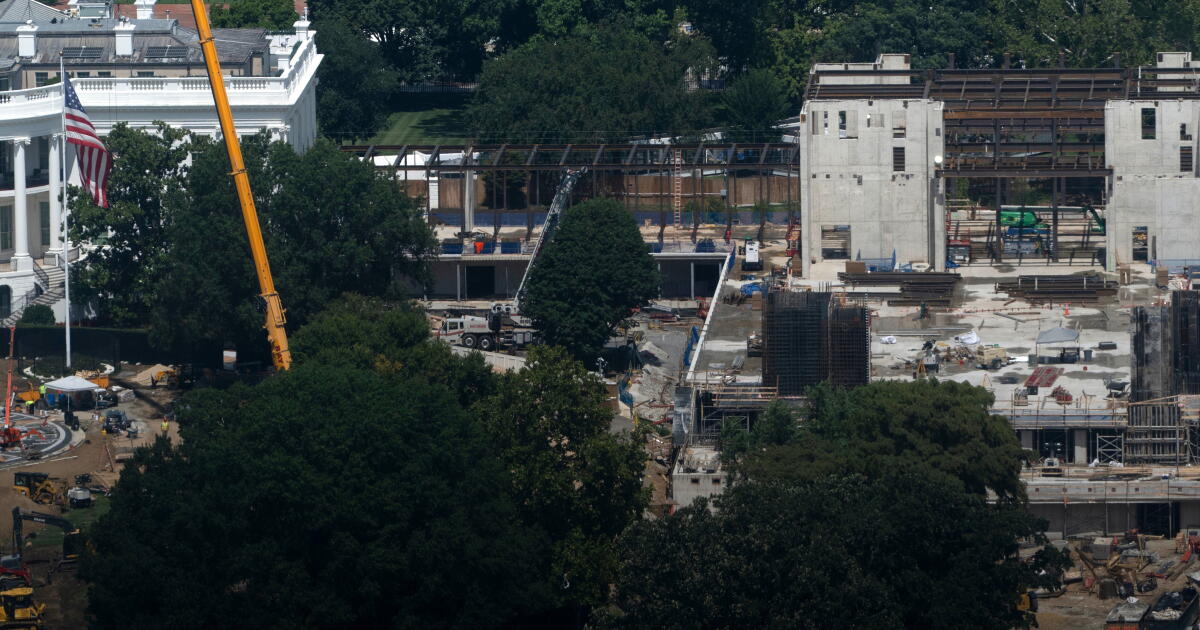
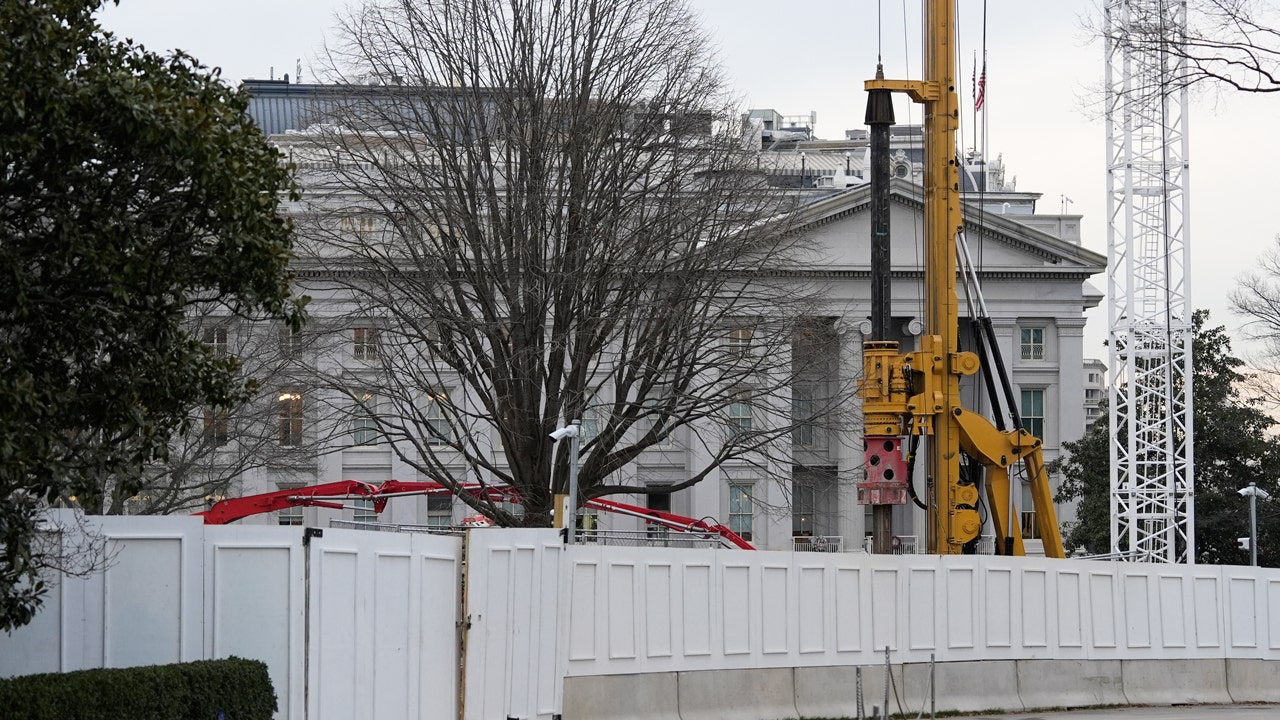
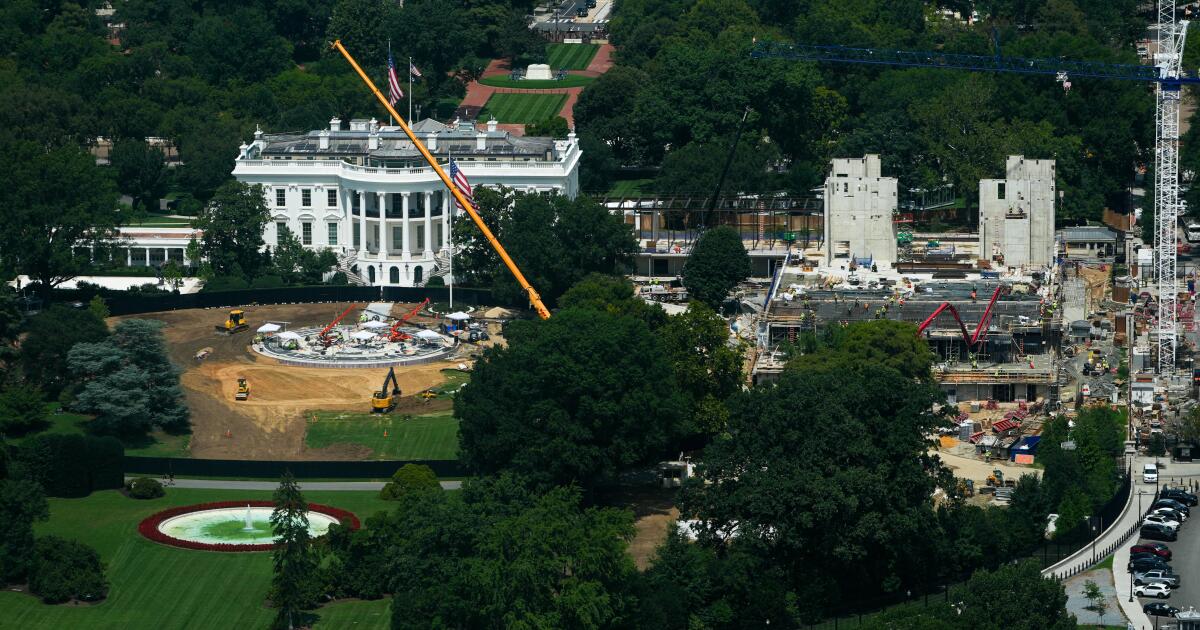
Yet none of that has stopped Trump from demolishing a large part of the White House without any congressional approval in order to build his much-desired ballroom. asserted
none → stop → ballroom
Roberts thought so. asserted
Roberts → think → ?
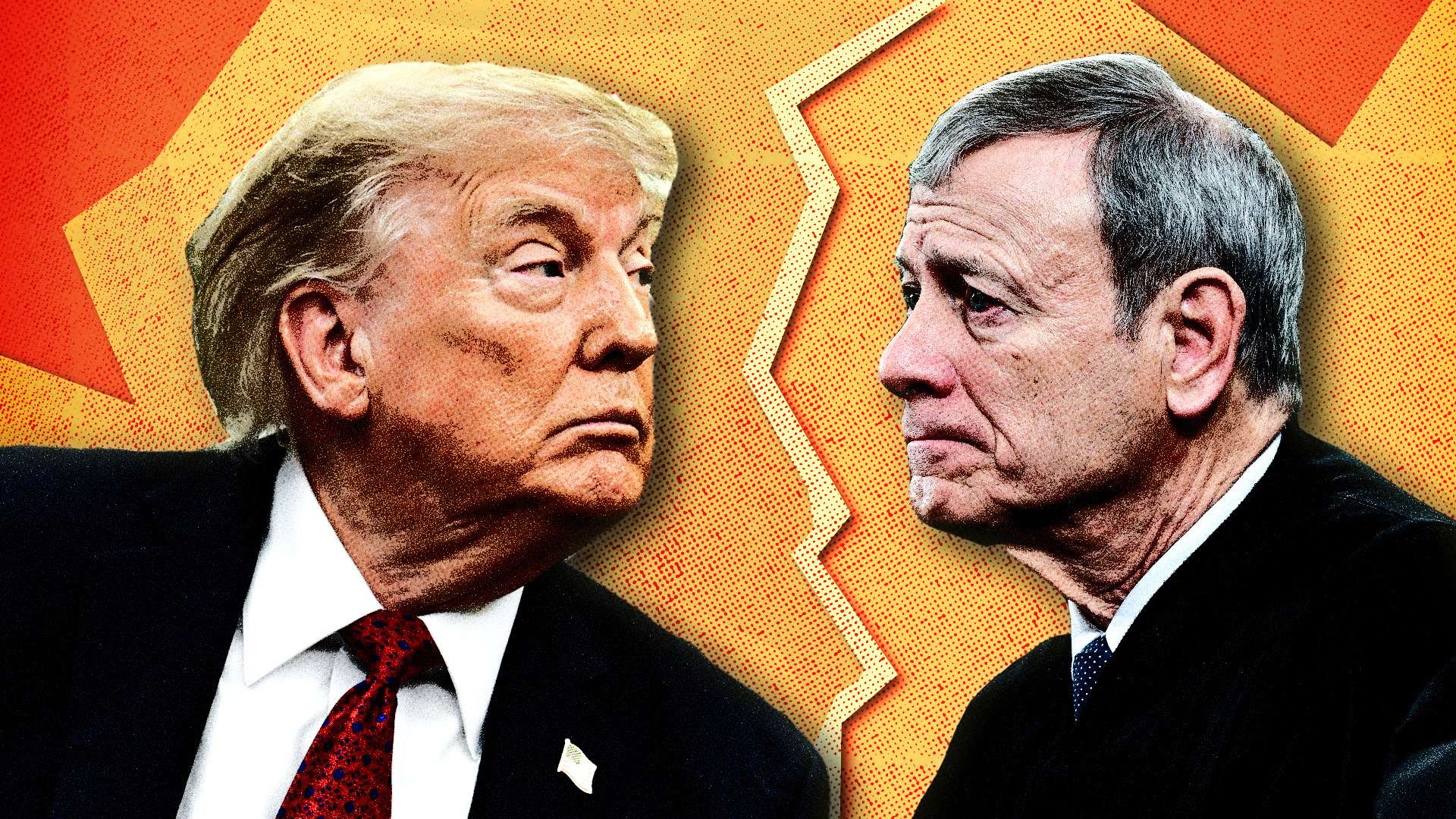
But this time the chief justice found himself in dissent. asserted
justice → find → dissent
Five members of the Court cohered around an unsigned per curiam opinion this week that allowed the construction on the White House to proceed for now because, in their view, the legal challengers who had sued to stop the ballroom likely lacked the requisite standing needed to sue in the first place. asserted
who → cohere → place
Roberts, joined by Justices Sonia Sotomayor, Elena Kagan, and Ketanji Brown Jackson, thought the challengers did satisfy the necessary standing requirements and therefore faulted his colleagues for effectively giving the green light to Trump's "likely unlawful" ballroom building spree. asserted
challengers → join → spree
Legal standing is one of those handy doctrines that judges can selectively employ when they want to avoid ruling on the merits of a particular case, or when they want to defer to the government without coming right out and deferring openly. asserted
they → employ → government
It's hard to tell in this case which one of those two reasons might account for the majority's actions. uncertain
one → tell → actions
Roberts' dissent is much easier to parse. asserted
dissent → parse → ?
He simply tried and failed to convince the Supreme Court to provide the judicial check on executive lawlessness that the Constitution demands. asserted
Constitution → try → that
Give feedback · no sign-in needed

No sign-in needed for now. Your note is sent without a name, so it cannot be answered.

History Support