Photo via The Straits Times

Anthropic touts AI-led biology discovery

Read the original at The Straits Times ↗
Cite

The Straits Times. (2026, September 24). Anthropic touts AI-led biology discovery. The Straits Times. https://www.straitstimes.com/world/united-states/anthropic-touts-ai-led-biology-discovery

Dated when The Aporia collected the article, usually within hours of publication. Check the original for its exact date and byline.

The Straits Times · collected 2026-09-24 · by The Straits Times

Quick Summary

Anthropic, an AI startup based in San Francisco, announced on September 23 that its Claude AI model discovered a previously unknown enzyme system through analyzing DNA sequences. The AI processed data for 21 hours, identifying over 200,000 genes and narrowing down to 20 promising candidates, demonstrating the potential of AI in accelerating scientific research. Anthropic CEO Dario Amodei highlighted this finding as a preliminary but significant discovery that could lead to new gene editing technologies with medical applications.
Written by AI on 2026-09-24, from this article's own text only (the story summary below draws on all the coverage).
See how they differ ↓

AI analysis

Story summary

Anthropic, an AI company based in San Francisco, announced on September 23 the discovery of a new enzyme system by its AI model Claude. The finding is similar to CRISPR technology and could represent a new gene-editing mechanism. Anthropic's biology lab used more than 950 autonomous AI agents, which combed through over 200,000 genes within 21 hours, identifying about 20 that warrant further investigation—a task that would typically take months for human scientists.

The discovery involves a pattern in bacterial DNA consisting of repeating pieces of DNA next to two genes, one known and another mysterious. This system shows characteristics of only a few other programmable structures and displays patterns reminiscent of CRISPR, which has revolutionized the treatment of diseases like sickle cell disease and cancer. Anthropic emphasized that its role was primarily in setting up initial instructions and conducting follow-up lab experiments, while Claude autonomously identified the leads.

This breakthrough underscores AI's potential to accelerate scientific discovery significantly and highlights ongoing debates about managing the risks and benefits associated with advanced AI technologies globally.

Written for “AI Discovery In Biology” on 2026-11-21, grounded in this article and the 1 other(s) covering the same event.

How they differ

2 outlets covered “AI Discovery In Biology”.

What each outlet says

One AI summary per outlet of its latest article on this story, written from that article alone and checked against it. Open the article for the outlet's own words.

The Straits TimesThis outlet24 Sep

Anthropic, an AI startup based in San Francisco, announced on September 23 that its Claude AI model discovered a previously unknown enzyme system through analyzing DNA sequences. The AI processed data for 21 hours, identifying over 200,000 genes and narrowing down to 20 promising candidates, demonstrating the potential of AI in accelerating scientific research. Anthropic CEO Dario Amodei highlighted this finding as…

Anthropic touts AI-led biology discovery (this article)
Al Jazeera24 Sep

Anthropic announced on Wednesday that its AI model Claude discovered a new enzyme system in bacterial DNA similar to the CRISPR gene-editing mechanism after searching a large database of DNA sequences for 21 hours. The company suggests this could represent a novel gene editing tool, though its exact function is still unknown. Experts like Stanford's Stanley Qi view the finding as promising for AI-assisted biological…

AI model Claude discovers CRISPR-like enzyme system, Anthropic says →

Compared with similar articles

This article reads unscored and hedges 17% of its claims. Each row says how that neighbour differs.
Al Jazeera
Hedges 5 of 20 claims Outlet record 60/100
Fox News
Hedges 7 of 24 claims Outlet record 66/100
“Article A describes Anthropic unveiling an AI-led discovery of a new enzyme system, while Article B focuses on predictions made by Anthropic CEO about the future impact of AI in curing diseases.”

Story

AI Discovery In Biology
Technology · 2 article(s) covering the same event. See how they differ ↑
How this article was measured signals, leaning charts, publisher record, byline, topics and claims

Signals How these are calculated →

Claims extracted
18
sentences that state something as happening or true
Uncertain
17%
3 of 18 hedged ("reportedly", "may", "according to")
Leaning
not political
takes no side on a contested political question
Publisher signals
64/100
The Straits Times's corrections and hedging, across everything collected from it. Not a measure of accuracy.
Outlets on this story
2
Technology
Same framing elsewhere
1
articles that frame the event the way this one does
Analyzed 2026-09-24 · how these are computed

How this is being covered How these are calculated →

Article leaning vs. publisher reliability
Source leaning vs. consistency

Publisher

The Straits Times · 5674 article(s) · 7 correction(s) detected
Running correction rate · 7 correction(s)

Who wrote this

The Straits Times
3966 article(s) here · 1 carrying a prediction
The environmental consequences of this war will last for generations,” Lewis Pugh wrote in a post on his website.
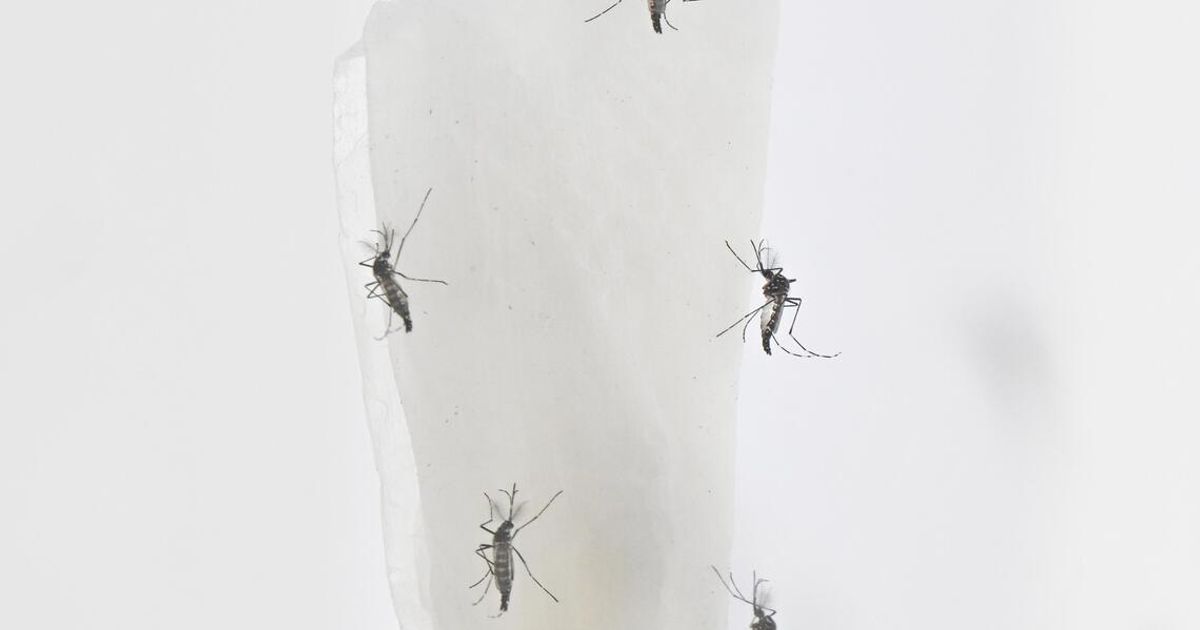
He predicts that pairing more use of these Wolbachia mosquitoes with existing steps to fight mosquito-borne disease could “knock dengue down to much lower levels” in many places.
The Estonian police said on Nov 20 the closure would “make it harder for Russian intelligence services to recruit and influence people, and help prevent sanctions evasion”.
2026-11-21 · assertive framing · Queues in Russian town as Estonia border closure looms
COP31 climate summit risks failure as talks go deep into overtime ANTALYA, Turkey, Nov 21 - The COP31 climate summit will either produce a good deal or no deal at all, the European Union's top climate official said on Saturday as talks stretched deep into overtime.
He was considered one of the leaders of the Beltran Leyva cartel, which had reportedly allied with the Los Mayors faction of the powerful Sinaloa Cartel.
Trump told European leaders they were spending a lot on Ukraine, Zelenskiy says KYIV, Nov 21 - US President Donald Trump told European leaders this week they were spending a lot on the war in Ukraine and could use that money at home if a peace deal were reached with Russia, Ukrainian President Volodymyr Zelenskiy said on Saturday.
Denmark would present its proposals at a meeting of EU ambassadors in Brussels on Monday.
NATO will defend every inch of Polish territory, Rutte says WARSAW, Nov 21 - NATO will defend every inch of Polish territory, NATO Secretary General Mark Rutte said in Warsaw, a day after Poland said Russia violated its airspace with three objects that were probably two missiles and a drone.
The cuts proposed by Antonio Costa, who chairs summits of EU leaders, would reduce the overall seven-year budget by €40 billion to €1.582 trillion compared to a proposal presented by the Irish EU presidency in October, and by €180.6 billion compared to the original Commission proposal.
Catherine, Britain’s Princess of Wales, will reflect on her experience with cancer and recovery in a documentary to be broadcast internationally in November, Kensington Palace said on Nov 21.
Also by The Straits Times
Nothing else under this byline is closely related to this article, so these are simply their most recent.
All 3966 articles by The Straits Times →

Topics

Anthropic Claude MIT SAN FRANCISCO – the UN Security Council

Subjects

Anthropic ORG · 7× Amodei PERSON · 2× Claude PERSON · 2× Dario Amodei PERSON · 1× Feng Zhang PERSON · 1× MIT ORG · 1× SAN FRANCISCO – GPE · 1× Stanford University ORG · 1× the Broad Institute ORG · 1× the UN Security Council ORG · 1×

Narrative

Anthropic touts AI-led biology discovery AI generated SAN FRANCISCO – US artificial intelligence startup Anthropic on Sept 23 unveiled the first discovery from its molecular biology lab, a previously unknown enzyme system spotted by its Claude model and touted by the company as proof that AI can speed up basic research.
framing: assertive · carried by 1 article(s) · first seen 2026-09-24
The agents found more than 200,000 genes for one type of enzyme and picked out 20 worth a closer look – work that would take an expert scientist weeks or even months.
2026-09-24 · The Straits Times
Anthropic touts AI-led biology discovery · assertive framing

Claims (18 extracted, 3 hedged)

Anthropic touts AI-led biology discovery AI generated SAN FRANCISCO – US artificial intelligence startup Anthropic on Sept 23 unveiled the first discovery from its molecular biology lab, a previously unknown enzyme system spotted by its Claude model and touted by the company as proof that AI can speed up basic research. asserted
AI → tout → research
Enzyme systems found in nature have led to some of biology’s biggest breakthroughs, from the tools that launched the biotech industry to the DNA-copying method behind many medical tests. asserted
that → find → tests
According to the company, some 950 Claude-powered software agents combed through a database of DNA sequences for 21 hours. uncertain
agents → accord → hours
The agents found more than 200,000 genes for one type of enzyme and picked out 20 worth a closer look – work that would take an expert scientist weeks or even months. asserted
that → find → weeks
Anthropic said its researchers’ involvement was limited to the initial instructions and the lab experiments, with the AI agents working autonomously to decide which leads to pursue. asserted
agents → say → leads
One of the agents spotted something in viruses that infect bacteria that scientists appear to have missed: a string of short, repeating pieces of DNA sitting next to two genes, one for a known enzyme and one for a mystery protein. asserted
scientists → spot → protein
The setup looks like CRISPR, a natural defence system in bacteria that scientists turned into a gene-editing tool now used in medicine. asserted
scientists → look → medicine
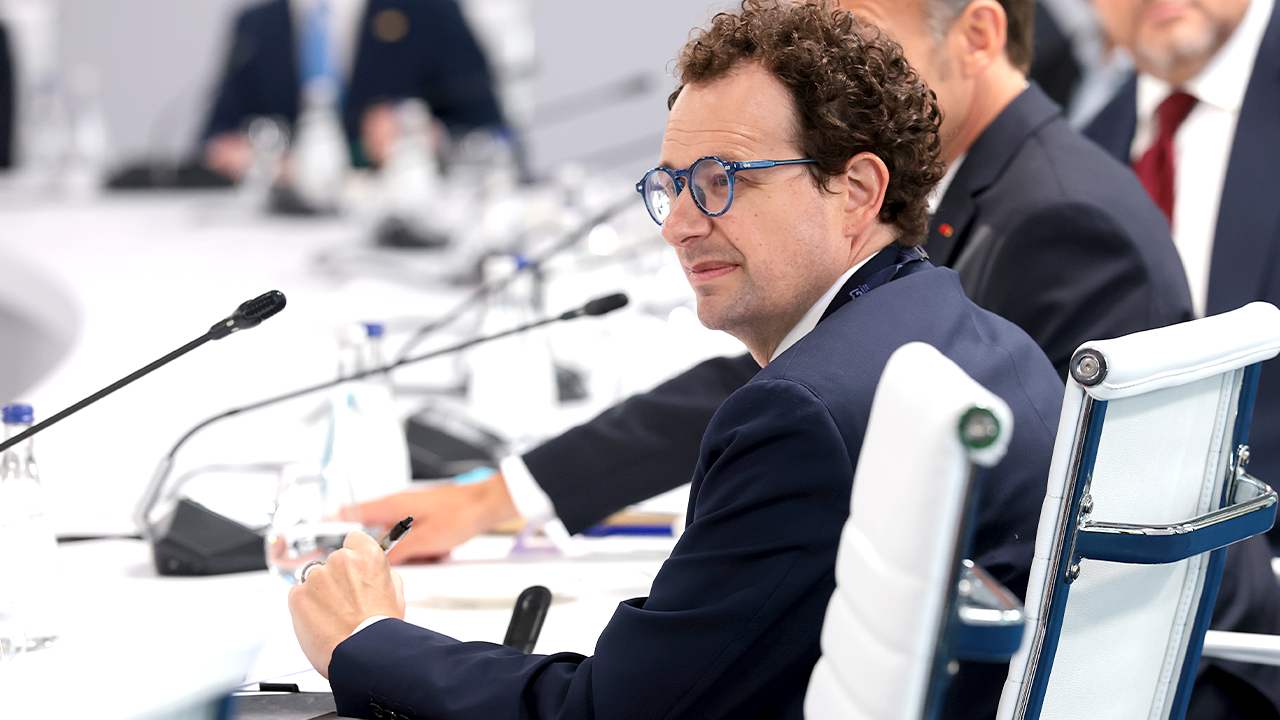
Anthropic chief Dario Amodei, who recently called for slowing AI development because of its risks, cited the discovery on Sept 23 in remarks to the UN Security Council, which he addressed by video link. asserted
he → call → link
The finding is “preliminary,” he said, but “may constitute a new gene editing mechanism that could have applications in gene therapy.” uncertain
that → say → therapy
He predicted “profound progress in the near future on diseases that have plagued humanity for millennia.” asserted
that → predict → millennia
The function of the newly identified system, dubbed ART, remains unknown, Anthropic said. asserted
Anthropic → identify → system
The company added that its initial experiments suggest the system could, like CRISPR, be programmable. uncertain
system → add → CRISPR
The results, published as a preprint, have not yet been reviewed by other scientists. asserted
results → publish → scientists
Feng Zhang, one of the pioneers of CRISPR and a professor at MIT and the Broad Institute, called the identification of the repeated DNA fragments “genuinely intriguing” and said it “merits further investigation,” in remarks released by Anthropic. asserted
it → call → Anthropic
Amodei also said on X that a team at Stanford University had independently described a comparable but distinct system. asserted
team → say → system
Formed in the spring, Anthropic’s lab team works in the San Francisco Bay Area and does not handle pathogens capable of infecting humans. asserted
team → form → humans
All experiments are carried out by human scientists, Anthropic said. asserted
Anthropic → carry → scientists
Amodei did not rule out Claude eventually operating lab equipment itself, with appropriate safeguards. asserted
Claude → rule → safeguards
Give feedback · no sign-in needed

No sign-in needed for now. Your note is sent without a name, so it cannot be answered.

History Support