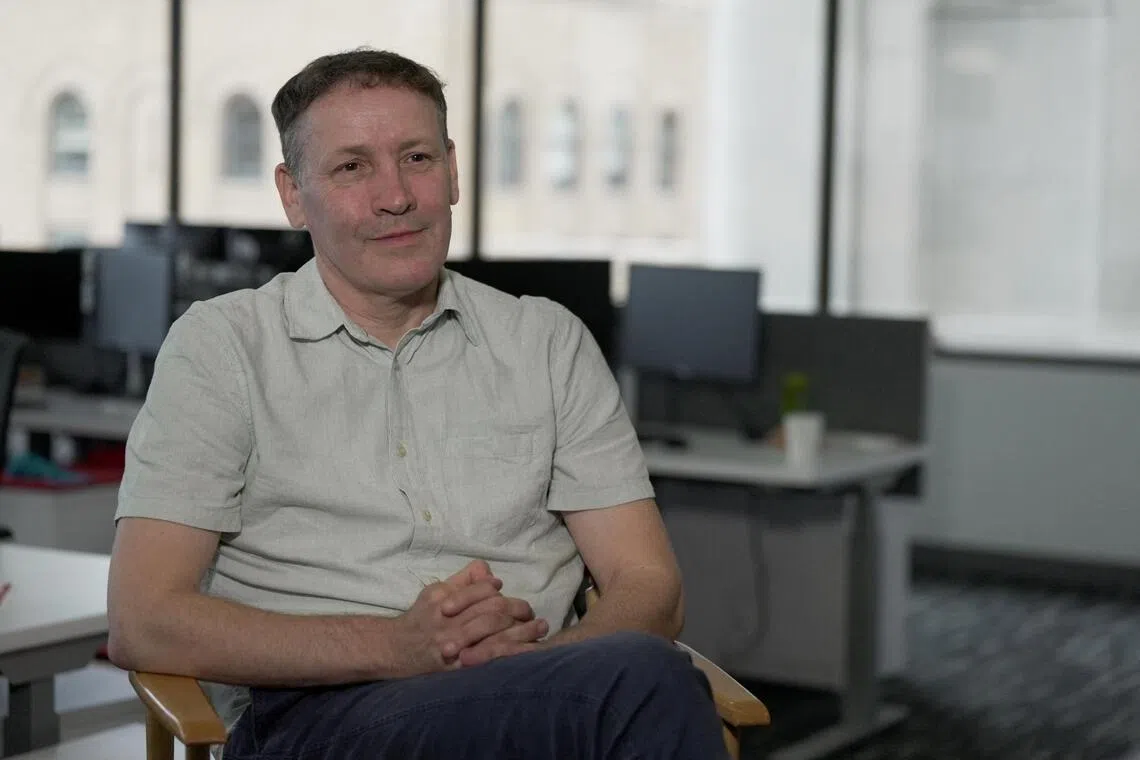
Photo via The Straits Times

Ex-Google safety chief warns AI could harm children more than social media did

Read the original at The Straits Times ↗
Cite

The Straits Times. (2026, September 23). Ex-Google safety chief warns AI could harm children more than social media did. The Straits Times. https://www.straitstimes.com/world/ex-google-safety-chief-warns-ai-could-harm-children-more-than-social-media-did

Dated when The Aporia collected the article, usually within hours of publication. Check the original for its exact date and byline.

The Straits Times · collected 2026-09-23 · by The Straits Times

Quick Summary

Tom Siegel, former vice president of trust and safety at Google, has warned that artificial intelligence (AI) poses a greater threat to children than social media did, potentially causing severe harm such as suicide or psychosis. Siegel recently joined Common Sense Media's Youth AI Safety Institute as its executive director, aiming to develop standards for holding AI firms accountable. He argues that major AI companies like Anthropic and OpenAI are introducing features to minors without adequate safeguards in place.
Written by AI on 2026-09-23, from this article's own text only (the story summary below draws on all the coverage).

AI analysis

Story summary

Tom Siegel, formerly Vice President of Trust and Safety at Google, has warned about the potential dangers AI poses to children, suggesting they might be more harmful than social media. Siegel argues that as technology companies rush to develop advanced chatbots and other AI features, there is a risk of repeating past mistakes similar to those in the social media era. Reuters reported on an internal Meta document from 2025 revealing that their chatbots could engage minors in inappropriate conversations, leading to investigations by Congress. Despite these concerns, regulatory efforts have not kept pace with AI's rapid development. Siegel believes outside intervention is necessary for the industry to address these issues effectively.

Written for “AI Safety Concerns For Children” on 2026-11-20, grounded in this article and the 0 other(s) covering the same event.

Compared with similar articles

This article reads unscored and hedges 26% of its claims. Each row says how that neighbour differs.
Al Jazeera
Hedges 1 of 14 claims Outlet record 60/100
“The articles cover different aspects of internet safety and AI regulation, not a single specific incident.”
South China Morning Post
Leans right Hedges 3 of 4 claims Outlet record 62/100
“The articles describe different perspectives and actions related to protecting minors from online harms but do not report on the same specific incident.”
Al Jazeera
Leans left Hedges 4 of 18 claims Outlet record 60/100
“The articles describe different legal cases involving Facebook and TikTok, not a single specific incident.”
Global News
Hedges 5 of 48 claims Outlet record 63/100
“The articles discuss different warnings about AI risks from distinct sources (an ex-Google safety chief vs. Anthropic and OpenAI CEOs).”
Al Jazeera
Hedges 3 of 20 claims Outlet record 60/100
“The articles discuss different people's views on AI regulation at distinct times and do not describe the same specific incident.”

Story

AI Safety Concerns For Children
Technology · 1 article(s) covering the same event.
How this article was measured signals, leaning charts, publisher record, byline, topics and claims

Signals How these are calculated →

Claims extracted
27
sentences that state something as happening or true
Uncertain
26%
7 of 27 hedged ("reportedly", "may", "according to")
Leaning
withheld
no quote in the article backed the model's score
Publisher signals
64/100
The Straits Times's corrections and hedging, across everything collected from it. Not a measure of accuracy.
Outlets on this story
1
Technology
Same framing elsewhere
1
articles that frame the event the way this one does
Analyzed 2026-09-23 · how these are computed

How this is being covered How these are calculated →

Article leaning vs. publisher reliability
Source leaning vs. consistency

Publisher

The Straits Times · 5570 article(s) · 7 correction(s) detected
Running correction rate · 7 correction(s)

Who wrote this

The Straits Times
3829 article(s) here · 1 carrying a prediction
The European leaders were meeting as part of the so-called coalition of the willing, which regularly gathers to discuss ways to protect a postwar Ukraine from future Russian aggression.
US peace negotiator Jared Kushner, at the same event, also said that he and fellow negotiator Steve Witkoff had “gotten the Russians comfortable with the concept that any security guarantee for Ukraine would be based on Article 5”.
Takaichi’s China trip this week was her first since suggesting in 2025 that Japan might intervene militarily if China attempted to take Taiwan by force.
But while some believe the success of the meeting could have a stabilising effect on an international order in turmoil, the broad consensus among analysts is that this first-of-its-kind meeting worked more as a confidence-building exercise between the rival nations rather than an immediate, concrete cure to the world’s ills.
Iraqi security forces will deploy in Jurf al-Sakhar, a stronghold of the Kataib Hezbollah armed group, on Friday, security officials told a press conference, under a compromise deal designed to ease tensions with Iran's most powerful Shi'ite militia ally in the country.
Some analysts said the outcome of the Shenzhen summit may actually diminish Trump’s stature on the world stage as he enters the lame-duck phase of his presidency, while bolstering two of Washington’s main adversaries.
Whether or not the allegation is true, “just the news will definitely influence people’s opinions of women who have broken the ceiling or are trying to.” Asian American women working in tech, civil rights advocacy and academia have felt a sense of dread that this ordeal will diminish how their peers are viewed and treated in their workplaces. It is a reminder that no accomplishments will completely dispel centuries-old stereotypes.
Three killed in missile strikes on Kyiv, mayor says, in biggest attack on bridges
The Bill is backed by both the oil and gas industry and clean energy groups, but opposed by many major environmental organisations. The measure now proceeds to the House of Representatives, where Speaker Mike Johnson, a supporter of the initiative, has predicted he has the votes to pass it. But members on both sides of the aisle, including Minority Leader Hakeem Jeffries, have said they want to make changes to the Bill. Some Republicans, including Representative Chip Roy, policy chair of the ultraconservative House Freedom Caucus, have wavered in their support, saying they have concerns about the legislation’s electric transmission provisions. Some progressive Democrats, meanwhile, have said they oppose the Senate version of the Bill, contending it would weaken environmental laws. Representative Bruce Westerman, the chairman of the House Natural Resources Committee, said on Nov 19 he doubted there would be time to make changes to the Bill before Congress’s term expires at the end of December. “If the Senate gets it done then I think that’s what we’ll have to pass in the House,” Westerman said in an interview before the vote.
Their complaint alleged that supervisors had warned that objections would result in “trouble.”
Also by The Straits Times
Nothing else under this byline is closely related to this article, so these are simply their most recent.
All 3829 articles by The Straits Times →

Topics

Alphabet Google Meta Reuters SAN FRANCISCO -

Subjects

Siegel PERSON · 8× Google ORG · 5× OpenAI ORG · 2× Reuters ORG · 2× Alphabet ORG · 1× Common Sense Media ORG · 1× Meta ORG · 1× SAN FRANCISCO - GPE · 1× Tom Siegel PERSON · 1× the Youth AI Safety Institute ORG · 1×

Narrative

Siegel’s concerns mirror a growing fear among some tech insiders and academic researchers that AI poses a deeper threat to children than social media did, at a time when the industry is racing to add increasingly advanced features to chatbots that millions of young people already use daily.
framing: mixed · carried by 1 article(s) · first seen 2026-09-23
Ex-Google safety chief warns AI could harm children more than social media did AI generated

Claims (27 extracted, 7 hedged)

Ex-Google safety chief warns AI could harm children more than social media did AI generated uncertain
media → warn → AI
SAN FRANCISCO - The founder of the trust and safety team at Alphabet’s Google this week called for a slowdown in AI development, warning that the tech industry was repeating the same mistakes from the social media era, potentially causing even greater harm to children. asserted
industry → call → children
Social media companies are paying huge sums and facing thousands of lawsuits over claims they harmed young users, while governments around the world are working to curb minors’ access to their platforms. Reuters in 2025 exclusively reported on an internal Meta policy document that stated its chatbots could “engage a child in conversations that are romantic or sensual”, resulting in a congressional probe. uncertain
that → pay → probe
Even so, regulation has yet to catch up with AI’s breakneck pace of development. asserted
regulation → have → development
“We find ourselves in a really terrible situation in terms of what AI is doing to kids,” Tom Siegel, the former vice-president of trust and safety at Google, told Reuters. asserted
Siegel → find → Reuters
“The idea that the industry will figure it out by itself without outside help is unrealistic.” asserted
industry → figure → help
Siegel’s concerns mirror a growing fear among some tech insiders and academic researchers that AI poses a deeper threat to children than social media did, at a time when the industry is racing to add increasingly advanced features to chatbots that millions of young people already use daily. asserted
millions → mirror → people
Siegel joins youth at AI safety institute Siegel announced on Sept 22 that he had joined Common Sense Media, a children’s online advocacy group. asserted
he → join → Media
The non-profit, established in 2003, conducts research and reviews the suitability of various media for children. asserted
profit → establish → children
In May, it launched the Youth AI Safety Institute, a research organization to assess kids’ AI use, for which Siegel will serve as the first executive director. uncertain
Siegel → launch → director
Anthropic and OpenAI Foundation, the nonprofit that controls OpenAI, are among the institute’s backers. asserted
that → control → backers
Siegel said he planned to develop standards by which to hold AI firms accountable, and hoped to do so by working alongside those companies and third-party groups. asserted
firms → say → companies
He previously worked at Google from 2004 to 2019, but left after concluding that the tech industry was “plateauing” in its ability to create safe online spaces for consumers. asserted
industry → work → consumers
He then co-founded TrustLab, a startup that built tools to help companies detect safety threats, before stepping aside as CEO earlier this month to take on his new position. asserted
companies → co → position
As it stands, major AI companies are rolling out features to children without establishing sufficient guardrails, Siegel said. asserted
Siegel → stand → guardrails
Risks range from suicide to psychosis “I think we’re looking at very, very severe scenarios of harm being done,” he said. asserted
he → range → harm
He suggested that the companies had immediate steps they could take to better protect young people, citing risks ranging from suicide and psychosis to cognitive offloading, a term used to describe decreased critical thinking caused by leaning on AI to answer questions. uncertain
they → suggest → questions
Anthropic and OpenAI could enforce more robust age verification measures to stop underage kids from accessing their chatbots, he said. uncertain
he → enforce → chatbots
His former employer Google could easily implement an option to turn off AI Overviews and AI Mode in its search engine, he added, in the same way that it already has a toggle that allows users to filter out sexually explicit content. uncertain
users → implement → content
While these measures could affect usage or profits in the short term, AI companies that do not act will run the risk of lawsuits and regulation that could impact their business more heavily, Siegel added. uncertain
Siegel → affect → business
Asked to respond to Siegel’s comments, a Google spokesman said parents have controls to turn off a child’s access to the search engine entirely. asserted
parents → ask → engine
“Our AI Search features are an incredibly useful way for kids and teens to learn, explore and make sense of information and the world,” the spokesperson said. asserted
spokesperson → learn → information
An OpenAI spokesperson said the company uses “account and behavioral signals” in addition to self-reported age to identify underage users. asserted
company → say → users
“While no single age-assurance method is perfect, we continuously test and improve these systems, including against attempts to bypass safeguards.” asserted
we → test → safeguards
Anthropic did not immediately respond to a request for comment. asserted
Anthropic → respond → comment
At Common Sense Media, Siegel said a top priority would be scaling up independent standards similar to car crash testing that would measure the risk of publicly available AI tools. asserted
that → say → tools
The effectiveness will depend in part on the willingness of AI companies to collaborate, the likelihood of which Siegel said was not certain, but was high enough for him to take the job. asserted
him → depend → job

Give feedback · no sign-in needed

No sign-in needed for now. Your note is sent without a name, so it cannot be answered.

History Support