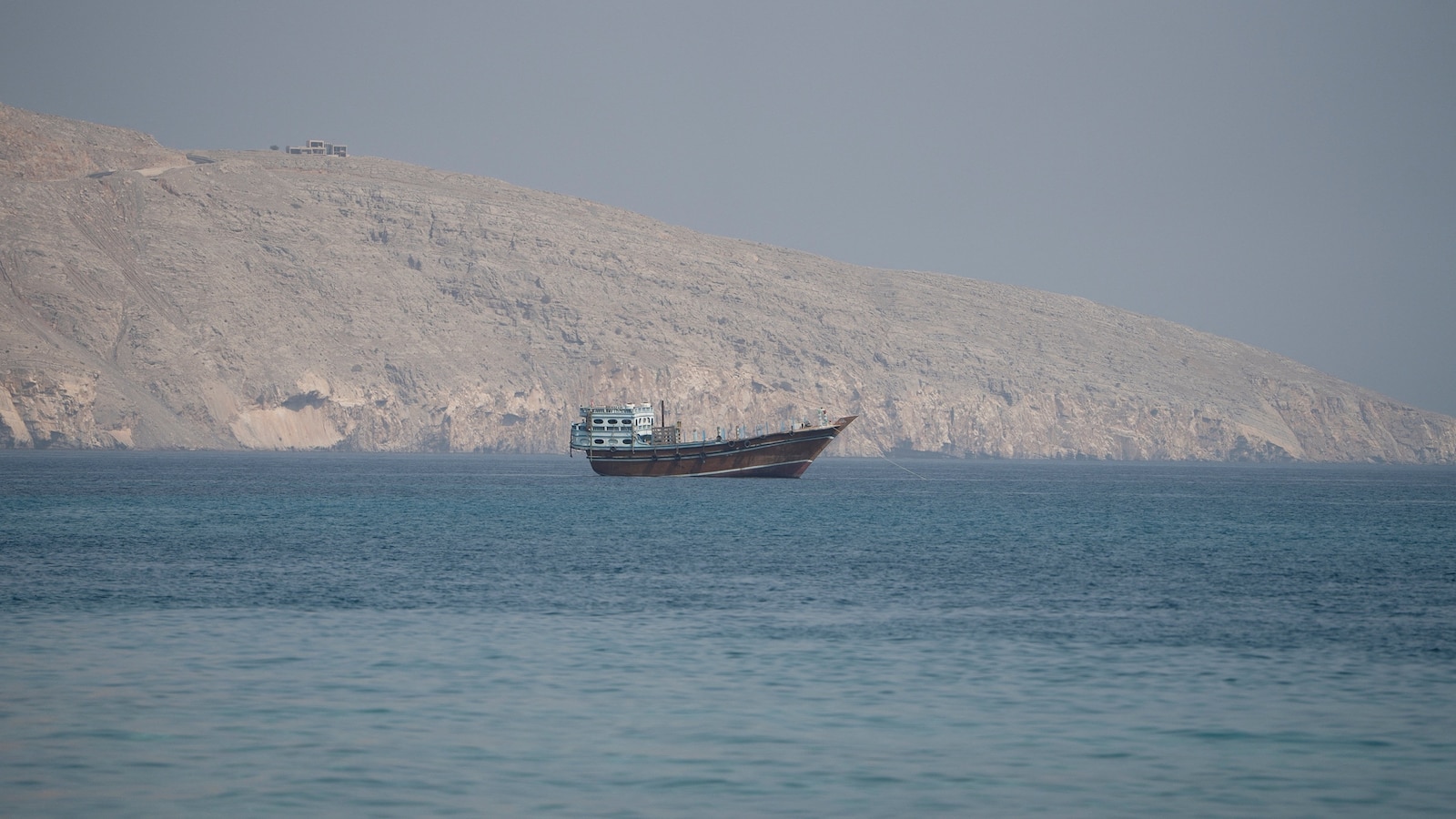
Photo via Al Jazeera

Who are Iran’s top trading partners US would need to target to isolate it?

Read the original at Al Jazeera ↗
Cite

Haddad, M. (2026, August 25). Who are Iran’s top trading partners US would need to target to isolate it? Al Jazeera. https://www.aljazeera.com/news/2026/8/25/who-are-irans-top-trading-partners-us-would-need-to-target-to-isolate-it?traffic_source=rss

Dated when The Aporia collected the article, usually within hours of publication. Check the original for its exact date and byline.

Al Jazeera · collected 2026-08-25 · by Mohammed Haddad

Quick Summary

The US Treasury Secretary Scott Bessent has announced new sanctions against nearly 60 entities and individuals related to Iran, aiming to isolate its economy. The top trading partners of Iran in 2024 were China, accounting for $14.58 billion in exports and $17.8 billion in imports, followed by Iraq ($11.7bn), the UAE ($7.16bn and $21bn), Turkiye ($6.1bn and $11.1bn), and Afghanistan ($2.3bn). The article breaks down Iran's top trading partners based on official customs figures from Trade Data Monitor, excluding unrecorded flows sustaining its oil exports.
Written by AI on 2026-08-25, from this article's own text only (the story summary below draws on all the coverage).
See how they differ ↓

AI analysis

Story summary

President Trump announced on August 18, 2026, what he described as "the most crushing economic operation ever taken against any country" targeting Iran, aiming to escalate pressure beyond existing sanctions. This move came after a 60-day ceasefire expired without diplomatic resolution to the war initiated by the US and Israel in February. Iran's military has signaled a shift towards more aggressive offensive operations, threatening retaliation against Gulf states like the United Arab Emirates (UAE) that assist the U.S. In response, the UAE halted all trade and financial dealings with Iran following accusations of missile attacks on August 18. Treasury Secretary Scott Bessent later detailed new sanctions targeting five key economic areas: digital assets, technology, gold, aviation, and shipping, aiming to cut off Iran's remaining economic lifelines globally, while China remains a major concern due to its significant trade ties with Iran.

Written for “US Sanctions on Iran Economy” on 2026-11-20, grounded in this article and the 40 other(s) covering the same event.

How they differ

18 outlets covered “US Sanctions on Iran Economy”.

What each outlet says

One AI summary per outlet of its latest article on this story, written from that article alone and checked against it. Open the article for the outlet's own words.

Al JazeeraThis outlet25 Aug

The US Treasury Secretary Scott Bessent has announced new sanctions against nearly 60 entities and individuals related to Iran, aiming to isolate its economy. The top trading partners of Iran in 2024 were China, accounting for $14.58 billion in exports and $17.8 billion in imports, followed by Iraq ($11.7bn), the UAE ($7.16bn and $21bn), Turkiye ($6.1bn and $11.1bn), and Afghanistan ($2.3bn). The article breaks down…

Who are Iran’s top trading partners US would need to target to isolate it? (this article)4 articles from Al Jazeera on this story
The Straits Times24 Aug

Iran's Deputy Foreign Minister Kazem Gharibabadi mocked the US threat of an "economic D-day" against the country, calling it an admission of defeat. This comes after US Treasury Secretary Scott Bessent declared a massive economic pressure campaign on Iran, claiming the US had already dismantled its military capabilities and nuclear program. Bessent is scheduled to explain new US sanctions on Iran on August 24. The…

Iran mocks US threat of ‘economic D-day’, says it’s an admission of defeat →5 articles from The Straits Times on this story
CBC26 Aug

The US Trump administration has declared "economic D-Day" against Iran, warning global trade partners to cut all financial ties with Tehran or face severe economic consequences. This move is aimed at isolating Iran's economy. No specific numbers are mentioned in the article to quantify the severity of these consequences. The article appears to be an analysis piece from the About That outlet, breaking down this…

The U.S. threatens Iran with ‘economic D-Day’ | About That →5 articles from CBC on this story
CBS News24 Aug

Iranian Economy Minister Ali Madanizadeh said on Monday that Iran is prepared to face new US sanctions, which were announced by U.S. Treasury Secretary Scott Bessent and include measures targeting digital assets, gold, aviation, and shipping. The State Department has also offered a $10 million reward for information on key leaders of the Iranian Islamic Revolutionary Guard Corps (IRGC), which it accuses of targeting…

Iran says it's ready for new U.S. sanctions, has 2-year plan →4 articles from CBS News on this story
The Independent21 Aug

Iran's Foreign Minister Abbas Araghchi has accused President Donald Trump of threatening "economic terrorism" after the US announced its intention to impose the "toughest sanctions in history" on Tehran. The US treasury secretary Scott Bessent warned allies that they would face economic consequences if they continued to help mediate peace talks with Iran. Over 750 members of the US military have been injured since…

Iran-US war latest: Tehran accuses Trump of ‘economic terrorism’ after he vows to crush it with sanctions →3 articles from The Independent on this story
BBC25 Aug

Iranian Economy Minister Ali Madanizadeh claims that Iran is "fully prepared" to counter US economic sanctions, which were announced by US Treasury Secretary Scott Bessent as part of what Bessent described as an "economic D-Day" against Iran. The new measures aim to isolate countries and businesses dealing with Iran from the global economy, but some economists have questioned their effectiveness. According to…

Iran says it is 'fully prepared' to counter widened US economic sanctions →3 articles from BBC on this story
Show 12 more outlets
NPR24 Aug

US Treasury Secretary is set to announce a new economic measure against Iran, which Tehran has warned will lead to "seismic" repercussions if carried out. No specific details are provided about the measure or its timeline. Canada's response to potential US trade actions is also outlined, with Ottawa pledging to impose retaliatory tariffs on American goods.

Morning news brief →3 articles from NPR on this story
ABC News (US)24 Aug

The US is preparing to announce new sanctions against Iran, which has caused its currency, the rial, to hit a record low of 2.02 million to the dollar. The informal rate in unofficial markets is significantly lower than the official Central Bank rate of around 1.5 million rials to the dollar. This marks the latest blow to an Iranian economy already battered by previous sanctions and a US naval blockade, with…

Iran's rial currency hits new record low as US prepares to announce more sanctions →2 articles from ABC News (US) on this story
Washington Examiner24 Aug

The US is expected to announce new sanctions against Iran, which has already caused its currency, the rial, to hit a record low at 2.02 million to the US dollar in informal markets. The previous sanctions and US naval blockade have severely impacted Iran's economy, with double-digit inflation and negative growth. Iranian officials are responding to the impending sanctions by warning that any country supporting them…

Iran’s rial currency hits new record low as US prepares to announce more sanctions →2 articles from Washington Examiner on this story
Toronto Star20 Aug

Iran has dismissed US President Donald Trump's economic threats, with no specific response or details provided on what was said by Iranian officials. This article appears to be a factual report of current events in the Middle East without taking a particular stance or analysis. No key numbers are mentioned in the brief text. The main development reported is Iran's rejection of US economic threats while Syria's…

Iran dismisses US economic threats and other developments in the Middle East →
National Post21 Aug

US Treasury Secretary Scott Bessent will hold a press conference on Monday to discuss the US plan to economically isolate Iran. The US is seeking to impose economic pressure on countries that trade with Iran, with Secretary Bessent saying "you are either with us or against us." China, which buys 50% of its energy from the Gulf, is likely to be targeted by the US efforts. This comes after President Trump threatened…

U.S. Treasury Secretary to detail plans to isolate Iran’s economy on Monday →
The Hindu24 Aug

US Treasury Secretary Scott Bessent has warned Iran that new economic sanctions are imminent, calling it "economic D-Day". The US aims to sever Iran's economic lifelines by targeting its trade partners. Iran's President Masoud Pezeshkian has defended a memorandum of understanding with the US as a way out of the conflict, while Iran's Supreme National Security Council secretary Mohsen Rezaei has threatened to shut…

‘Economic D-Day’: U.S. threatens Iran with new sanctions, Tehran fires back →
Semafor25 Aug

The US Treasury Secretary threatened secondary sanctions against countries doing business with Iran as part of an effort to end the war in Iran. The main targets of this effort, China and Iran, both downplayed the threat, with China stating it will "safeguard its own rights and interests" and Iran's foreign minister calling American leaders "desperate". Chinese banks were not specifically targeted by the sanctions…

China, Iran shrug off US threats of economic war →
Mother Jones25 Aug

US Treasury Secretary Scott Bessent announced on Monday that the US will impose new sanctions on countries and institutions doing business with Iran as part of "Operation Economic Outcast", aiming to end the war in the region. The plan involves cutting off all economic lifelines, including digital assets and shipping, but details on how this will be achieved were not provided. According to Bessent, the US has…

Maybe Trump’s Iran Sanctions Will Work This Time →
Los Angeles Times25 Aug

The US Treasury Secretary Scott Bessent announced new sanctions against Iran on Monday, calling it "economic D-Day" in an effort to sever Tehran from the global financial system. The sanctions aim to target not only Iran but also its trade partners, including China and India, with secondary measures expected to take effect quickly if these countries do not comply. The Trump administration has imposed a total of $50…

To further isolate Iran's economy, U.S. rolls out 'D-Day' sanctions →
Time25 Aug

Iran's currency, the rial, hit a record low on Monday with an exchange rate of 2.02 million rials per dollar. The US Treasury announced new sanctions on more than 60 targets and expanded sanctionable sectors to include digital assets, technology, gold, aviation, and shipping. Treasury Secretary Scott Bessent warned that countries which continue to support Iran's economy may face secondary sanctions within weeks. The…

Iranian Rial Hits Record Low as the U.S. Unveils New Sanctions →
Fox News26 Aug

The article is an opinion piece by someone who has studied World War II and notes similarities between President Donald Trump's "Economic D-Day" campaign against Iran and the Allied invasion of Nazi Germany in 1944. The author questions whether economic pressure will lead to Iranian surrender, pointing out that it took eleven months for Germany to surrender after D-Day. The article reports that the US Treasury has…

Trump’s Economic D-Day can hammer Iran, but will Tehran ever surrender? →
Deutsche Welle26 Aug

US Treasury Secretary Scott Bessent has announced a new phase of economic sanctions against Iran, targeting its international networks used for illicit money movement and five key sectors: digital assets, technology, gold, aviation, and shipping. The US is warning foreign entities that help facilitate money laundering for Iran that they will be removed from the US dollar-based financial system. Around 60…

Can new US sanctions cripple Iran's shadow economy? →

Compared with similar articles

This article reads leans strongly right and hedges 13% of its claims. Each row says how that neighbour differs.
BBC News
Hedges 2 of 45 claims Outlet record 65/100
Semafor
Leans left further left than this Hedges 0 of 5 claims Outlet record 64/100
Mother Jones
Leans strongly left further left than this Hedges 1 of 17 claims Outlet record 60/100
Los Angeles Times
Hedges 9 of 50 claims Outlet record 95/100
CBC News
Leans left further left than this Hedges 3 of 37 claims Outlet record 60/100
BBC News
Hedges 2 of 25 claims Outlet record 65/100
“Article A describes Trump's threat of tougher economic measures on August 20, while Article B reports on a new wave of sanctions imposed by Treasury Secretary Scott Bessent on August 25”
The Independent
Leans strongly right Hedges 4 of 56 claims Outlet record 59/100
The Hindu
Centre further left than this Hedges 2 of 33 claims Outlet record 60/100
“Article B reports on a new wave of sanctions already implemented, whereas Article A describes an impending threat of economic sanctions”
ABC News (US)
Leans strongly left further left than this Hedges 0 of 5 claims Outlet record 67/100
“Article A discusses an Iranian official's statement on exporting oil and a threat from the US, while Article B reports on new sanctions imposed by the US Treasury Secretary, which is a separate development”

Story

US Sanctions on Iran Economy
Politics · 41 article(s) covering the same event. See how they differ ↑
How this article was measured signals, leaning charts, publisher record, byline, topics and claims

Signals How these are calculated →

Claims extracted
23
sentences that state something as happening or true
Uncertain
13%
3 of 23 hedged ("reportedly", "may", "according to")
Leaning
Leans strongly right
of the writing, not the subject · beta estimate
Publisher signals
60/100
Al Jazeera's corrections and hedging, across everything collected from it. Not a measure of accuracy.
Outlets on this story
41
Politics
Same framing elsewhere
1
articles that frame the event the way this one does
Analyzed 2026-08-25 · how these are computed

How this is being covered How these are calculated →

Article leaning vs. publisher reliability
Source leaning vs. consistency

Publisher

Al Jazeera · 6159 article(s) · 4 correction(s) detected
Running correction rate · 4 correction(s)

Who wrote this

Mohammed Haddad
9 article(s) here · 0 carrying a prediction
In 1958, physicist William Higinbotham wired a tennis game to an oscilloscope for visitors at Brookhaven National Laboratory in New York.
The next government, like every government in Israel’s history, will have to be a coalition.
According to Palestinian political analyst Ehab Jabareen, much of Jewish Israeli politics now works from “assumptions that would have been treated as right-wing a generation ago”.
Shas left the government in July 2025 but remained in the coalition and New Hope will merge into Likud for this election.
2026-10-20 · assertive framing · Israel’s elections 2026 explained in maps and charts
They were expected to make further withdrawals gradually, but instead, they have seized more territory.
On Tuesday, nearly 130 heads of state and government are expected to begin taking the podium at the annual United Nations General Assembly (UNGA) in New York as the high-level general debate opens.
This year’s El Nino began developing in June 2026 and is expected to peak by early 2027, with forecasters warning it could be one of the strongest ever recorded.
Also by Mohammed Haddad
Nothing else under this byline is closely related to this article, so these are simply their most recent.
All 9 articles by Mohammed Haddad →

Topics

China Iran Iranian Tehran Turkiye

Subjects

Iran GPE · 17× Turkiye GPE · 4× Tehran GPE · 3× Afghanistan GPE · 2× China GPE · 2× Iranian NORP · 2× Iraq GPE · 2× UAE ORG · 2× Treasury ORG · 1× United States GPE · 1×

Narrative

United States Treasury Secretary Scott Bessent has unveiled a new wave of sanctions on Iran, branded “Operation Economic Outcast”, designating close to 60 entities, individuals and vessels and widening secondary sanctions to cover shipping, gold, aviation, technology and digital assets.
framing: assertive · carried by 1 article(s) · first seen 2026-08-25

Claims (23 extracted, 3 hedged)

United States Treasury Secretary Scott Bessent has unveiled a new wave of sanctions on Iran, branded “Operation Economic Outcast”, designating close to 60 entities, individuals and vessels and widening secondary sanctions to cover shipping, gold, aviation, technology and digital assets. asserted
Bessent → unveil → shipping
He said the aim was to sever every economic lifeline sustaining the government in Tehran until it stands alone, and that President Donald Trump was telephoning world leaders with specific requests to halt their dealings with Iran, though he named no countries and set no deadline. asserted
he → say → deadline
Below, we break down Iran’s top trading partners using official customs figures compiled by Trade Data Monitor, which exclude the unrecorded flows sustaining much of Iran’s oil exports. asserted
which → break → exports
Iran’s top export partners Iran has spent much of the past two decades under Western sanctions, a pressure that has pushed its economy away from Europe and towards a narrowing group of Asian and regional partners. asserted
that → spend → partners
In 2024, Iran exported some $56bn worth of goods to at least 112 countries and territories, according to official customs figures. uncertain
Iran → export → figures
Its top export partners were: - China ($14.58bn) – The largest buyer of Iranian oil, taking more than 80 percent of Iran’s seaborne crude exports, according to tanker-tracking analysts. uncertain
partners → take → analysts
Much of it is discounted and moved by shadow-fleet vessels, barely registering in either country’s customs records. asserted
Much → discount → records
- Iraq ($11.7bn) – Iran has been a major supplier of gas to Iraq for electricity generation, and sells electricity directly to Iraqi provinces in the south. asserted
Iran → sell → south
It is also a leading source of food products, building materials and manufactured goods. asserted
It → lead → products
- UAE ($7.16bn) – Has long been a financial and re-export lifeline for Iran, accounting for 13 percent of its exports. asserted
UAE → account → exports
Abu Dhabi imposed an indefinite trade embargo last week after accusing Iran of firing missiles at its territory. asserted
Dhabi → impose → territory
Tehran denied the allegations. asserted
Tehran → deny → allegations
- Turkiye ($6.1bn) – Iran has long supplied Turkiye with pipeline gas via the Tabriz-Ankara Pipeline, along with petrochemicals, food products, and construction materials. asserted
Iran → supply → petrochemicals
Iran supplies its landlocked neighbour with fuel, food and construction materials, and Afghanistan depends heavily on Iranian ports and overland routes to access wider markets. asserted
Afghanistan → supply → markets
In 2024, Iran imported some $68.5bn worth of goods from at least 87 countries and territories, according to official customs figures. uncertain
Iran → import → figures
Its top import partners were: - UAE ($21bn) – Supplied just above 30 percent of Iran’s imports, most of them re-exported goods rather than Emirati production, giving Tehran indirect access to Western machinery, electronics and consumer goods. asserted
most → supply → machinery
Abu Dhabi’s indefinite trade embargo has severed that route. asserted
embargo → sever → route
- China ($17.8bn) – The main supplier of machinery, electronics, vehicles and industrial components, and the partner Iran has leaned on most heavily as Western trade has closed off. asserted
trade → lean → machinery
- Turkiye ($11.1bn) – A shared land border and longstanding commercial ties make Turkiye a key overland supply route, sending machinery, chemicals, vehicles and manufactured goods. asserted
Turkiye → share → machinery
Trade in both directions has fallen since the war began. asserted
war → fall → directions
- European Union ($6.1bn) – European sales are now a fraction of pre-2018 levels, concentrated in pharmaceuticals, medical equipment and machinery. asserted
sales → concentrate → pharmaceuticals
- India ($1.6bn) – Trade has fallen sharply in recent years. asserted
Trade → fall → years
New Delhi has kept commercial links narrow and weighted towards agricultural goods including rice, tea and pharmaceuticals. asserted
Delhi → keep → rice
Give feedback · no sign-in needed

No sign-in needed for now. Your note is sent without a name, so it cannot be answered.

History Support