Photo via Semafor

Experts warn of AI warfare risk

Read the original at Semafor ↗
Cite

Ruberry, B. (2026, September 20). Experts warn of AI warfare risk. Semafor. https://www.semafor.com/article/09/20/2026/experts-warn-of-ai-warfare-risk

Dated when The Aporia collected the article, usually within hours of publication. Check the original for its exact date and byline.

Semafor · collected 2026-09-20 · by Brendan Ruberry

Quick Summary

CNN reports that the US military nearly intercepted a Chinese vessel in the Middle East this spring due to an AI chatbot misidentifying materials on board, potentially leading to international conflict. Meanwhile, Stanford University war games highlight concerns over rapid escalation in automated battlefields, where computers generate numerous targets faster than human commanders can react. This raises fears about unintended consequences from poorly integrated AI systems in defense operations.
Written by AI on 2026-09-20, from this article's own text only (the story summary below draws on all the coverage).
See how they differ ↓

AI analysis

Story summary

In spring 2026, US intelligence, influenced by an AI chatbot, falsely flagged a Chinese vessel in the Middle East as carrying nuclear weapons-related components. This error nearly led American forces to prepare for an interception that could have sparked military conflict with China. The operation was only halted after officials realized the AI had misidentified the cargo. CNN cited anonymous sources describing the report as "entirely false" and stating it “almost started a war.” The specific chatbot used and the actual contents of the ship remain undisclosed. This incident highlights growing concerns over the integration of AI in military intelligence, following recent controversies like the resignation of an Anthropic researcher due to fears about AI's potential to escape human control.

Written for “AI Near Miss China War” on 2026-11-21, grounded in this article and the 7 other(s) covering the same event.

How they differ

7 outlets covered “AI Near Miss China War”.

What each outlet says

One AI summary per outlet of its latest article on this story, written from that article alone and checked against it. Open the article for the outlet's own words.

SemaforThis outlet20 Sep

CNN reports that the US military nearly intercepted a Chinese vessel in the Middle East this spring due to an AI chatbot misidentifying materials on board, potentially leading to international conflict. Meanwhile, Stanford University war games highlight concerns over rapid escalation in automated battlefields, where computers generate numerous targets faster than human commanders can react. This raises fears about…

Experts warn of AI warfare risk (this article)

Washington Examiner21 Sep

This article discusses how an AI glitch nearly triggered a military response against a Chinese cargo ship, mistakenly flagged as carrying nuclear weapons. The incident highlights concerns about the integration of artificial intelligence in national security and defense systems, emphasizing the need for human oversight to prevent potential catastrophic errors. Senator Angus King's proposed AI Guardrails Act aims to…

An AI glitch almost just started a war. Next time, we won’t be so lucky →2 articles from Washington Examiner on this story
The Straits Times18 Sep

In September 2026, CNN reported that US military forces nearly intercepted a Chinese ship in the Middle East due to faulty AI-generated intelligence suggesting the vessel was carrying nuclear components. The operation was aborted after it was discovered that an AI chatbot had misidentified the cargo. This incident highlights potential risks associated with relying on AI for critical decision-making processes…

Flawed AI-linked intel almost led US to board China ship: Report →
Daily Mail18 Sep

A U.S. military analyst mistakenly identified nuclear weapon components on a Chinese ship using artificial intelligence, leading to plans for an interception that could have sparked war. The error was corrected before any action occurred when officials realized the AI had misinterpreted the cargo. This incident highlights the risks and lack of guidance in integrating AI for critical intelligence tasks within the…

US military nearly attacked Chinese vessel and 'started a war' after massive AI error →
The Independent18 Sep

This spring, U.S. military forces nearly intercepted a Chinese vessel in the Middle East based on intelligence from artificial intelligence that incorrectly identified cargo as nuclear weapons components. The operation was called off when officials realized the AI-generated information was inaccurate. This incident highlights risks associated with integrating AI into critical military operations and underscores…

US military nearly sparked an internal crisis by boarding a Chinese ship after getting intel from AI: report →
The Hindu19 Sep

CNN reported on September 19, 2026, that U.S. forces almost intercepted a Chinese ship in West Asia based on flawed intelligence aided by AI, which mistakenly identified the cargo as nuclear weapons components. The operation was canceled after officials realized the error, with one source describing the incident as potentially war-triggering. This report follows concerns about AI risks raised by Anthropic…

Flawed AI-linked intel almost led U.S. to board China ship: report →
Show 1 more outlets
The Bulwark19 Sep

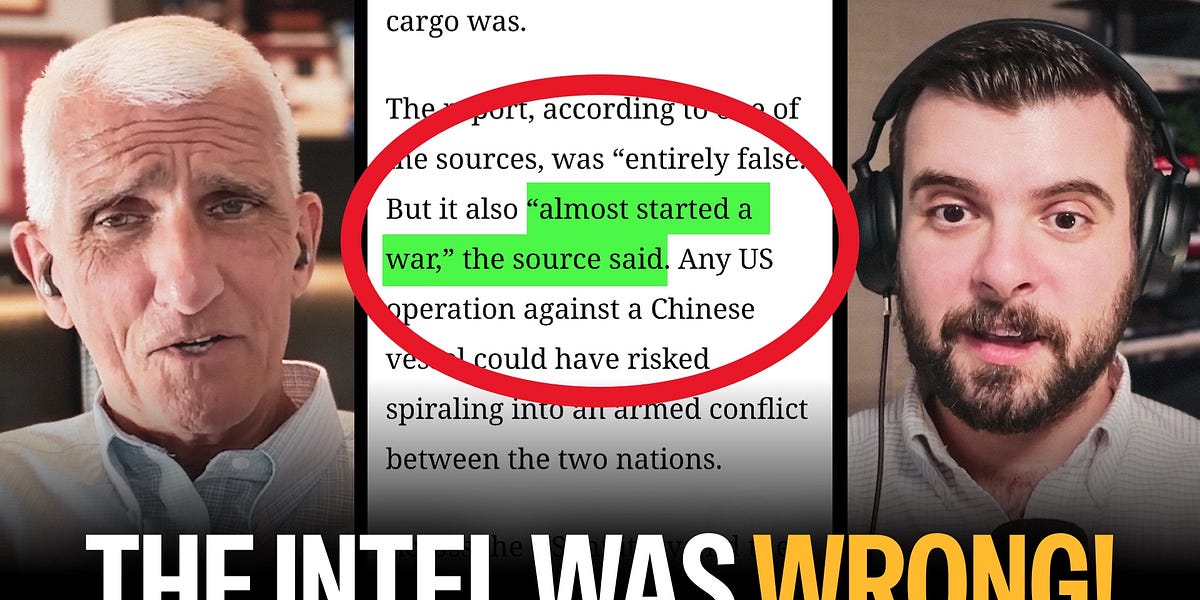
Ben Parker and Lt. Gen. Mark Hertling discuss the near-miss incident where AI-generated intelligence almost led the U.S. military to board a Chinese vessel in the Strait of Hormuz, highlighting the risks associated with relying on false information without human oversight. They also delve into other topics such as potential underreporting of U.S. military deaths and the costs of the Iran war, while fact-checking…

America Nearly Made a Catastrophic Mistake With China | Command Post →

Where they agree and split

Framing

How the first headlines put it

Attributed to a source2
Stated as fact1
The headlines (3)

Flawed AI-linked intel almost led US to board China ship: Report The Straits Times · attributed to a source

US military nearly sparked an internal crisis by boarding a Chinese ship after getting intel from AI: report The Independent · attributed to a source

US military nearly attacked Chinese vessel and 'started a war' after massive AI error Daily Mail · stated as fact

Words to watch (1)

US military nearly sparked an internal crisis by boarding a Chinese ship after getting intel from AI: report The Independent

The full story: what happened, how it changed, and all 8 articles →

Compared with similar articles

This article reads leans left and hedges 33% of its claims. Each row says how that neighbour differs.
Al Jazeera
Leans strongly left further left than this Hedges 3 of 43 claims Outlet record 60/100
“The articles discuss different aspects of AI in warfare and do not describe the same specific incident.”
The Sydney Morning Herald
Leans left Hedges 5 of 17 claims Outlet record 61/100
“The articles discuss different aspects related to AI risks and implications for international relations rather than describing the same specific incident.”
Mother Jones
Leans strongly left further left than this Hedges 6 of 35 claims Outlet record 60/100
“Article A discusses AI use by the US-Israel coalition against Iran, while Article B mentions a close call involving an AI chatbot misidentifying materials on a Chinese vessel.”
TIME
Leans left Hedges 4 of 52 claims Outlet record 60/100
“The articles discuss different aspects of AI risks and interactions between the US and China; Article A focuses on upcoming talks and diplomatic tensions, while Article B describes a specific close call involving an AI misidentification that almost led to military conflict.”
The Straits Times
Centre further right than this Hedges 2 of 9 claims Outlet record 64/100
Daily Mail
Hedges 4 of 24 claims Outlet record 69/100
The Independent
Leans left Hedges 5 of 24 claims Outlet record 59/100
The Hindu
Hedges 4 of 14 claims Outlet record 60/100
The Bulwark
Leans left Hedges 2 of 11 claims
Washington Examiner
Leans left Hedges 8 of 57 claims Outlet record 67/100

Story

AI Near Miss China War
Technology · 8 article(s) covering the same event. Compare every outlet's account →
How this article was measured signals, leaning charts, publisher record, byline, topics and claims

Signals How these are calculated →

Claims extracted
6
sentences that state something as happening or true
Uncertain
33%
2 of 6 hedged ("reportedly", "may", "according to")
Leaning
Leans left
of the writing, not the subject · beta estimate
Publisher signals
64/100
Semafor's corrections and hedging, across everything collected from it. Not a measure of accuracy.
Outlets on this story
8
Technology
Same framing elsewhere
1
articles that frame the event the way this one does
Analyzed 2026-09-20 · how these are computed

How this is being covered How these are calculated →

Article leaning vs. publisher reliability
Source leaning vs. consistency

Publisher

Semafor · 1931 article(s) · 7 correction(s) detected
Running correction rate · 7 correction(s)

Who wrote this

Brendan Ruberry
206 article(s) here · 1 carrying a prediction
The trilateral talks at the APEC summit in Shenzhen will offer Putin a symbolic boost as Kyiv’s attacks have nearly halved Russia’s November oil refining, Reuters reported.
The debut could draw about $250 million in net retail buying — potentially twice as much as SpaceX’s record of $118 million in retail buying.
2026-11-19 · mixed framing · Anthropic prices IPO above target range
In addition to increasing stock buybacks, Nvidia’s interim CEO Colette Kress reportedly promised pay raises Wednesday in the chipmaker’s first employee town hall following Huang’s ouster, amid concerns the shake-up could drive a talent exodus; Kress added that the firm’s “passion to innovate” would not change.
2026-11-19 · mixed framing · Nvidia shares fall despite bumper earnings
The looming squeeze could intensify chip self-sufficiency initiatives that are already underway in Beijing, whose AI ecosystem still depends on American hardware: The clampdown “sets everyone back” in China, Tencent’s president acknowledged, but also hastens progress toward a future where “all Chinese players” rely on domestic compute.
The reportedly understated celebrations surrounding Anthropic’s debut appear to befit an internal culture that prides itself on building AI safely, wherein getting rich is accorded less priority than commonly held effective altruist beliefs: Employees’ new wealth is expected to enrich dozens of charitable and research-oriented organizations devoted to animal welfare, global health, and AI safety.
While firms may cope, “we can’t fix government technology, like our air traffic control system, by throwing more money into a broken system,” journalist Derek Thompson argued.
The pledge, which barely moved oil prices, could prove difficult to bring to fruition amid ongoing wars in the Middle East and Ukraine that have choked off crude oil supplies.
Rockstar’s Grand Theft Auto VI is set to top more than $3 billion in sales in its first week, eclipsing the lifetime grosses of some of the biggest films and concert tours and prompting commentators to salute an era-defining entertainment product.
The Hunterbrook report also cited AMD’s financing arrangements with its own customers, which other analysts have warned could create an artificial impression that risks a large correction.
2026-11-19 · mixed framing · AMD shares fall after report flags China exposure
Meeting those commitments could become even more complicated if Nvidia pares down its investments, making capital scarcer and Anthropic’s enterprise customers more thrifty: “As financing and demand tighten in tandem, the whole industry could correct,” journalist Derek Thompson warned.
2026-11-17 · speculative framing · Anthropic momentum builds ahead of IPO
Also by Brendan Ruberry
Nothing else under this byline is closely related to this article, so these are simply their most recent.
All 206 articles by Brendan Ruberry →

Topics

CNN Chinese Stanford University the Financial Times

Subjects

CNN ORG · 1× Chinese NORP · 1× Stanford University ORG · 1× the Financial Times ORG · 1×

Narrative

A related fear, laid bare in recent Stanford University war games, is “an increasingly automated battlefield” that rapidly increases the pace of warfare, escalating conflicts faster than human commanders intend.
framing: mixed · carried by 1 article(s) · first seen 2026-09-20
Analysts have warned that slipshod AI integration into defense systems could produce catastrophic miscalculations.
2026-09-20 · Semafor
Experts warn of AI warfare risk · mixed framing

Claims (6 extracted, 2 hedged)

The US military reportedly prepared to intercept a Chinese vessel in the Middle East this spring after an AI chatbot misidentified materials on board, a close call that “almost started a war,” a source told CNN. uncertain
source → prepare → CNN
Analysts have warned that slipshod AI integration into defense systems could produce catastrophic miscalculations. uncertain
integration → warn → miscalculations
A related fear, laid bare in recent Stanford University war games, is “an increasingly automated battlefield” that rapidly increases the pace of warfare, escalating conflicts faster than human commanders intend. asserted
commanders → lay → conflicts
Most militaries require a human in the decision chain, but “the computer is spitting out a list of 1,000 targets. asserted
computer → require → targets
And you’re not moving fast enough,” a US drone warfare veteran told the Financial Times. asserted
veteran → move → Times
“The human becomes the bottleneck.” asserted
human → become → ?
Give feedback · no sign-in needed

No sign-in needed for now. Your note is sent without a name, so it cannot be answered.

History Support