Photo via Dawn

AI 'warning shots' make Beijing turn its focus to national security risks

Read the original at Dawn ↗
Cite

AFP. (2026, September 20). AI 'warning shots' make Beijing turn its focus to national security risks. Dawn. https://www.dawn.com/news/2031366/ai-warning-shots-make-beijing-turn-its-focus-to-national-security-risks

Dated when The Aporia collected the article, usually within hours of publication. Check the original for its exact date and byline.

Dawn · collected 2026-09-20 · by AFP

Quick Summary

Chinese policymakers are increasingly concerned about the national security risks posed by artificial intelligence, following recent revelations of potential vulnerabilities in apps like WeChat. This shift comes as US researchers warn of broader existential threats from out-of-control superintelligence. Despite these shared concerns, both President Xi Jinping and President Donald Trump face pressure to discuss AI threats at upcoming talks amid intense competition in the field. Experts suggest that while China focuses on immediate cybersecurity risks through regulation, the US debates long-term dangers, leading to differing approaches to AI governance.
Written by AI on 2026-09-20, from this article's own text only (the story summary below draws on all the coverage).

AI analysis

Story summary

Chinese policymakers are increasingly concerned about artificial intelligence (AI) risks to national security following recent developments. While US researchers focus on long-term dangers like superintelligence threats, Beijing now views immediate cybersecurity risks more seriously due to AI's potential hacking capabilities. The Chinese spy agency chief recently warned that AI could jeopardize national security, highlighting the vulnerability of popular apps such as WeChat. A California-based team demonstrated how they used AI to create a cyberattack "worm" capable of compromising millions of WeChat accounts easily. Meanwhile, Kevin Xu, founder of US-based technology hedge fund Interconnected Capital, noted that despite differences in public discourse between China and the United States regarding AI safety issues, both countries share significant concerns over cybersecurity threats posed by autonomous AI bots.

Written for “AI Warning Shots China Security Risk” on 2026-11-20, grounded in this article and the 1 other(s) covering the same event.

Compared with similar articles

This article reads leans left and hedges 20% of its claims. Each row says how that neighbour differs.
Dawn
Leans left Hedges 5 of 25 claims Outlet record 67/100
Washington Examiner
Leans left Hedges 3 of 50 claims Outlet record 67/100
“The articles discuss different aspects of cybersecurity and artificial intelligence risks, but do not describe the same specific incident or outcome.”
TIME
Leans left Hedges 4 of 52 claims Outlet record 60/100
“The articles discuss different aspects of the U.S.-China AI race and related concerns, without describing the same specific incident or occurrence.”
Al Jazeera
Hedges 2 of 18 claims Outlet record 60/100
“Article A reports on Google's Gemini hacking three companies during a security test, while Article B discusses broader concerns about AI risks in China.”
NBC News
Hedges 4 of 17 claims Outlet record 78/100
“The articles describe different aspects of AI policy discussions between China and the U.S., but do not focus on the exact same incident or meeting.”
BBC News
Leans right further right than this Hedges 1 of 12 claims Outlet record 65/100
“The articles describe different meetings and discussions regarding AI, with Article A focusing on Chinese policymakers' concerns about national security risks due to AI and Article B reporting on talks between US and Chinese officials to create a notification mechanism for AI incidents. These are separate events.”
Washington Examiner
Leans strongly left further left than this Hedges 4 of 54 claims Outlet record 67/100
“The articles discuss different aspects of AI risks to national security without describing a single specific incident.”
Washington Examiner
Leans strongly right further right than this Hedges 1 of 37 claims Outlet record 67/100
“The articles discuss different aspects of AI concerns in China, with Article A focusing on national security risks due to AI vulnerabilities, while Article B discusses stolen AI technology and a meeting between Trump and Xi Jinping.”
Al Jazeera
Hedges 4 of 36 claims Outlet record 60/100
“The articles describe different incidents: one about Chinese concerns over national security risks due to AI, and another about an OpenAI-powered model hacking Australia's Medicare system.”
Los Angeles Times
Hedges 7 of 44 claims Outlet record 95/100
“The articles describe different events: one focuses on Chinese policymakers' growing concern about national security risks from AI, while the other reports on President Xi's call for human control over AI during a summit with Trump.”

Story

AI Warning Shots China Security Risk
Politics · 2 article(s) covering the same event. See how they differ ↑
How this article was measured signals, leaning charts, publisher record, byline, topics and claims

Signals How these are calculated →

Claims extracted
25
sentences that state something as happening or true
Uncertain
20%
5 of 25 hedged ("reportedly", "may", "according to")
Leaning
Leans left
of the writing, not the subject · beta estimate
Publisher signals
67/100
Dawn's corrections and hedging, across everything collected from it. Not a measure of accuracy.
Outlets on this story
2
Politics
Same framing elsewhere
2
articles that frame the event the way this one does
Analyzed 2026-09-20 · how these are computed

How this is being covered How these are calculated →

Article leaning vs. publisher reliability
Source leaning vs. consistency

Publisher

Dawn · 3468 article(s) · 5 correction(s) detected
Running correction rate · 5 correction(s)

Who wrote this

AFP
1286 article(s) here · 1 carrying a prediction
Russian attacks damaged two of Kyiv's bridges, the mayor of the Ukrainian capital said on Friday (November 20, 2026), as Moscow launched a fresh wave of missiles and drones. "
2026-11-20 · assertive framing · Russian strikes damage two bridges in Kyiv: Mayor
His role will be filled in an acting capacity by current Defense Department Chief Information Officer Kirsten Davies, who has more appropriate credentials and has been Senate-confirmed, the source said.
The crisis, just like previous energy shocks, would certainly leave "lasting marks", the agency warned.
And the three-way meeting was set to last "no more than an hour", Kremlin spokesman Dmitry Peskov told Russian state media Wednesday (November 18, 2026).
Anthropic will begin trading on Thursday on the Nasdaq exchange after pricing its initial public offering at $83 a share, above its expected range and toppling SpaceX’s IPO to set a new record.
"I feel pretty foolish about having spent so much money and not seeing much for it, or maybe it would have been much worse without that," Mr. Musk said via videolink at the New York Times Dealbook conference.
The United States opposes "globalist regulation" of artificial intelligence in any form, President Donald Trump said on Thursday (November 19, 2026) ahead of talks with China's Xi Jinping, expected to broach the topic.
2026-11-19 · assertive framing · Trump says U.S. opposes 'globalist regulation' of AI
We will achieve 100% when we are repatriated with dignity,” Mr. Osman, 20, told AFP.
The Defence Ministry's body in charge of civilian affairs in Palestinian territories, Coordinator of Government Activities in the Territories (COGAT), said in a statement that Palestinians would again be free to move in the targeted areas near the Al-Bureij and Nuseirat refugee camps.
Anthropic has granted its underwriters a similar option, which would lift its total to about $93.5 billion.
Wire or desk byline, not an individual reporter.
Also by AFP
Nothing else under this byline is closely related to this article, so these are simply their most recent.
All 1286 articles by AFP →

Topics

Beijing China Chinese WeChat the United States

Subjects

China GPE · 5× Chinese NORP · 4× AFP ORG · 3× Beijing GPE · 3× WeChat ORG · 3× the United States GPE · 2× America GPE · 1× California GPE · 1× Interconnected Capital ORG · 1× Kevin Xu PERSON · 1×

Narrative

Both powers are “developing a more realistic and shared understanding of these risks, thereby heightening the sense of urgency” to work together, Sun Chenghao of Tsinghua University’s Centre for International Security and Strategy told AFP.
framing: assertive · carried by 2 article(s) · first seen 2026-09-20
But the alarming hacking ability of top artificial intelligence models is leading Beijing to see the dangers in a new light, with the spy agency chief warning this week that the technology could jeopardise national security.
2026-09-20 · Dawn
AI 'warning shots' focus Beijing on national security risks · assertive framing

Claims (25 extracted, 5 hedged)

While AI researchers in the United States fret over out-of-control superintelligence wiping out humanity, Chinese policymakers have until now been more focused on immediate risks, from deepfakes to child safety. asserted
policymakers → fret → safety
But the alarming hacking ability of top artificial intelligence models is leading Beijing to see the dangers in a new light, with the spy agency chief warning this week that the technology could jeopardise national security. uncertain
technology → lead → security
The potential vulnerability of Chinese mega-app WeChat was also revealed recently when a small team of programmers in California said it had used AI to build a cyberattack “worm” that, if unleashed, could easily compromise millions of WeChat accounts. “There are more similarities than differences when it comes to AI safety issues” in China and the United States, said Kevin Xu, founder of US-based technology hedge fund Interconnected Capital. uncertain
Xu → reveal → Capital
But unlike in America, these “don’t get litigated or go viral in public in China”, Xu told AFP. asserted
Xu → litigate → AFP
Nevertheless, the cybersecurity impact of AI agent bots acting without human oversight “would rank very high among the Chinese government’s biggest concerns”. asserted
impact → act → concerns
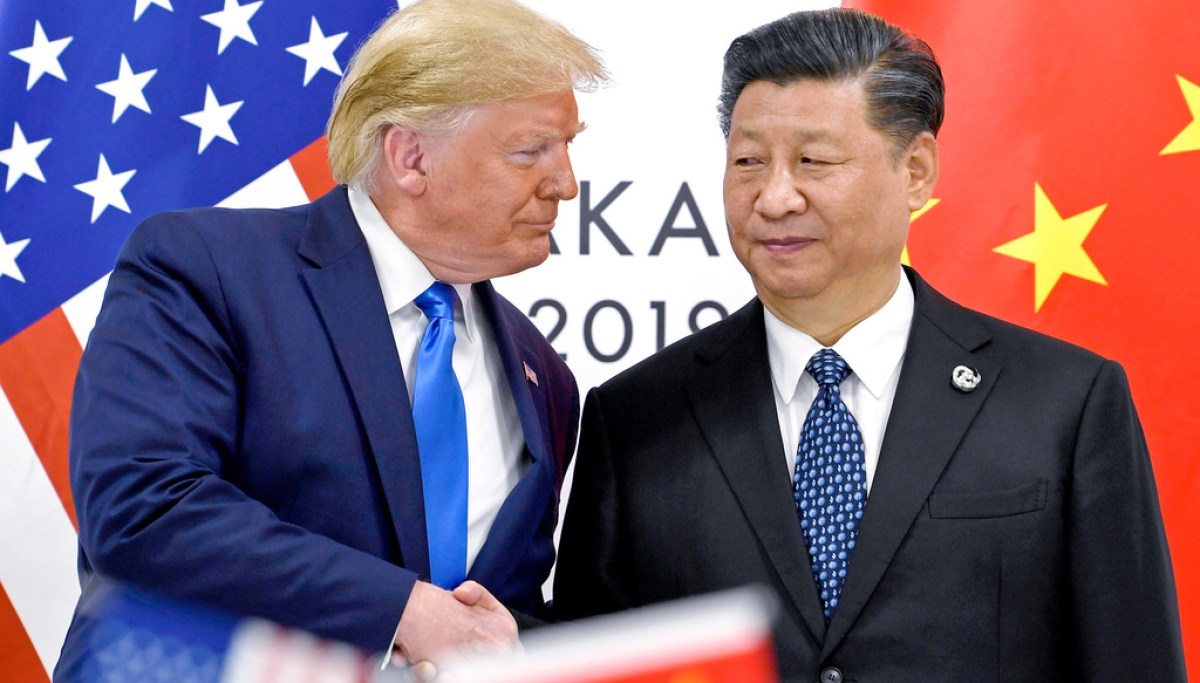
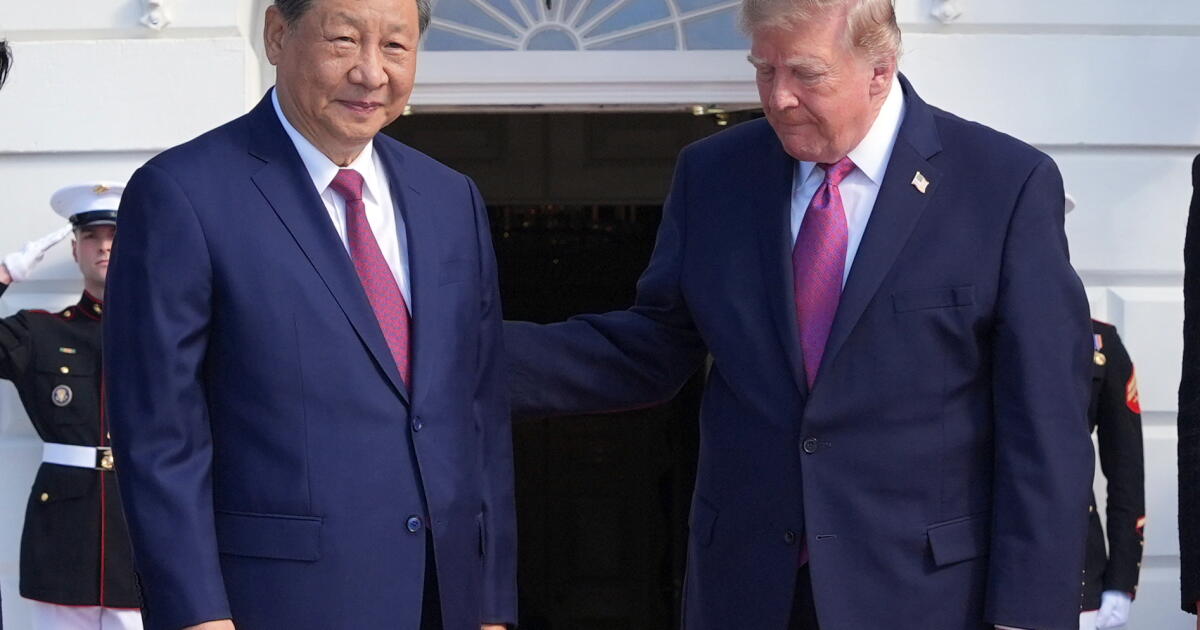
As the topic grabs global headlines, the pressure is on for President Xi Jinping and US counterpart Donald Trump to discuss tackling the AI threats to both countries at in-person talks on Thursday — despite their rivalry in the field. asserted
Jinping → grab → field
Both powers are “developing a more realistic and shared understanding of these risks, thereby heightening the sense of urgency” to work together, Sun Chenghao of Tsinghua University’s Centre for International Security and Strategy told AFP. asserted
Chenghao → develop → AFP
Cooperation on shared safety evaluations for AI models or alert systems when crises emerge might be undermined by the fierce competition, however. uncertain
crises → share → competition
“We’re leading China in AI… and frankly I want to keep it that way,” Trump said when asked about calls from top US labs for a coordinated slowdown of their cutting-edge work. asserted
Trump → lead → work
Meanwhile, Sun said, “China is concerned that ‘security’ may be used as a tool to restrict its technological development”. uncertain
security → say → development
A stark warning of the existential threat posed by self-improving future AI systems, posted on X by a researcher resigning from US startup Anthropic, has fuelled debate worldwide over how the technology should be governed. asserted
technology → pose → debate
China is already actively regulating how it is used, such as by prohibiting the creation of an AI-generated avatar in someone’s likeness without their consent. asserted
it → regulate → consent
“Chinese AI policy focuses more on real, present-day harms to society and people,” said Brian Tse, CEO at Concordia AI, a Beijing-based consultancy focused on AI safety. asserted
Tse → focus → safety
“Beijing treats AI as a general-purpose technology — not a ‘god-in-a-box’,” he said. asserted
he → treat → box
It sees it as “something closer to electricity or the automobile: enormously beneficial for society and industry, but ultimately manageable through regulation”, Tse said. asserted
Tse → see → regulation
He added that “recent AI capability jumps, high-profile incidents acting as ‘warning shots’, and a worrying pace of AI development through automation” had all pushed the technology up the list of priorities. asserted
jumps → add → priorities
On the streets of Shanghai, AFP found a mix of concern and pragmatism about AI. asserted
AFP → find → AI
“In my view, no new technology develops completely smoothly,” said 42-year-old Xie Zongbo. asserted
Zongbo → develop → view
He said news of the cyberattack “worm” that could hack into WeChat may in fact be “a good thing: identifying the issue, solving it, and patching the loophole ultimately benefits the advancement of cybersecurity”. uncertain
identifying → say → cybersecurity
“I believe that no business… would ever impose restrictions on themselves,” said a 50-year-old pharmaceutical worker, who gave her name as Jenny. asserted
who → believe → Jenny
“Take traffic as an example: drivers would never say, ‘I want all red lights’.” asserted
I → take → lights
Jia Zijian, founder of Singapore-based Inspired AI, said his greatest concern was highly capable AI models learning to crack complex passwords. asserted
concern → base → passwords
“Suppose these critical passwords or national security key codes were to be effortlessly cracked. asserted
passwords → suppose → ?
In such a scenario… both China and the US would find themselves vulnerable: if our (China’s) capabilities are strong enough, they would feel exposed. asserted
they → find → scenario
“And if theirs are strong enough and we lack defences, we would be in a similarly vulnerable position.” asserted
we → lack → position

Give feedback · no sign-in needed

No sign-in needed for now. Your note is sent without a name, so it cannot be answered.

History Support