Supreme Court to hear Alaska plane seizure case Tuesday
asserted
Court → hear → case
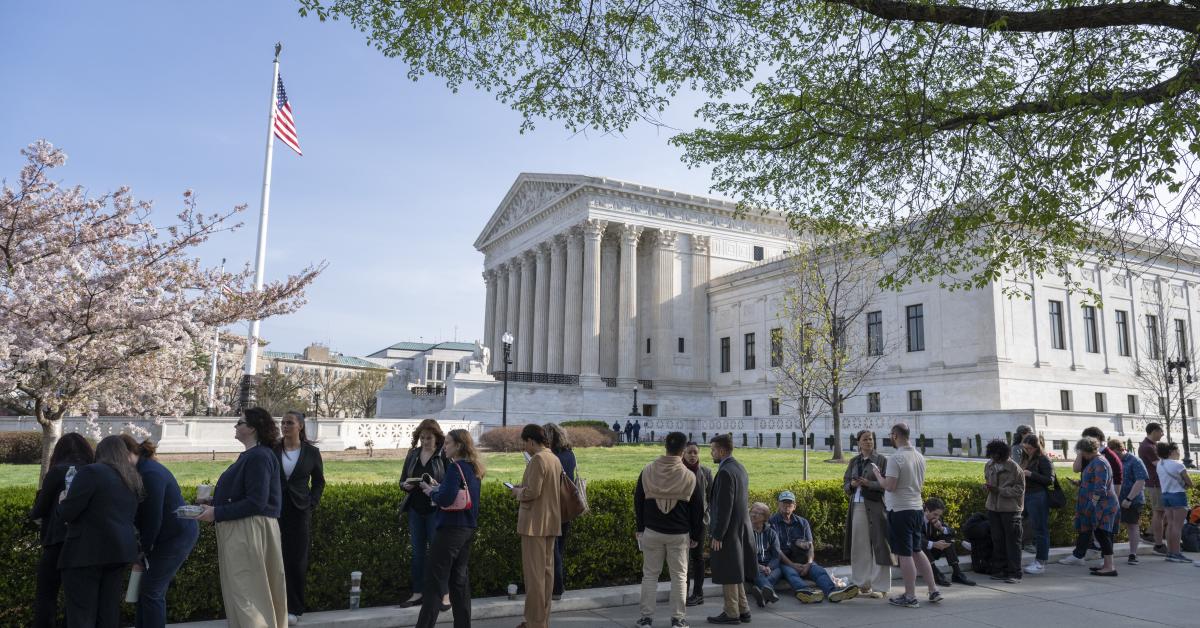
The high court will hear arguments Tuesday in a case over whether an Alaska man’s plane can be confiscated after one of his passengers brought beer with alcohol into a village where alcohol is illegal.
asserted
alcohol → hear → village
The Supreme Court will hear arguments Tuesday in a case over whether an Alaska man’s plane can be confiscated after one of his passengers brought beer with alcohol into a village in which alcohol is illegal.
asserted
alcohol → hear → which
The case, Jouppi v. Alaska, focuses on bush pilot Kenneth Jouppi, whose plane was confiscated after a passenger brought a six-pack of Budweiser to Beaver, Alaska, according to court documents.
uncertain
passenger → focus → documents
Jouppi runs a business taking people on tours to remote locations in Alaska.
asserted
Jouppi → run → Alaska
Across Alaska, villages may enact “dry” laws that make it a state crime to send or transport alcoholic beverages in communities.
uncertain
it → enact → communities
Jouppi’s lawyers argued that seizing his plane, valued at $95,000, violates the excessive fines clause in the Constitution.
asserted
seizing → argue → Constitution
The Eighth Amendment reads: “Excessive bail shall not be required, nor excessive fines imposed, nor cruel and unusual punishments inflicted.”
asserted
bail → read → ?
The clause limits the kind of financial penalties the government can impose.
asserted
government → limit → penalties
Matthew Cavedon, director of the Cato Institute’s project on criminal justice, said penalties such as Alaska's are far-reaching and can have an outsized effect on ordinary Americans who unknowingly break the law.
asserted
who → say → law
He pointed to people who possess marijuana in a state where it is illegal or fail to fill out a tax form properly.
asserted
it → point → form
“Mr. Jouppi’s case highlights that sometimes even pretty innocuous things can trigger huge consequences,” Cavedon told The Center Square in an interview.
asserted
Cavedon → highlight → interview
The state's lawyers argued that Alaska faces unique challenges with alcoholism, with limited medical resources contributing to a substantially higher mortality rate than in the rest of the country.
asserted
resources → argue → country
“Alcohol abuse in rural Alaska leads to increased crime; disorders, such as alcoholism; conditions, such as fetal alcohol spectrum disorder; and death, imposing substantial costs on public health and the administration of justice,” lawyers for Alaska wrote in a brief to the high court.
asserted
lawyers → lead → court
“Within this context, it is clear that the illegal importation of even a six-pack of beer causes grave societal harm.
asserted
importation → cause → harm
This factor strongly suggests that the forfeiture is not grossly disproportional.”
uncertain
forfeiture → suggest → ?
Jouppi's lawyers and Cavedon argued that Alaska cannot invoke alcoholism’s wider societal harm to justify the penalty against him.
asserted
Alaska → argue → him
“The excessive fines clause just sets the default as: ‘You got to have a fine that respects the ability of a person to pay and that recognizes the specific contribution of that person's wrongdoing due to the social problem,’ rather than saddling one person unfairly with the burden of a much larger social problem, which is absolutely what we think Alaska is trying to do here,” Cavedon said.
asserted
Cavedon → set → what
He also said that Jouppi’s livelihood depends on his ability to fly people to remote villages across Alaska and that the forfeiture falls squarely into the category of an excessive fine.
asserted
forfeiture → say → fine
“This is a major imposition on his ability to sustain himself,” he said.
asserted
he → sustain → himself
“He is being economically disabled by this.
asserted
He → disable → this
Historically, that's a big deal that the law cared a lot about when considering whether a fine was excessive.”
asserted
fine → care → that
The state's lawyers countered that Jouppi owned a second plane, was “pretty much retired,” and would “probably just sell” the plane at issue in the case.
asserted
Jouppi → counter → case
“It is undisputed that the forfeiture of one of Jouppi’s planes would not deprive him of his livelihood,” lawyers for Alaska wrote.
asserted
lawyers → deprive → Alaska
“None of Jouppi’s supposed mitigating circumstances alters the constitutional analysis.”
asserted
None → suppose → analysis
Cavedon said the issue before the court can be resolved simply by a plain reading of the Eighth Amendment’s text.
asserted
issue → say → text
He said the history of the excessive fines clause points to a vision in which the founders understood the need for an appropriate balance between laws that prohibited certain activities and the just punishment for breaking them.
asserted
that → say → them
“At the time that the excessive fines clause was enacted, it meant that a fine had to be proportionate to the crime and to be proportionate to the ability of the person facing the fine to pay it,” he said.
asserted
he → enact → it
Cavedon said he would be surprised if the justices sided with Alaska, noting that the Supreme Court typically takes cases to set a standard or reverse a decision it disagrees with.
asserted
it → say → decision
“I might be mistaken, but I'm feeling optimistic about this,” he said.
uncertain
he → feel → this
“I am curious to see if they are going to say more about civil forfeiture as a regime because we've got concerns about civil forfeiture that go beyond this case.”
asserted
that → see → case
 The Aporia