Claims extracted
15
sentences that state something as happening or true
Uncertain
47%
7 of 15 hedged
("reportedly", "may", "according to")
Leaning
withheld
no quote in the article backed the model's score
Publisher signals
92/100
The Daily Caller's corrections and
hedging, across everything collected from it. Not a measure of accuracy.
Outlets on this story
4
Politics
Same framing elsewhere
1
articles that frame the event the way this one does
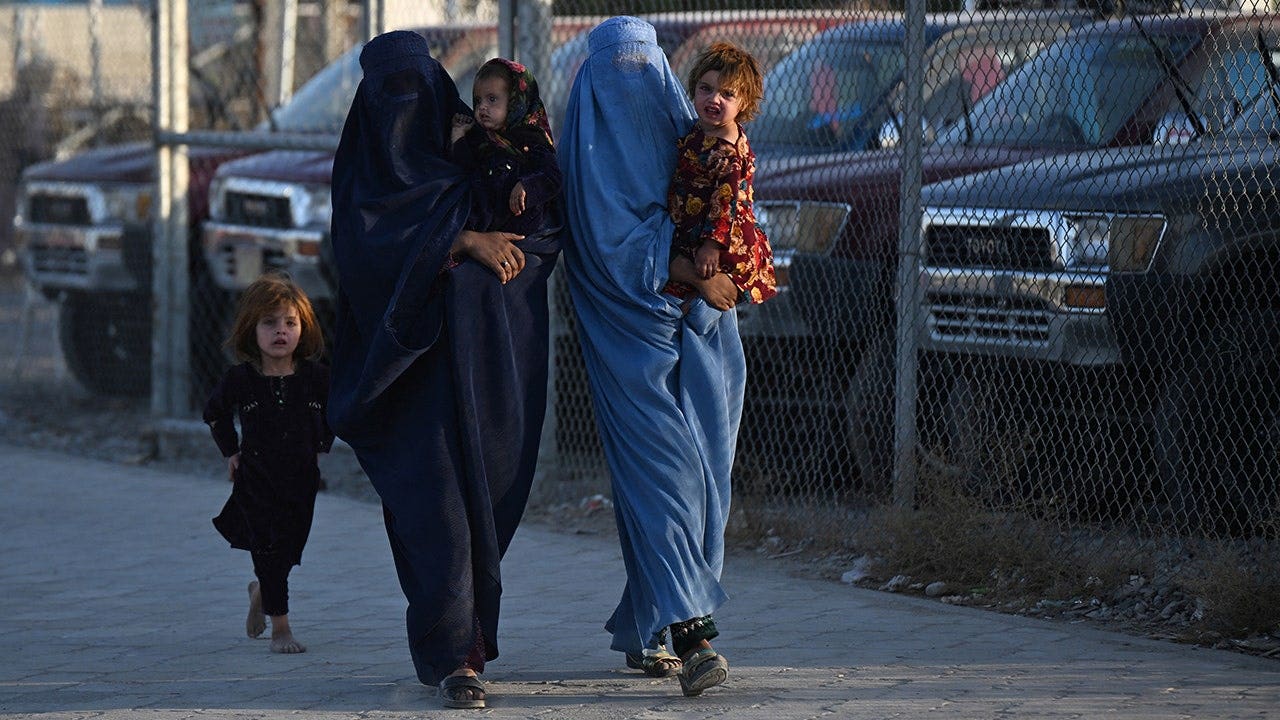
Afghan women have been addressed by degrading epithets after the Taliban in northern Afghanistan ordered that women no longer be referred to by their names on official documents, including even medical prescriptions, in new strictures on the rights of Aghan women and girls, according to reports.
uncertain
women → address → reports
Healthcare workers and facilities in Balj (or Balkh) province received orders to refer to any female patient in documents as “Bibi,” meaning “Granny” or “old woman,” instead of by her name, according to joint investigative journalism by The Guardian and the Afghan outlet Zan Times.
uncertain
workers → receive → Guardian
The word “Bibi” is a title of respect accorded women in Afghan culture where publicly uttering a woman’s first name is regarded as an insult to her husband and children, according to EL PAÍS Monday.
uncertain
uttering → accord → PAÍS
Nonetheless, “in many cases, they are referred to in degrading terms associated with animals like ‘goat’ or ‘cow’,” Germany-based Afghan activist Lalah Osmany told the outlet, citing various reports from women, doctors, and civil rights activists.
asserted
Osmany → refer → women
Afghan women in Balkh province, in northern Afghanistan, are facing new restrictions under the Taliban, with hospitals and clinics ordered to stop using female patients’ names in official documents, prescriptions and medical records, instead referring to them as “Bibi.”
asserted
hospitals → face → Bibi
The directive comes amid a wider crackdown that has barred women from medical training and further restricted their access to qualified healthcare providers.
asserted
that → come → providers
When a regime replaces a woman’s name and gives her one of an animal, it is stripping her of her human soul and reducing her to a mere biological creature or the property [of a man],” Osmany told the outlet.
asserted
Osmany → replace → outlet
The ban is an escalation that follows a December 2024 ban on women pursuing training to be medical doctors as well as a ban on male doctors treating female patients, among a host of other restrictions, according to the report by The Guardian and Zan Times.
uncertain
doctors → follow → Guardian
(RELATED: ‘All Of Our Classmates Cried’: Afghan Girls Mourn Taliban-Mandated End To Their Education As They Graduate Sixth-Grade)
asserted
They → cry → Grade
In official documents, women are referred to as the “wife” or “daughter” of a male relative, and women’s names are not inscribed on their tombstones after death, the outlet reported.
asserted
outlet → refer → death
“A nameless person cannot dream, cannot own property, cannot claim justice, nor be remembered in history,” Osmany told the outlet.
uncertain
Osmany → dream → outlet
“Calling a woman by her real name in Afghanistan is an act of resistance.”
asserted
Calling → call → resistance
An Afghanistan-based activist told the outlet that people so far have ignored the ban on addressing women by name.
asserted
people → base → name
However, Zubaida Akbar, director of the Afghanistan program at the U.S.-based nonprofit Femena, sounded the alarm that the localized resistance might trigger a nationwide enforcement of the ban, as had happened with other issues.
uncertain
resistance → sound → issues
There are more than 144 Taliban decrees restricting the rights of Afghan women, including a law passed May 14 legalizing the rape of girls, EL PAÍS reported.
uncertain
PAÍS → be → girls

 The Aporia