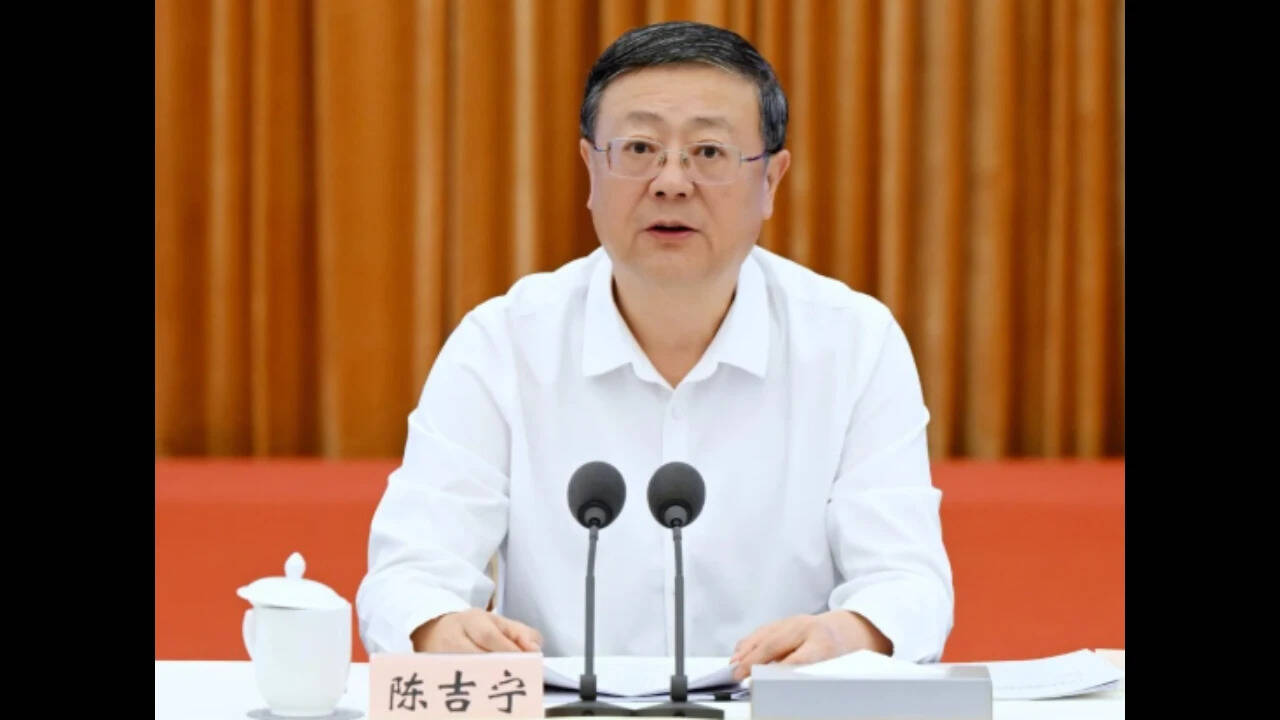
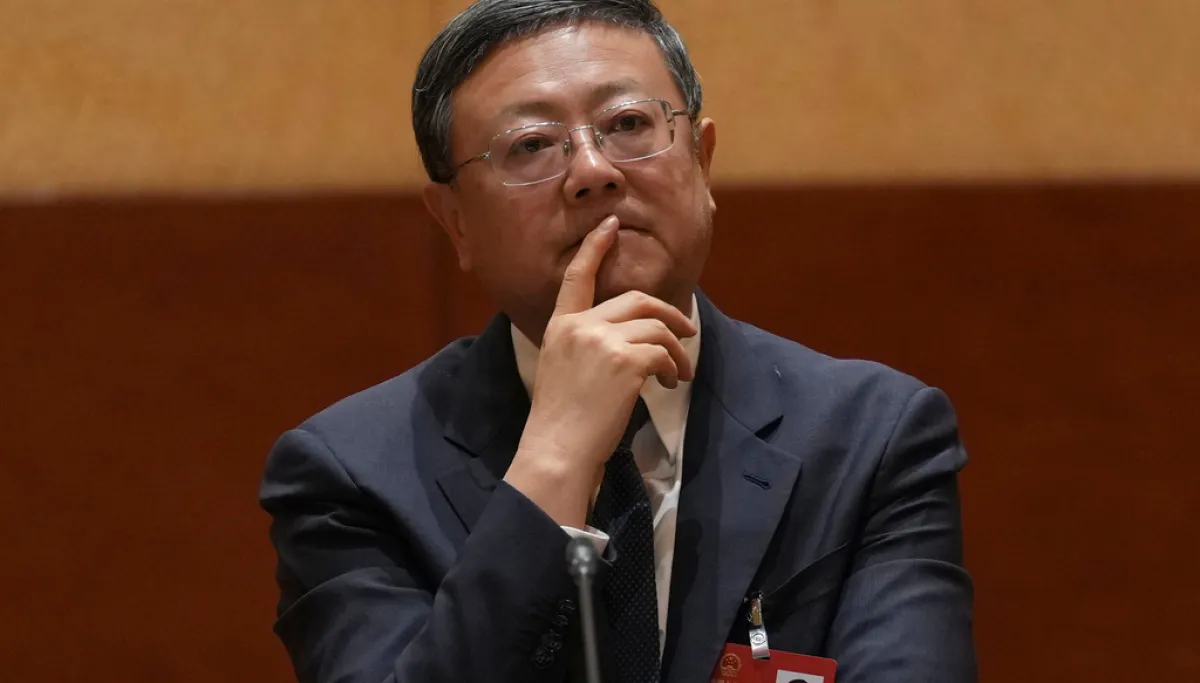
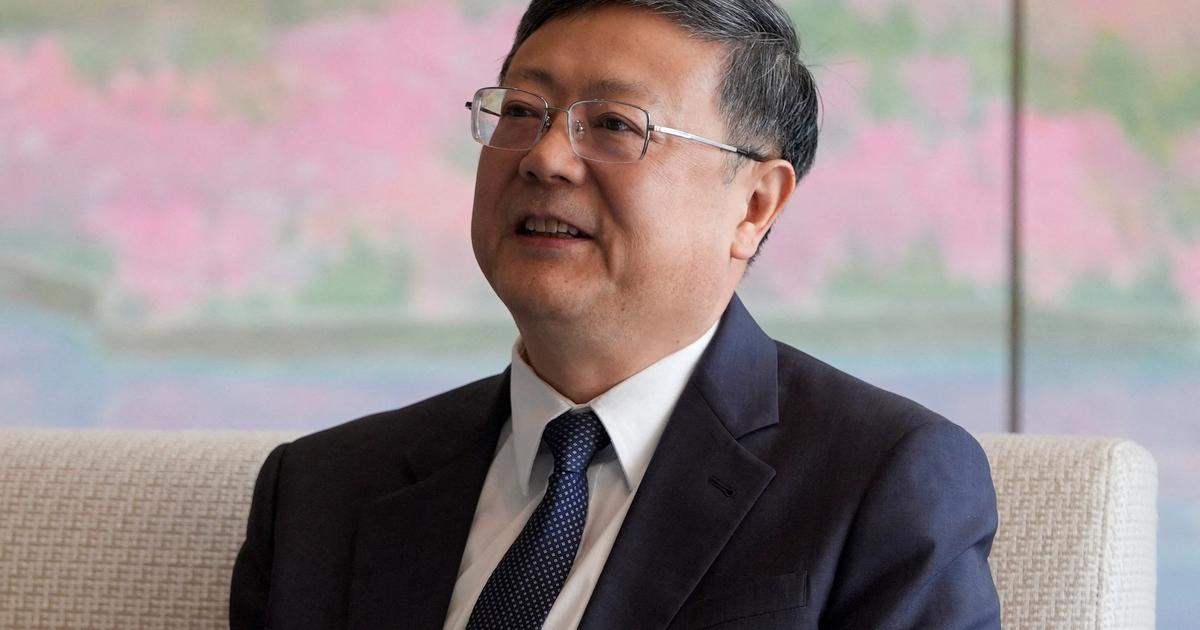
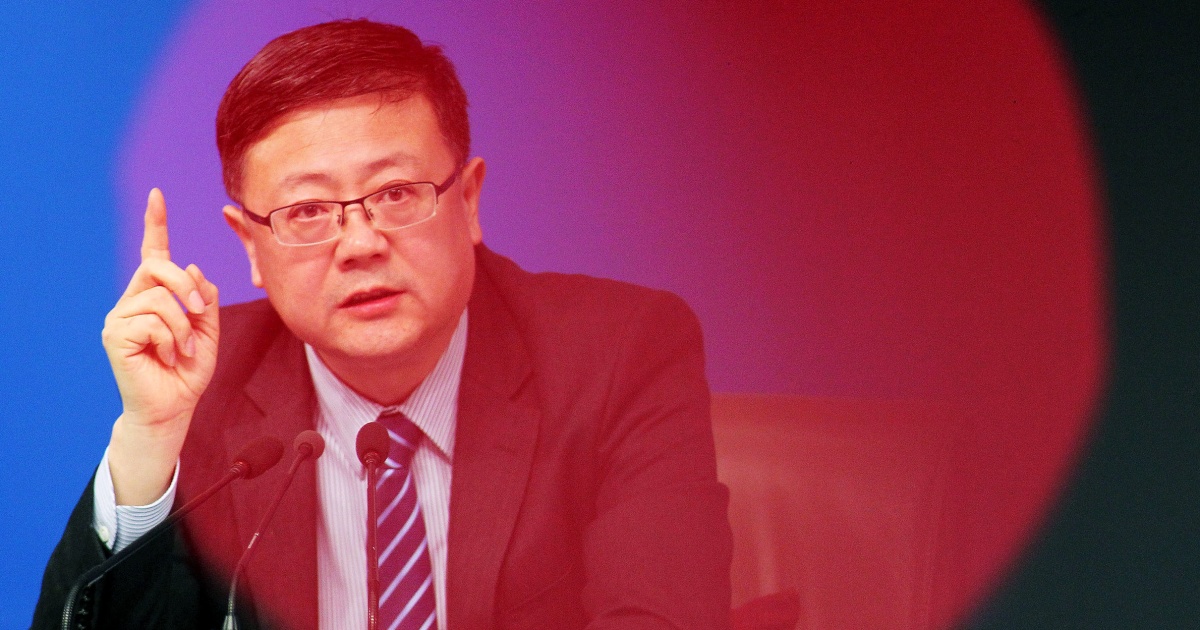
Chen Jining had been all three.
He was widely tipped to join a small group of leaders closest to President Xi Jinping on the exclusive Standing Committee of the Politburo next year, and as a potential successor to China's leader.
asserted
He → tip → leader
Now he is gone.
asserted
he → go → ?
Chinese authorities announced on Tuesday evening, local time, that he was under investigation for "suspected serious violations of discipline and law", a term commonly used for corruption.
asserted
he → announce → corruption
Mr Chen's case highlights the intensifying inter-party rivalry ahead of the Chinese Communist Party's (CCP) 21st National Congress next year and raises big questions about China's future politics.
asserted
case → highlight → politics
Chen Jining's rise
Graeme Smith from the Australian National University (ANU), who worked with Mr Chen in academia, found the allegations "extremely hard to believe".
asserted
allegations → work → academia
Everyone who worked with him … had the highest regard for him as a human being," he told the ABC's The World program.
asserted
he → work → program
Mr Smith, an expert in Chinese politics, speculated that he had likely become another victim of "factional warfare" within the CCP.
asserted
he → speculate → CCP
Twelve days before the corruption probe was announced, Mr Chen chaired a meeting that called for greater adherence to Mr Xi's directives and continued efforts to enforce party discipline.
asserted
that → announce → discipline
In just seven years, Mr Chen went from academia to the Politburo, something Mr Smith described as a "rapid and unusual rise" among senior Chinese officials.
asserted
Smith → go → officials
While leading China's financial hub for the CCP, Tesla opened its first energy storage mega factory outside the United States in Shanghai, and Toyota announced a 14.6-billion-yuan ($3.3 billion) investment in a wholly owned electric vehicle factory.
asserted
Toyota → lead → factory
He became Shanghai's Communist Party chief after Li Qiang, who is China's current premier, and joined the Politburo in 2022.
asserted
who → become → 2022
The 62-year-old studied environmental engineering at Tsinghua University, where Mr Xi also studied, before pursuing a doctorate at Imperial College London.
asserted
Xi → study → London
Returning to China in 1998, he rose through the academic ranks at Tsinghua, becoming its president in 2012.
asserted
he → return → 2012
He entered government as China's environmental protection minister in 2015, and from 2017 until 2022 was mayor of Beijing.
asserted
He → enter → Beijing
In November 2024, he hosted former Singaporean prime minister Lee Hsien Loong to discuss closer economic ties.
asserted
he → host → ties
Mr Lee told Singaporean media that he "hoped to make some contacts with the next generation of Chinese leaders".
asserted
he → tell → leaders
This week some have speculated that it may have inadvertently landed Mr Chen in trouble.
"
uncertain
it → speculate → trouble
Once you appoint yourself as leader for life [like Xi], anyone who looms as a mooted successor is in a dangerous position," Mr Smith said.
asserted
Smith → appoint → position
Deng Yuwen, a former CCP-run journal editor and now independent political researcher based in the US, said Mr Chen's downfall had nothing to do with him being a threat because of his professional ability.
asserted
him → base → ability
He said from the Chinese president's perspective, "once someone has broken Party discipline and state law, it doesn't matter how much expertise they have in their field".
asserted
they → say → field
"Chen's downfall does not mean the position of technocrats in the party's upper ranks has changed in any way.
asserted
position → mean → way
The two are not related," he told the ABC.
asserted
he → relate → ABC
Technocrats are people with specific professional expertise who hold political power.
asserted
who → hold → power
Mr Chen is not the first Politburo member to come under scrutiny as part of Mr Xi's widening anti-corruption probe.
asserted
Chen → come → probe
Since 2022, Zhang Youxia, Ma Xingrui and He Weidong have also been investigated.
asserted
Youxia → investigate → 2022
Mr Deng said the president wanted officials who were "loyal, clean and willing to take responsibility".
asserted
who → say → responsibility
However, he said the corruption crackdown sometimes worked as "a form of reverse selection" by scaring capable officers into inaction.
asserted
crackdown → say → inaction
"In such a political environment, they fear that showing their abilities will provoke jealousy from the top leader, or other consequences, so they hold back."
asserted
they → fear → leader
In January, Mr Xi said that corruption was a major obstacle to the country's development and the CCP, adding it was a battle they "could not afford to lose and must not lose".
uncertain
they → say → development
Questions over future leadership
Xia Ming, professor of political science at the City University of New York, told the ABC that cadre appointments had "moved from the old requirement to be 'red', meaning ideological bureaucrats, to 'both red and expert', ushering in the era of technocrats".
asserted
appointments → tell → technocrats
He said these technocrats are often young, concentrated in local government and influenced by globalisation.
asserted
technocrats → say → globalisation
"It is reasonable that they would come into conflict with ideological bureaucrats like Xi Jinping," he said.
asserted
he → come → Jinping
Mao Shoulong, a professor at Renmin University of China, said that "when technocrats' professional aura no longer converts automatically into political trust", CCP selection processes could change in key ways.
uncertain
processes → say → ways
He wrote that stricter vetting, longer assessment periods and "more detailed files to screen out potential risks" could be introduced, along with rule changes to avoid concentrating multiple powers in one person.
uncertain
vetting → write → person
Chinese government authorities later censored the article.
asserted
authorities → censor → article
As for who might be China's next president, Deng Yuwen said the selection process would differ from the eras of Deng Xiaoping, Jiang Zemin and Hu Jintao, where a trusted circle of confidants had input.
uncertain
circle → say → input
"In the Xi era, the choice of successor depends more on Xi himself and his wishes.
asserted
choice → depend → Xi
He also puts candidates through long observation and listens to some people's views before deciding, but his personal view will play the decisive role," he said.
Graeme Smith said it was unclear who would be China's next president, and, in his view, that was causing problems.
"This 'death watch' type situation where there is no obvious successor [to Xi] is building instability into the system," he said.
uncertain
he → put → system
"I don't think there's any doubting that Xi Jinping's hold on power is as firm as it ever was."
asserted
it → think → power
 The Aporia