Photo via The Sydney Morning Herald

Baby bill shock: Tax office data-matching whacks tens of thousands

Read the original at The Sydney Morning Herald ↗
Cite

Heffernan, M. (2026, November 28). Baby bill shock: Tax office data-matching whacks tens of thousands. The Sydney Morning Herald. https://www.smh.com.au/business/consumer-affairs/baby-bill-shock-tax-office-data-matching-whacks-tens-of-thousands-20261128-p61cxy.html?ref=rss&utm_medium=rss&utm_source=rss_feed

Dated from the outlet's own feed. Check the original for its byline.

The Sydney Morning Herald · collected 2026-11-28 · by Madeleine Heffernan

Quick Summary

The Australian Taxation Office is using data-matching technology to enforce a law requiring families to have adequate private health insurance for all members, including dependent children and spouses. About 50,000 people are facing significant tax debts due to not meeting these requirements or misunderstanding the rules. The total amounts owed have not been determined, but individual debts are reported in the thousands. The Medicare levy surcharge, which ranges from 1 to 1.5 percent of income for high earners, is designed to encourage the purchase of appropriate private hospital cover, not just extras coverage.
Written by AI on 2026-11-28, from this article's own text only (the story summary below draws on all the coverage).

AI analysis

Story summary

The Australian Taxation Office (ATO) is sending out letters to approximately 50,000 taxpayers based on data from the 2025 income year, following comparisons between tax returns, private health insurance records, and spouse tax return information. This enforcement action targets families who did not have the required "appropriate level of private patient hospital insurance" to avoid the Medicare levy surcharge, resulting in significant tax debts. Lisa Greig, a tax lecturer at the University of Melbourne, suggests that the unexpectedly large number of affected taxpayers likely stems from a misunderstanding of the tax laws rather than deliberate avoidance. Many parents are reporting bills in the thousands of dollars and claim they were not informed about the requirement to add their children to their insurance coverage. The total amounts owed have not yet been determined by the ATO.

Written for “Baby Bill Shock Tax Hits Thousands” on 2026-11-28, grounded in this article and the 0 other(s) covering the same event.

Compared with similar articles

Nothing to compare against. No article is close enough to this one for the pipeline to have linked or judged the pair.

Story

Baby Bill Shock Tax Hits Thousands
Politics · 1 article(s) covering the same event.
How this article was measured signals, leaning charts, publisher record, byline, topics and claims

Signals How these are calculated →

Claims extracted
35
sentences that state something as happening or true
Uncertain
9%
3 of 35 hedged ("reportedly", "may", "according to")
Leaning
withheld
no quote in the article backed the model's score
Publisher signals
61/100
The Sydney Morning Herald's corrections and hedging, across everything collected from it. Not a measure of accuracy.
Outlets on this story
1
Politics
Same framing elsewhere
1
articles that frame the event the way this one does
Analyzed 2026-11-28 · how these are computed

How this is being covered How these are calculated →

Article leaning vs. publisher reliability
Source leaning vs. consistency

Publisher

The Sydney Morning Herald · 8632 article(s) · 19 correction(s) detected
Running correction rate · 19 correction(s)

Who wrote this

Madeleine Heffernan
7 article(s) here · 1 carrying a prediction
In July, the tax office flagged it would send “data-matching letters” to well-paid people or families who did not have the required “appropriate level of private patient hospital insurance” to avoid the Medicare levy surcharge.
It’s been a resounding defeat for the Republican Party, and the focus will now turn to just how President Donald Trump gets through the remaining two years of his second term.
Combined, these groups are expected to have spent a record $US11.6 billion ($16.5 billion) to influence these elections, which will determine whether the Democrats can neuter the final two years of Donald Trump’s presidency.
2026-11-04 · assertive framing · The most expensive Senate battles these midterms
Georgia (polls close 11am AEDT) This race is projected to be a pretty comfortable, possibly double-digit win for the Democrats.
2026-11-03 · assertive framing · Here’s where all the key midterm races stand
Traditionally red Iowa could be on the cusp of turning blue, with Turek neck and neck with self-described “common-sense” mum, Hinson.
2026-10-30 · assertive framing · Seven key midterm battles, and who is fighting them
On November 3, Americans will head to the polls in midterm elections that could have big ramifications for the second half of Donald Trump’s presidency.
2026-10-29 · assertive framing · Your fast guide to the US midterms and how they work
He’s watched them play from the sidelines at games and on countless hours of video; reviewed their psychological tests and physical tests; analysed their statistics; met with their coaches, employers, schoolteachers; and spent time in their orbit on training camps – to work out who they are, and who they could become.
Also by Madeleine Heffernan
Lame-duck Trump swamped by a blue wave: What happens next?
2026-11-04 · The Sydney Morning Herald
The most expensive Senate battles these midterms
2026-11-04 · The Sydney Morning Herald
Here’s where all the key midterm races stand
2026-11-03 · The Sydney Morning Herald
Seven key midterm battles, and who is fighting them
2026-10-30 · The Sydney Morning Herald
Nothing else under this byline is closely related to this article, so these are simply their most recent.
All 7 articles by Madeleine Heffernan →

Topics

ATO Australians Medicare The Australian Taxation Office the University of Melbourne

Subjects

ATO ORG · 6× Medicare ORG · 6× Australians NORP · 1× CPA Australia ORG · 1× Greig PERSON · 1× Jenny Wong PERSON · 1× Lisa Greig PERSON · 1× The Australian Taxation Office ORG · 1× Wong PERSON · 1× the University of Melbourne ORG · 1×

Narrative

This week, the ATO said it “expect[ed] to issue letters to approximately 50,000 taxpayers based on data related to the 2025-income year, following comparisons between information reported in taxpayers’ tax returns, private health insurance records and spouse tax return information”. “This population includes taxpayers not holding an appropriate level of cover for themselves and/or their family, [and] instances where information reported by private health insurers does not match information reported by the taxpayer,” it said.
framing: assertive · carried by 1 article(s) · first seen 2026-11-28
In July, the tax office flagged it would send “data-matching letters” to well-paid people or families who did not have the required “appropriate level of private patient hospital insurance” to avoid the Medicare levy surcharge.
2026-11-28 · The Sydney Morning Herald
Baby bill shock: Tax office data-matching whacks tens of thousands · assertive framing

Claims (35 extracted, 3 hedged)

Tens of thousands of Australians are being snared in a tax office push on private health insurance, and are forced to pay thousands in Medicare levy surcharge backpay despite having private cover. asserted
thousands → snare → cover
The Australian Taxation Office is using data-matching technology to enforce a poorly understood law on families’ private health insurance requirements. asserted
Office → use → requirements
Now, about 50,000 people are staring down hefty tax debts for not taking out private hospital cover for all family members, including dependent children and spouses, or buying the wrong kind of insurance. asserted
people → star → insurance
Lisa Greig, a tax lecturer at the University of Melbourne, said the number of affected taxpayers was surprisingly large, and probably caused by a misunderstanding of how the tax laws apply or a lack of attention to detail in tax return disclosures rather than tax avoidance. asserted
laws → say → avoidance
Some parents agree, and complain they were not informed – by their tax agent, insurer or the hospital where they gave birth – that they needed to add their child to their insurance to avoid a pricey surcharge. asserted
they → agree → surcharge
The ATO has not yet determined the total amounts owed. asserted
ATO → determine → amounts
It is also unclear the average debt, although people are reporting bills in the thousands. uncertain
people → report → thousands
In the 2024 financial year, 885,087 people paid the Medicare levy surcharge, at an average $1284 per person. asserted
people → pay → person
In July, the tax office flagged it would send “data-matching letters” to well-paid people or families who did not have the required “appropriate level of private patient hospital insurance” to avoid the Medicare levy surcharge. asserted
who → flag → surcharge
“Appropriate” cover must have an excess of $750 or less for singles, while couples or families must have an excess of $1500 or less. asserted
couples → have → less
General cover, known as extras, does not qualify. asserted
cover → know → extras
The surcharge is designed to encourage people on high incomes to take out private hospital cover and applies to singles earning at least $105,000, and couples and families earning at least $210,000 combined. asserted
surcharge → design → 210,000
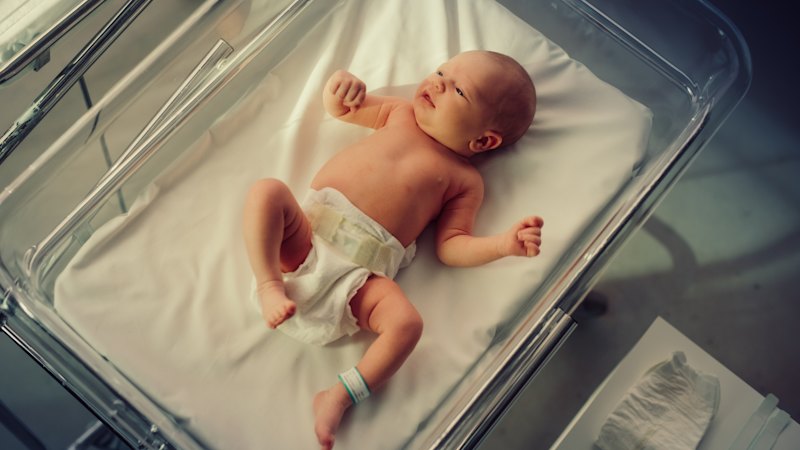
It’s levied at between 1 and 1.5 per cent of income, and kicks in if any family member – even dependent children, such as newborns – does not have “an appropriate level of private patient hospital cover”. asserted
member → levy → cover
(The surcharge is in addition to the 2 per cent Medicare levy most taxpayers already pay.) asserted
taxpayers → pay → levy
This week, the ATO said it “expect[ed] to issue letters to approximately 50,000 taxpayers based on data related to the 2025-income year, following comparisons between information reported in taxpayers’ tax returns, private health insurance records and spouse tax return information”. “This population includes taxpayers not holding an appropriate level of cover for themselves and/or their family, [and] instances where information reported by private health insurers does not match information reported by the taxpayer,” it said. asserted
it → say → taxpayer
The ATO reminded taxpayers they are “responsible for ensuring the information reported in their tax return is accurate and reflects their personal and family circumstances”. asserted
information → remind → circumstances
Greig said: “Many people assume that holding their own hospital cover means they’re saved from the Medicare levy surcharge. asserted
they → say → surcharge
But if you have a spouse or a dependent child, the test is whether everyone in the family is covered. asserted
everyone → have → family
Unfortunately, both spouses can get caught with paying, even the taxpayer with the cover.” asserted
spouses → catch → cover
An ATO spokesperson said taxpayers could avoid unexpected Medicare levy surcharge liabilities by reviewing their insurance statements, checking their cover includes all dependents and speaking to their tax agent. uncertain
cover → say → agent
Insurance experts say the levy is more expensive than the hospital cover. asserted
levy → say → cover
The surcharge is not new, but its underpayment has become more apparent under data matching. asserted
underpayment → become → matching
“With the ATO matching insurer data against tax returns, mistakes are being picked up,” said Jenny Wong, the tax lead at accounting organisation CPA Australia. asserted
Wong → match → Australia
Wong advises people who have been contacted by the ATO to “check the schedule carefully against their own records, talk to their tax agent and respond before the due date if they disagree”. asserted
they → advise → date
Mark Chapman, the director of tax communications at accounting firm H&R Block Australia, said the Medicare levy surcharge was not well-known, and it was unreasonable for the ATO to expect people to understand tax law without outside help. asserted
people → say → help
“There has to be an obligation on particularly the insurance companies to advise them of their obligations to make sure that everybody is actually covered under the policy,” Chapman said. asserted
Chapman → have → policy
“There’s a real weakness there in terms of the burden is basically falling entirely on taxpayers to disclose this information. asserted
burden → ’ → information
But the Australian Health Funds Council, which represents private health insurance funds, said health funds “were very clear on the requirement”, and acknowledged people would seek advice about health insurance and the Medicare Levy surcharges. asserted
people → represent → insurance
“We would hope and expect that brokers, financial advisers and others are giving accurate advice to customers,” the council said. asserted
council → hope → customers
‘With the ATO matching insurer data against tax returns, mistakes are being picked up.’Jenny asserted
mistakes → match → returns
The council said that if people use their health insurance when starting or expanding a family, their fund “may invite” them to add their baby to the policy. uncertain
fund → say → policy
But under Australian taxation law, the council said, “the onus is on the individual to know about the Medicare levy surcharge and dependents”. asserted
onus → say → surcharge
The ATO letters highlight an increasing reliance by the ATO on data provided by third parties, such as health insurers, banks, land agencies, crypto platforms, temporary accommodation providers and government departments, to ensure people are paying the right amount of tax. asserted
people → highlight → tax
“The data’s just so rich now, so their data-matching is getting better and better,” said Greig, who predicts more people will get ATO letters to review and amend their tax returns – for various reasons beyond health insurance – based on discrepancies found through data matching. asserted
people → ’ → matching
The Business Briefing newsletter delivers major stories, exclusive coverage and expert opinion. asserted
newsletter → deliver → stories

Give feedback · no sign-in needed

No sign-in needed for now. Your note is sent without a name, so it cannot be answered.

History Support