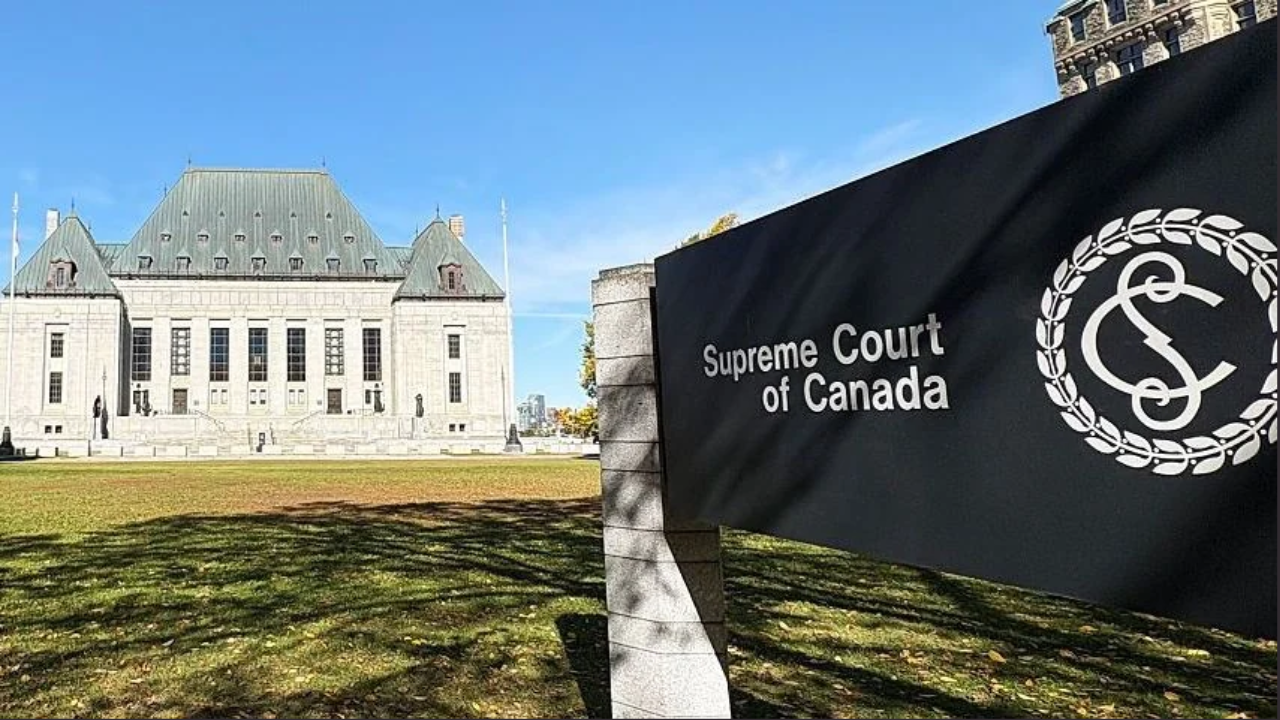
A North Dakota landowner who claimed that a 1993 subdivision map gave him the right to use access roads across his neighbours' properties lost his legal battle after the state
Supreme Court found that he had failed to establish an easement.
asserted
he → claim → easement
The dispute centred on two documents recorded at noon on the same day: a property map showing access easements and a deed transferring the middle parcel to a new owner.
asserted
dispute → centre → owner
However, the court found that the landowner could not prove the deed had been delivered before the map was recorded.
uncertain
map → find → ?
In its November 25, 2026
decision in Tamm v. Gatzke, available on Justia, the North Dakota Supreme Court also rejected claims that the access rights arose through long-term use or necessity.
uncertain
rights → reject → use
It affirmed the lower court's judgment denying Rudra Tamm's request to establish access across his neighbours' land.
asserted
It → affirm → land
Dispute began with a 1993 property subdivision
asserted
Dispute → begin → subdivision
According to the court's decision, F.M. Roberts owned a large property along River Road in Burleigh County in 1993.
uncertain
Roberts → accord → 1993
He subsequently divided it into three parcels known as Tracts 1-B, 2-B and 3-B.
asserted
He → divide → B
A subdivision map executed by Roberts on May 10, 1993, showed two strips marked as access easements.
uncertain
map → execute → easements
One crossed Tract 1-B and the other crossed Tract 3-B, with Tract 2-B situated between them.
asserted
B → cross → them
On the same day, Roberts transferred Tract 2-B to Scott Johnson through a warranty deed.
asserted
Roberts → transfer → deed
Neither document mentioned a specific time of execution or delivery, but both were stamped as recorded at noon on May 10, 1993.
uncertain
both → mention → May
The deed did not expressly mention any access easement.
asserted
deed → mention → easement
Over the years, ownership of the surrounding properties changed.
asserted
ownership → surround → properties
Diane Gatzke eventually acquired Tract 1-B, while the Eggers family acquired Tract 3-B.
asserted
family → acquire → B
Johnson transferred Tract 2-B to Tamm in 2010.
asserted
Johnson → transfer → 2010
In 2024, Tamm filed a lawsuit seeking a declaration that the access easements shown on the 1993 map benefited his property.
asserted
easements → file → property
Court examines whether map created an easement
asserted
map → examine → easement
The central question was whether Roberts still owned all three parcels when the subdivision map was recorded.
asserted
map → own → parcels
Under North Dakota law, an owner cannot create an easement over land that the same person still owns.
asserted
person → create → that
To establish an easement benefiting Tract 2-B, Tamm needed to prove that Roberts had already transferred that parcel to Johnson before recording the map.
asserted
Roberts → establish → map
Tamm argued that Roberts delivered the deed to Johnson before noon on May 10, 1993.
uncertain
Roberts → argue → May
If that had happened, Roberts would have owned the surrounding parcels but not Tract 2-B when the map was recorded.
asserted
map → happen → parcels
However, Johnson was the only witness with personal knowledge of the transaction, and he could not clearly remember the sequence of events more than 30 years later.
uncertain
he → remember → events
He testified that he assumed the deed exchange had taken place before he visited the recorder's office but acknowledged that he did not remember exactly when or how the documents were exchanged.
asserted
documents → testify → office
The district court found that Tamm had failed to establish that the deed was delivered before the map was recorded.
asserted
map → find → ?
The Supreme Court agreed, explaining that the recording timestamps alone could not establish when ownership actually transferred because a deed takes effect upon delivery, not recording.
uncertain
deed → agree → recording
Landowner also fails to prove implied access rights
Tamm alternatively argued that the access easements had arisen through prior use of the property.
asserted
easements → fail → property
An easement implied from pre-existing use can arise when land under common ownership is divided and one portion has historically been used to benefit another.
asserted
portion → imply → another
However, the claimant must establish apparent, permanent and continuous use, along with other legal requirements.
asserted
claimant → establish → requirements
Tamm argued that a two-track road had existed since the 1960s and ran across the surrounding properties.
asserted
road → argue → properties
The court found that the evidence did not clearly establish that Roberts had continuously used the disputed strips specifically to access Tract 2-B.
asserted
Roberts → find → Tract
Although witnesses described travelling along the road to reach equipment and other areas, that did not prove the required use for the middle parcel.
asserted
that → describe → parcel
The court therefore upheld the finding that Tamm had failed to establish an easement based on prior use.
asserted
Tamm → uphold → use
Court rejects easement by necessity
Tamm also argued that access across his neighbours' properties was necessary because the terrain along River Road made it difficult to construct a driveway.
asserted
it → reject → driveway
However, the court noted that Tract 2-B directly adjoined River Road.
asserted
B → note → Road
A former county engineer testified that access could potentially be created through openings in the property's non-access line, particularly through a less steep southern opening.
uncertain
access → testify → opening
Tamm had made informal enquiries about obtaining access but had not formally applied for an approach permit.
asserted
Tamm → make → permit
The court concluded that he had not provided clear and convincing evidence that reasonable alternative access was unavailable.
asserted
access → conclude → evidence
Supreme Court upholds neighbours' position
On November 25, 2026, the North Dakota Supreme Court affirmed the district court's judgment, rejecting all three grounds for establishing an easement.
asserted
Court → uphold → easement
…and 2 more, not listed.
 The Aporia