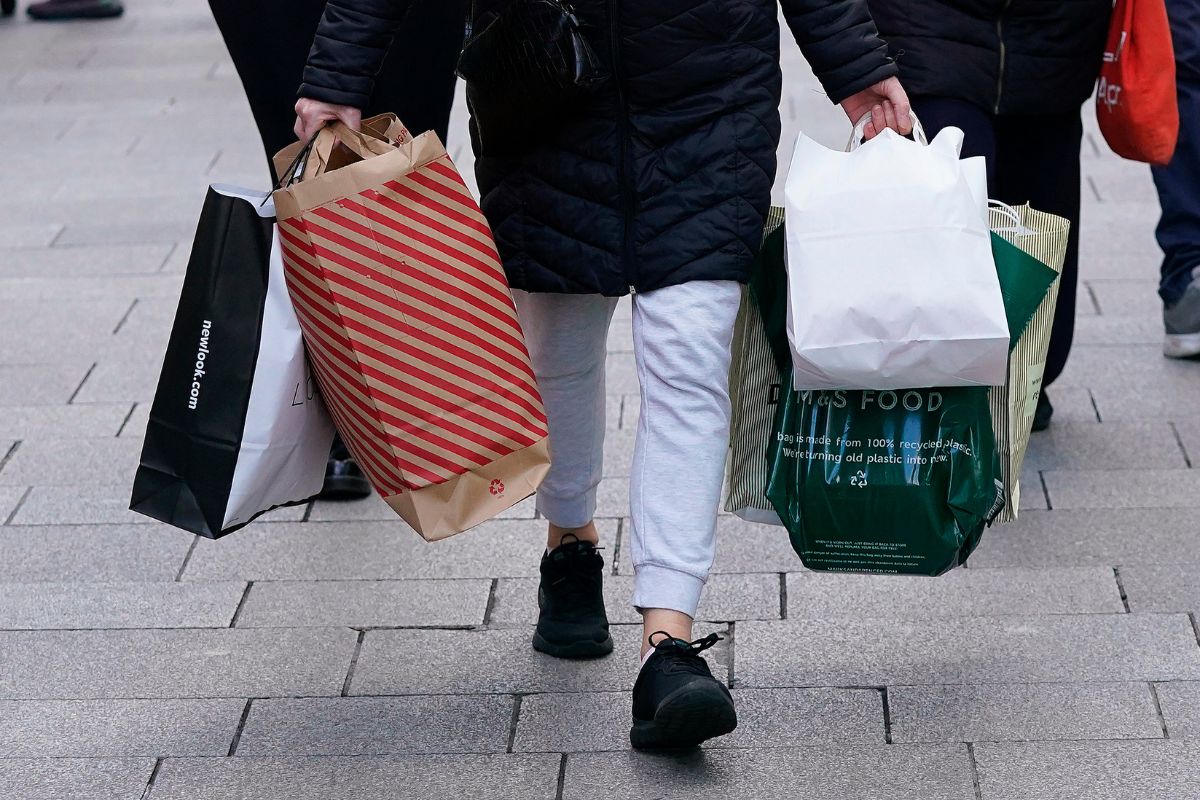
Photo via Toronto Star

What AI shopping bots learn during casual chats

Read the original at Toronto Star ↗
Cite

Janmohamed, I. (2026, November 27). What AI shopping bots learn during casual chats. Toronto Star. https://www.thestar.com/rolling-file/what-ai-shopping-bots-learn-during-casual-chats/article_48978983-736d-4243-a23b-6f9ed03ad62e.html

Dated from the outlet's own feed. Check the original for its byline.

Toronto Star · collected 2026-11-27 · by Iman Janmohamed

Quick Summary

Cybersecurity expert Ritesh Kotak discusses how agentic AI shopping bots collect personal information through casual conversations, potentially revealing private details like family relationships and preferences. Kotak warns that even if users do not pay for the service, their data is valuable and can be used for targeted advertising. He emphasizes that these seemingly harmless conversations can piece together a detailed picture of users' lives, highlighting privacy concerns.
Written by AI on 2026-11-27, from this article's own text only (the story summary below draws on all the coverage).

AI analysis

Story summary

Cybersecurity expert Ritesh Kotak warns that users of AI shopping bots, like Meta's Muse, may unknowingly reveal personal information through casual conversations. Kotak explains that by asking a bot to buy a gift for a niece, for instance, the bot learns details like the niece's age, implying the user has siblings. Over time, these small pieces of data can paint a comprehensive picture of the user's life, allowing for targeted advertising. Meta asserts that Muse does not share individual conversations or the data from personal virtual machines with its ad systems, even if the account is tied to affiliates like Facebook or Instagram. However, Kotak emphasizes that the data collected through these interactions can still be used to target users with ads, highlighting the privacy concerns associated with using such services.
Written for “AI Shopping Bots Learning Chats” on 2026-11-28, grounded in this article and the 0 other(s) covering the same event.

Compared with similar articles

This article reads unscored and hedges 17% of its claims. Each row says how that neighbour differs.
City AM
Hedges 4 of 23 claims Outlet record 95/100
“The articles discuss different aspects of AI in shopping and cybersecurity, with Article A focusing on AI fraud and phishing during Black Friday, while Article B focuses on the privacy concerns and information collection by AI shopping bots.”
Toronto Star
Hedges 0 of 3 claims Outlet record 64/100
“The articles discuss different aspects of AI in shopping and do not describe the same specific incident.”

Story

AI Shopping Bots Learning Chats
Technology · 1 article(s) covering the same event.
How this article was measured signals, leaning charts, publisher record, byline, topics and claims

Signals How these are calculated →

Claims extracted
18
sentences that state something as happening or true
Uncertain
17%
3 of 18 hedged ("reportedly", "may", "according to")
Leaning
withheld
no quote in the article backed the model's score
Publisher signals
64/100
Toronto Star's corrections and hedging, across everything collected from it. Not a measure of accuracy.
Outlets on this story
1
Technology
Same framing elsewhere
1
articles that frame the event the way this one does
Analyzed 2026-11-27 · how these are computed

How this is being covered How these are calculated →

Article leaning vs. publisher reliability
Source leaning vs. consistency

Publisher

Toronto Star · 18806 article(s) · 35 correction(s) detected
Running correction rate · 35 correction(s)
2026-11-17
Correction
2026-10-26
Correction
2026-10-24
Correction
2026-10-07
Correction
2026-09-24
Correction

Who wrote this

Iman Janmohamed
11 article(s) here · 1 carrying a prediction
It definitely did that quicker than I could without AI, but I’m disappointed Muse wasn’t able to execute the purchase.
2026-11-27 · mixed framing · Final musings
The agent couldn’t even access the site let alone make a purchase.
2026-11-27 · assertive framing · Third time's the charm?
“This would sort of put pressure on the need to go to the mall or to stores when you can do more of it online, but it’s not really that it’s changing how much you can do online.
The information agentic AI collects — what you like to buy, what deals you look for — can reveal private and personal information you might not realize you’re giving up, Kotak said.
2026-11-27 · assertive framing · What AI shopping bots learn during casual chats
I asked Muse what it thinks my gender is and it said: “I don’t know — you haven’t told me, and I don’t have anything that would tell me.
2026-11-27 · assertive framing · A false assumption in Muse’s notes
You might have seen a cute, cuddly creature with round black eyes and rosy cheeks across billboards and digital ads over the last couple months.
2026-11-27 · mixed framing · Good morning, and happy Black Friday
Most Ontarians making minimum wage would fall short of what they need to cover their basic expenses, according to a report released by the Ontario Living Wage Network on Monday.
His clients sometimes set arbitrary limits on the condo fees they’re willing to pay, which he says can lead them to ignore units that are well-suited to their needs.
Alberta’s government will not comment further on the allegations or legal proceedings as the matter is now before the courts, Green said.
Also by Iman Janmohamed
Final musings
2026-11-27 · Toronto Star
Third time's the charm?
2026-11-27 · Toronto Star
Nothing else under this byline is closely related to this article, so these are simply their most recent.
All 11 articles by Iman Janmohamed →

Topics

Facebook Instagram Kotak Meta Muse

Subjects

Kotak PERSON · 2× Ritesh Kotak PERSON · 2× Facebook ORG · 1× Instagram ORG · 1× Meta ORG · 1× Muse ORG · 1× WhatsApp ORG · 1×

Narrative

Meta says Muse doesn’t share individual conversations or the data in personal virtual machines with the company’s ad systems, even if the account is tied to its affiliates like Facebook, Instagram or WhatsApp.
framing: assertive · carried by 1 article(s) · first seen 2026-11-27
The information agentic AI collects — what you like to buy, what deals you look for — can reveal private and personal information you might not realize you’re giving up, Kotak said.
2026-11-27 · Toronto Star
What AI shopping bots learn during casual chats · assertive framing

Claims (18 extracted, 3 hedged)

“If you’re not paying for the product, then you are the product.” asserted
you → pay → product
That’s what cybersecurity expert and lawyer Ritesh Kotak told me after I asked him about agentic AI and privacy. asserted
I → ’ → AI
“If you’re not paying for the product, then you are the product.” asserted
you → pay → product
That’s what cybersecurity expert and lawyer Ritesh Kotak told me after I asked him about agentic AI and privacy. asserted
I → ’ → AI
The information agentic AI collects — what you like to buy, what deals you look for — can reveal private and personal information you might not realize you’re giving up, Kotak said. uncertain
Kotak → collect → information
“Most people … are using (chatbots) in a conversational manner. asserted
people → use → manner
So now the bot knows that you have a five-year-old niece, you probably have a brother or a sister,” he explained. asserted
he → know → brother
“It starts collecting all these little pieces of data and it may not seem that it’s — on the onset — an issue … but think of it as one big puzzle,” he said. uncertain
he → start → puzzle
“You may not have all the pieces of the puzzle complete, but you know what the picture is, and that picture is your life.” uncertain
picture → have → puzzle
Speaking broadly about chatbots, Kotak said this data collection can allow for targeted advertisements, as that’s how some of these programs make money. asserted
some → speak → money
“Your data is a currency that they’re seeking.” asserted
they → seek → that
Meta says Muse doesn’t share individual conversations or the data in personal virtual machines with the company’s ad systems, even if the account is tied to its affiliates like Facebook, Instagram or WhatsApp. asserted
account → say → Facebook
Your account has been registered, and you are now logged in. asserted
you → register → ?
Submitting this form below will send a message to your email with a link to change your password. asserted
Submitting → submit → password
An email message containing instructions on how to reset your password has been sent to the email address listed on your account. asserted
message → contain → account
No promotional rates found. asserted
rates → find → ?
Your purchase was successful, and you are now logged in. asserted
you → log → ?
| Rate: | | | Tax: | | | Today's total: | | | Begins: | | | Transaction ID: | A receipt was sent to your email. asserted
receipt → begin → email
Give feedback · no sign-in needed

No sign-in needed for now. Your note is sent without a name, so it cannot be answered.

History Support