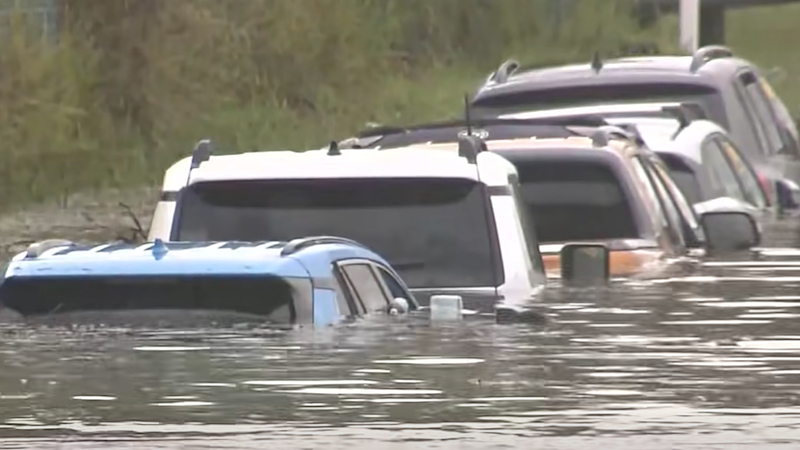
A wet and stormy spring is wrapping up with another widespread outbreak of rain and thunderstorms.
asserted
spring → wrap → rain
And thanks to a plume of humid tropical air, the atmosphere has been primed with moisture, laying the platform for possible flash flooding and river flooding across multiple states this weekend.
The soaking follows frequent rain events during the past two months ensuring Australia's wettest spring on record for an El Niño year.
asserted
soaking → prim → year
Loading...High humidity fuels rainband from tropics to Tasmania
asserted
humidity → load → Tasmania
After already soaking central Australia this week, the system reached eastern states on Friday, stretching thousands of kilometres from the country's far north to Tasmania.
asserted
system → soak → Tasmania
Thargomindah in outback Queensland was drenched by 66 millimetres in less than 12 hours through the night; more than double the monthly average and the heaviest November rain in 35 years.
asserted
Thargomindah → drench → years
By midday, heavy rain was also falling over western parts of Victoria and New South Wales, including a deluge at Warracknabeal in the Wimmera where more than 50mm was recorded in one hour.
asserted
mm → fall → hour
The system is now advancing towards the Great Dividing Range and there is a high chance of showers and thunderstorms today in a band from central Queensland, through NSW to Victoria and Tasmania.
asserted
system → advance → Victoria
Within the broader band of wet weather, severe thunderstorms are possible, particularly on and just west of the ranges, although severe weather cannot be ruled out in coastal areas.
asserted
weather → rule → areas
Thanks to the abundant atmospheric moisture, the set-up supports heavy rain and flash flooding with a lesser risk of damaging winds and hail.
asserted
up → support → winds
Three capitals could be on the receiving end of heavy falls or severe thunderstorms today.
uncertain
capitals → receive → falls
Hobart can also expect rain today, while showers and a non-severe storm is likely in Brisbane.
asserted
showers → expect → Brisbane
With somewhat wet catchments following heavy rain earlier this month, river rises and minor flooding is also possible across more than a dozen Victorian catchments — 10 in southern Queensland, along with the Upper Murray, Mitta Mitta, and Upper Macintyre rivers in NSW.
asserted
rises → follow → NSW
Minor riverine flooding is also a risk in northern Tasmania despite an exceptionally dry spell since August that culminated in this week's 15,000-hectare bushfire on Flinders Island.
asserted
that → culminate → Island
A cooler and drier southerly change will cause the band of rain and storms to contract to north-east NSW and eastern Queensland on Sunday, before clearing off the coast at night.
asserted
band → cause → night
2026 rain defies the odds
This year is breaking multiple rain records.
asserted
year → defy → records
Compared to 27 previous El Niño years since 1900, nationally 2026 has produced the:
- Wettest El Niño year on record.
- Wettest El Niño winter-spring on record.
- Wettest El Niño October on record.
- Wettest El Niño spring on record.
asserted
2026 → compare → record
The wet November could also rewrite the record books, so why is 2026 not seeing the typical winter and spring drought?
uncertain
2026 → rewrite → drought
In a complex climate system with many influences on rainfall, it is difficult to pinpoint the exact cause of the wet year.
What is clear however, is very warm ocean temperatures across the Indian Ocean have played a role in supplying extra moisture into the atmosphere during winter and spring.
asserted
temperatures → pinpoint → winter
During more recent weeks, an anomalously strong region of high pressure near New Zealand could be having a greater influence, along with a pulse of tropical storm activity near western Indonesia.
uncertain
region → have → Indonesia
El Niño's impact on rainfall generally dissipates by summer, and the rainfall outlook shows no clear swing to favour wetter or drier conditions for most of southern and eastern Australia.
asserted
outlook → dissipate → Australia
However, the Bureau of Meteorology's modelling is tipping a drier than normal summer across much of tropical Australia, especially near the Western Australia north coast where the chance of above median rainfall is below 20 per cent.
asserted
chance → tip → rainfall
National temperatures are forecast to land close to 2 degrees Celsius above the long-term mean, which could challenge our hottest summer on record in 2018-19, when temperatures were 2.1C above average.
uncertain
temperatures → forecast → average
 The Aporia