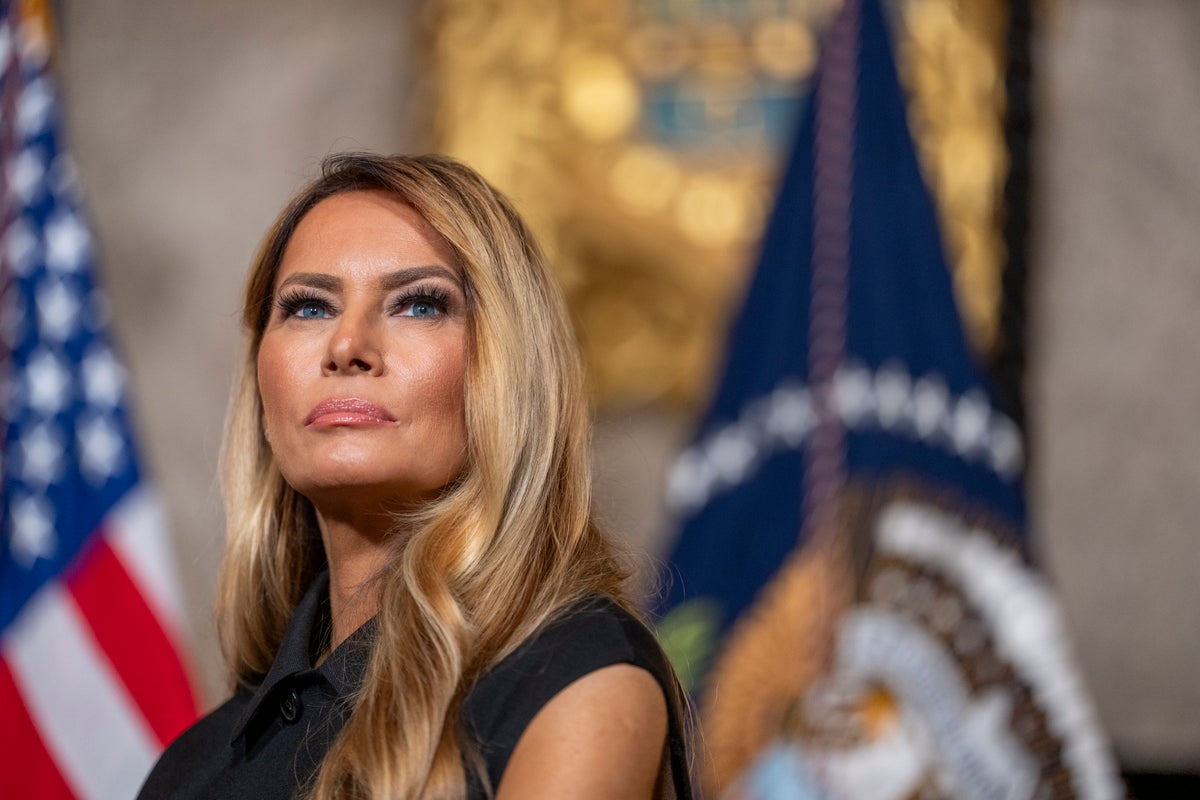
The Trump administration is approving far fewer applications for the sought-after visa reserved for people with “extraordinary ability” – which First Lady Melania Trump once used to obtain permanent residency – raising concerns that the U.S. could lose top talent to other countries.
uncertain
U.S. → approve → countries
Nicknamed the “Einstein visa,” the EB-1A offers a path to a green card for people in science, the arts, education, business and sports who have earned national or international recognition.
asserted
who → nickname → recognition
Approval rates have dropped sharply since President Donald Trump returned to the White House.
asserted
Trump → drop → House
By mid-2026, just 32 percent of applications were approved, compared with 75 percent in the final months of former President Joe Biden’s administration, according to federal immigration data.
uncertain
percent → approve → data
About 5,200 people received the visa in the first three quarters of fiscal 2026, down from nearly 8,900 during the same period in fiscal 2024.
asserted
people → receive → 2024
Melania Trump received permanent residency through the EB-1 program in 2001 while working as a model.
asserted
Trump → receive → model
A 2018 Washington Post report questioned whether her career met the program's high standards, noting she wasn't a top supermodel like Kate Moss, Gisele Bündchen or Naomi Campbell.
asserted
she → question → Moss
Another notable recipient was Canadian-born Olympic ice dancer Tanith Belbin, who received the visa in 2000 and later won silver for the United States at the 2006 Winter Olympics.
asserted
who → bear → Olympics
But now, immigration attorneys say even highly accomplished applicants are being turned down, and some law firms have stopped taking on cases because so many applications are being denied.
asserted
applications → say → cases
“It’s a huge, huge drop,” Kate Angustia, a former immigration officer and supervisory policy and practice counsel at the American Immigration Lawyers Association, told the Washington Post.
asserted
Angustia → ’ → Post
“It’s strange because the Trump administration has repeatedly said they want the best and the brightest.
asserted
they → ’ → best
There is no evidence the administration specifically ordered officers to reject more applications, but the decline comes amid Trump's larger efforts to restrict legal immigration.
asserted
decline → be → immigration
Attorneys say officers are taking a more subjective approach to deciding who qualifies.
asserted
who → say → approach
Applicants who might have been approved in previous years are now being turned away.
uncertain
who → approve → years
“It’s become so much more subjective,” Rachel Baskin, a Long Island-based immigration attorney, told the Washington Post.
asserted
Baskin → become → Post
Applicants generally must meet at least three of 10 eligibility criteria or show evidence of a major achievement, such as winning an Olympic medal or an Oscar.
asserted
Applicants → meet → medal
They must then pass a final review in which officers consider all the evidence.
asserted
officers → pass → evidence
Finn Reynolds, head of insights and strategy at immigration data firm Lawfully, said increased scrutiny is only part of the problem.
asserted
scrutiny → say → problem
More weak applications, including those prepared with artificial intelligence or generic templates, may also be contributing to denials.
uncertain
applications → include → denials
Buyouts and firings coordinated by the U.S. DOGE Service have left fewer experienced officers to review applications, he said.
asserted
he → coordinate → applications
“The scrutiny is probably roughly half of the equation here,” Reynolds said of the increased denials.
asserted
Reynolds → say → denials
“And then the other half is probably the fact that there are both more unqualified and underqualified petitions being submitted.”
asserted
half → be → ?
Still, Reynolds said some applicants who would have qualified in previous years are now being rejected.
asserted
who → say → years
He estimates the approval rate could fall to about 27 percent in the final quarter of fiscal 2026.
uncertain
rate → estimate → 2026
The trend is also affecting the tech industry.
asserted
trend → affect → industry
James Hollis, a Memphis immigration attorney who handles “extraordinary ability” visa applications, said one of his clients was denied despite having raised more than $60 million in venture capital, sold companies and been featured in 20 news articles.
asserted
one → handle → articles
“They’re killing AI entrepreneurs,” Hollis said.
asserted
Hollis → kill → entrepreneurs
“They’re absolutely annihilating them.”
asserted
They → annihilate → them
The Independent has contacted the Department of Homeland Security, the White House and the first lady’s office for comment.
asserted
Independent → contact → comment
 The Aporia