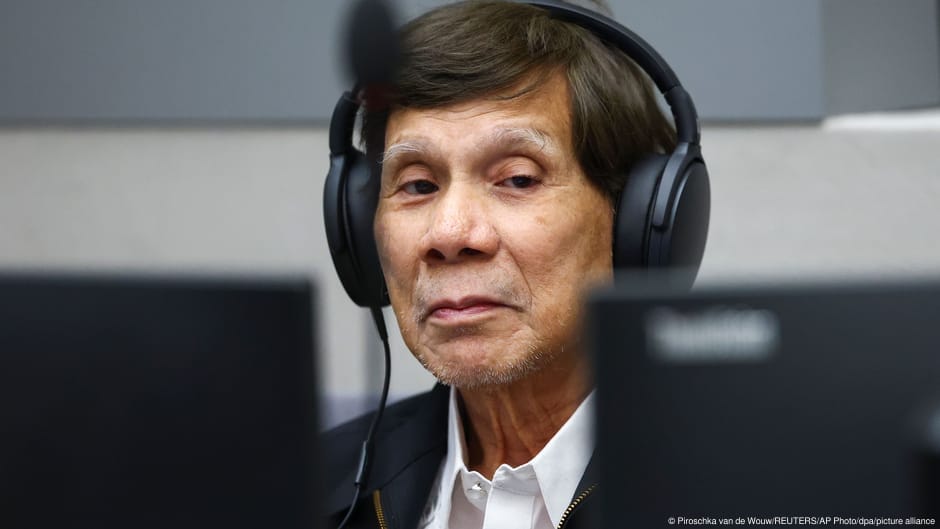
Former Philippine President Rodrigo Duterte will stand trial at the International Criminal Court (ICC) in The Hague on November 30, where he faces three counts of crimes against humanity linked to his bloody war on drugs.
asserted
he → stand → drugs
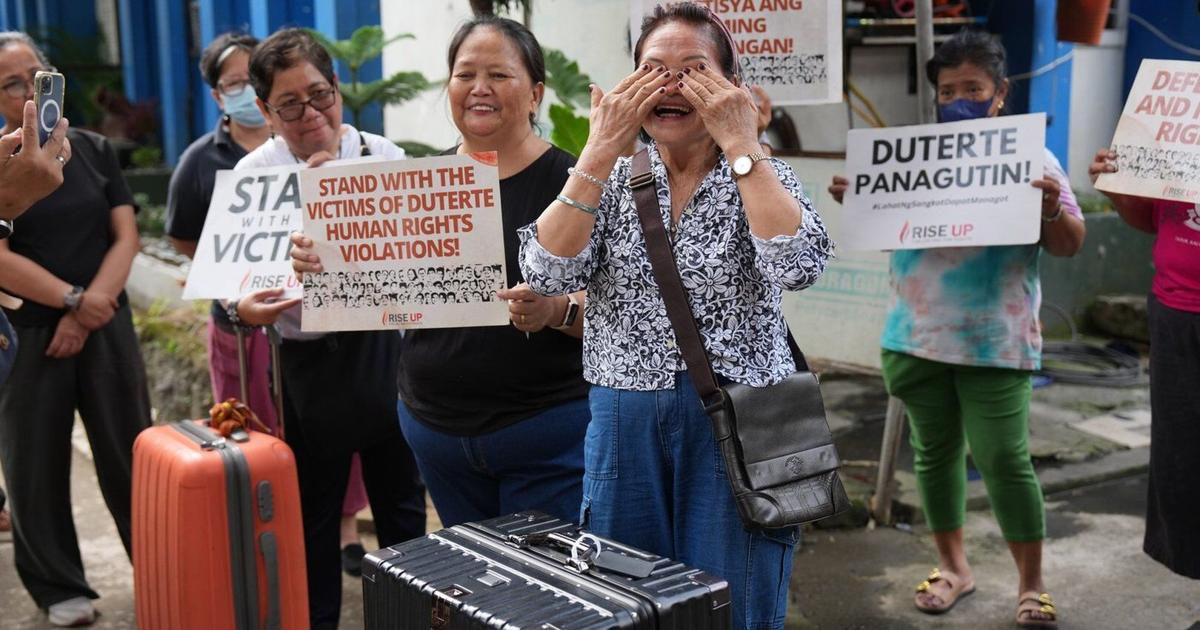
For the families of the thousands killed during his anti-narcotics campaign, the trial is a chance for justice that has eluded them at home.
It is also a significant test of international justice at a time when the ICC faces increasing political pressure and questions about its ability to hold former heads of state accountable.
asserted
heads → kill → state
Yet, Duterte, 81, is still a popular figure in the Philippines, where many still regard his violent crackdown as one of his presidency's greatest achievements.
asserted
many → regard → achievements
With his daughter, Vice President Sara Duterte, a frontrunner for the 2028 presidential election, the proceedings in The Hague could become a defining issue in the Philippines' next presidential election.
uncertain
proceedings → become → election
Rodrigo Duterte was elected president in 2016 following an expletive-laden, populist campaign in which he openly promised to kill criminals and drug dealers.
asserted
he → elect → criminals
During his more than two decades as mayor of Davao City, he earned a reputation for transforming a notoriously violent city into a relatively safe one.
asserted
he → earn → one
However, human rights groups found systematic extrajudicial killings by the so-called Davao Death Squad, which ICC prosecutors allege Duterte helped establish and oversee.
asserted
Duterte → find → which
His disregard for political convention and promises of swift, uncompromising justice appealed to millions of Filipinos frustrated by corruption, crime and the perceived failures of successive governments.
asserted
disregard → appeal → governments
"Filipinos who were deeply frustrated with everyday experiences of injustice and government inaction made them receptive to Duterte's promise of swift justice, even though extraordinary and violent means," Cleve Arguelles, a political scientist and CEO of Momentum Research, a pollster, told DW.
asserted
Arguelles → frustrate → DW
After assuming the presidency, Duterte extended his Davao law enforcement model nationwide.
asserted
Duterte → assume → model
Police launched sweeping anti-narcotics operations, primarily targeting impoverished urban communities, while suspected drug users and dealers were also killed by unidentified gunmen.
asserted
users → launch → gunmen
Philippine authorities officially recorded 6,252 deaths during anti-drug operations, with police claiming to have acted in self-defence.
asserted
police → record → defence
Human rights organizations estimate the actual death toll at between 12,000 and 30,000.
asserted
organizations → estimate → 12,000
"Duterte's ruthless war on drugs was not simply a campaign against crime; it was a way of governing through killing," David Johnson, a professor of sociology at the University of Hawaii at Manoa, told DW.
asserted
Johnson → govern → DW
"The extraordinary violence he ordered and encouraged was sustained by a combination of extraordinary problems of impunity in the Philippine criminal justice system and deep failures of democracy in that country,” Johnson said.
"These conditions made extrajudicial killing politically useful even though it was ineffective as crime control," he added.
asserted
he → order → control
Duterte also used state power to intimidate and suppress wide sections of Philippine society, including opposition politicians, civil society groups, journalists, lawyers and judges, Diane Desierto, a professor of law and global affairs at the University of Notre Dame, told DW.
asserted
Desierto → use → DW
Former president remains popular
asserted
president → remain → ?
The deterioration of human rights under Duterte damaged the Philippines' international standing and strained relations with its traditional Western partners, particularly the United States under President Barack Obama and the European Union, which threatened to withdraw Manila's preferential trade privilege.
asserted
which → damage → privilege
Duterte left office in June 2022 as one of the most popular presidents in recent Philippine history.
asserted
Duterte → leave → history
A survey conducted by pollster Social Weather Stations found that 88% of Filipinos were satisfied with his performance.
asserted
% → conduct → performance
His daughter was overwhelmingly elected vice president in May 2022, while their allies dominated that year's Senate elections.
uncertain
allies → elect → elections
"Up to now, the Dutertes remain popular not in spite of the drug war but because of it,” Arguelles said.
asserted
Arguelles → remain → it
Why was Duterte arrested?
asserted
Duterte → arrest → ?
Despite years of domestic and international scrutiny, Duterte remained at liberty for nearly three years after leaving office.
asserted
Duterte → remain → office
The ICC opened a preliminary examination into the drug war in 2018, prompting Duterte to withdraw the Philippines from the court's founding treaty.
asserted
ICC → open → treaty
A formal investigation began in September 2021.
asserted
investigation → begin → September
For much of his early presidency, President Ferdinand Marcos refused to cooperate with the ICC investigation.
asserted
Marcos → refuse → investigation
What changed was the breakdown of relations between the Marcoses and the Dutertes, two of the country's most powerful political dynasties.
asserted
breakdown → change → dynasties
Marcos' father had ruled the Philippines as a dictator until he was overthrown in the 1986 People Power Revolution.
asserted
he → rule → Revolution
The alliance that brought Marcos Jr. and Sara Duterte to power in 2022 unravelled spectacularly after November 2024, when the vice president claimed she had arranged for Marcos to be assassinated in the event of her own killing.
asserted
Marcos → bring → killing
She has since faced successive impeachment efforts.
asserted
She → face → efforts
Philippine authorities arrested Rodrigo Duterte in March 2025, acting on an ICC arrest warrant issued four days earlier.
asserted
authorities → arrest → warrant
In April this year, ICC judges confirmed three charges of crimes against humanity involving murder and attempted murder.
asserted
judges → confirm → murder
The trial will begin with opening statements, followed by testimony from prosecution witnesses.
asserted
trial → begin → witnesses
The process is expected to be extensive, potentially running until 2028, the year of the next Philippine presidential elections.
asserted
process → expect → elections
What does the trial mean for Philippine politics?
asserted
trial → mean → politics
The Philippines is effectively confronting two different questions about the Duterte legacy: whether Rodrigo Duterte should be held criminally accountable for his presidency and whether his family should be entrusted with political power again, Arguelles said.
asserted
Arguelles → confront → power
Duterte-aligned senators implicated in the ICC investigation could face arrest and transfer to The Hague, while Sara Duterte is still a leading contender for the 2028 presidency, despite an ongoing impeachment trial over allegations of unexplained wealth that could see her barred from public office.
uncertain
her → align → office
Her brother, Sebastian Duterte, the mayor of Davao City, has also become a possible alternative presidential candidate.
asserted
brother → become → City
By portraying the ICC proceedings as foreign interference and political persecution, the Duterte family hopes to preserve the political capital accumulated during Rodrigo Duterte's presidency, Jayson Lamchek, a legal scholar at Western Sydney University, told DW.
asserted
Lamchek → portray → DW
…and 8 more, not listed.
 The Aporia