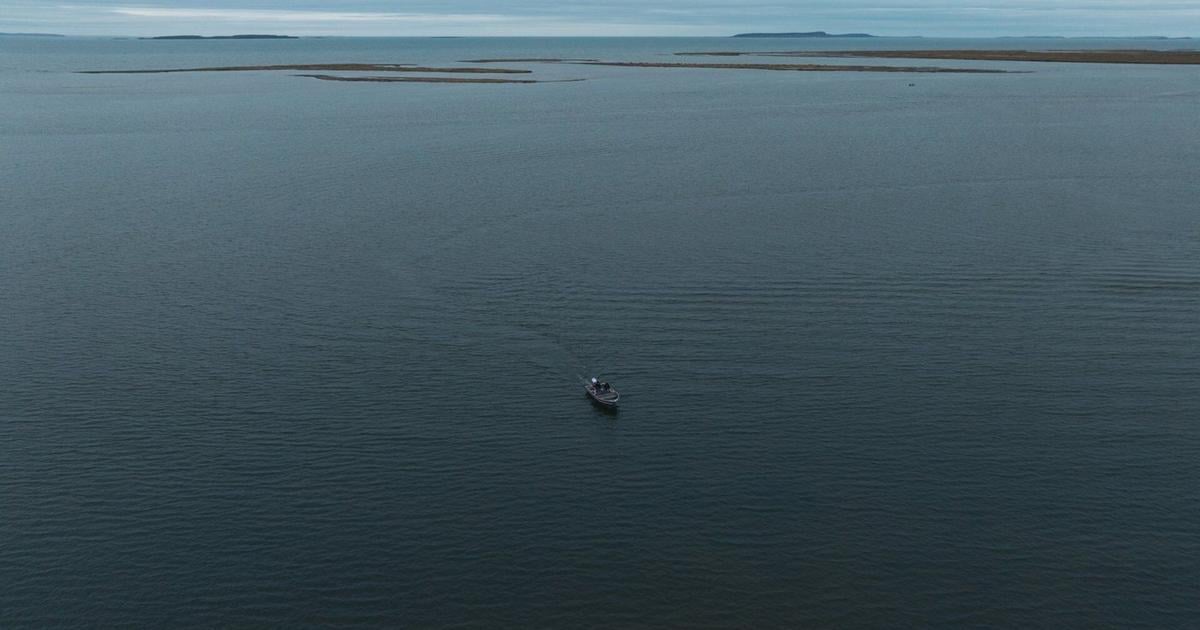
KUGLUKTUK - Nobody lives at Grays Bay.
asserted
Nobody → live → Bay
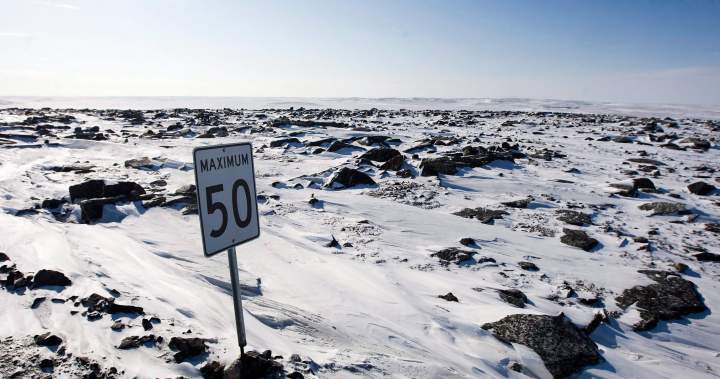
The deepwater inlet on Nunavut’s northwestern Arctic coast is ringed by treeless tundra, threaded with lakes, ponds and streams and scattered with boulders and the odd hunting cabin.
asserted
inlet → ring → boulders
Everything needed to build one – fuel, steel, heavy equipment and people – would have to arrive by barge in the few ice-free months, or by truck over a road made of ice.
asserted
Everything → need → ice
West Kitikmeot Resources Corp (WKR) plans to change that by building an all-season gravel road, a deepwater port and an airfield in a megaproject that would be a first step in connecting Nunavut by road to the rest of the country.
asserted
that → plan → country
The company says it would also provide Canada with its first deepwater seaport on the western Arctic coast, bolstering security in the North and making Grays Bay one of Canada’s major economic gateways.
asserted
Bay → say → gateways
The goal, says Brendan Bell, WKR’s CEO, is to kickstart copper and zinc mining in the area, spurring development that would ultimately funnel hundreds of millions of dollars into the economy by enabling the movement of critical minerals to international markets.
asserted
that → say → markets
“There are a number of very high-grade copper and zinc deposits that are landlocked,” Bell says.
asserted
Bell → be → deposits
“You can’t fly this material out of here – you need infrastructure to get to tidewater.”
asserted
you → fly → tidewater
Starting close to the Nunavut-Northwest Territories border and stretching 230 kilometres north along several mining deposits, Grays Bay Road and Port (GBRP) would take an estimated five years to build and cost upward of $1 billion.
asserted
Road → start → billion
The project is currently before the Nunavut Impact Review Board for assessment, and Prime Minister Mark Carney has referred it to the federal major projects office, which could fast-track its construction through the federal regulatory process.
uncertain
which → refer → process
“I think Canada must do it, needs to do it,” Bell says.
asserted
Bell → think → it
As director of Arctic engineering with Tetra Tech, he worked on the 138-kilometre Inuvik-Tuktoyaktuk Highway (ITH), which his firm helped plan, design and build before it opened in 2017.
asserted
it → work → 2017
“It’s a big deal and a big challenge to complete,” he says of the GBRP.
asserted
he → ’ → GBRP
It takes what he calls “alignments” – of labour, resources and equipment, but also of the people of Nunavut, governments, landowners, regulators and the environment.
asserted
he → take → Nunavut
The proposed road needs 15 million cubic metres of rock – enough to build the Great Pyramid of Giza six times over – and nearly all of it has to come from land it is planned to cross.
asserted
it → propose → land
In total, crews will open up to 40 new quarries along the route, blasting rock into pieces less than a metre across and crushing it into gravel.
asserted
crews → open → gravel
Blasting would be timed to avoid sensitive periods for wildlife, fish and migratory birds, according to WKR’s filings with the review board.
uncertain
Blasting → time → board
The road – about 10 metres wide to carry traffic in both directions – will traverse low-lying tundra and wind through a maze of lakes, ponds and streams, requiring about 230 bridges and culverts.
asserted
road → carry → bridges
Those components would need to be prefabricated in the south and brought in by sealift or over a winter road, then installed when the ground and water are frozen.
asserted
ground → need → road
And there are the workers – they’ll need hundreds of them.
asserted
they → be → them
With no existing communities along the proposed route, the biggest challenges are likely to be staffing and accommodations.
asserted
challenges → exist → route
In the first year, the company plans to set up a temporary work camp with supplies delivered by ship at the Grays Bay port site.
asserted
company → plan → site
At the coastal end of the project, about a metre of sediment and loose rock will need to be dredged from the ocean floor.
asserted
metre → need → floor
Crews also need to build a harbour breakwater and a boat launch to allow for the transportation of goods during the open-water season, from June to October.
asserted
Crews → need → October
Due to sea ice, marine construction season is naturally shorter, says Elliot Holland, WKR’s chief operating officer.
asserted
Holland → say → ice
“We have to account for the force of the ice pushing on the in-water wharf structures.”
asserted
We → have → structures
Once winter arrives, crews would build a temporary airstrip and a pad for a permanent camp, a fuel station, the first quarries and a vital winter road.
asserted
crews → arrive → camp
Rebuilt each year over ice and snow, the road would connect Jericho Station, a dormant diamond mine site at the south end of the Grays Bay road, to the Tibbitt to Contwoyto Winter Road in the Northwest Territories.
asserted
road → rebuild → Territories
About 1,000 trucks would haul materials and equipment along the route each winter.
asserted
trucks → haul → route
Construction would then start at both ends of the route, with crews working towards each other until they meet in the middle.
asserted
they → start → middle
As the road advances, crews would move the camps every three months.
asserted
crews → advance → camps
—-
Beneath it all is melting permafrost – ground that’s at or below 0 C and held together by ice.
asserted
that → melt → ice
When permafrost thaws, the ground shifts and sinks, buckling roads and tilting buildings; that’s why many homes in the North are built on pilings drilled deep into the ground.
asserted
homes → thaw → ground
Designed to last 75 years, Grays Bay road needs to remain stable well into the 2100s, in a region warming several times faster than the global average.
asserted
road → design → average
WKR plans to use fill-only construction where possible, adding gravel or other materials on top of the existing ground to minimize disruption, rather than using conventional cut-and-fill techniques.
asserted
WKR → plan → techniques
As much as possible, the road would be routed on top of stable bedrock.
asserted
road → rout → bedrock
Where that’s not practical, it would sit on a base of large rocks, preferably non-acid-generating granite.
asserted
it → ’ → rocks
In either case, gravel goes on top.
asserted
gravel → go → top
The road’s embankment would be thicker, with coarse materials such as sand and gravel acting as a blanket.
asserted
materials → act → blanket
The company says this limits heat seeping into the ground, keeping the permafrost frozen.
asserted
this → say → permafrost
…and 42 more, not listed.

 The Aporia