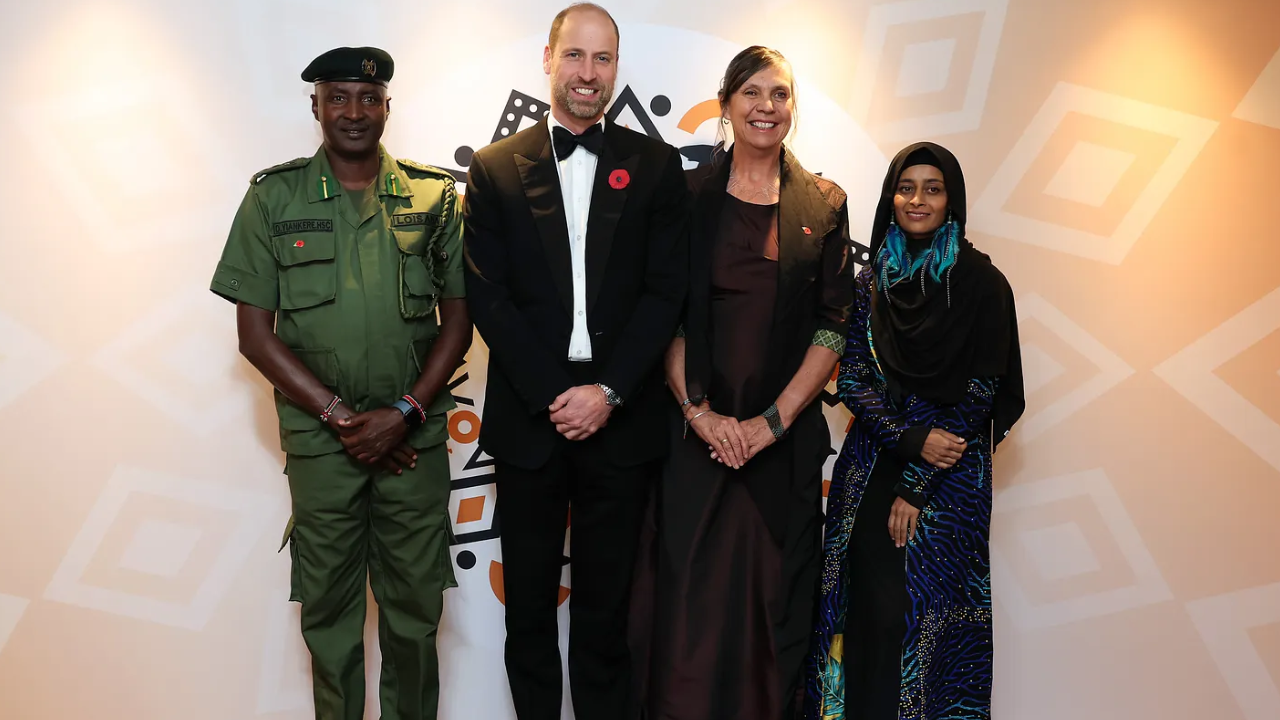
Kenyan conservationist Raabia Hawa, who left a career in radio to protect wildlife, has won the 2026 Tusk Award for Conservation in Africa for her work against poaching and environmental destruction.
asserted
who → leave → poaching
Her efforts have helped bring an endangered antelope population back from the brink, while also strengthening the role of local communities in protecting threatened ecosystems.
asserted
efforts → help → ecosystems
According to Tusk Trust, which announced this year’s winners following its November 11 ceremony in London, Hawa was recognised for her leadership through the Ulinzi Africa Foundation, an organisation she founded in 2014.
uncertain
she → accord → 2014
Reporting by Mongabay and Nature Africa has also highlighted her transition from broadcasting to frontline conservation and the growing scope of her environmental work.
asserted
Reporting → report → work
From radio to wildlife conservation
Hawa’s journey into conservation began while she was working as a radio presenter in Kenya.
asserted
she → begin → Kenya
Although she had developed an interest in wildlife from an early age, witnessing the consequences of elephant poaching and the risks faced by wildlife rangers prompted her to take a more active role.
asserted
witnessing → develop → role
She initially used her media platform to draw attention to wildlife crime, but eventually decided that raising awareness was not enough.
asserted
raising → use → awareness
She wanted to work directly with the people protecting animals on the ground.
asserted
She → want → ground
That decision led to the establishment of Ulinzi Africa Foundation in 2014.
asserted
decision → lead → 2014
The organisation initially focused on supporting rangers and strengthening anti-poaching efforts in areas where wildlife protection remained under-resourced.
asserted
protection → focus → areas
Over the years, its work has expanded across Kenya’s Lamu and Tana River regions, bringing together wildlife monitoring, community engagement and environmental advocacy.
asserted
work → expand → monitoring
How coastal topi numbers recovered
One of the most significant outcomes associated with Hawa’s conservation work has been the recovery of coastal topi in one of their remaining strongholds.
asserted
One → recover → strongholds
According to Tusk, the population in the area increased from approximately 33 to 34 animals to more than 300.
uncertain
population → accord → 300
The improvement has been attributed to sustained anti-poaching patrols, habitat protection and the work of local ranger teams.
asserted
improvement → attribute → teams
The recovery is particularly significant because the coastal topi, a subspecies of antelope, has experienced a severe decline across its historical range.
asserted
topi → experience → range
A 2026 report published by Ulinzi Africa Foundation, drawing on conservation research and population assessments, highlights the scale of the problem.
asserted
report → publish → problem
It estimates that coastal topi numbers in Kenya fell by approximately 92 per cent between 1977 and 2013.
asserted
numbers → estimate → 1977
The report also points to further declines in subsequent years, making the protection of remaining populations increasingly important.
asserted
protection → point → populations
The organisation’s work is therefore not simply about preventing individual incidents of poaching.
asserted
work → prevent → poaching
It involves protecting the habitats that allow wildlife populations to survive and reproduce.
asserted
populations → involve → habitats
Conservation that involves local communities
Hawa’s approach also places considerable emphasis on the people who live alongside wildlife.
asserted
who → involve → wildlife
Her work has increasingly extended beyond land-based wildlife protection.
asserted
work → extend → protection
As highlighted in Mongabay’s November 2026 profile, Hawa has also challenged destructive industrial fishing practices and extractive activities that threaten coastal ecosystems and local livelihoods.
asserted
that → highlight → ecosystems
The conservationist has faced serious personal risks because of her work, including threats linked to her opposition to environmentally damaging activities.
asserted
conservationist → face → activities
She has also advocated for greater participation by women in conservation, encouraging them to take up leadership and frontline roles in a field traditionally dominated by men.
asserted
She → advocate → men
Recognition at the 2026 Tusk Conservation Awards
Hawa received the Tusk Award for Conservation in Africa at the November 11 ceremony in London.
asserted
Hawa → receive → London
The award recognises conservationists demonstrating exceptional leadership and making a meaningful contribution to protecting Africa’s natural heritage.
asserted
award → recognise → heritage
She was among three individuals recognised this year.
asserted
She → recognise → individuals
Dr Colleen Begg, whose work with the Niassa Carnivore Project in Mozambique has helped protect large carnivores across an extensive wilderness landscape, received the Prince William Award for Conservation in Africa.
asserted
work → help → Africa
Meanwhile, Daniel Yiankere, security manager at Kenya’s Loisaba Conservancy, received the Tusk Wildlife Ranger Award for his contribution to wildlife protection and ranger operations.
asserted
Yiankere → receive → protection
For Hawa, the recognition reflects years of work by rangers and communities operating in difficult conditions.
asserted
recognition → reflect → conditions
Her story also highlights how conservation can move beyond traditional protection efforts when local leadership, sustained fieldwork and community involvement come together.
asserted
leadership → highlight → efforts
 The Aporia