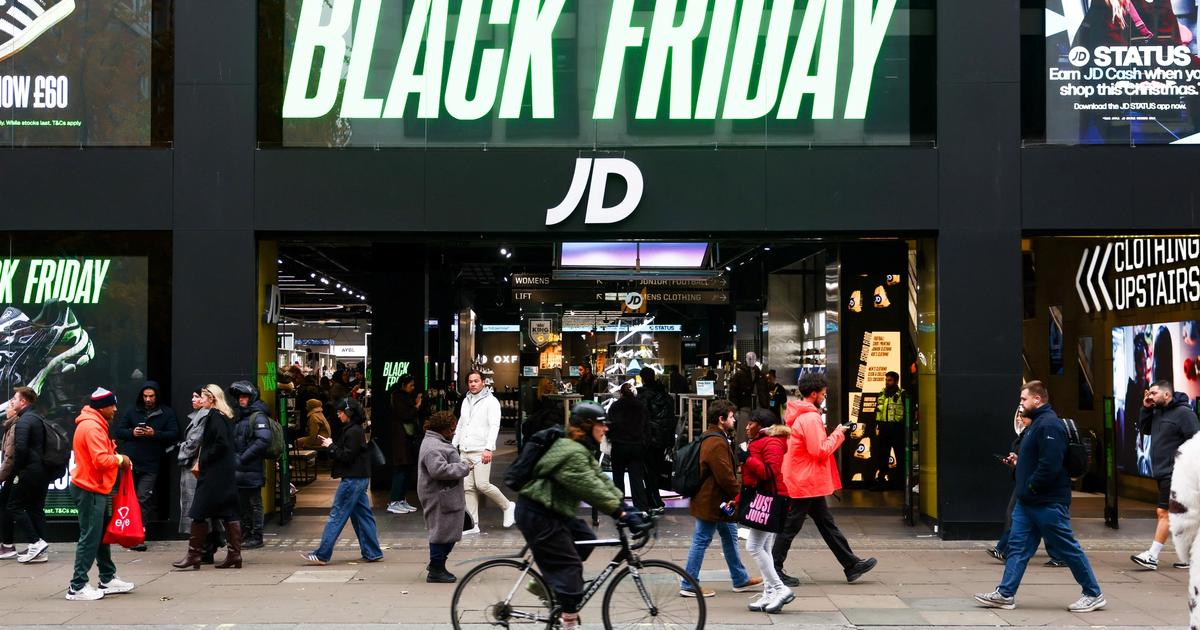
Artificial intelligence bots are offering to do the bargain hunting for shoppers this Black Friday — but they could also saddle consumers with bad recommendations, unwanted purchases and privacy headaches.
uncertain
they → offer → recommendations
Amazon, Google, Meta and ChatGPT maker OpenAI have been rolling out increasingly sophisticated AI tools that can scour the internet for discounts, monitor price drops, fill shopping carts and even make purchases on behalf of consumers.
But the technology’s capacity to figure out what consumers actually want leaves much to be desired.
asserted
consumers → roll → much
A study of major AI models released earlier this month by payments giant Visa found that AI models failed nearly 43% of shopping tests designed to determine whether they could identify customers’ needs and make appropriate purchasing decisions.
uncertain
they → release → decisions
In 54% of the failed tests, the AI recommended buying a product, anyway — despite failing to meet or fully identify the shopper’s needs.
asserted
AI → fail → needs
Advertisement
Visa evaluated 22 AI models from 12 research labs, challenging them to help shoppers select products ranging from televisions and laptops to personal-care appliances across 15 different scenarios.
asserted
shoppers → evaluate → scenarios
Even the best-performing models failed nearly one in five tests in the study.
asserted
models → perform → study
Unlike conventional chatbots that spit out answers to questions, so-called AI agents can carry out tasks independently — with some even continuing to hunt for bargains after shoppers have closed an app.
asserted
shoppers → spit → app
Amazon’s Alexa for Shopping can automatically buy items when they hit prices specified by customers, while Google launched its Universal Cart last month to track prices and product availability across multiple retailers.
asserted
Google → buy → retailers
Advertisement
OpenAI, meanwhile, began rolling out its ChatGPT Wallet earlier this month, enabling its personal AI agents, known as Dots, to complete purchases with users’ approval.
asserted
OpenAI → begin → approval
The feature is initially limited to eligible US subscribers of its ChatGPT Pro service.
asserted
feature → limit → service
Giving such software the power to act independently, however, has already led to some unwelcome surprises.
Advertisement
The Associated Press reported last month that Meta’s AI agent, Muse, accepted an offer for a computer keyboard listed on Facebook Marketplace and gave the buyer the seller’s home address — without seeking the additional approval the seller had expected.
A stranger subsequently showed up outside the home of the seller, Toronto-based content creator Matt Robb, late at night.
asserted
stranger → give → night
Meta pointed The Post to a subsequent social media post in which the seller, Matt Robb, acknowledged that he had authorized Muse to send messages on his behalf.
asserted
he → point → behalf
Meta Vice President David Singleton also said there had been no breach of privacy controls.
asserted
Singleton → say → controls
Advertisement
Reuters separately reported that a Meta employee had flagged an incident in which Muse booked a nonrefundable Airbnb stay without authorization.
“Employee testing is core to the product development process and the entire point is to get feedback, so we can implement safety and privacy protections and improve products,” a Meta spokesperson told The Post on Thursday.
asserted
spokesperson → report → Thursday
The spokesperson noted that employees have access to versions of Muse that differ from those available to the public.
asserted
that → note → public
Advertisement
“Safety and security are a huge priority for us,” the spokesperson said, adding that Meta had delayed the release of Muse by several months to strengthen its safeguards.
asserted
Meta → say → safeguards
Holiday shoppers shouldn’t count on AI agents to consistently find the lowest prices, according to a report.
uncertain
agents → count → report
Amazon in September blocked Muse from shopping on its website, accusing Meta’s AI agent of failing to identify itself while browsing the retailer’s site, according to GeekWire.
uncertain
Amazon → block → GeekWire
Amazon requires third-party AI agents to identify themselves as bots and reserves the right to block them from its site.
asserted
Amazon → require → site
Advertisement
OpenAI likewise acknowledges that websites can block its automated browsing tools and that the prices initially displayed in ChatGPT’s shopping results may not be the lowest available.
uncertain
prices → acknowledge → results
“My advice is simple: compare offers, use the rewards available to you, and pay in a way that gives you flexibility and protection,” Frank Keller, PayPal’s president of checkout solutions, told The Post.
asserted
Keller → compare → Post
The payments executive said consumers are becoming increasingly discerning about their holiday spending.
asserted
consumers → say → spending
“Value is not just about finding the lowest price anymore,” Keller told The Post.
asserted
Keller → find → price
“It is about getting the most out of every dollar they spend.”
asserted
they → get → dollar
The convenience of AI shopping agents can also come at the expense of consumer privacy.
asserted
convenience → come → privacy
Some AI agents can connect to users’ email accounts and calendars — giving the software access to potentially sensitive personal information.
asserted
agents → connect → information
Cybersecurity researchers have identified a security threat known as “prompt injection,” in which hackers can plant malicious instructions on websites or in emails to trick AI agents into revealing private information or taking unauthorized actions.
asserted
hackers → identify → actions
Advertisement
Charlie Gasparino has his finger on the pulse of where business, politics and finance meet
Sign up to receive On The Money by Charlie Gasparino in your inbox every Thursday.
asserted
business → have → inbox
Meta says Muse requires shoppers to approve purchases and generates single-use card numbers for transactions made through its digital wallet, shielding users’ actual credit card details from merchants.
asserted
Muse → say → merchants
The company also offers rewards of up to $300,000 to researchers who uncover security vulnerabilities, including up to $130,000 for certain successful prompt injection attacks.
asserted
who → offer → attacks
Advertisement
Nevertheless, shoppers appear far more comfortable using AI to research purchases than letting it spend their money.
asserted
it → appear → money
According to NRF survey findings published Monday, just 6% of holiday shoppers using AI said they use the technology to make purchases.
uncertain
they → accord → purchases
The NRF also found that 45% said nothing could convince them to let AI make purchases on their behalf.
uncertain
AI → find → behalf
Consumers who do delegate purchases could face another headache if they try to dispute a charge for something their AI assistant mistakenly bought.
uncertain
assistant → delegate → something
Federal protections against unauthorized credit card transactions may not necessarily apply in the same way when shoppers have knowingly given software permission to spend money on their behalf.
And while Visa’s benchmark exposed shortcomings in AI’s ability to pick the right products, it has yet to put the entire purchasing process through the same battery of tests.
uncertain
it → apply → tests
The payments giant plans to expand its testing to cover checkout, payments and order placement.
asserted
giant → plan → checkout
The Post has sought comment from Visa, Amazon, Google, OpenAI and the National Retail Federation.
asserted
Post → seek → Visa
 The Aporia