Photo via Deutsche Welle

Protests in Iraqi Kurdistan at plans for government in Baghdad to take over oil, border crossings

Read the original at Deutsche Welle ↗
Cite

Hallam, M. (2026, November 26). Protests in Iraqi Kurdistan at plans for government in Baghdad to take over oil, border crossings. Deutsche Welle. https://www.dw.com/en/protests-in-iraqi-kurdistan-at-plans-for-government-in-baghdad-to-take-over-oil-border-crossings/a-80065994?maca=en-rss-en-world-4025-rdf

Dated from the outlet's own feed. Check the original for its byline.

Deutsche Welle · collected 2026-11-26 · by Mark Hallam

Quick Summary

Protesters in Irbil, the capital of Iraqi Kurdistan, demonstrated against the Iraqi federal government's decision to take control of oil operations and border crossings previously managed by Kurdish authorities. The decision, backed by Iraq's Federal Supreme Court, aims to curb oil smuggling but has been met with strong opposition from the Kurdish Regional Government, which views it as a violation of constitutional rights. Rival Kurdish factions united in the protests, which also spread to other cities, as the move escalates the long-standing power struggle between the central government and Kurdish authorities.
Written by AI on 2026-11-26, from this article's own text only (the story summary below draws on all the coverage).
See how they differ ↓

AI analysis

Story summary

On November 24, 2026, Iraqi Prime Minister Ali al-Zaidi ordered federal authorities to take control of oilfields and border crossings in Kurdish-controlled areas, citing an investigation into oil smuggling. This move escalated tensions between Baghdad and the semi-autonomous Kurdistan region. By November 26, thousands of protesters gathered in Irbil, the capital of Iraq's Kurdish region, to oppose the federal government's actions. The protests reflect growing opposition among Kurdish authorities and the public to Baghdad's central control measures. The Supreme Court of Iraq had previously ruled that the Kurdish Regional Government's authority only extends to areas within its administrative boundaries, further complicating the dispute.

Written for “Iraqi Kurds Protest Baghdad's Control Moves” on 2026-11-26, grounded in this article and the 9 other(s) covering the same event.
Why this leaning score
The model judged this article politically coded and scored it +0.35, but 1 quote(s) could not be found in the article and the other 1 are attributed speech rather than the article's own narration, so the score is not published.
Written under an earlier scoring contract, which gave a paragraph rather than checkable quotes. Re-analysing this article replaces it.
Leaning score withheld for article 182938: no verified evidence · logged 2026-11-26

How they differ

4 outlets covered “Iraqi Kurds Protest Baghdad's Control Moves”.

What each outlet says

One AI summary per outlet of its latest article on this story, written from that article alone and checked against it. Open the article for the outlet's own words.

Deutsche WelleThis outlet26 Nov

Protesters in Irbil, the capital of Iraqi Kurdistan, demonstrated against the Iraqi federal government's decision to take control of oil operations and border crossings previously managed by Kurdish authorities. The decision, backed by Iraq's Federal Supreme Court, aims to curb oil smuggling but has been met with strong opposition from the Kurdish Regional Government, which views it as a violation of constitutional…

Protests in Iraqi Kurdistan at plans for government in Baghdad to take over oil, border crossings (this article)
Al Jazeera26 Nov

Iraq’s federal government, led by Prime Minister Ali al-Zaidi, has clashed with the Kurdistan Regional Government (KRG) over control of oil resources and border crossings. Al-Zaidi ordered federal authorities to take control of border crossings and oilfields in disputed territories, a move that the Iraqi Federal Supreme Court later backed. The KRG considers these measures unconstitutional and a threat to regional…

How an oil feud is deepening rift between Baghdad and Iraq’s Kurdish region →4 articles from Al Jazeera on this story
The Straits Times26 Nov

On November 26, thousands of Iraqi Kurds protested in the Kurdistan region against Prime Minister Ali al-Zaidi's efforts to assert central control, particularly by deploying federal troops to the region’s borders and taking over oil fields under Kurdish control. The protests follow al-Zaidi’s moves against a Shi'ite militia, raising tensions between the federal government and Kurdish forces, with both crackdowns…

Iraqi Kurds protest against Baghdad leader's moves to assert central control →3 articles from The Straits Times on this story
Toronto Star26 Nov

Thousands of protesters gathered in Irbil, the capital of Iraq’s Kurdish region, to oppose a federal government decision that strips the Kurdish authorities of control over oil operations and border crossings. Iraqi Prime Minister Ali al-Zaidi announced these measures, citing steps to address oil smuggling. The decision has heightened tensions in the ongoing power struggle between the central government and the…

Thousands protest in Irbil as Baghdad moves to seize Kurdish oil and border control →

Compared with similar articles

This article reads unscored and hedges 0% of its claims. Each row says how that neighbour differs.
Toronto Star
Leans right Hedges 1 of 31 claims Outlet record 65/100
The Straits Times
Leans left Hedges 1 of 17 claims Outlet record 64/100
Al Jazeera
Leans right Hedges 2 of 12 claims Outlet record 60/100
“Article A reports the order by the Prime Minister to take over oilfields, while Article B describes the protests that occurred in response to this order a few days later.”
Washington Examiner
Leans right Hedges 0 of 3 claims Outlet record 66/100
“While both articles discuss issues related to Kurdish autonomy and government actions in Iraq, Article A provides a broader analysis of the erosion of Kurdish autonomy, while Article B specifically reports on protests occurring in Erbil due to Baghdad's plans to take over oil and border control operations.”
Al Jazeera
Hedges 10 of 93 claims Outlet record 60/100
“While both articles discuss the conflict over control of oil and border crossings, Article A focuses on the federal government's actions and the court ruling, while Article B describes the protests in response to these actions. They describe different aspects of the same broader issue but not the same specific incident.”
The Straits Times
Centre Hedges 0 of 8 claims Outlet record 64/100
“Article A describes the Iraqi PM's order to manage oilfields and border crossings, while Article B covers the protests in Iraqi Kurdistan in response to those orders.”
The Straits Times
Hedges 1 of 38 claims Outlet record 64/100
“While both articles discuss the federal government's actions and disputes with the Kurdistan region, Article A describes the initial announcement and orders by the Prime Minister, while Article B reports on the subsequent protests in response to these orders.”
Al Jazeera
Leans right Hedges 1 of 18 claims Outlet record 60/100
“Article A denies reports of troop movements and discusses Baghdad's authority over Kurdistan's border crossings and oil, while Article B reports on protests in Iraqi Kurdistan against Baghdad's plans to take control of oil operations and border crossings.”
Al Jazeera
Hedges 3 of 18 claims Outlet record 60/100
“Article A describes the court ruling and PM's orders for federal control, while Article B reports on protests reacting to those plans.”
Al Jazeera
Hedges 0 of 1 claims Outlet record 60/100
“While related, Article A describes the federal government's order to take control of oilfields and border crossings, and Article B describes the subsequent protests in response to this order.”

Story

Iraqi Kurds Protest Baghdad's Control Moves
Politics · 10 article(s) covering the same event. See how they differ ↑
How this article was measured signals, leaning charts, publisher record, byline, topics and claims

Signals How these are calculated →

Claims extracted
18
sentences that state something as happening or true
Uncertain
0%
0 of 18 hedged ("reportedly", "may", "according to")
Leaning
withheld
no quote in the article backed the model's score
Publisher signals
95/100
Deutsche Welle's corrections and hedging, across everything collected from it. Not a measure of accuracy.
Outlets on this story
10
Politics
Same framing elsewhere
1
articles that frame the event the way this one does
Analyzed 2026-11-26 · how these are computed

How this is being covered How these are calculated →

Article leaning vs. publisher reliability
Source leaning vs. consistency

Publisher

Deutsche Welle · 780 article(s) · 0 correction(s) detected
No corrections detected for this publisher. That may mean careful reporting, or simply that nothing has been checked.

Who wrote this

Mark Hallam
57 article(s) here · 1 carrying a prediction
He said the measures reflected Iraq's "independent national will."
Infantino is the favorite for an election on March 18, when he is expected toface challenges from Kohzo Tashima of Japan and Philippe Diallo of France.
Iwasawa also said that some civilian participation in the clearance operations could not necessarily be considered state-ordered or state-sanctioned behavior.
Suzanne Nora Johnson, a former vice chair at Goldman Sachs, will chair the committee, joined by fellow directors Stephen Neal, a former CEO of a law firm, John Dabiri, a professor of aeronautics and mechanical engineering at the California Institute of Technology (Caltech).
The two men were accused of visiting addresses linked to their targets, taking photos and videos, and using platforms such as ChatGPT to research them online "Thankfully, the defendants were stopped before any attack could take place," prosecutor Ferguson said.
Trinidadian authorities argued that because the 1986 laws were passed with a super-majority and constituted criminal penalties that dated back to colonial times, prior to the constitution, they could be considered "existing law" and override the individual constitutional rights in certain circumstances. But the Privy Council judges found that the so-called "proviso" for this special status — "unless the Act is shown not to be reasonably justifiable in a society that has proper respect for the rights and freedoms of the individual" — had not been met.
France summons ambassador, says it rules 'nothing' out in response French Foreign Minister Jean-Noel Barrot said on Tuesday that his government would "rule nothing out and will take all measures — including those we may not disclose publicly — that we deem proportionate and necessary to deter any further attacks."
Last month, when first announcing that the paper would close, Sokolov said the outlet had "been killed."
He could have faced the death penalty, which is still technically on the books in Kenya.
2026-11-06 · assertive framing · Kenya cult leader Paul Mackenzie sentenced to 200 years
He mentioned both existing areas of cooperation like the Comprehensive Economic and Trade Agreement (CETA), calling it "one of the most successful free trade agreements in the world," and also pointed to research cooperation and programs like Horizon Europe and Erasmus+ enabling student exchanges. But Carney also pointed to areas where the two sides could seek to expand cooperation, naming areas like space technologies, artificial intelligence and critical minerals.
Also by Mark Hallam
Nothing else under this byline is closely related to this article, so these are simply their most recent.
All 57 articles by Mark Hallam →

Topics

Baghdad Erbil Iraq Kirkuk Kurdish

Subjects

Kurdish NORP · 11× Iraq GPE · 6× Baghdad GPE · 2× Erbil GPE · 2× Iraqi NORP · 2× Iraqi Kurdistan GPE · 2× Kirkuk GPE · 2× Kurds NORP · 2× Saddam Hussein PERSON · 2× al-Zaidi PERSON · 2×

Narrative

Regional Prime Minister Masrour Barzani said his government was "surprised" by al-Zaidi's decisions and called them "completely unacceptable." Contested region even since 2005 reformation Iraq's Supreme Court ruled on Wednesday that the authority of the Kurdish Regional Government (KRG) only covered the land it administered on March 19, 2003, the day before the US-led invasion that unseated Saddam Hussein. Kurdish peshmerga forces moved into many disputed areas after 2003, including the oil fields covered by this week's orders. The 2005 constitution tried to solve the fate of some of the disputed territories in the lands between the borders to Syria and Iran that are home to a host of ethnicities and communities but with Kurds generally the majority group. Article 140 called for reversing Saddam-era policies of expelling Kurds and moving Arabs in, and called for a census and a referendum on whether the disputed regions should join the Kurdistan region.
framing: assertive · carried by 1 article(s) · first seen 2026-11-26
He said the measures reflected Iraq's "independent national will."

Claims (18 extracted, 0 hedged)

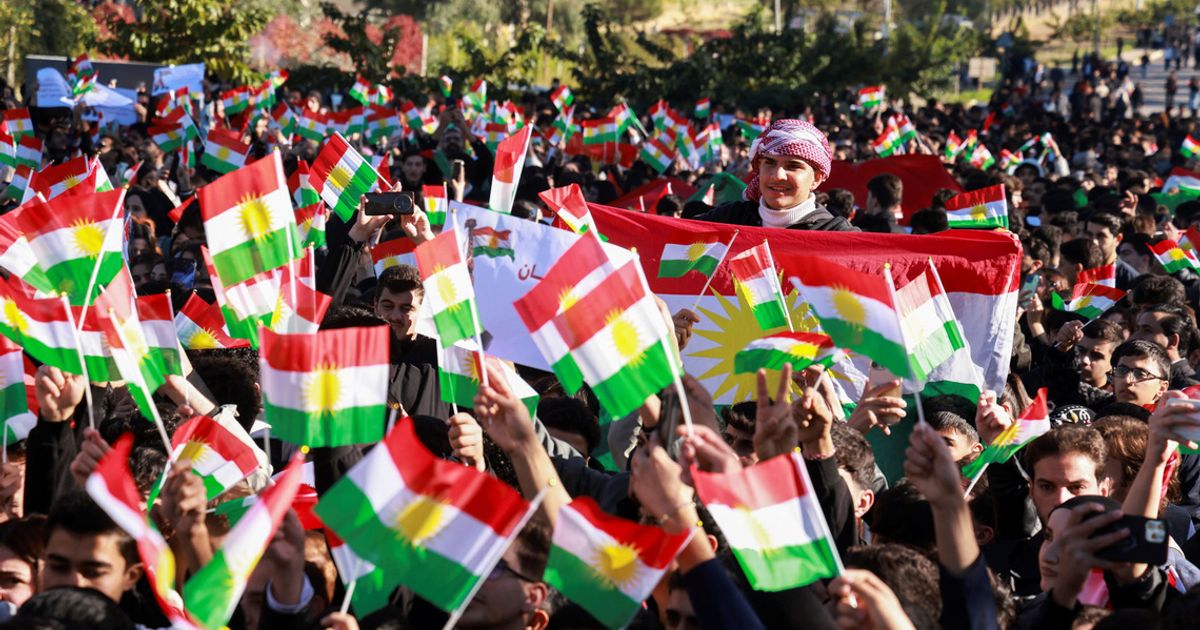
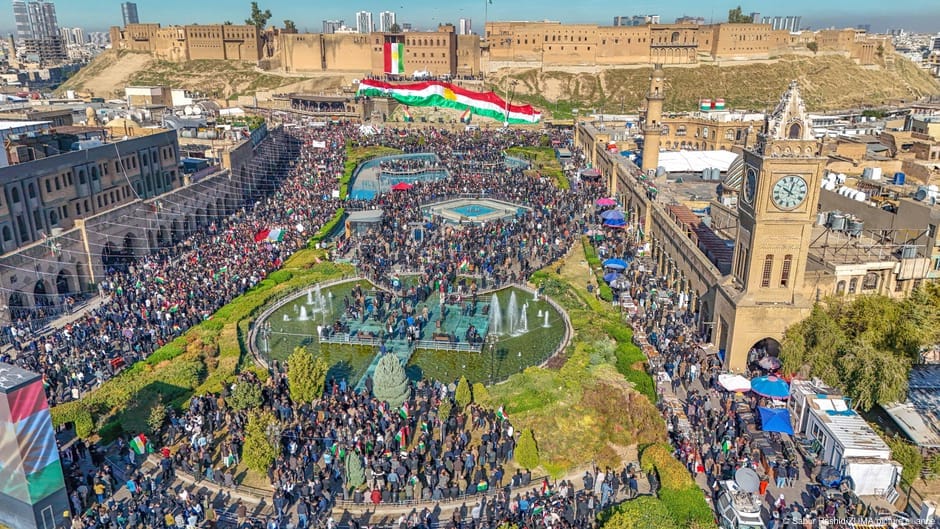
Protesters took to the streets of Irbil, also often written Erbil, in Iraqi Kurdistan early on Thursday in large numbers, waving massive flags of the semiautonomous region in northern Iraq. asserted
Protesters → take → Iraq
They were responding to federal government plans announced earlier in the week for Baghdad to take control of oil operations and border crossings previously run by Kurdish authorities. asserted
Baghdad → respond → authorities
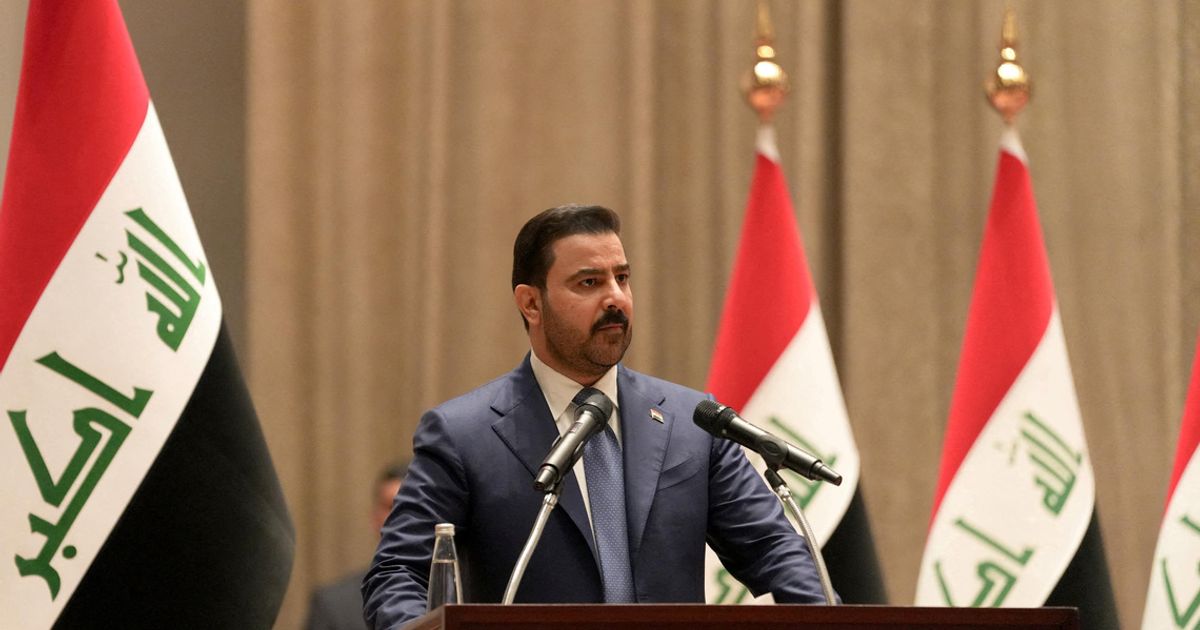
Iraqi Prime Minister Ali al-Zaidi had said the measures were part of a bid to stop oil smuggling when announcing the changes. asserted
measures → say → changes
Rival Kurdish factions unite to protest plans The plans marked an escalation in the long-running power struggle between the central government and Kurdish authorities that have largely governed themselves since 1991, albeit with varying levels of recognition and authority. asserted
that → unite → recognition
Rival Kurdish parties joined forces for the large protests in the regional capital. asserted
parties → join → capital
Protests were also reported to have spread to several other towns and cities beyond the capital. asserted
Protests → report → capital
Iraq's 2005 constitution, written following the US-led invasion that toppled Saddam Hussein, formally recognized the Kurdish region and its government. asserted
that → write → region
But authorities in Erbil and Baghdad have remained in a tug of war over the control of land, oil and money ever since. asserted
authorities → remain → land
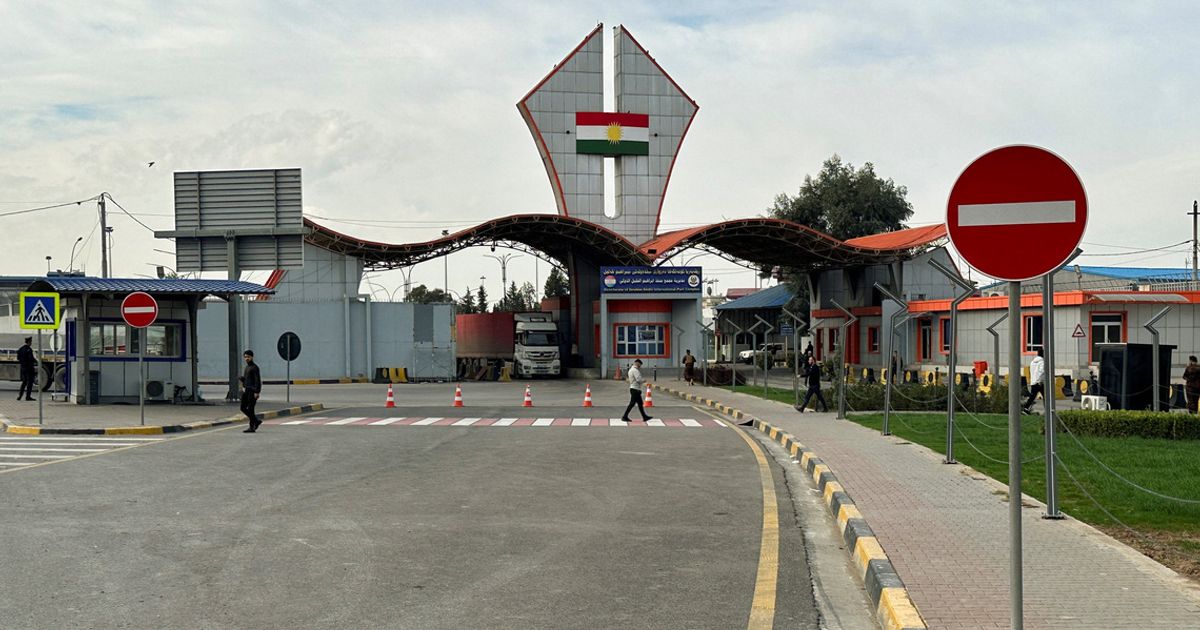
Tuesday's decision, which received backing from Iraq's Federal Supreme Court a day later, brings border crossing in the Kurdish region under federal government management. asserted
which → receive → management
It places approval for oil exports from the region under the authority of the federal oil ministry and transfers the management of oil fields in four contested provinces — Kirkuk, Diyala, Salahuddin and Nineveh. asserted
It → place → provinces
The Kurdish regional government's Cabinet said on Wednesday that the decision from Baghdad "violates both the Constitution and the constitutional rights of the Kurdistan region," saying it represented "an attempt to return Iraq to a centralized regime." Prime Minister al-Zaidi, who took office earlier this year with the backing of US President Donald Trump, also dismissed Kirkuk's operations commander and police chief and the head of the Border Ports Commission. asserted
who → say → Commission
He said the measures reflected Iraq's "independent national will." asserted
measures → say → will
Regional Prime Minister Masrour Barzani said his government was "surprised" by al-Zaidi's decisions and called them "completely unacceptable." Contested region even since 2005 reformation Iraq's Supreme Court ruled on Wednesday that the authority of the Kurdish Regional Government (KRG) only covered the land it administered on March 19, 2003, the day before the US-led invasion that unseated Saddam Hussein. Kurdish peshmerga forces moved into many disputed areas after 2003, including the oil fields covered by this week's orders. The 2005 constitution tried to solve the fate of some of the disputed territories in the lands between the borders to Syria and Iran that are home to a host of ethnicities and communities but with Kurds generally the majority group. Article 140 called for reversing Saddam-era policies of expelling Kurds and moving Arabs in, and called for a census and a referendum on whether the disputed regions should join the Kurdistan region. asserted
regions → say → region
Neither was held. asserted
Neither → hold → ?
Kurdish forces then gained more of the disputed territory after Iraqi forces were forced out by the so-called "Islamic State," with Kurdish pershmerga for subsequently reclaiming some of the land with some international assistance. asserted
forces → gain → assistance
The oil-rich region is highly important to both administrations, in a country that relies on oil revenues for the vast majority of its public sector budget. asserted
that → rely → budget
Internal political tensions within Iraqi Kurdistan have further complicated the issue in recent months, with the Federal Supreme Court hearing an ongoing challenge against the current government's legitimacy after a party withdrew from the coalition cabinet. asserted
party → complicate → cabinet
But rival Kurdish political factions seem to have found common ground on this issue at least. asserted
factions → seem → issue
Give feedback · no sign-in needed

No sign-in needed for now. Your note is sent without a name, so it cannot be answered.

History Support