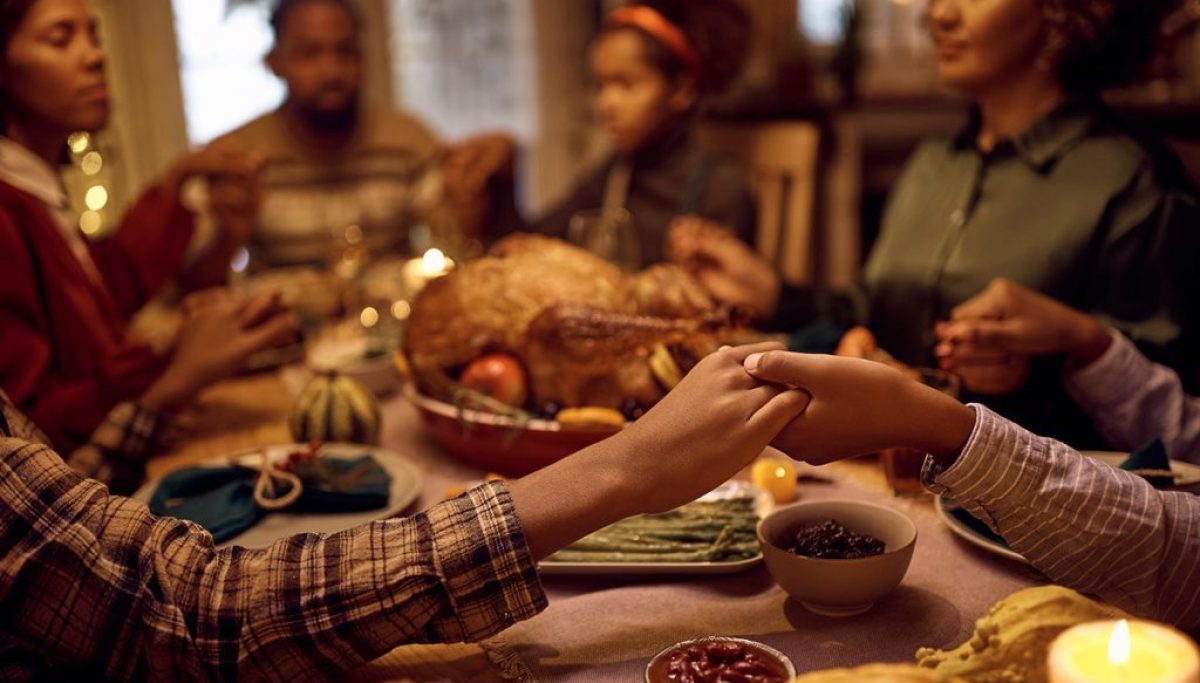
There is one day that is ours – “One day that is purely American.”
asserted
that → be → ?
O. Henry knew it when he wrote those words more than a century ago in “Two Thanksgiving Day Gentlemen,” a simple short story about Stuffy Pete and the Old Gentleman, one homeless, the other lonely, who meet each November at a park bench in Union Square so one can buy the other a Thanksgiving meal.
asserted
one → know → meal
Stuffy Pete has already eaten himself senseless but forces down a second feast so he doesn’t break the annual tradition he established with the old man, who, unbeknownst to Pete, has starved himself for three days to afford the meal he buys for Pete at a humble diner.
asserted
he → eat → diner
Pete collapses from overindulgence; the old man collapses from hunger.
asserted
man → collapse → hunger
In the end, both men have kept something alive that the modern world seems determined to starve.
asserted
world → keep → something
“Yes, a day of celebration, exclusively American,” writes Henry.
asserted
Henry → write → celebration
The simple story is deeply and exclusively American, reflected in the situation’s contradictions, humor, and irony.
asserted
story → reflect → contradictions
O. Henry himself — born during the Civil War, a real-life rebel, a fugitive from the law, later imprisoned under questionable circumstances, granted early release for good behavior, and, in the end, fiercely loyal to his daughter and his family above all else — embodied the quintessential American spirit.
asserted
Henry → bear → spirit
A writer who, although he died in poverty, gained fame in the mid-20th century through his short stories (the 1952 film “O. Henry’s Full House” adapted five of his short stories, one featuring Marilyn Monroe).
asserted
film → die → Monroe
He is once again largely overlooked.
asserted
He → overlook → ?
On Thanksgiving, we often strive for the perfect celebration – the idyllic tablescape, a beautifully browned turkey, award-winning pies, a wholesome gathering, and our favorite team winning the football game.
asserted
we → strive → game
But that probably won’t be the case (especially if you’re a longtime Detroit Lions fan).
asserted
you → ’re → ?
And that’s the point.
asserted
that → ’ → ?
We do it anyway and revel in the imperfection.
asserted
We → do → imperfection
These contradictions are at the heart of America and deeply ingrained in our ethos.
asserted
contradictions → ingrain → ethos
We are a nation that dominates the world in culture, warpower, politics, athletics, and spirit, yet always seem to be the underdog.
asserted
that → dominate → culture
We are ridiculed for our consumerism, yet this holiday — the most American — is the least commodified.
asserted
holiday → ridicule → consumerism
We constantly reinvent ourselves, yet remain firmly rooted in our Americanness, as difficult as it is to completely define what that means.
asserted
that → reinvent → what
We are never satisfied with the status quo yet remain grateful for what we have.
asserted
we → remain → what
Growing up, our family always hosted Thanksgiving dinner for our extended family and whatever friends, acquaintances, and stragglers orphaned from their own usual celebrations.
asserted
friends → grow → celebrations
One year we were without a functioning kitchen and had to make do with the remnants of an electric stove and a toaster oven.
asserted
we → function → stove
It was the same year we started cooking our turkey on a charcoal grill.
asserted
we → start → grill
The tradition remains (the stove has since been replaced).
asserted
stove → remain → ?
There was never a question of whether there would be a Thanksgiving, just a pivot around how that would look, and out of it was born a new tradition, now old.
asserted
that → be → tradition
We live in an age that worships perpetual motion, often without a destination.
asserted
that → live → destination
Algorithms shape our worldview.
asserted
Algorithms → shape → worldview
Reflection is treated as inefficiency, stillness as wasted time.
asserted
Reflection → treat → time
We hustle, optimize, and are inextricably connected to a tangled-up world that is harder to straighten out, let alone make sense of.
asserted
that → hustle → sense
Yet here we are, a nation in perpetual motion, 24-hour news cycles, in a time of wealth and abundance, but we often feel poor of heart and purpose, when we have access to unlimited knowledge and information, yet seem to understand and trust each other less, to aim for a big goal rather than to cherish the little daily victories, when the very idea of retreat feels like a kind of treason against progress.
asserted
idea → feel → progress
Yet the small things — even the tattered threads — continue to define the fabric of a life far more than the grand narratives we are sold.
asserted
we → continue → narratives
The unexpected generosity of a neighbor who shows up when they didn’t need to.
asserted
they → show → neighbor
George Washington, in his 1789 Thanksgiving Proclamation, reminded a young nation that it is the duty of all peoples “to acknowledge the providence of Almighty God… and to be grateful for His benefits.”
asserted
it → remind → benefits
During the Civil War, Abraham Lincoln asked Americans to set apart a day of thanksgiving for “the blessings of fruitful fields and healthful skies.
asserted
Lincoln → ask → fields
These were not calls to ignore hardship.
asserted
These → ignore → hardship
They were invitations to acknowledge what remained when everything else seemed to be unraveling.
asserted
everything → acknowledge → ?
Gratitude, as Cicero observed before either man, is not only the greatest of virtues but the parent of all the others.
asserted
Cicero → observe → others
O. Henry’s Old Gentleman and Stuffy Pete understood something we risk forgetting: that the gift of giving thanks is not just about abundance or sacrifice; it’s about faithfulness to tradition.
asserted
it → understand → tradition
The Old Gentleman paid for the meal when it cost him his own.
asserted
it → pay → own
Stuffy Pete ate it even when his body rebelled.
asserted
body → eat → it
Their story is comic and tragic and strangely beautiful because it refuses the modern math that measures worth by comfort or convenience.
asserted
that → refuse → comfort
…and 3 more, not listed.
 The Aporia