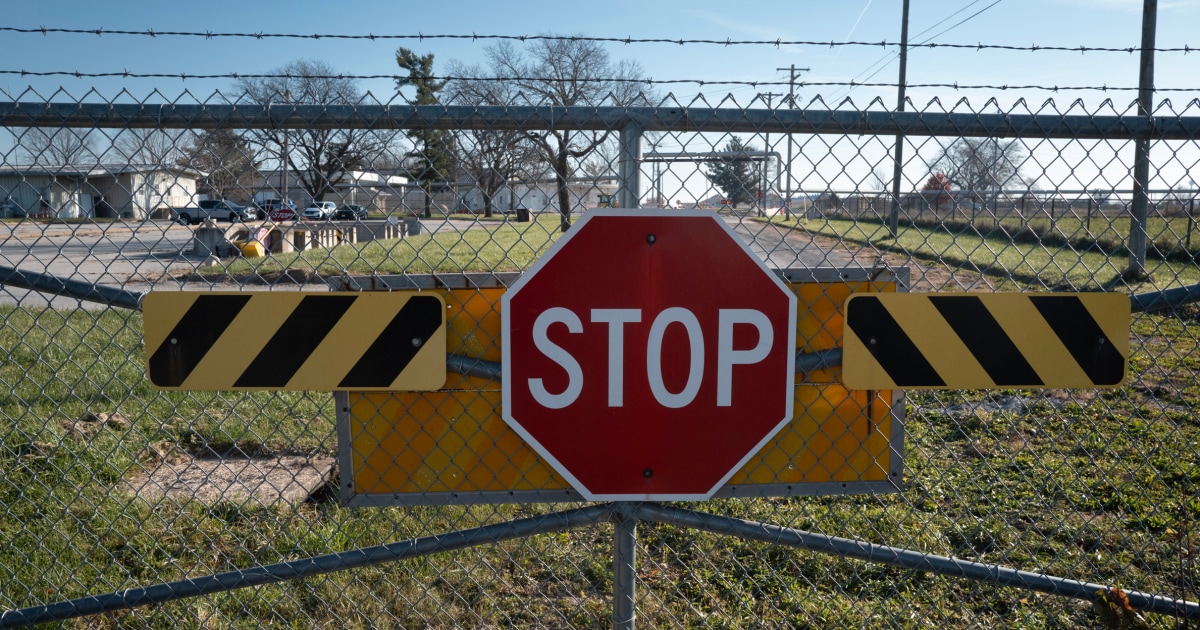
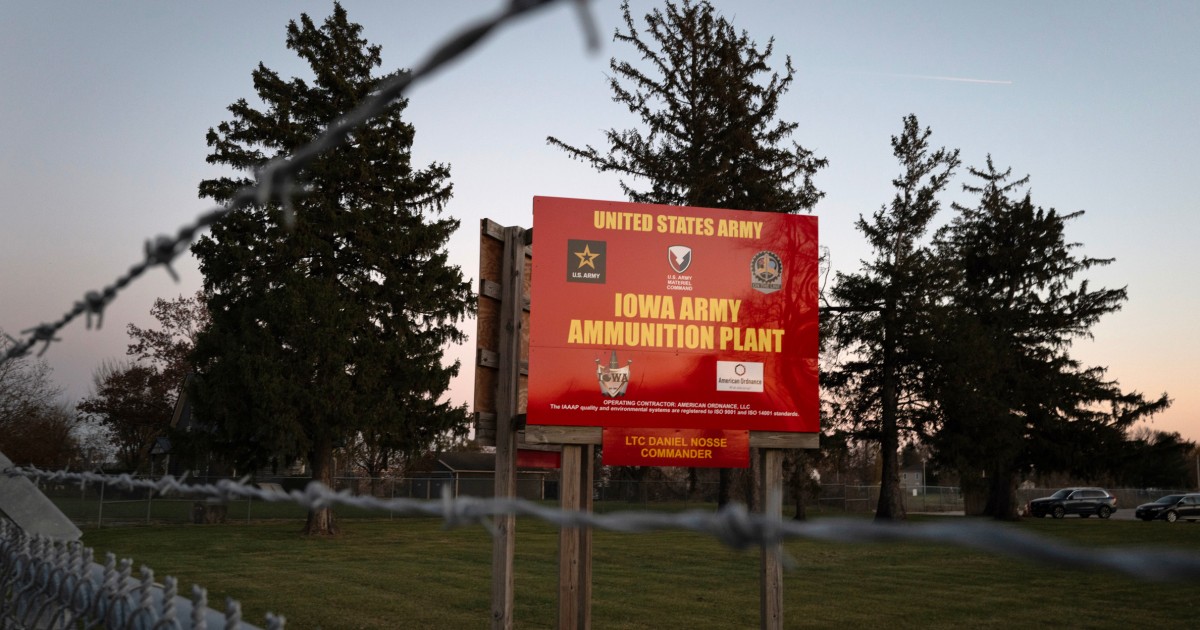
As federal officials offered reassurances Wednesday that the Army’s detonation of a cache of lead azide in Iowa produced a minimal plume of lead dust, independent scientists and local residents said questions remain about how much contamination the explosion caused, and where — though they were hopeful about the initial results.
asserted
they → offer → results
Some people with homes closest to the blast who had heeded the call to evacuate said they were still unsure when it will be safe to return.
asserted
it → heed → call
In a post on X around 5:30 p.m. local time, the Army said that the Federal Emergency Management Agency had issued an “all clear” around the Iowa Army Ammunition Plant, where the detonation occurred, but provided little detail beyond that.
asserted
detonation → say → that
“Post-detonation surface sampling is underway, and results will be released once complete,” it said.
asserted
it → release → ?
Sean Byers, who lives across the street from the plant, said he plans to stay away from his home for a few days with his children.
asserted
he → live → children
“Although the Army has supposedly not detected lead in the air, I think it is in their best interest to make that claim,” he said.
uncertain
he → detect → claim
“I think that a lot of people in general are downplaying the potential long-term effects of what may be to come simply because they may have perceived the lead plume as less boisterous” than some had feared.
uncertain
some → think → plume
The Environmental Protection Agency said that initial, real-time air monitoring data — from four sites — had not detected any lead in the atmosphere; however, outside experts said it will take days to begin to understand whether there are hotspots that require cleanup.
asserted
that → say → cleanup
Several experts said they were cautiously optimistic that the Army had averted the worst possible version of events in Middletown, Iowa.
asserted
Army → say → Middletown
The planned explosion, which occurred at 9 a.m. local time, had sparked an intense public outcry over the last two weeks.
asserted
which → plan → weeks
Local residents complained of poor communication from the Army and insufficient time to prepare — especially given the Thanksgiving holiday — which led officials to delay the detonation.
asserted
which → complain → detonation
Army leaders have said that detonating the 9,700 pounds of lead azide was the only option because the chemical had become so degraded and unstable that it was at risk of blowing up on its own.
asserted
it → say → own
Lead is a highly dangerous neurotoxin, and no level of exposure is considered safe.
asserted
level → consider → exposure
To assess where lead dust might have dispersed and how much contamination possibly occurred, academic and EPA scientists have spread out across Iowa to collect samples and begin testing.
uncertain
scientists → assess → samples
A few more days of uncertainty about the risks lie ahead.
asserted
days → lie → risks
Dr. Joel Kaufman, a professor of medicine, epidemiology and environmental health sciences at the University of Washington who studies air pollution, said the EPA’s initial, real-time air monitoring was a promising sign but that it must be backed up with lab-based chemistry results from dust collected on the ground.
“This is a reasonable way to test for real-time lead in the environment,” he said, adding that it will be crucial to analyze samples from a wide variety of locations.
asserted
it → study → locations
“Is it possible that they are right that the amount of lead that’s being put into the environment is virtually zero?
asserted
that → put → environment
Yes,” Kaufman said.
asserted
Kaufman → say → ?
Andrew Whelton, a professor of civil, environmental and ecological engineering at Purdue University in Indiana, agreed that a study of physical samples is essential.
asserted
study → agree → samples
“You have to collect particles that deposit and send them to a lab for chemical analysis,” he said.
asserted
he → have → analysis
The EPA said Wednesday that it had 300 employees and contractors on the ground in Iowa and that they had taken 1,200 air, land and water samples before the detonation.
asserted
they → say → detonation
“We are very diligently working to immediately send the new post-event samples back to EPA labs,” the agency said on X.
Garrett Anthony, a Burlington resident who said his home is about 7 miles from the blast site, evacuated earlier this week.
“
asserted
home → work → site
I’m really thrilled to see that the live monitoring by the EPA is showing zero lead in the air, but the ground testing is still very, very important to me, and I want to see what happens next,” he said.
asserted
he → ’m → me
“I definitely care about the lasting effects.”
asserted
I → care → effects
Anthony said he stored some soil in advance to use as a baseline in tests if necessary.
asserted
he → say → tests
In a letter to Iowa’s governor on Friday, Jim Macy, an EPA administrator for the region, said the Army’s permit required it to update and distribute a plume estimate within six hours of the detonation.
asserted
permit → say → detonation
The Army published deposition and air dispersal maps at 3 p.m. local time, but they contained few immediate details.
asserted
they → publish → details
The air dispersal map showed no plume, as no lead was detected by sensors.
asserted
lead → show → sensors
“Post detonation sampling underway,” one map said.
asserted
map → say → ?
“Results will be published when available.”
asserted
Results → publish → ?
Macy said the EPA expected to receive initial results from dust wipe samples “in the days following the detonation,” but that a full data review would take longer.
asserted
review → say → detonation
The Army and the EPA are also supposed to determine which bodies of water could have been affected by the plume and reach out immediately to public water systems to offer lead sampling resources, drinking water evaluations and filter equipment for homes.
uncertain
bodies → suppose → homes
In the days before the detonation, Whelton had been critical of the EPA and the Army for not publicly sharing more details about their lead testing plan.
asserted
Whelton → share → plan
In the permit documents that the Army submitted to the EPA, he said, “there is no plan for applying an evidence-based approach to determine if people’s homes, schools and businesses are safe.”
asserted
homes → submit → approach
Academic scientists had been gearing up for more than a week to provide their own air and soil sampling.
asserted
scientists → gear → sampling
Patrick O’Shaughnessy, a professor in the department of occupational and environmental health at the University of Iowa, said he planned to collect dust particles in a specialized pump that pulls air through a filter.
asserted
that → say → filter
“Then you have to send it off to a lab using a sophisticated analysis machine to get at the lead content of it,” O’Shaughnessy said on Friday.
asserted
O’Shaughnessy → have → Friday
Others at the University of Iowa had planned to sample surfaces with dust wipes and have those tested.
asserted
those → plan → wipes
“We’re going to do as many as we can,” O’Shaughnessy said, adding that researchers from Oregon and New York had flown to Iowa to help.
asserted
researchers → go → Iowa
The group hoped to have some preliminary data to share Thursday morning, he added.
asserted
he → hop → data
…and 10 more, not listed.

 The Aporia