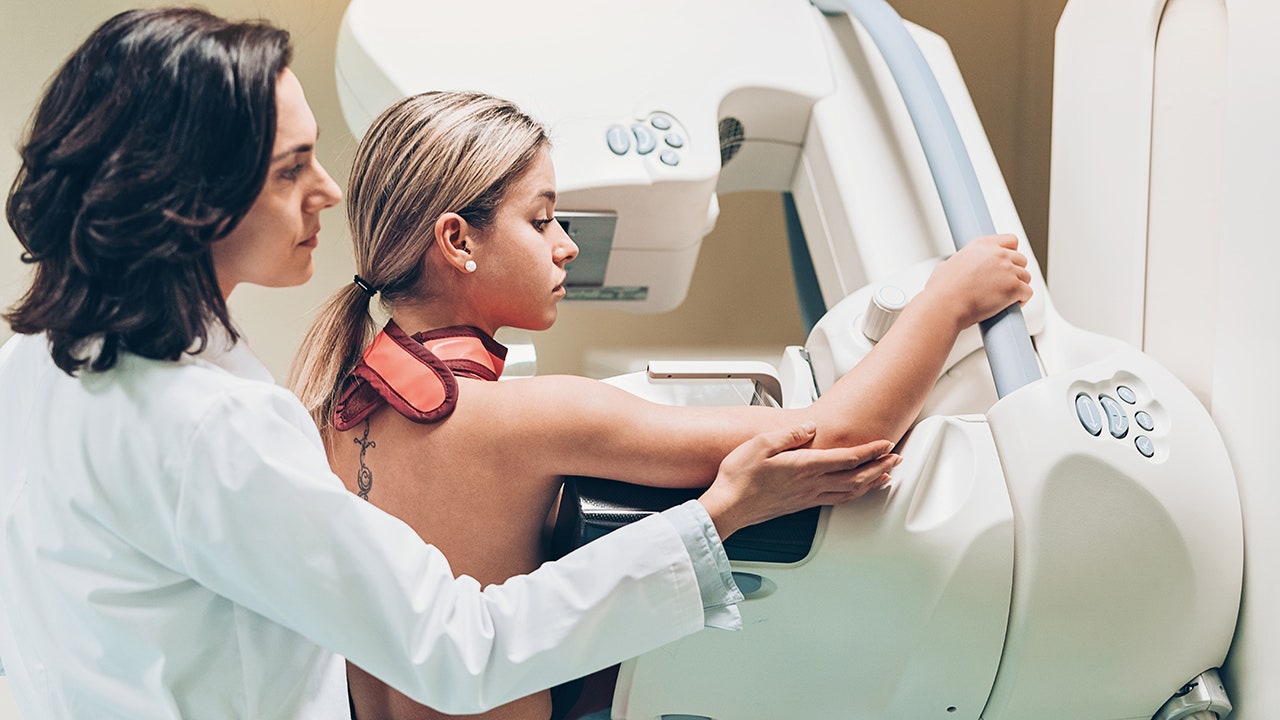
Photo via Fox News

Taking Ozempic or Wegovy could lead to extra cancer screenings, new study suggests

Read the original at Fox News ↗
Cite

Quill, K. (2026, November 26). Taking Ozempic or Wegovy could lead to extra cancer screenings, new study suggests. Fox News. https://www.foxnews.com/health/taking-ozempic-wegovy-could-lead-extra-cancer-screenings-new-study-suggests

Dated from the outlet's own feed. Check the original for its byline.

Fox News · collected 2026-11-26 · by Khloe Quill

Quick Summary

A new study presented at the Radiological Society of North America's annual meeting suggests that women taking GLP-1 receptor agonists like Ozempic and Wegovy may experience increased breast density on mammograms, requiring additional imaging despite no cancer findings. The study analyzed 107 women aged 34 to 79, with an average weight loss of 40 pounds after at least a year of treatment. Researchers found that breast density increased in 62.5% of participants, leading to higher recall rates for further imaging compared to the national average. Lead author Dr. Eva C. Gombos suggests that weight loss causes a relative increase in mammographic density due to a shift in breast tissue composition rather than actual growth of dense tissue.
Written by AI on 2026-11-26, from this article's own text only (the story summary below draws on all the coverage).
See how they differ ↓

AI analysis

Story summary

A new study presented at the annual meeting of the Radiological Society of North America found that 62% of women who lost an average of 40 pounds while using GLP-1 receptor agonists like Ozempic and Wegovy experienced increased breast density. The study, conducted by researchers at Mass General Brigham, examined mammograms from 104 women before and after they started taking the weight loss drugs. Higher breast density can make tumors more difficult to detect on mammograms, leading to more frequent screenings and unnecessary biopsies. The researchers noted that while the increased density is not a direct effect of the medication, it is a result of weight loss, which changes the composition of breast tissue. This finding has significant implications for women using GLP-1 drugs, as it may necessitate more frequent and detailed breast cancer screenings.

Written for “GLP-1 Drugs Linked to Breast Density Increases” on 2026-11-29, grounded in this article and the 2 other(s) covering the same event.

How they differ

3 outlets covered “GLP-1 Drugs Linked to Breast Density Increases”.

What each outlet says

One AI summary per outlet of its latest article on this story, written from that article alone and checked against it. Open the article for the outlet's own words.

Fox NewsThis outlet26 Nov

A new study presented at the Radiological Society of North America's annual meeting suggests that women taking GLP-1 receptor agonists like Ozempic and Wegovy may experience increased breast density on mammograms, requiring additional imaging despite no cancer findings. The study analyzed 107 women aged 34 to 79, with an average weight loss of 40 pounds after at least a year of treatment. Researchers found that…

Taking Ozempic or Wegovy could lead to extra cancer screenings, new study suggests (this article)
New York Post24 Nov

A new study presented at the Radiological Society of North America meeting suggests that women using GLP-1 weight loss drugs may experience increased breast density, complicating mammogram results. The study involved 107 women who lost an average of 40 pounds on GLP-1 drugs, with 62.5% showing increased breast density after treatment. The screening recall rate for these women rose to 22.4%, compared to the usual…

GLP-1s could complicate mammograms for nearly two-thirds of women: study →
NBC News27 Nov

A new study from the Mass General Brigham Cancer Institute found that 62% of women who took GLP-1 weight-loss drugs like Zepbound and Wegovy had increased breast density after a year. The study, which will be presented at the Radiological Society of North America meeting starting November 29, involved 104 women who lost an average of 40 pounds. Dr. Eva Gombos, a study co-author, explains that the increased density…

GLP-1 Weight-Loss Drugs Tied to Higher Breast Density in New Study. What Women Need to Know →

Where they agree and split

The full story: what happened, how it changed, and all 3 articles →

Compared with similar articles

This article reads unscored and hedges 29% of its claims. Each row says how that neighbour differs.
NBC News
Hedges 7 of 37 claims Outlet record 70/100
New York Post
Hedges 7 of 22 claims Outlet record 65/100
“While both articles discuss a study presented at the Radiological Society of North America, Article B provides specific details about the study such as the number of participants and their average weight loss, which are not mentioned in Article A.”

Story

GLP-1 Drugs Linked to Breast Density Increases
Health · 3 article(s) covering the same event. Compare every outlet's account →
How this article was measured signals, leaning charts, publisher record, byline, topics and claims

Signals How these are calculated →

Claims extracted
24
sentences that state something as happening or true
Uncertain
29%
7 of 24 hedged ("reportedly", "may", "according to")
Leaning
not political
takes no side on a contested political question
Publisher signals
68/100
Fox News's corrections and hedging, across everything collected from it. Not a measure of accuracy.
Outlets on this story
3
Health
Same framing elsewhere
1
articles that frame the event the way this one does
Analyzed 2026-11-26 · how these are computed

How this is being covered How these are calculated →

Article leaning vs. publisher reliability
Source leaning vs. consistency

Publisher

Fox News · 9248 article(s) · 20 correction(s) detected
Running correction rate · 20 correction(s)

Who wrote this

Khloe Quill
35 article(s) here · 1 carrying a prediction
"Black adults in the United States have a higher prevalence of vitamin D deficiency and sleep disturbances compared to White adults, and may benefit more from increasing vitamin D levels," lead author Diefei Chen, a doctoral candidate in epidemiology at the Bloomberg School, said in a press release.
Women taking popular weight loss medications may have higher breast density on mammograms and require more follow-up imaging, even when none of those abnormalities turn out to be cancer.
Fasting all morning to save room for a big holiday feast might seem like a smart strategy, but experts say it can have unwanted health effects, and that there are better ways to prepare. When people go hours without food, blood sugar levels drop, triggering headaches, nausea and irritability, according to Gabrielle Kishner, a registered dietitian nutritionist and founder in New York City.
Maybe it was beets, he mused, before realizing he hadn't touched one in six years.
Separate studies would be needed to test whether the combination works in those diseases.
Replacing regular table salt with a potassium-enriched alternative could prevent nearly three million deaths and more than 10 million cases of heart and kidney disease worldwide every year, according to a major study published in Nature Health.
Most people infected with dengue experience mild or no symptoms, typically recovering within two weeks, according to Mayo Clinic.
People who lose weight through crash dieting or appetite-suppressing medications may shed muscle along with fat, experts warn.
" Some people may maintain friendships while leaving open the possibility of a future romantic relationship, Trombetti said.
"From a clinical perspective, is helpful to review medications with the autistic patient's physicians and, if possible, try to avoid medications that may cause a Parkinson's appearance."
Also by Khloe Quill
Nothing else under this byline is closely related to this article, so these are simply their most recent.
All 35 articles by Khloe Quill →

Topics

Brigham and Women's Hospital Chicago Ozempic Wegovy the Radiological Society of North America

Subjects

Gombos PERSON · 4× Boston ORG · 1× Brigham and Women's Hospital ORG · 1× Chicago GPE · 1× Eva C. Gombos PERSON · 1× Fox News Digital ORG · 1× Novo Nordisk ORG · 1× U.S. GPE · 1× the Radiological Society of North America ORG · 1×

Narrative

It did not establish whether the imaging changes affect long-term breast cancer risk. Gombos recommends that women tell their breast imaging team if they use GLP-1 medications or have recently lost a significant amount of weight because it helps technologists and radiologists more accurately compare new scans to older ones. Novo Nordisk, maker of Ozempic and Wegovy, emphasized that it continuously monitors the safety profile of its medicines, reviewing emerging data as it becomes available.
framing: mixed · carried by 1 article(s) · first seen 2026-11-26
Women taking popular weight loss medications may have higher breast density on mammograms and require more follow-up imaging, even when none of those abnormalities turn out to be cancer.

Claims (24 extracted, 7 hedged)

Women taking popular weight loss medications may have higher breast density on mammograms and require more follow-up imaging, even when none of those abnormalities turn out to be cancer. uncertain
none → take → abnormalities
That's according to a new study scheduled for presentation at the annual meeting of the Radiological Society of North America, Nov. 29-Dec. 3, 2026, in Chicago. uncertain
That → accord → Chicago
The study examined 107 women, ages 34 to 79, who took GLP-1 receptor agonists, a class of drugs that includes Ozempic and Wegovy, for weight loss for at least one year. asserted
that → examine → year
Participants lost between six and 107 pounds, with an average loss of 40 pounds. asserted
Participants → lose → pounds
Researchers reviewed 214 screening mammograms taken before and after at least a year of treatment, according to the study. uncertain
Researchers → review → study
Specialized software showed that breast density rose by at least one category in 62.5% of participants who took GLP-1s. asserted
who → show → GLP-1s
Eight women moved up two density categories. asserted
women → move → categories
Radiologists also saw smaller breasts in roughly 58% to 79% of patients, depending on the reviewer, and increased skin thickening in about 9% to 18%. asserted
Radiologists → see → %
Higher breast density is generally tied to a greater risk of breast cancer and can make tumors harder to spot on X-rays. asserted
tumors → tie → rays
However, the pattern seen after weight loss likely reflects a shift in proportions rather than more dense tissue growing, according to lead author Dr. Eva C. Gombos, a diagnostic radiologist at Brigham and Women's Hospital in Boston. uncertain
tissue → see → Boston
"It was surprising that 62.5% of women had increased BI-RADS breast density despite substantial weight loss, with no decreases observed," Gombos said in a release. " asserted
Gombos → increase → release
This may reflect disproportionate loss of breast fat, causing a relative increase in mammographic density even as absolute fibroglandular volume decreases. uncertain
volume → reflect → density
" When a person loses significant fat from the breast, the remaining milk ducts and supportive tissue — known as fibroglandular tissue — can make up a larger share of what shows up on the image, even if the total amount of that tissue did not grow. asserted
amount → lose → tissue
Gombos also noted that losing breast fat and volume can leave extra skin or skin folds, which may help explain why skin and connective tissue strands looked more prominent on some scans. uncertain
strands → note → scans
Nearly 22.4% of the women were called back for additional imaging after screening, compared with an average U.S. recall rate of about 10%. asserted
% → call → %
Two women had technical recalls to repeat scans due to positioning or imaging issues. asserted
women → have → issues
Four women were referred for biopsies, and all four came back benign. asserted
four → refer → biopsies
All other callbacks also turned out to be benign or negative, including three simple cysts. asserted
callbacks → turn → cysts
Gombos emphasized that the findings should not pose a concern for women taking GLP-1 drugs or cause them to skip routine screenings. asserted
them → emphasize → screenings
Whether these density shifts carry any long-term change in breast cancer risk remains unclear and needs more research. uncertain
carry → carry → research
The study was retrospective and looked back at medical records rather than following patients forward in a controlled trial, the researchers noted. asserted
researchers → look → trial
It did not establish whether the imaging changes affect long-term breast cancer risk. Gombos recommends that women tell their breast imaging team if they use GLP-1 medications or have recently lost a significant amount of weight because it helps technologists and radiologists more accurately compare new scans to older ones. Novo Nordisk, maker of Ozempic and Wegovy, emphasized that it continuously monitors the safety profile of its medicines, reviewing emerging data as it becomes available. asserted
it → establish → data
"Individuals respond to treatment uniquely based on multiple biological and lifestyle factors, which means outcomes can vary from person to person," a spokesperson told Fox News Digital. asserted
spokesperson → respond → Digital
"We recommend that all patients maintain close contact with their healthcare professional to discuss any questions or concerns about their treatment, and for ongoing guidance and careful monitoring." asserted
patients → recommend → guidance
Give feedback · no sign-in needed

No sign-in needed for now. Your note is sent without a name, so it cannot be answered.

History Support