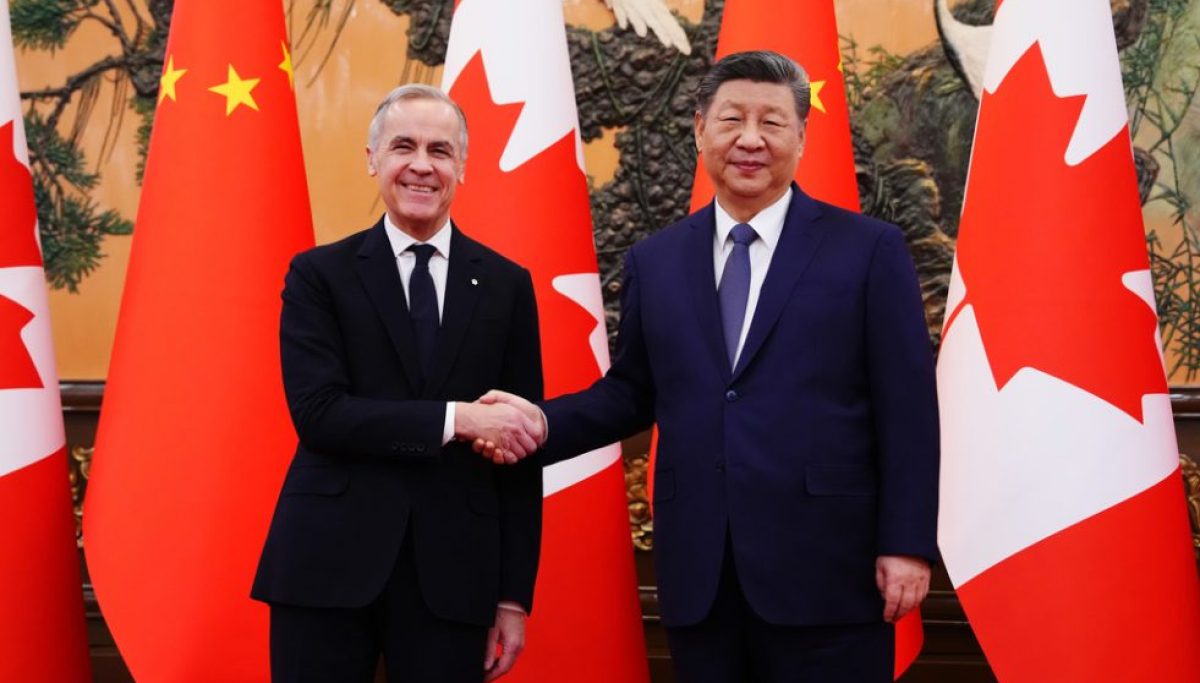
Photo via Global News

Canadian auto sector moving away from U.S. imports, new report shows

Read the original at Global News ↗
Cite

Canadian auto sector moving away from U.S. imports, new report shows. (2026, November 25). Global News. https://globalnews.ca/news/12166316/less-us-imports-in-canada-auto-sector/

Dated from the outlet's own feed. Check the original for its byline.

Global News · collected 2026-11-25 · by globalnewsdigital

Quick Summary

A report from DesRosiers Automotive Consultants indicates that Canada's auto sector is reducing its reliance on U.S. imports and increasing its sourcing from other countries. Light vehicle imports from the U.S. have dropped to 40% of Canada's total in 2026, down from 49.1% in 2024. This shift has seen increases in imports from Mexico, Japan, South Korea, and European markets, reflecting a diversification strategy amid the ongoing trade war. Andrew King, managing partner at DesRosiers, attributes this trend to manufacturers seeking alternative sources to maintain competitive pricing.
Written by AI on 2026-11-26, from this article's own text only (the story summary below draws on all the coverage).
See how they differ ↓

AI analysis

Story summary

The Canadian auto sector is shifting away from U.S. imports toward other global markets amid an ongoing trade war. According to a report by DesRosiers Automotive Consultants, U.S. light vehicle imports accounted for 40% of Canada’s total imports by dollar value in 2026, down from 49.1% in 2024. Meanwhile, imports from Mexico rose to 20.5% from 16.7%, and Japan's share increased to 12.9% from 10.7%. The overall shift is significant, with other markets like South Korea and Europe also seeing increases in their import shares. DesRosiers managing partner Andrew King noted that certain manufacturers affected by tariffs have "moved rapidly to seek other sourcing where possible and to continue to provide Canadians with vehicles at the best possible price."

Written for “Canadian Auto Sector Shifts Away From U.S. Imports” on 2026-11-26, grounded in this article and the 1 other(s) covering the same event.

How they differ

2 outlets covered “Canadian Auto Sector Shifts Away From U.S. Imports”.

What each outlet says

One AI summary per outlet of its latest article on this story, written from that article alone and checked against it. Open the article for the outlet's own words.

Global NewsThis outlet25 Nov

A report from DesRosiers Automotive Consultants indicates that Canada's auto sector is reducing its reliance on U.S. imports and increasing its sourcing from other countries. Light vehicle imports from the U.S. have dropped to 40% of Canada's total in 2026, down from 49.1% in 2024. This shift has seen increases in imports from Mexico, Japan, South Korea, and European markets, reflecting a diversification strategy…

Canadian auto sector moving away from U.S. imports, new report shows (this article)

Compared with similar articles

This article reads leans left and hedges 8% of its claims. Each row says how that neighbour differs.
Toronto Star
Hedges 1 of 2 claims Outlet record 65/100
Washington Examiner
Hedges 1 of 7 claims Outlet record 66/100
“The articles discuss related trends in Canadian trade policy but describe different specific developments: one about a shift in auto imports from the U.S. to other markets, and the other about Canada's trade diversification with China, including tariff reductions and exemptions.”

Story

Canadian Auto Sector Shifts Away From U.S. Imports
Economy/Business · 2 article(s) covering the same event. See how they differ ↑
How this article was measured signals, leaning charts, publisher record, byline, topics and claims

Signals How these are calculated →

Claims extracted
25
sentences that state something as happening or true
Uncertain
8%
2 of 25 hedged ("reportedly", "may", "according to")
Leaning
Leans left
of the writing, not the subject · beta estimate
Publisher signals
63/100
Global News's corrections and hedging, across everything collected from it. Not a measure of accuracy.
Outlets on this story
2
Economy/Business
Same framing elsewhere
1
articles that frame the event the way this one does
Analyzed 2026-11-26 · how these are computed

How this is being covered How these are calculated →

Article leaning vs. publisher reliability
Source leaning vs. consistency

Publisher

Global News · 3773 article(s) · 13 correction(s) detected
Running correction rate · 13 correction(s)

Who wrote this

No reporter is named on this article, beyond the feed's “globalnewsdigital”.

Topics

Canada Canadian DesRosiers Automotive Consultants U.S. the United States

Subjects

Canada GPE · 14× U.S. GPE · 8× the United States GPE · 3× Canadian NORP · 2× Japan GPE · 2× Mexico GPE · 2× Ottawa GPE · 2× Ross PERSON · 2× Trump PERSON · 2× DesRosiers Automotive Consultants ORG · 1×

Narrative

DesRosiers managing partner Andrew King said certain manufacturers affected by the tariff situation “have moved rapidly to seek other sourcing where possible and to continue to provide Canadians with vehicles at the best possible price.”
framing: assertive · carried by 1 article(s) · first seen 2026-11-26
Bank of Canada expected to hike interest rate next month, economists say -
2026-11-26 · Global News
Canadian auto sector moving away from U.S. imports, new report shows · assertive framing

Claims (25 extracted, 2 hedged)

A new report suggests the Canadian auto sector is starting to pivot away from U.S. imports toward other global markets amid the ongoing trade war. uncertain
sector → suggest → war
The data analysis from DesRosiers Automotive Consultants showed that light vehicle imports from the United States have accounted for 40 per cent of Canada’s total thus far in 2026 when measured by dollars. asserted
imports → show → dollars
Meanwhile, most other markets saw their shares rise from two years ago. asserted
shares → see → ?
The proportion of Canada’s light vehicle imports from Mexico increased from 16.7 per cent in 2024 to 20.5 per cent so far this year, while Japan saw an increase to 12.9 per cent from 10.7 per cent in 2024. asserted
Japan → increase → 2024
Imports from South Korea have risen from 10.4 to 12.5 per cent, and the combined European markets saw a bump from 9.8 to 11.1 per cent. asserted
markets → rise → cent
The overall shift is notable given that not all manufacturers are affected by Canada’s counter-tariffs, which exclude some of the highest volume players, the report said. asserted
report → give → players
DesRosiers managing partner Andrew King said certain manufacturers affected by the tariff situation “have moved rapidly to seek other sourcing where possible and to continue to provide Canadians with vehicles at the best possible price.” asserted
manufacturers → say → price
“What the U.S. lost in share was captured readily by the other major light vehicle exporters, with the trade war helping to diversify Canada’s sourcing in this space,” he said in a statement. asserted
he → lose → statement
Vehicles made in Canada are tariffed by the United States at 25 per cent, minus their American content, while auto and truck parts that comply with the Canada-United States-Mexico agreement on trade are exempt. asserted
that → make → trade
In August, President Donald Trump threatened to hike tariffs on all vehicles, auto parts and steel from Canada to 50 per cent on Jan. 1. asserted
Trump → threaten → Jan.
Canada maintains import duties of 25 per cent on U.S. autos that are not compliant with CUSMA. asserted
that → maintain → CUSMA
Ottawa allows automakers to import a quota of vehicles made in the United States tariff-free, based in part on their level of automotive assembly in Canada. asserted
automakers → allow → Canada
Bank of Canada expected to hike interest rate next month, economists say - asserted
economists → expect → rate
U.S. wants to accommodate Canada on sectoral tariffs, Trump trade czar says asserted
czar → want → tariffs
Microsoft declares ‘Code Red’ following 24-hour outage: Here’s what that means - asserted
that → declare → what
said the figures show manufacturers are “fighting … to keep prices from climbing. asserted
manufacturers → say → prices
“I think it’s directly related to trade policy and the trade war at hand,” said Ross, senior manager of auto industry insights at Canadian Black Book. asserted
Ross → think → Book
“A lot of manufacturers are finding their way to decrease dependency for the Canadian market based off of what’s happening in the U.S. asserted
what → find → U.S.
So the narrative is, ultimately, where else can we get these? asserted
we → get → these
Where can we work with?” asserted
we → work → Where
Prime Minister Mark Carney said in recent weeks that trade talks with the U.S. are making progress, but Ottawa won’t accept a deal that doesn’t allow for a viable auto sector. asserted
that → say → sector
That came three months after Canada pulled out of trade talks with the U.S. due to last-minute demands from Washington that included a hit to Canada’s auto sector. asserted
that → come → sector
Whether automakers continue to shift imports to non-U.S. markets will depend on how trade negotiations progress, said Ross. asserted
Ross → continue → markets
“If it were not to move (in a positive) direction, then I think we could continue to see that climb of market share for Mexico, for Japan specifically,” he said. uncertain
he → move → Japan
“Whether or not that’s the best way forward, it’s a better way forward than having our skin in the game with a U.S. marketplace that’s highly volatile for the last few years.” asserted
that → ’ → years
Give feedback · no sign-in needed

No sign-in needed for now. Your note is sent without a name, so it cannot be answered.

History Support