Photo via CBS News

Why are investors freaking out even as the U.S. economy surges?

Read the original at CBS News ↗
Cite

Picchi, A. (2026, November 25). Why are investors freaking out even as the U.S. economy surges? CBS News. https://www.cbsnews.com/news/us-economy-stocks-ai-inflation/

Dated from the outlet's own feed. Check the original for its byline.

CBS News · collected 2026-11-25 · by Aimee Picchi

Quick Summary

Despite the U.S. economy growing at a robust 4.3% in the third quarter, driven by consumer spending and business investment in AI infrastructure, investors are anxious. This unease stems from inflation running at 3.8% year-over-year, fueled partly by AI spending, and concerns about further interest rate hikes by the Federal Reserve to curb inflation. These factors are causing stock market volatility, with the S&P 500 index nearing a 10% correction from its recent peak.
Written by AI on 2026-11-25, from this article's own text only (the story summary below draws on all the coverage).

AI analysis

Story summary

As of November 25, 2026, despite the U.S. economy experiencing a significant surge with a third-quarter GDP growth of 4.3%, investors are showing extreme volatility and panic, causing stock markets to swing wildly. The S&P 500 index dropped over 1,000 points in the morning but recovered much of those losses by the afternoon. This erratic behavior stems from concerns over inflation, rising interest rates set by the Federal Reserve, and the potential downturn in the artificial intelligence sector. As of October 6, the S&P 500 had already declined by 8%, nearing a market correction, defined as a drop of over 10% from its recent peak. The Bureau of Economic Analysis revised its growth estimate from 3.4% to 4.3%, indicating robust consumer spending and increased business investment, particularly from tech companies investing heavily in infrastructure.

Written for “Investor Concerns Over U.S. Economy” on 2026-11-26, grounded in this article and the 0 other(s) covering the same event.
Why this leaning score
The article's own words the score was based on. Each is quoted verbatim and was checked against the article text before being stored, so you can find it in the original.
Reading Leans right (beta estimate) Confidence high 1 quote(s) discarded as not found in the article
Leaning: leans right for article 180645 (high confidence, 3 verified quotes) · logged 2026-11-25

Compared with similar articles

This article reads leans right and hedges 19% of its claims. Each row says how that neighbour differs.
Semafor
Leans left further left than this Hedges 2 of 4 claims Outlet record 70/100
“The articles discuss similar economic and market concerns but describe different specific times and contexts, with Article A focusing on warnings about Federal Reserve policy and AI bubble fears, while Article B discusses broader investor panic despite strong economic data.”
New York Post
Hedges 1 of 36 claims Outlet record 66/100
“The articles discuss different aspects of market sentiment and economic conditions, not a specific single event.”
Toronto Star
Hedges 11 of 44 claims Outlet record 65/100
“While both articles discuss market volatility and AI concerns, they describe different time periods and specific market movements.”

Story

Investor Concerns Over U.S. Economy
Economy/Business · 1 article(s) covering the same event.
How this article was measured signals, leaning charts, publisher record, byline, topics and claims

Signals How these are calculated →

Claims extracted
31
sentences that state something as happening or true
Uncertain
19%
6 of 31 hedged ("reportedly", "may", "according to")
Leaning
Leans right
of the writing, not the subject · beta estimate
Publisher signals
66/100
CBS News's corrections and hedging, across everything collected from it. Not a measure of accuracy.
Outlets on this story
1
Economy/Business
Same framing elsewhere
1
articles that frame the event the way this one does
Analyzed 2026-11-25 · how these are computed

How this is being covered How these are calculated →

Article leaning vs. publisher reliability
Source leaning vs. consistency

Publisher

CBS News · 6315 article(s) · 12 correction(s) detected
Running correction rate · 12 correction(s)

Who wrote this

Aimee Picchi
38 article(s) here · 1 carrying a prediction
The answer boils down to the relationship among inflation, interest rates and the Federal Reserve, along with mounting concerns on Wall Street that the artificial intelligence boom could turn to bust.
Stocks in the U.S. are set to tumble on Wednesday, marking a second consecutive day of declines and largely erasing Monday's rally sparked by the as CEO of Nvidia.
Jensen Huang's first task in returning to lead Nvidia after resigning last week under a cloud will be to deal with the fallout from his stunning exit and even more surprising reprieve.
2026-11-24 · assertive framing · Can Jensen Huang put out the fire he started at Nvidia?
"It's impossible to know when any selloff will run its course, but history shows most moves like this don't turn into bear markets —only five of the past 15 corrections from all-time highs since 1983 have done so," he said, referring to when stocks decline 20% or more from the market's most recent peak.
That would mark its longest losing streak since February 2020, when investors fled the market amid the panicked early days of the pandemic.
Goolsbee, who will become a voting member of the interest rate-setting Federal Open Market Committee in January, declined to forecast the central bank's next moves on interest rates.
Their individual wealth, at least on paper, will put them in the same ranks as Rupert Murdoch and his family, worth a combined $20 billion, and famed inventor James Dyson, who is worth $19.9 billion, according to the Bloomberg Billionaires Index.
The Dow Jones Industrial Average plunged more than 1,100 points on Thursday, while other stock markets also slid, amid fears that the boom in artificial intelligence stocks may be deflating.
The surge in panic buying could lift Costco's sales, Bellinger wrote.
as Kress hosted her first earnings call since HuangThe chipmaker reported fiscal third-quarter profits of $65.3 billion, topping analyst forecasts and up 105% from earnings of $31.9 billion in the year-ago period.
Also by Aimee Picchi
Nothing else under this byline is closely related to this article, so these are simply their most recent.
All 38 articles by Aimee Picchi →

Topics

Americans HFE U.S. the Bureau of Economic Analysis the Federal Reserve

Subjects

Americans NORP · 1× Austan PERSON · 1× Carl B. Weinberg PERSON · 1× EY-Parthenon ORG · 1× Federal Reserve ORG · 1× Federal Reserve Bank of Chicago ORG · 1× HFE ORG · 1× U.S. GPE · 1× the Bureau of Economic Analysis ORG · 1× the Federal Reserve ORG · 1×

Narrative

"Households face renewed inflation pressures, diminished saving capacity and higher borrowing costs, while elevated interest rates are raising the cost of investment and financing across the economy," EY-Parthenon chief economist Gregory Daco said in an email.
framing: assertive · carried by 1 article(s) · first seen 2026-11-25
The answer boils down to the relationship among inflation, interest rates and the Federal Reserve, along with mounting concerns on Wall Street that the artificial intelligence boom could turn to bust.
2026-11-25 · CBS News
Why are investors freaking out even as the U.S. economy surges? · assertive framing

Claims (31 extracted, 6 hedged)

The U.S. economy is racing ahead, with new data showing that the country's gross domestic product rose at a blistering 4.3% pace in the third quarter. asserted
product → race → quarter
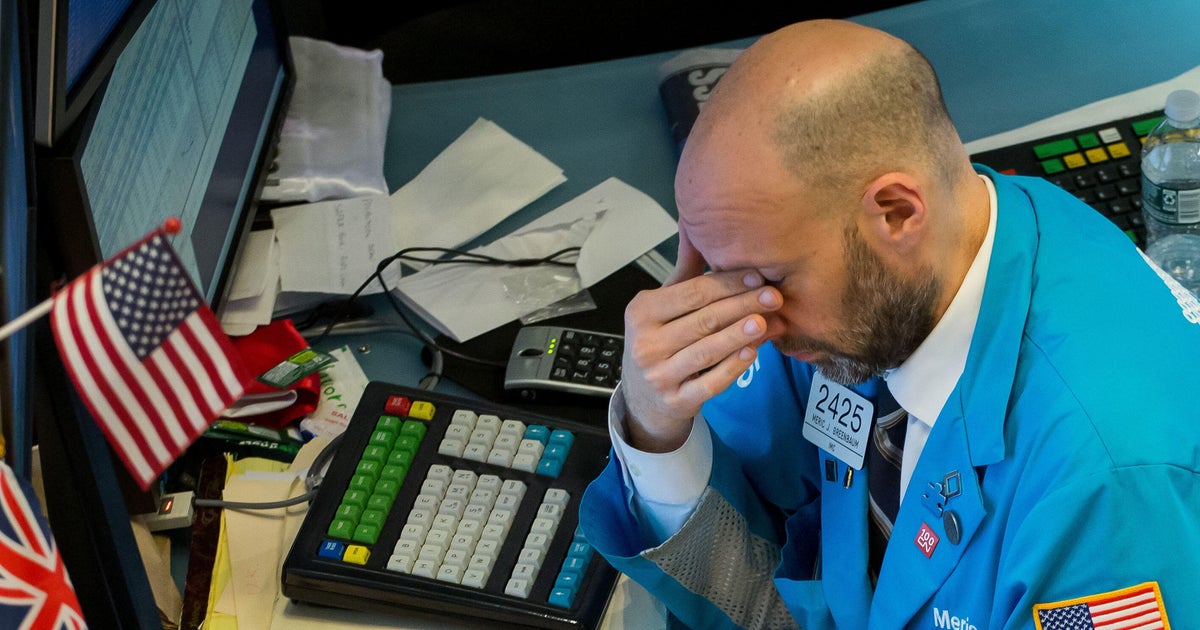
So why are investors hitting the panic button, causing stocks to swing wildly and bruising your 401(k) plan? asserted
stocks → hit → plan
The answer boils down to the relationship among inflation, interest rates and the Federal Reserve, along with mounting concerns on Wall Street that the artificial intelligence boom could turn to bust. uncertain
boom → boil → bust
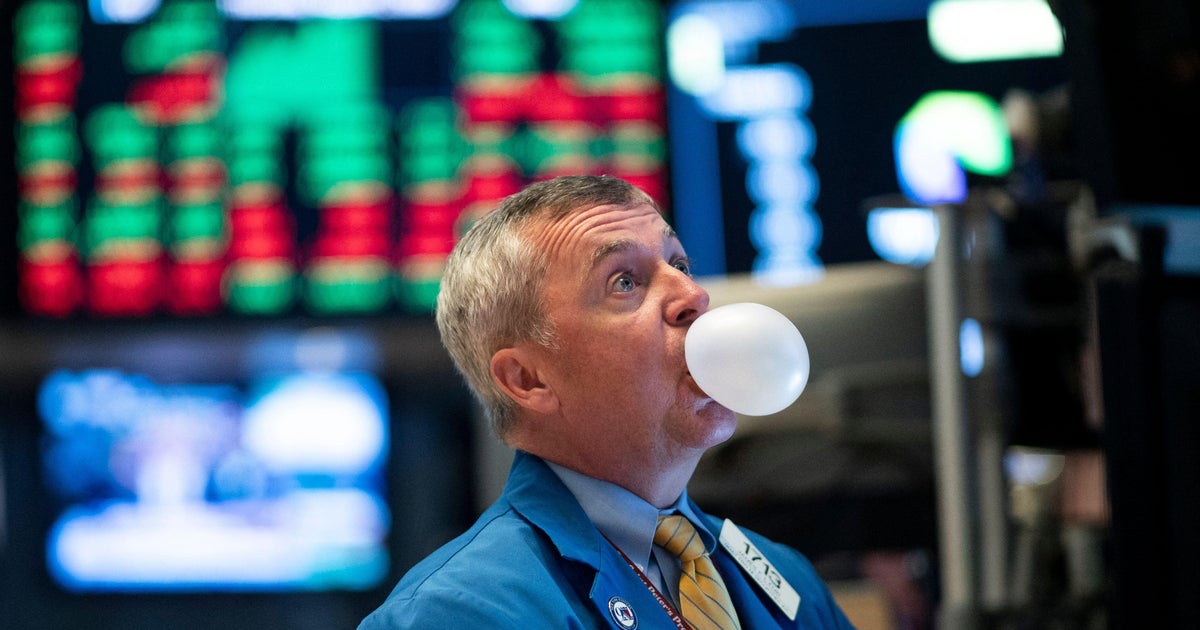
Stocks on Wednesday show just how brittle investor sentiment is at the moment. asserted
sentiment → show → moment
Leading indexes plunged more than 1,000 points in morning activity, only to claw back much of those losses in afternoon trading. asserted
indexes → lead → trading
Where stocks go next, nobody knows. asserted
nobody → go → ?
The S&P 500 index is now about 8% lower than its most recent high on Oct. 6, putting it close to a correction, or a decline of more than 10% from its recent peak. asserted
index → put → peak
Also on Wednesday, the Bureau of Economic Analysis sharply raised its estimate for third-quarter growth from its previous forecast of 3.4%. asserted
Bureau → raise → %
That growth is being fueled by steady consumer spending and surging business investment, with large tech firms splurging on building out data centers and other infrastructure required to power AI. asserted
firms → fuel → AI
Americans benefit when the economy is growing, fueling consumer spending and hiring. asserted
economy → benefit → spending
But heady growth can also have a downside — especially when, as in the current moment, inflation is already running hot. asserted
inflation → have → moment
"In the simplest possible words, the economy is overheated, with demand exceeding supply. asserted
demand → overheat → supply
The consequence is a blowout of the trade deficit and inflation," HFE chief economist Carl B. Weinberg said in a research note. asserted
Weinberg → say → note
Although inflation earlier in the year was largely driven by rising energy costs, more recent signals suggest that strong economic growth, fueled by heavy AI spending, is now the main factor driving up prices. asserted
growth → drive → prices
Federal Reserve Bank of Chicago President Austan last week that trillions in spending on data centers are contributing to the nation's "borderline disturbingly high" inflation asserted
trillions → contribute → inflation
Newly released inflation data showed consumer prices rose 3.8% in October from a year earlier, up from 3.6% in September. asserted
prices → release → September
Meanwhile, the admixture of high inflation and heady economic growth virtually cements a Federal Reserve interest-rate hike at its December meeting, and possibly additional hikes in early 2027, according to economists. uncertain
admixture → cement → economists
The specter of rate hikes is weighing on the stock market, as higher borrowing costs could create hurdles for AI and other tech companies seeking to expand their computing capacity. uncertain
costs → weigh → capacity
And households, already stretched thin by rising inflation, could face higher costs for everything from credit cards to mortgages — a headwind for consumer spending. uncertain
households → stretch → spending
"Households face renewed inflation pressures, diminished saving capacity and higher borrowing costs, while elevated interest rates are raising the cost of investment and financing across the economy," EY-Parthenon chief economist Gregory Daco said in an email. asserted
Daco → face → email
Investors are also questioning whether the huge investments by AI companies will pay off, given the massive losses recorded by many of the big AI labs. asserted
investments → question → labs
Anthropic, which last week recorded the , lost a startling $104 billion in the first nine months of 2026. asserted
which → record → 2026
It plans to spend nearly $1 trillion on chips and AI infrastructure through 2045."But asserted
It → plan → chips
the critical thing AI may never be able to do is make profits high enough to justify its declining, but still stratospheric valuations," Boston University economist Laurence Kotlikoff said in a Wednesday blog post. uncertain
Kotlikoff → do → post
Some investors and economists say that investors should brace for more downside, at least in the near term. asserted
investors → say → term
"As investors saw last week, pessimism can build quickly and suddenly take the wheel of market momentum," said Anthony Saglimbene, Ameriprise chief market strategist, in a research note. asserted
Saglimbene → see → note
"And fear tends to feed on itself at these readings, as falling stock prices become the evidence that justifies more selling across the market." asserted
that → tend → market
Experts advise against making snap decisions during a market downturn, such as selling stocks, as it can lead to losses that are tough to recover from. asserted
that → advise → losses
For instance, investors who sold in previous downturns may have missed the sharp market gains that have often followed. uncertain
that → sell → gains
Despite investors' fears, the economy remains strong, helping shore up corporate growth, noted Doug Beath, global equity strategist at the Wells Fargo Investment Institute. asserted
Beath → remain → Institute
"We expect solid economic and earnings growth in 2027 to support our year-end S&P 500 target of 8,700," he said. asserted
he → expect → 8,700

Give feedback · no sign-in needed

No sign-in needed for now. Your note is sent without a name, so it cannot be answered.

History Support