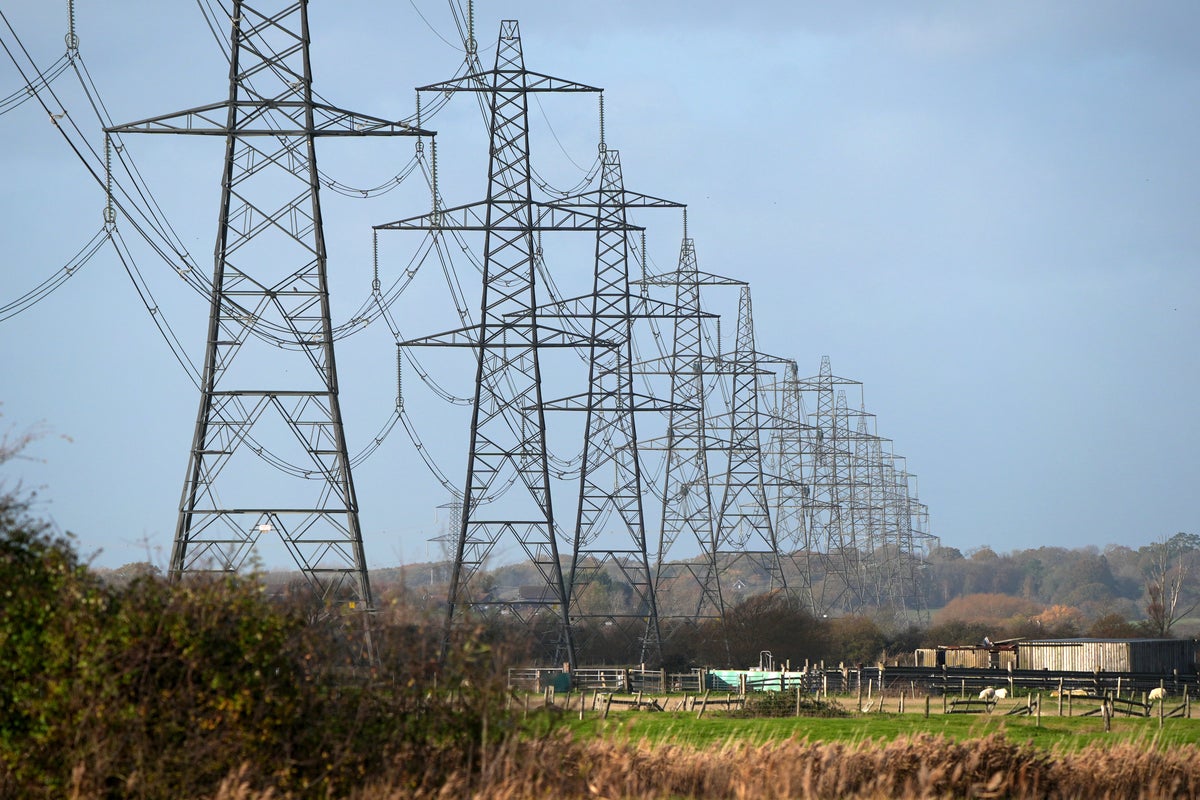
Photo via The Independent

The five key moments in the Ukraine and Iran wars that sent your energy bills soaring

Read the original at The Independent ↗
Cite

Croft, A. (2026, November 25). The five key moments in the Ukraine and Iran wars that sent your energy bills soaring. The Independent. https://www.independent.co.uk/news/world/europe/uk-energy-price-cap-wars-ukraine-russia-iran-b3091536.html

Dated from the outlet's own feed. Check the original for its byline.

The Independent · collected 2026-11-25 · by Alex Croft

Quick Summary

The energy price cap for households in England, Scotland, and Wales is set to increase by 26% from January 1, 2027, rising by £443 per year to £2,166 annually. Ofgem attributes the surge in energy prices to the ongoing conflicts in Iran and the Middle East, which have led to significant volatility in oil and gas markets. The article highlights specific events such as the US and Israel launching a war on Iran, resulting in a blockade of the Strait of Hormuz and a sharp increase in oil prices, as well as subsequent tit-for-tat strikes on gas facilities that further destabilized the energy market.
Written by AI on 2026-11-26, from this article's own text only (the story summary below draws on all the coverage).
See how they differ ↓

AI analysis

Story summary

As of November 25, 2026, Ofgem, the UK's energy regulator, announced that the energy price cap will rise by 26% from January 1, 2027, increasing annual bills from £1,723 to £2,166. This hike, confirmed by Ofgem, will be the highest level since 2023 and will see a typical household bill jump by more than £400 per year. Campaigners warn that millions of households will struggle to keep their homes warm, facing a "nightmare before Christmas." The government has responded with immediate actions, including a £100 energy payment and a temporary cut in 5% VAT on electricity bills until the end of June, which reduces costs by about £45 a year. However, experts argue these measures are insufficient to mitigate the significant impact on households already struggling with the cost of living.

Written for “Energy Bills Soaring 26%” on 2026-11-26, grounded in this article and the 23 other(s) covering the same event.
Why this leaning score
The article's own words the score was based on. Each is quoted verbatim and was checked against the article text before being stored, so you can find it in the original.
Reading Leans right (beta estimate) Confidence high 2 quote(s) discarded as not found in the article
Leaning: leans right for article 180005 (high confidence, 1 verified quote) · logged 2026-11-26

How they differ

4 outlets covered “Energy Bills Soaring In January”.

What each outlet says

One AI summary per outlet of its latest article on this story, written from that article alone and checked against it. Open the article for the outlet's own words.

The IndependentThis outlet25 Nov

The energy price cap for households in England, Scotland, and Wales is set to increase by 26% from January 1, 2027, rising by £443 per year to £2,166 annually. Ofgem attributes the surge in energy prices to the ongoing conflicts in Iran and the Middle East, which have led to significant volatility in oil and gas markets. The article highlights specific events such as the US and Israel launching a war on Iran…

The five key moments in the Ukraine and Iran wars that sent your energy bills soaring (this article)
Evening Standard25 Nov

Households in the UK face a significant rise in energy bills starting January, with the price cap increasing by £443 per year to £2,166 for the average home using both electricity and gas. This represents a 26% increase, making it the highest since the second quarter of 2023. While some government support measures are in place, including a £100 payment for 20 million households, charities and experts warn that these…

Households face ‘nightmare before Christmas’ as energy bills to soar 26% →17 articles from Evening Standard on this story
BBC25 Nov

A predicted 26% increase in energy costs starting in January has raised concerns among residents in Stockton-on-Tees and Darlington. The UK government plans to provide £100 to millions of households to help cover winter costs, but many residents feel this is insufficient. Kathleen Simms, a cancer survivor with a lung condition, fears the cost increase could lead to health complications. Other residents express worry…

Energy price increase 'could put me in hospital' →5 articles from BBC on this story
City A.M.25 Nov

Energy bills in Britain are set to rise by 26% starting January 1, 2027, according to the energy regulator Ofgem, increasing the cap from £1,723 to £2,166 for typical annual bills. This increase is attributed to rising wholesale gas prices due to the war in the Middle East and higher winter energy use, despite the government’s decision to scrap VAT on energy bills. The price cap will cover the period from January 1…

Energy bills set to rocket 26 per cent in major blow to UK households →

Where they agree and split

Framing

How the first headlines put it

Stated as fact3
The headlines (3)

Energy bills set to soar by £443 this winter with prices expected to hit highest level since 2023 due to chaos in the Middle East Daily Mail · stated as fact

Households set for £443 increase on energy bills City A.M. · stated as fact

Winter energy bill misery on way as price cap set to jump by 26% in January Evening Standard · stated as fact

Words to watch (1)

Energy bills set to soar by £443 this winter with prices expected to hit highest level since 2023 due to chaos in the Middle East Daily Mail

The full story: what happened, how it changed, and all 24 articles →

Compared with similar articles

This article reads leans right and hedges 2% of its claims. Each row says how that neighbour differs.
Evening Standard
Leans left further left than this Hedges 0 of 15 claims Outlet record 64/100
Evening Standard
Hedges 0 of 28 claims Outlet record 64/100
Evening Standard
Hedges 1 of 11 claims Outlet record 64/100
Evening Standard
Hedges 1 of 14 claims Outlet record 64/100
City AM
Hedges 2 of 19 claims Outlet record 95/100
Evening Standard
Hedges 3 of 24 claims Outlet record 64/100
“While both articles discuss the same increase in the energy price cap, Article B focuses on the reasons behind the increase, particularly the impact of conflicts in Iran and the Middle East, which is not the main focus of Article A.”
BBC News
Leans left further left than this Hedges 3 of 15 claims Outlet record 65/100
“While both articles discuss the same general topic of energy price increases due to the conflict in Iran, they do not describe the same specific incident or occurrence. ARTICLE A focuses on the overall impact and the regulator's statement, whereas ARTICLE B focuses on the reaction and concerns of individual residents in specific locations.”
Daily Mail
Hedges 3 of 23 claims Outlet record 68/100
“While both articles discuss rising energy costs and their implications, they describe different aspects of the situation — Article A focuses on the specific increase in the energy price cap and its causes, while Article B emphasizes the potential impact on interest rates warned by the Bank of England governor.”
Evening Standard
Hedges 0 of 16 claims Outlet record 64/100
“While both articles discuss the increase in the energy price cap starting from January, they differ in the primary reason given for the price increase, with Article B attributing it to the conflict in Iran and the Middle East.”
Evening Standard
Hedges 0 of 16 claims Outlet record 64/100
“While both articles discuss the same price cap increase for energy bills, Article B attributes the cause to ongoing conflicts in Iran, which is not mentioned in Article A.”

Story

Energy Bills Soaring 26%
Economy/Business · 24 article(s) covering the same event. Compare every outlet's account →
How this article was measured signals, leaning charts, publisher record, byline, topics and claims

Signals How these are calculated →

Claims extracted
48
sentences that state something as happening or true
Uncertain
2%
1 of 48 hedged ("reportedly", "may", "according to")
Leaning
Leans right
of the writing, not the subject · beta estimate
Publisher signals
59/100
The Independent's corrections and hedging, across everything collected from it. Not a measure of accuracy.
Outlets on this story
24
Economy/Business
Same framing elsewhere
2
articles that frame the event the way this one does
Analyzed 2026-11-26 · how these are computed

How this is being covered How these are calculated →

Article leaning vs. publisher reliability
Source leaning vs. consistency

Publisher

The Independent · 5103 article(s) · 10 correction(s) detected
Running correction rate · 10 correction(s)

Who wrote this

Alex Croft
81 article(s) here · 1 carrying a prediction
The energy price cap is set to jump by 26 per cent from 1 January 2027 for households in England, Scotland and Wales, the energy regulator has said.
When contacted by the outlet, a US official described the reporting as “not accurate”, adding: “We are organising our negotiating tracks and will announce them when we are ready and this continues to be an element.”
When he called next week’s snap election in early October, Sanchez took a huge gamble: that fury over the housing situation in Spain and a desire to keep the far-right from power would see voters rally behind his party.
A major new report into drug trafficking in Europe, set to be published next week by the Global Initiative against Transnational Organised Crime (GI-TOC) and shared in advance exclusively with The Independent, lays bare how the narcolancha cocaine route has become a dominant trend in Europe.
A French mayor has been given an eight-month suspended prison sentence for harassment against local bakers for refusing to slice their loaves of bread.
Trump later dialled into a parallel Coalition of the Willing summit in Berlin – attended by prime minister Andy Burnham and Ukrainian president Volodymyr Zelensky – where he reportedly urged European allies to stop funding Kyiv.
Experts said the emergence of pornographic material could have left Eriksson vulnerable to blackmail, a claim he denies.
He could have been much tougher, frankly,” the US president said on Monday.
Aksyonov gave no details of the damage in a statement on messaging app Telegram, but said traffic on the bridge would be limited until midday on Monday.
Also by Alex Croft
Nothing else under this byline is closely related to this article, so these are simply their most recent.
All 81 articles by Alex Croft →

Topics

England Iran Israel Ofgem Ukraine

Subjects

Iran GPE · 7× Qatar GPE · 3× Ukraine GPE · 3× Israel GPE · 2× Ofgem ORG · 2× Ralston PERSON · 2× Russia GPE · 2× Trump PERSON · 2× England GPE · 1× Scotland GPE · 1×

Narrative

The attacks have once again been intensifying as of autumn 2026, with 15 Russian refineries attacked on November. “Despite what Europe and the UK have done to end buying Russian oil and gas, obviously when those those pieces of infrastructure are attacked, then there's less global supply,” she says. “So we're competing with the likes of China and India, who still get Russian oil or gas, for less supply.”
framing: assertive · carried by 2 article(s) · first seen 2026-11-26
The energy price cap is set to jump by 26 per cent from 1 January 2027 for households in England, Scotland and Wales, the energy regulator has said.

Claims (48 extracted, 1 hedged)

The energy price cap is set to jump by 26 per cent from 1 January 2027 for households in England, Scotland and Wales, the energy regulator has said. asserted
regulator → set → England
Ofgem said the price cap will rise by £443 per year, meaning an increase in annual bills from £1,723 to £2,166 if this level was sustained for a year. asserted
level → say → year
The regulator said the ongoing conflict in Iran and the Middle East was the “primary driver” for the wild fluctuations in oil and gas prices which have intensified the cost of living crisis across the world. asserted
which → say → world
Wholesale prices have since eased back, leading to a reduction in petrol prices, but this came too late to affect the calculation for the new Ofgem price cap. asserted
this → ease → cap
“What I can't control are wars in the Middle East that we weren't a part of, which impact families here,” said energy secretary Miatta Fahnbulleh when the price cap increased by four per cent in August. asserted
cap → control → August
Analysts say that although prices first started rising in August 2021 - when rumours began strengthening that Moscow was preparing an invasion of Ukraine - developments in the Middle East in the past year have seen them skyrocket. asserted
them → say → year
“The markets are constantly reacting to uncertainty, and over the past six years there’s been so much of that,” says Jess Ralston, head of energy at the Energy and Climate Intelligence Unit (ECIU). asserted
Ralston → react → Unit
“We've had one thing after another, and markets just take that sort of uncertainty and price that in - because they don't know where the next barrel is going to come from.” asserted
barrel → have → that
The Independent looks at how developments thousands of miles away have lead to spiralling energy costs in the UK. asserted
developments → look → UK
28 February: US and Israel launch war on Iran before Strait of Hormuz blockaded The beginning of the war sparked a huge crisis in oil and gas prices, sending them rocketing to levels not seen since early on in Russia’s invasion of Ukraine. asserted
beginning → launch → Ukraine
Ms Ralston says prices did fall slightly after the Russian invasion but “never returned to pre-crisis levels”. asserted
prices → say → levels
“So they remained inflated even after that initial huge spike had ended, and then you had Trump going to war in Iran, spilling out into conflict in the wider Middle East,” she says. asserted
she → remain → East
The day after Trump’s war on Iran began, Iranian forces imposed a blockade on the Strait of Hormuz, the chokepoint through which one-fifth of the world’s crude oil and liquefied natural gas (LNG) passed during peace time. asserted
fifth → begin → time
Within ten days the price of Brent crude, the international benchmark, had shot up from $73 a barrel to $99. asserted
price → shoot → 99
Three weeks after the war was launched, it hit $112. asserted
it → launch → 112
Since then, as the war has entered a state of limbo with both sides exchanging limited strikes, oil and gas prices have been hugely volatile. asserted
prices → enter → strikes
In the continued absence of a peace deal, the UK’s energy price cap jumped from £1,641 in the second quarter of 2026 to £2,166 for the first quarter of 2027. asserted
cap → jump → 2027
March: Tit-for-tat strikes on gas facilities in the Middle East Nearly three weeks into the war, Israel launched a series of strikes on Iran’s major South Pars gas field and other petrochemical facilities around Asaluyeh. asserted
Israel → launch → Asaluyeh
The attack hit gas treatment, refining and petrochemical infrastructure, damaging four gas-processing plants and reportedly halting around 100 million cubic meters of gas each day, equating to around roughly 12 per cent of Iran's total gas output. uncertain
attack → hit → output
Iran responded with heavy strikes on Qatar’s LNG facilities, inflicting heavy damage and wiping out 17 per cent of the country’s LNG capacity for up to five years. asserted
Iran → respond → years
Qatar exports around 77 million tonnes of LNG annually, which is around one fifth of the global supply. asserted
which → export → supply
Although it makes up a small share of overall gas supply, the UK imports around 6 per cent of its LNG imports from Qatar, as of 2025. asserted
UK → make → 2025
For the UK in particular, which relies heavily on gas, the impact of war in the Middle East on the LNG trade - especially following years of chaos following Russia’s invasion of Ukraine - has been severe, says Ms Ralston. asserted
Ralston → rely → Ukraine
“Many of our homes being reliant on gas boilers is a large part of the reason that we're so exposed to these volatile spikes,” she says, adding that 85 per cent of homes in the UK use gas boilers. asserted
cent → say → boilers
“As we head into winter, we don't have very much gas storage anywhere in the UK, but across Europe, gas storage is quite low. asserted
storage → head → Europe
The UK gets most of its gas from the North Sea and Norway - however North Sea gas is owned by “huge multinational corporations” meaning the UK has to pay the usual market rate for this gas. asserted
UK → get → gas
Late March: Ukraine begins striking Russia’s Baltic Oil hubs asserted
Ukraine → begin → hubs
Ukraine’s intensified attacks on Russian energy infrastructure, as it sought to inflict damage to its wartime economy, had a significant effect on Russian exports. asserted
it → intensify → exports
In late March, Kyiv ramped up strikes on Russia’s Baltic oil export hubs, including the Ust-Luga oil terminal five times in 10 days. asserted
Kyiv → ramp → days
The Primorsk terminal, which like Ust-Luga, is located near St Petersburg, was also targeted in the intensifying strikes. asserted
which → locate → strikes
The two hubs usually handle 42 per cent of Russian seaborn oil exports. asserted
hubs → handle → exports
Alone, the strikes did not have a huge impact on global crude prices. asserted
strikes → have → prices
But they preceded a much more widespread, intense Ukrainian campaign against Russian oil refineries which is ongoing as of November. asserted
which → precede → November
April onwards: Ukraine intensifies strikes on Russian oil refineries asserted
Ukraine → intensify → refineries
Waves of attacks on Russian refineries over summer even led to a domestic fuel crisis in the country, forcing several regions to impose petrol and diesel rationing. asserted
Waves → lead → rationing
In June 2026, Russian oil refinery dropped by 30 per cent compared to what it had been a year earlier, and its lowest point in 20 years. asserted
it → drop → years
Gasoline output also dropped by 20 per cent compared to 2025 levels, while diesel production dropped by 30 per cent. asserted
production → drop → cent
The International energy Agency (IEA) says the sharp fall in diesel output contribute to “severe pressures facing international middle distillate markets”. asserted
fall → say → markets
Ms Ralston explains that the markets are “constantly to what they see and hear in the news and global events”. asserted
they → explain → news
Ukrainian attacks on energy infrastructure have had an impact on oil and gas prices worldwide, because of the impact it has had on global supply. asserted
it → have → supply
…and 8 more, not listed.
Give feedback · no sign-in needed

No sign-in needed for now. Your note is sent without a name, so it cannot be answered.

History Support