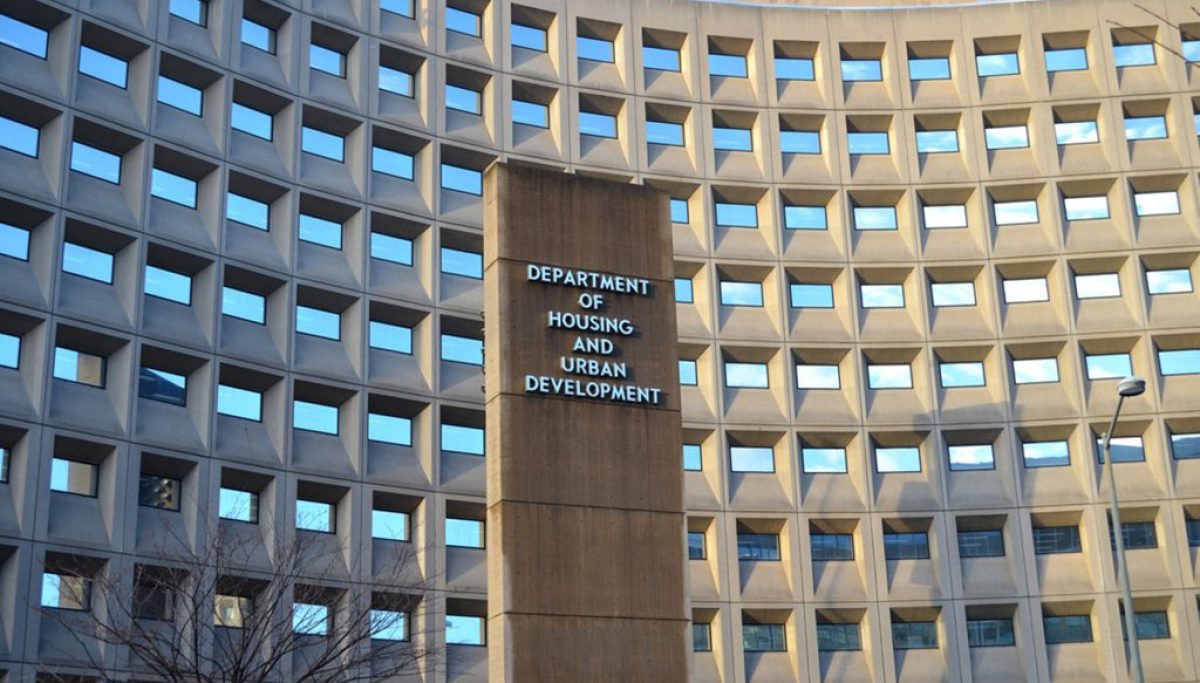
Photo via Washington Examiner

Who answers when the judge gets it wrong?

Read the original at Washington Examiner ↗
Cite

Rogers, J. (2026, November 25). Who answers when the judge gets it wrong? Washington Examiner. https://www.washingtonexaminer.com/op-eds/4814352/new-york-bail-law-judicial-immunity/

Dated from the outlet's own feed. Check the original for its byline.

Washington Examiner · collected 2026-11-25 · by Jay Rogers

Quick Summary

Jin Yu, a 62-year-old woman, was killed in her Chinatown apartment on November 20, according to prosecutors. The suspect, Alexander Florentino, 25, had been released the day before by Judge Juliet Howard on a petty larceny charge under New York’s bail law. The article criticizes the legal system, arguing that the bail law limits judges' discretion and an immunity doctrine protects them from accountability, leading to potential failures in public safety.
Written by AI on 2026-11-26, from this article's own text only (the story summary below draws on all the coverage).

AI analysis

Story summary

Alexander Florentino, 25, was released from custody by Judge Juliet Howard of Manhattan on November 19, 2026, after a petty larceny charge. Prosecutors had requested $3,000 cash bail or a $9,000 bond, but the judge ordered supervised release with no monetary bail. Five days later, Jin Yu, 62, was killed in her Chinatown apartment, and Florentino was subsequently charged with her murder. Critics argue that the judge's decision ignored a pattern of pending cases against Florentino and highlights flaws in the bail law and immunity doctrine that protect judges. The incident has sparked debate over judicial accountability and bail practices in New York.

Written for “Judicial Errors Debated” on 2026-11-27, grounded in this article and the 0 other(s) covering the same event.

Compared with similar articles

This article reads unscored and hedges 0% of its claims. Each row says how that neighbour differs.
Times of India
Hedges 10 of 43 claims Outlet record 58/100
“Article A focuses on the judicial decision to release Florentino the day before the murder, while Article B highlights his multiple releases in 2026, including the one the day before the murder.”
New York Post
Leans strongly right Hedges 3 of 14 claims Outlet record 66/100
“Article A discusses the legal and systemic issues surrounding the release of the accused murderer, while Article B focuses on the call for the judge to step down or be removed from the bench due to the decision to release the accused. Although both articles reference the same incident, they describe different aspects and outcomes.”

Story

Judicial Errors Debated
Crime & Law · 1 article(s) covering the same event.
How this article was measured signals, leaning charts, publisher record, byline, topics and claims

Signals How these are calculated →

Claims extracted
10
sentences that state something as happening or true
Uncertain
0%
0 of 10 hedged ("reportedly", "may", "according to")
Leaning
not political
takes no side on a contested political question
Publisher signals
66/100
Washington Examiner's corrections and hedging, across everything collected from it. Not a measure of accuracy.
Outlets on this story
1
Crime & Law
Same framing elsewhere
1
articles that frame the event the way this one does
Analyzed 2026-11-26 · how these are computed

How this is being covered How these are calculated →

Article leaning vs. publisher reliability
Source leaning vs. consistency

Publisher

Washington Examiner · 5609 article(s) · 12 correction(s) detected
Running correction rate · 12 correction(s)

Who wrote this

Jay Rogers
27 article(s) here · 0 carrying a prediction
Twenty-one cities, counties and housing agencies, including New York, Los Angeles, Chicago and Boston, sued to block a Department of Housing and Urban Development rule they claim will “unlawfully evict U.S. citizens and other qualifying residents from their homes.”
2026-11-27 · assertive framing · Subsidized housing has a waiting list. Respect it
Then-President Joe Biden told reporters in June 2024, “I will not pardon him.”
2026-11-16 · assertive framing · Pardon me, are you a lobbyist?
The checks are small, and U.S. citizens may give from abroad.
2026-11-14 · assertive framing · Pay no attention to the man in Shanghai
I wasn’t in that control room, and Diawara may have a perfectly good explanation.
Hollywood would call it a heist hoax film.
2026-10-30 · assertive framing · Fake robberies, real bills
This week, the justices lifted a court-ordered deadline that would have forced the agency to rule on a Democratic challenge to its political advertising policy before Nov. 3.
2026-10-18 · assertive framing · One ad, one price. Congress should say so
The 6-3 order is temporary, and the justices will hear arguments on Dec. 9.
If you entered illegally, a judge ordered you out, and your homeland won’t take you, America can send you somewhere that will.
Whatever you do, never submit to the extended, adversarial questioning that might reveal what millions of Americans were forced to confront after the June 2024 debate: that the 46th president’s cognitive capacity had been degrading in the most powerful office on Earth.
That timing placed the release squarely inside the window the DOJ’s own election-sensitivity guidance identifies as the highest-risk period for any government action that could appear to influence a vote.
Also by Jay Rogers
Subsidized housing has a waiting list. Respect it
2026-11-27 · Washington Examiner
Let America build again
2026-11-23 · Washington Examiner
Pardon me, are you a lobbyist?
2026-11-16 · Washington Examiner
Pay no attention to the man in Shanghai
2026-11-14 · Washington Examiner
Nothing else under this byline is closely related to this article, so these are simply their most recent.
All 27 articles by Jay Rogers →

Topics

Manhattan The New York Post

Subjects

Alexander Florentino PERSON · 1× Jin Yu PERSON · 1× Juliet Howard PERSON · 1× Manhattan GPE · 1× The New York Post ORG · 1×

Narrative

The system that put him back on Catherine Street deserves no such presumption, and it fails in two places: a bail law that blindfolds judges and an immunity doctrine that shields them.
framing: assertive · carried by 1 article(s) · first seen 2026-11-26
2026-11-26 · Washington Examiner
Who answers when the judge gets it wrong? · assertive framing

Claims (10 extracted, 0 hedged)

Jin Yu, 62, was killed in her Chinatown apartment on Nov. 20, prosecutors allege. asserted
prosecutors → kill → Nov.
The man charged with her murder, Alexander Florentino, 25, had been released by a Manhattan judge the day before. asserted
man → charge → judge
He’s presumed innocent of the killing. asserted
He → presume → killing
The system that put him back on Catherine Street deserves no such presumption, and it fails in two places: a bail law that blindfolds judges and an immunity doctrine that shields them. asserted
that → put → them
Both have fixes. asserted
Both → have → fixes
Judge Juliet Howard ordered supervised release on Nov. 19 in a petty larceny case. asserted
Howard → order → case
The New York Post reported that prosecutors had asked for $3,000 cash bail or a $9,000 bond. asserted
prosecutors → report → bail
The outlet also reported that another judge freed him with non-monetary conditions on Nov. 13, and the theft charge was one of a half-dozen cases pending against him. asserted
charge → report → him
They’re still five reasons for a judge to ask hard questions. asserted
judge → ’re → questions
Pattern recognition is the job, and judges who ignore it deserve criticism. asserted
who → ignore → criticism
Give feedback · no sign-in needed

No sign-in needed for now. Your note is sent without a name, so it cannot be answered.

History Support